What Makes Ivory Travertine Stand Out as a Backsplash Material
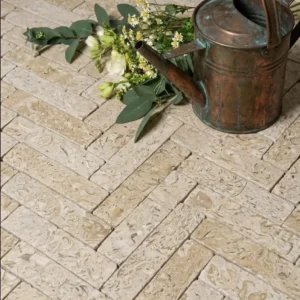
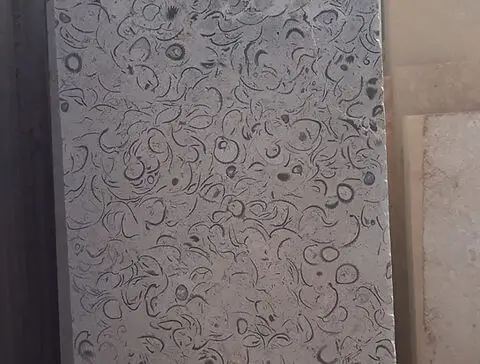
Ivory travertine backsplash ideas earn their place in serious kitchen specifications through performance characteristics that ceramic and engineered alternatives cannot replicate — the vein-cut and cross-cut surface options each expose a completely different visual character from the same block. Vein-cut delivers flowing, linear movement while cross-cut reveals the classic pitted cloud pattern most designers associate with old-world kitchens. Your finish choice between honed, brushed, and polished surfaces changes not just the sheen level but the perceived warmth, the slip resistance, and how aggressively the stone absorbs cooking grease near the range. According to Natural Stone Institute travertine properties and outdoor suitability, the open-pore calcium carbonate structure that gives travertine its warmth also makes it moderately absorbent — a specification detail worth understanding before you commit to a finish.
7 Ivory Travertine Backsplash Ideas Worth Specifying
Classic Subway Format in Honed Ivory
The 3×6 subway format in honed ivory travertine backsplash tile remains a workhorse for a reason. Honed surfaces give a smooth, low-sheen face that wipes clean, which matters near the sink where splash is constant. The muted, non-reflective surface absorbs ambient kitchen light rather than bouncing it, which creates a soft, settled warmth that polished surfaces can’t replicate in the same way. Grout joint width here deserves attention — 1/16″ tight joints highlight the tile geometry, while 3/16″ joints let the natural travertine variation read more organically.
Large-Format Field Tile with Minimal Grout Lines
Large-format ivory travertine tile — think 12×24 or 16×24 — shrinks the grout line count dramatically, which reduces long-term maintenance and creates a cleaner visual plane behind open shelving. The trade-off to manage is lippage: travertine’s natural thickness variation across a single piece means the setting bed needs to be perfectly flat, and back-buttering becomes mandatory rather than optional. Your installer should verify the wall substrate deflects no more than L/360 before committing to large-format pieces; travertine at this scale punishes a flex-prone wall faster than smaller tiles will.
Herringbone Pattern for Visual Movement
A herringbone layout using 2×4 or 3×6 travertine tiles introduces diagonal energy into a kitchen without resorting to a bold color. The pattern multiplies cut waste — budget 15% overage rather than the standard 10% — and the directional grain in vein-cut ivory travertine interacts with the herringbone geometry in ways that look intentional and dynamic. This is one of the more rewarding ivory travertine backsplash ideas for kitchen renovations where the cabinetry is neutral and the designer wants texture to carry the room.
Pencil Liner and Mosaic Border Accents
Framing a primary travertine field with a pencil liner or a 1×1 mosaic border in a complementary tone — warm beige marble or a darker walnut travertine — creates a banded effect that grounds the installation and gives it a furniture-quality finish. The detail also solves a practical problem: it defines the top edge of the backsplash cleanly where it meets open wall or upper cabinets, eliminating the need for a caulk line that telegraphs every minor wall imperfection. Confirm the border tiles are from the same calibration batch as the field tile to avoid height mismatches at the transition.
Tumbled Ivory Travertine for Old-World Texture
Tumbled travertine backsplash tile produces a hand-hewn, rounded-edge look that’s genuinely difficult to replicate with engineered materials. The tumbling process opens the surface pores further than honing does, so sealing this finish before grouting is essential — skipping that step means grout haze becomes nearly impossible to remove cleanly from the textured surface. For kitchens designed around rustic, colonial, or farmhouse aesthetics, tumbled ivory travertine integrates naturally with reclaimed wood shelving and unlacquered brass hardware in a way that feels collected rather than designed.
Full-Height Slab-Style Behind the Range
Extending ivory travertine backsplash tile from countertop to ceiling behind the range creates a focal wall that anchors the kitchen. Field tile in a 12×12 or 18×18 format works best here because the larger module makes the installation read as a near-continuous surface from a few feet away. Account for the range hood’s mounting hardware — pre-mark all penetrations on the tile layout before installation begins, and use a wet-core drill rather than a standard tile bit to avoid cracking the stone at the cutout. This configuration delivers the cleanest integration with the broader design aesthetic, especially when the tile’s ivory tone picks up warm undertones present in adjacent cabinetry or stone countertops.
Mixed-Finish Installation: Honed Field, Brushed Accents
Combining honed ivory travertine field tiles with brushed travertine accent strips in the same colorway creates subtle surface contrast without introducing a second material. The brushed finish catches light at a slightly different angle than the honed field, which produces a tonal depth that reads as intentional refinement. For design palettes influenced by modern minimalist or desert-contemporary aesthetics — spaces where restraint and material quality do the work — this approach delivers sophistication at a specification level that’s hard to argue against.
Finish Selection and Sealing Requirements for Travertine Tile Backsplash
Finish choice determines sealing frequency more than any other single specification. Honed and brushed finishes on a light ivory travertine kitchen backsplash tile require a penetrating impregnator sealer before grouting and again every 2–3 years depending on cooking volume and cleaning chemistry. Polished finishes are denser and absorb less, but they’re not sealed — they’re polished — and the crystalline surface layer can dull over time if acidic cleaners are used near the range. Per ASTM C1527 travertine dimension stone standard specifications, absorption rate classifications directly influence how aggressively a sealer needs to be applied and how often reapplication is warranted.
- Honed finish: most versatile, moderate sheen, requires biennial sealing in active kitchens
- Polished finish: highest light reflectivity, most sensitive to acidic cleaning products
- Brushed finish: best for textural depth, open pores need pre-grout sealing without exception
- Tumbled finish: most casual aesthetic, most porous surface, aggressive sealing schedule required
- Filled vs. unfilled: filled voids are easier to maintain; unfilled creates a more artisanal look but traps grease more readily
At Citadel Stone, we check sealer compatibility for every travertine lot we ship — some quarry runs have higher calcite density than others, and that affects how quickly a penetrating sealer saturates the stone. It’s a detail that gets missed when ordering blind from a catalogue without talking to someone who’s actually handled the material.
Setting Materials and Substrate Preparation
The substrate preparation stage determines whether ivory travertine backsplash ideas translate into a 20-year installation or a 7-year remediation project. Travertine requires a non-sag, polymer-modified mortar for vertical applications — standard thinset doesn’t have the open time or bond strength to hold larger format pieces on a wall without slippage during installation. The wall should be free of paint, wallpaper residue, and any wax-based primer before tile goes up; travertine’s weight density means bond failure usually happens at the substrate-to-mortar interface, not at the mortar-to-tile face.
- Use ANSI A118.4 or better polymer-modified mortar for all vertical travertine installations
- Back-butter every tile regardless of format size — travertine’s dimensional variation requires full coverage to prevent hollow spots
- Verify drywall substrate is rated for wet areas near the sink; cement board is the preferred backer behind the range
- Allow mortar to cure a full 24 hours before grouting — travertine’s weight can compress uncured mortar and shift tile alignment
- Expansion joints every 12–16 feet where backsplash meets adjacent surfaces are not optional in kitchens with radiant heat or high thermal cycling
For a resource that covers installation standards in technical depth, TCNA installation standards for natural stone tile provides the tile industry’s benchmark specifications, including mortar and grout type guidance that applies directly to travertine tile backsplash work.
Grout Selection for Ivory Travertine Backsplash
Grout color does more compositional work on an ivory travertine backsplash than most people anticipate. A warm cream or buff grout blends with the stone’s undertone and makes the installation read as a continuous surface — appropriate for traditional, colonial, and landscape-integrated kitchen designs where seamlessness is the goal. A contrasting charcoal or dark taupe grout emphasizes each tile’s geometry and works well with herringbone and subway formats where the layout pattern is intentional. Grout type matters as much as the color: unsanded grout for joints under 1/8″, sanded grout for anything wider, and epoxy grout near the range where cooking grease exposure is highest.
The filled voids in travertine tile backsplash installations sometimes telegraph through the grout surface as the work ages — particularly with tumbled finishes where the fill material is shallower. Specifying a quality Portland cement-based fill from the same manufacturer as the grout reduces the color drift seen in older installations where two different fill products were used.
Design Integration: How Ivory Travertine Connects to the Broader Aesthetic
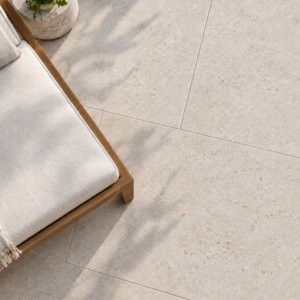
A kitchen’s connection to the broader design palette — both indoors and in sight lines to exterior spaces — influences whether ivory travertine reads as the right material or a missed opportunity. In homes where the interior opens to xeriscaped courtyards, desert-contemporary gardens, or Mediterranean landscape schemes, ivory travertine’s warm fossil tones carry directly through the glass line without visual interruption. The stone’s geological warmth is genuinely compatible with terracotta, raw linen, weathered oak, and the sun-bleached palette that landscape designers working in warm, arid climates frequently specify.
For kitchens adjacent to lush, tropical planting or darker colonial garden schemes, testing a slightly deeper ivory or a walnut-veined travertine sample before committing is worthwhile — the contrast between rich exterior greens and a very light ivory tile can feel disconnected rather than harmonious. The principle applies to any design environment: the backsplash doesn’t exist in isolation, and our light ivory travertine tile collection includes multiple tone variations specifically to help find the precise warmth that integrates with the full project palette. At Citadel Stone, we recommend ordering a physical sample alongside countertop and cabinetry swatches before placing a full order — warehouse stock across our national inventory spans several quarry runs, and visual warmth can shift noticeably between lots.
Ordering, Lead Times, and Project Planning
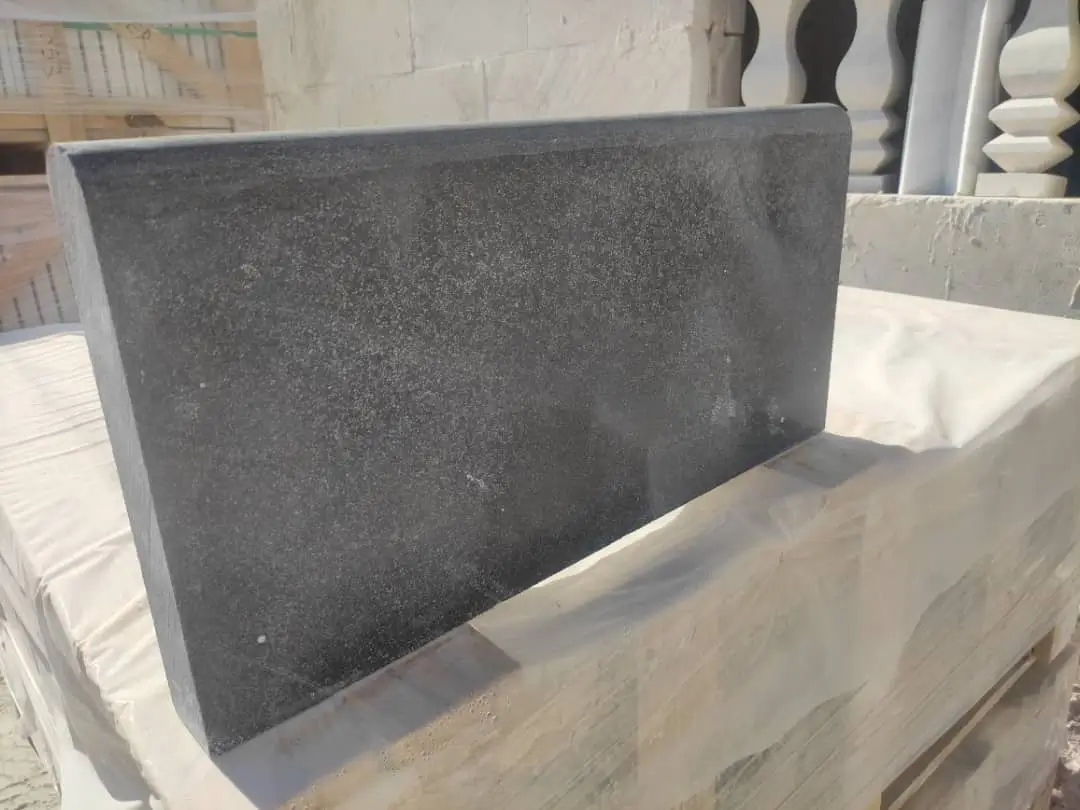
Planning an ivory travertine backsplash tile order around a renovation schedule requires more lead-time awareness than most clients expect. Natural stone doesn’t ship from a domestic manufacturing plant — it comes from quarries, and lot consistency between an initial sample and final delivery is a real variable. Citadel Stone maintains warehouse inventory of its core ivory travertine lines, which typically compresses delivery to 1–2 weeks for in-stock profiles versus the 6–8 week cycle for special-order imports. Truck delivery access should be confirmed before the order is placed — travertine ships palletized and heavy, and curbside delivery to a narrow alley or gated community requires coordination that affects the installation start date.
- Order 10–15% overage for standard installations; 15–18% for herringbone or diagonal layouts
- Verify the full lot number is consistent across all boxes before the installer opens anything
- Confirm warehouse stock availability before scheduling the tile setter — lead times shift with seasonal demand
- Check that truck access to the delivery address accommodates a standard freight vehicle if on a restricted street
- Store travertine flat, indoors, and off concrete floors until installation day to prevent moisture migration into the stone
Expert Summary: Getting Your Ivory Travertine Backsplash Specification Right
Ivory travertine backsplash ideas succeed or fail at the specification stage — long before a tile is set. Material selection, finish choice, substrate preparation, and sealing schedule work as a system, and getting one element wrong creates compounding problems that are expensive to correct once the kitchen is back in use. The seven approaches outlined here span everything from the classic honed subway tile to the mixed-finish installations that designers are increasingly specifying in contemporary kitchens, and each one requires a slightly different technical approach to execute correctly. For related natural stone applications, ivory travertine French pattern layouts covers how layout geometry affects both the visual outcome and the material quantity calculation — useful context if extending the stone beyond the backsplash into adjacent floor or feature-wall areas. The warm, neutral undertone of ivory travertine sourced through Citadel Stone makes it a versatile backsplash choice across traditional and contemporary kitchen styles alike.
Related reading: travertine porcelain tile · travertine pool tile · Ivory Travertine Pool Deck Guide: What to Know First.