What Honing Actually Does to Travertine’s Surface
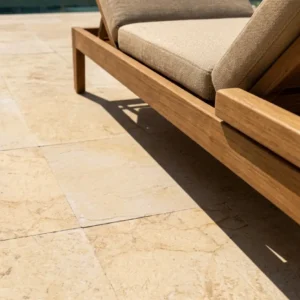
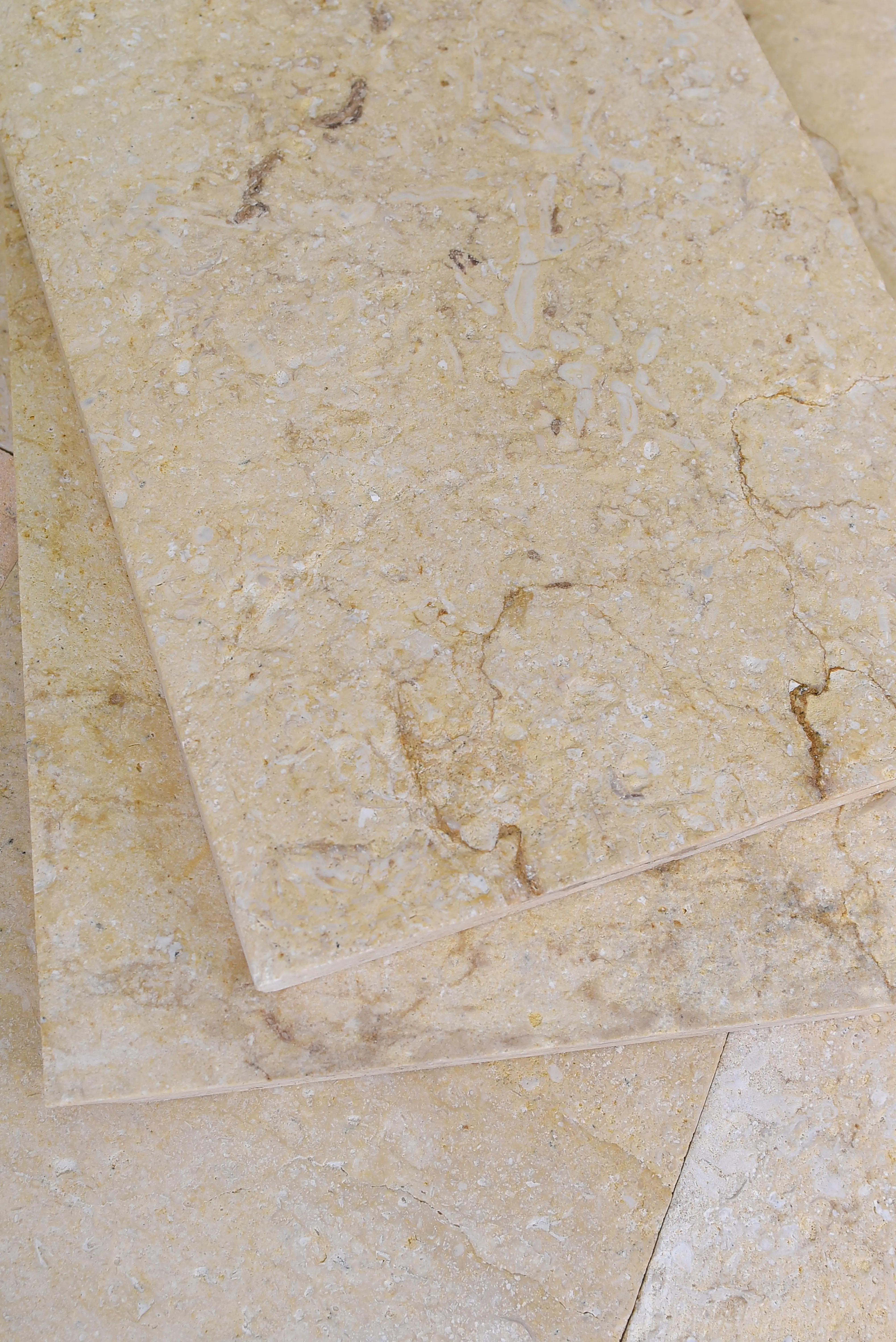
Honed travertine tile carries a fundamental surface characteristic that shapes every care decision you’ll make: the honing process opens the stone’s microscopic pore structure rather than sealing it under a polished glaze. That means your cleaning chemistry, sealing schedule, and daily maintenance routine all interact directly with the calcium carbonate matrix — not a protective finish layer. Understanding this distinction saves you from the most common and costly maintenance mistakes.
Sealing Schedule and Penetrating Sealer Selection
Your first maintenance decision — and the one that determines long-term performance more than any other — is sealer type and application frequency. Honed travertine flooring requires a penetrating impregnator, not a topical coating. Topical sealers sit on the surface and eventually peel, trapping moisture underneath and accelerating spalling in the process. A silane-siloxane or fluoropolymer-based penetrating sealer soaks into the pore structure and repels liquids from within, leaving the matte finish completely intact.
Resealing frequency depends on traffic intensity and your cleaning products. In residential settings with moderate foot traffic, a biennial application cycle is realistic. High-traffic commercial floors may need resealing annually. The water-bead test is your most reliable field indicator: pour a tablespoon of water on the surface and wait 4 minutes. If the water absorbs rather than beads, you’re past due. According to NSI stone tile specifications, absorption testing protocols for natural stone tiles follow established ASTM methods — knowing your tile’s absorption rate helps you anticipate how often sealer replenishment is genuinely needed.
- Apply penetrating sealer to clean, fully dry stone — moisture trapped below sealer will cloud or delaminate it
- Two thin coats outperform one heavy coat — allow 20–30 minutes between coats for full penetration
- Wipe off all excess sealer within the manufacturer’s working window — residue left on the surface creates a hazy film that’s difficult to remove without solvents
- Avoid silicone-based sealers — they trap moisture and are nearly impossible to remove for reapplication
Daily Cleaning Without Damaging the Honed Travertine Finish
The pH range that’s safe for honed travertine tile sits between 7 and 9 — mildly alkaline at most. Anything outside that range begins attacking the calcium carbonate surface immediately. Vinegar, lemon juice, and citrus-based cleaners are common culprits; so are many bathroom tile sprays and grout cleaners that contain acids. You’ll see the damage as a dull patch or etching that no amount of re-cleaning will reverse — acid etching requires mechanical re-honing to correct.
For daily maintenance, a pH-neutral stone soap diluted in warm water is all you need. Microfiber mops are preferable to sponge mops because they lift particulates rather than redistribute them. Grit and fine sand are actually more damaging over time than spills — abrasive particles act like sandpaper under foot traffic and gradually roughen the honed surface. Placing entry mats at exterior doors and area rugs in high-traffic corridors will extend the life of your honed travertine flooring significantly between professional maintenance cycles.
- Use pH-neutral stone cleaners rated 7–9 — check the product label before applying anything new
- Never use steam cleaners — the combination of heat and moisture forces moisture into travertine’s pore network and can loosen grout and tile adhesive over time
- Dry the surface after wet mopping — standing water is the single most consistent cause of grout deterioration in honed travertine flooring installations
- Blot spills immediately — red wine, coffee, and cooking oils penetrate fast in unsealed or under-sealed stone
Stain Removal by Stain Type
Different stains require different treatment strategies — using the wrong approach can set a stain permanently or damage the surface while trying to clean it. Organic stains like coffee, wine, and food respond well to a hydrogen peroxide poultice (12% concentration, mixed with flour or diatomaceous earth to a peanut-butter consistency). Apply the poultice, cover with plastic wrap, tape the edges, and let it dwell for 24–48 hours before removing. The drawing action pulls the stain up into the poultice material rather than pushing it deeper.
Oil-based stains — cooking grease, cosmetics, and mechanical oils — need a solvent-based poultice using acetone or mineral spirits as the carrier. The same dwell-and-draw technique applies. Rust stains are the most technically challenging because they require a rust remover that doesn’t contain hydrochloric acid. There are commercial stone-safe rust removers formulated with oxalic acid derivatives that work without etching the calcium carbonate surface. Always test any stain treatment in an inconspicuous area first — even stone-safe products can behave differently depending on the specific travertine batch and sealer system you’re working with.
Grout and Void-Fill Maintenance
Travertine’s natural voids — the characteristic pitting that distinguishes it from limestone — are typically filled at the factory or during installation. Over time, those fills can shrink, crack, or discolour, particularly in areas subject to thermal cycling or heavy point loads. Your maintenance plan should include an annual inspection of filled voids and grout lines. Reapplying travertine-matched void fill (a tinted epoxy or unsanded grout in a colour-matched blend) before cracks allow water ingress is far less costly than addressing subfloor moisture damage later.
Grout joints in honed travertine flooring installations benefit from their own dedicated sealer application. Grout is more porous than the stone itself and will absorb staining faster if left untreated. A dedicated grout sealer applied after the stone sealer provides an additional barrier. Check that TCNA tile installation standards for your specific installation method — epoxy grout or unsanded cement grout — are followed at the point of installation, because post-installation remediation of incorrect grout selection is expensive and disruptive.
Re-Honing: When Restoration Becomes Necessary
Every honed travertine tile surface reaches a point where cleaning and resealing aren’t enough. The tell is visual: the surface develops micro-scratches visible in raking light, the finish looks uneven across the floor, or acid etching has created dull spots that cleaning won’t lift. At that point, mechanical re-honing is the correct intervention — not more sealer or surface treatments that simply mask the problem.
Re-honing uses diamond abrasive pads run in progressively finer grits, typically from 120 grit up through 400 or 800 grit depending on the target finish. A professional stone restoration contractor will complete this process wet, using water as a slurry lubricant, then vacuum and neutralise the floor before applying fresh sealer. For large installations, this is a multi-day process. Budget the cost accordingly — expect 3–5 days of downtime for a typical residential floor, and ensure ventilation and dust containment are part of the contractor’s protocol. According to ASTM natural stone tile testing standards, abrasion resistance values for travertine inform how quickly a given tile will show wear under normal use — understanding your tile’s specification helps set realistic re-honing intervals.
Budget and Sourcing Factors for Ongoing Care
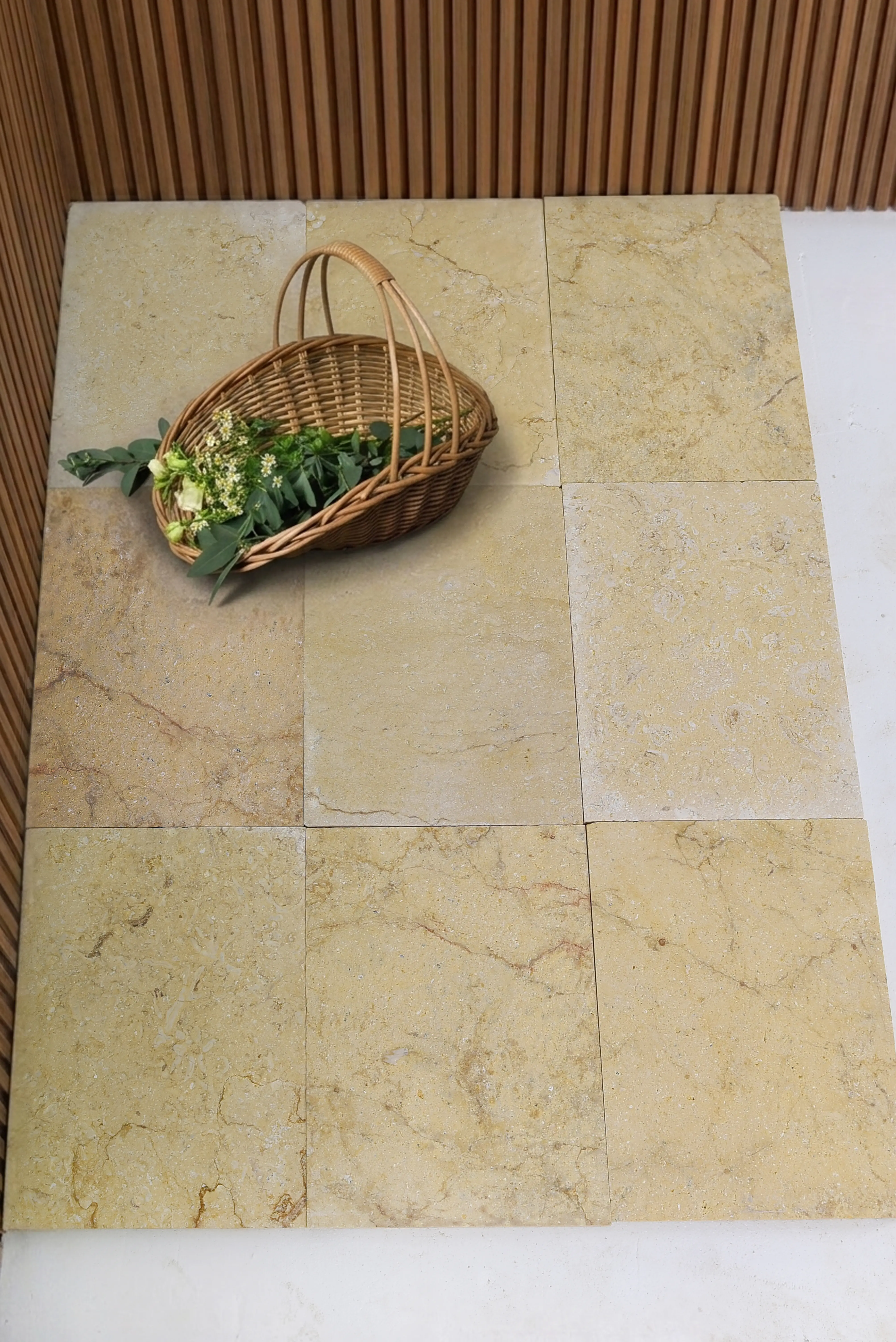
Long-term maintenance costs for honed travertine tiles don’t live only in your cleaning supply budget — they’re shaped significantly by your original material and sourcing decisions. Thicker tiles (3/4-inch and above) can be re-honed multiple times over their service life, extending the restoration window by decades. Thinner tiles (3/8-inch nominal) may only withstand one professional re-honing before they’re too thin for further material removal. Specifying the right thickness at the outset is a value-engineering decision with a long payback horizon.
Freight distance and material availability also affect ongoing project costs in ways that aren’t obvious at the planning stage. Honing travertine tile that needs replacement due to cracking or irreversible staining must match the original batch closely — colour, fill density, and surface finish can vary between quarry cuts. Ordering from a national supplier with stable warehouse inventory and reliable batch documentation makes replacement matching significantly more predictable than sourcing from regional distributors with inconsistent stock. At Citadel Stone, we maintain warehouse inventory with quarry-run batch records precisely because replacement tile matching is one of the most common sourcing challenges our clients face years after initial installation. Truck delivery schedules and freight costs also factor into your total project budget when sourcing replacement tiles across long distances — consolidating orders and confirming stock availability before committing to timelines avoids costly delays.
Labor market variation is another factor worth building into your restoration budget. Stone restoration contractors are not evenly distributed across all markets, and in areas where natural stone flooring is less common, specialist labor can command a significant premium. This dynamic makes the original installation quality — proper base preparation, correct adhesive selection, adequate grout joint sizing — even more critical, since correction costs more where qualified contractors are harder to source.
For projects that incorporate travertine across multiple applications, consistency in surface finish specification simplifies your ongoing care routine. Products like our honed travertine surfaces follow the same sealer and cleaning protocols as interior flooring, which means your maintenance crew works with a single product system rather than managing multiple finish-specific protocols across the same project.
Seasonal and Environmental Care Considerations
Honed travertine flooring installed in freeze-thaw regions requires additional vigilance around moisture management at transitions — exterior thresholds, French doors, and covered patios where rain splash reaches the stone. The pore structure that makes travertine beautiful also makes it susceptible to spalling if water saturates the tile and then freezes. Verify that your penetrating sealer is rated for freeze-thaw resistance if the installation includes any semi-exposed areas. Interior-rated sealers are not equivalent to exterior-rated formulations, and mixing them up is a field error that shows up two winters later as surface flaking.
- In high-humidity environments, allow extra cure time before resealing — moisture content above 0.5% in the stone will interfere with sealer penetration and bonding
- Direct UV exposure on interior honed travertine tiles near large glazed facades can accelerate void-fill discolouration over time — factor this into your inspection schedule
- Radiant floor heating systems require an extended temperature acclimation period before and after sealer application — apply sealer with heating systems off and stone at ambient room temperature
Honed Travertine Tile: Spec Wrap-Up
Your honed travertine tile will perform for 20–30 years without significant intervention if you hold to three non-negotiable practices: penetrating sealer maintained on a consistent cycle, pH-neutral cleaning chemistry used exclusively, and immediate response to spills before they penetrate past the sealer layer. The surface finish itself — that characteristic low-sheen matte — is both the aesthetic appeal and the technical vulnerability. Protecting it doesn’t require complicated chemistry; it requires discipline and the right products applied correctly. As you plan your stone project, related applications can inform your material decisions — travertine tile in outdoor settings explores how the same material performs under different environmental and specification demands. Sourced from internationally sourced quarries, Citadel Stone provides honed travertine that accepts penetrating sealers without altering its natural low-sheen tone.
Related reading: travertine coping heat comparison · laying travertine tile · travertine bullnose pool coping.