Scabos travertine pool coping rewards precise specification — the edge profile, finish, and thickness you select at the drawing stage determine whether the installation performs cleanly for two decades or starts showing stress fractures within five years. Most specifiers focus on aesthetics first, which is understandable given how striking the warm rust, walnut, and cream striations of scabos travertine pool coping look against pool water. But the palette decisions and the technical decisions are inseparable here, and getting both right simultaneously is what separates a well-executed project from a costly callback.
What Scabos Travertine Brings to Pool Coping
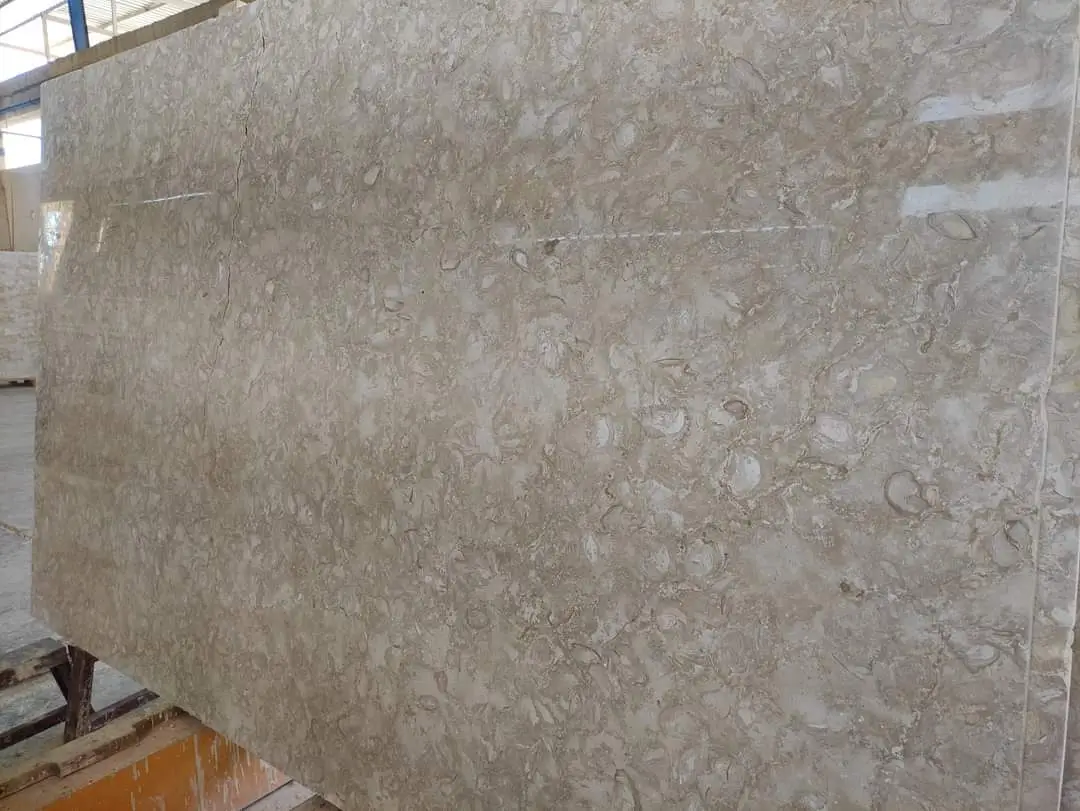
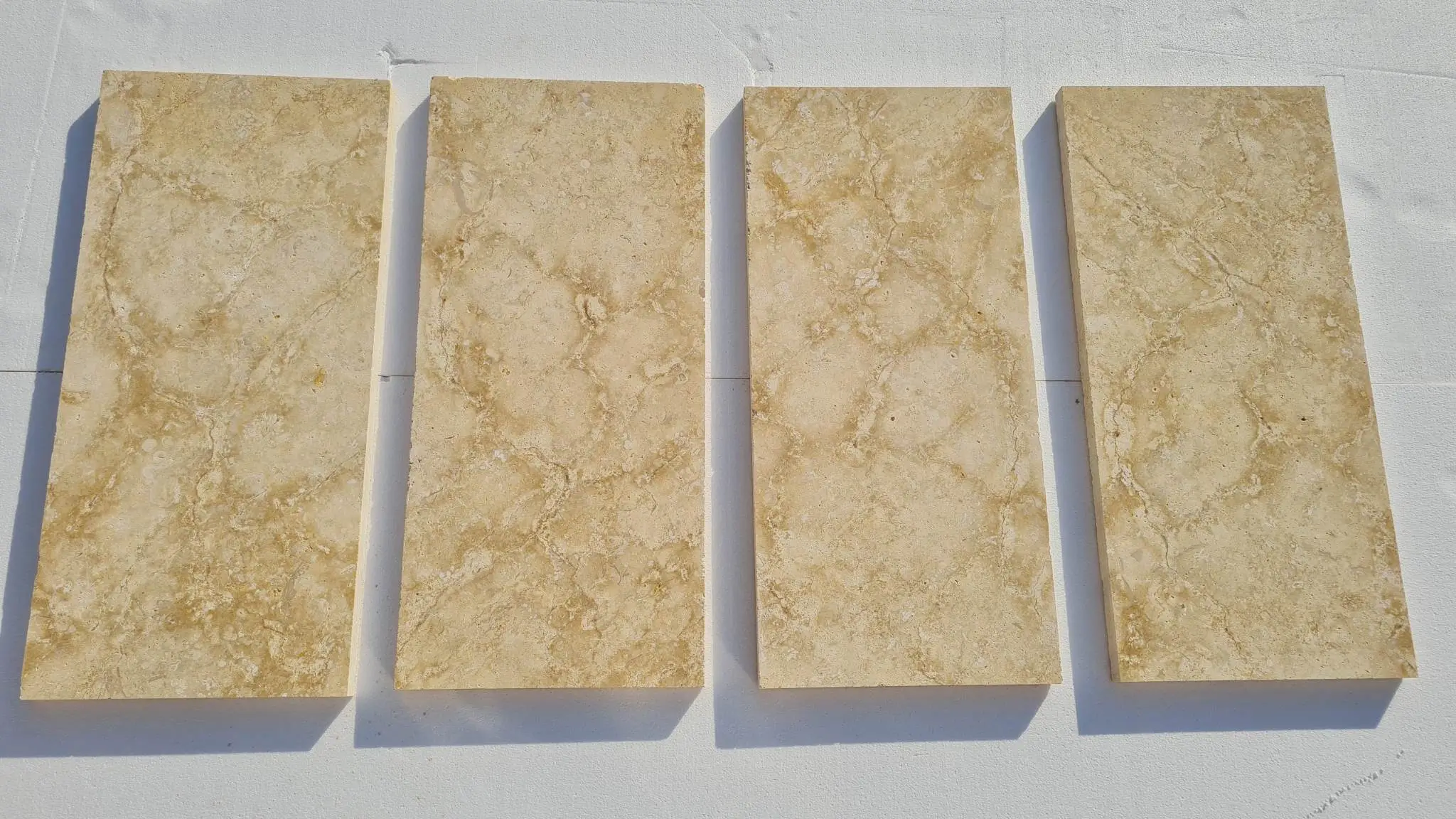
The color movement in scabos travertine is unlike most other natural stones in the pool coping category. You’re working with a material that shifts through amber, sienna, chocolate brown, and creamy beige within a single slab — the variation isn’t random noise, it’s geologically structured banding that gives installations a coherent, layered visual depth. That banding runs predictably enough that experienced specifiers can orient pieces to create a flowing visual narrative around a pool perimeter, or deliberately break the pattern for a more organic, irregular look.
Field performance data on scabos pool coping consistently shows compressive strength in the 6,000–9,000 PSI range, which is well above the threshold for residential and commercial pool deck applications. The open-pore structure that creates travertine’s characteristic voids also moderates surface temperatures — a meaningful advantage in high-UV environments where dense stone alternatives can reach temperatures that deter barefoot use. According to Natural Stone Institute travertine pool paving performance data, travertine’s pore structure and mineral composition make it among the most suitable natural stones for outdoor aquatic applications.
Scabos travertine pool coping comes in both filled and unfilled versions. For pool coping specifically, filled is almost always the right call — unfilled material around water introduces maintenance complexity and creates pathways for chlorinated water to work into the stone body over time. Specify filled-and-honed or filled-and-brushed for the working surface.
Edge Profiles: Which One Works for Your Pool Design
The edge profile on scabos travertine pool coping is a structural and safety specification, not just a finishing detail. Your profile choice affects how water drains away from the coping surface, how the edge holds up to chair leg impact and pool equipment contact, and how the visual transition between the coping and the pool shell reads from water level.
Bullnose Edge Profile
Bullnose remains the dominant profile for residential pool coping because it eliminates sharp corners at a zone where people grip and push off. The rounded leading edge on scabos travertine pool coping complements the warm tonal range of the material — the soft curve catches light differently across the day, which accentuates the amber and walnut striations rather than cutting them off abruptly. Specify a full bullnose (180-degree radius) rather than a demi-bullnose for pool edge applications — the half-round version leaves a small flat face that can trap debris and moisture at the most vulnerable edge point.
Tumbled Edge and Chiseled Edge
Tumbled and chiseled edge profiles suit pool installations where a more rustic, Mediterranean aesthetic is the design intent. The chiseled edge in particular works extremely well with scabos travertine’s natural veining — the irregular break line along the front edge mimics the stone’s own internal geology, creating a visually seamless character between the surface finish and the edge. One practical consideration: chiseled edges have more micro-surface variation at the nosing, which means confirming that your pool shell waterline tile or plaster line is equally irregular in character is essential, or the mismatch reads as unfinished rather than intentional.
Double Bullnose and Cantilevered Profiles
Double bullnose profiles — rounded on both the top leading edge and the bottom — are specified where the coping overhangs the pool shell and the underside of the coping is visible from inside the pool. This is common in infinity-edge and vanishing-edge pool designs. Cantilevered profiles extend further over the water line and typically require 2-inch minimum thickness to maintain structural integrity at the overhang. For scabos travertine in cantilevered applications, verify the stone’s flexural strength against the specific overhang dimension — the standard spec range is adequate for overhangs up to about 2.5 inches, beyond which consulting material test data for the specific quarry batch is advisable.
Finish Selection: Matching Performance to Palette
Finish selection on scabos travertine pool coping does three things simultaneously: it determines slip resistance, it affects how the palette reads in sunlight, and it influences long-term maintenance requirements. Getting all three right requires understanding how the different finish processes interact with scabos material specifically — the high iron oxide content that drives the warm color range reacts differently to mechanical finishing than lighter travertine varieties.
- Honed finish: smooth, matte surface with a static coefficient of friction typically between 0.42 and 0.60 depending on the specific stone batch — adequate for pool coping when properly sealed, and the finish that best displays the full tonal range of scabos striations
- Brushed finish: light mechanical texturing that opens the surface slightly, increasing friction coefficient to 0.55–0.72 range while maintaining most of the visual warmth — the practical choice when barefoot slip resistance is the primary concern
- Tumbled finish: full surface distressing that produces a weathered, aged aesthetic — friction values are high but the irregular surface texture complicates sealing and increases maintenance frequency near pool water
- Sand-blasted finish: aggressive texture that maximizes slip resistance but visually mutes the scabos palette, washing out the amber and sienna tones in favor of a flatter, lighter appearance — rarely specified for scabos because it negates the material’s primary visual advantage
The ASTM C1527 travertine dimension stone standard provides the framework for evaluating finish quality and dimensional tolerances in travertine coping — it’s worth referencing when writing your project specification to establish minimum acceptance criteria for delivered material.
For most scabos travertine pool coping projects, a brushed finish represents the best balance. The characteristic warm palette that makes scabos distinctive is preserved, friction values meet pool deck safety thresholds, and sealing frequency is reduced compared to a honed finish in a high-chlorine environment.
Thickness and Sizing Standards for Pool Coping
Standard scabos travertine pool coping ships in 12-inch and 16-inch face widths with thicknesses of 1.25 inches (3 cm) and 2 inches (5 cm). The 1.25-inch material works for standard residential applications where the coping sits on a solid bond beam with continuous substrate support. The 2-inch material is specified for cantilevered conditions, high-traffic commercial pools, or any application where the substrate has discontinuities that create unsupported spans.
Length tolerance is a specification point that doesn’t always get the attention it deserves. Natural travertine pool coping pieces are cut to nominal lengths — typically 12, 16, or 24 inches — but real-world dimensional variation runs ±⅛ inch per piece. Across a long pool perimeter, that variation accumulates unless you specify tight-tolerance fabrication or plan your joint layout to absorb it. Specify a target joint width of ⅜ inch with a range of ¼ to ½ inch to give yourself workable tolerance without creating wide, visually distracting joints.
For the travertine exterior tile sections of the pool deck adjoining the coping, maintain consistent thickness — mixing 1.25-inch coping with 20mm (¾-inch) field tile requires careful setting bed management to achieve a flush transition at the coping-to-deck joint. That transition is a common point of long-term failure if the height differential isn’t handled correctly in the setting mortar.
Subgrade and Ground Preparation: The Variable Most Specs Miss
Your coping specification doesn’t exist in isolation — the ground conditions beneath the pool shell and pool deck directly affect coping performance over time. This is an area where field experience diverges significantly from catalog specifications, and it’s worth addressing directly.
Expansive clay subgrades are the most common cause of premature coping failure in pool installations across large portions of the country. Clay soils expand significantly with moisture uptake — in some clay-heavy regions, active clay layers can exert lateral and vertical pressures that exceed 2,000 psf under saturation conditions. That movement translates to the pool shell, which transmits stress to the bond beam, which is exactly where your coping sits. On clay subgrades, the standard approach of bedding scabos travertine pool coping directly to the bond beam in a rigid mortar system creates a rigid connection in a dynamically moving substrate — a mismatch that produces cracking and displacement over 3–7 years even when the installation looks perfect at completion.
- On expansive clay sites, specify a flexible polymer-modified thin-set at the coping-to-bond-beam interface rather than standard cement mortar — the flex accommodation reduces transmitted stress significantly
- Sandy or loose granular subgrades create a different problem: subsidence rather than expansion — your concrete bond beam can settle unevenly, producing lippage and cracking at coping joints within the first 2–3 years without adequate compaction protocols
- Rocky or caliche subgrades are generally stable but create drainage challenges — water trapped between impermeable rock and the pool shell has nowhere to go, which increases hydrostatic pressure and can cause coping to tent or pop if drainage pathways aren’t engineered into the design
- For all soil types, confirm that the pool shell contractor has addressed subgrade preparation before scheduling coping installation — arriving to install on a freshly poured but insufficiently cured bond beam is a field problem that compromises adhesion regardless of material quality
Checking warehouse stock availability before your project schedule locks in is equally important — scabos travertine pool coping in specific edge profiles and finishes doesn’t always sit in deep inventory. At Citadel Stone, we recommend confirming availability 4–6 weeks before your installation date to avoid schedule disruption.
Color Coordination and Palette Planning Around the Pool
The scabos palette occupies a warm, earthy register that creates strong visual contrast with blue and blue-green pool water — that contrast is one of the primary reasons specifiers choose it. Understanding how to work with the palette across the full pool surround takes the material from simply present to genuinely composed.
The rust and amber tones in scabos travertine read differently in full sun versus shade. In direct sunlight, the warm tones intensify — the sienna and rust bands become prominent, creating a rich, saturated appearance. In shade or overcast conditions, the cream and beige tones become relatively more visible, softening the overall palette. Color coordination decisions therefore need to account for the sun exposure pattern of specific areas of the pool deck, not just a single sample viewed in a showroom.
You can review our scabos coping and finish options to evaluate the range of tonal variation across current inventory — quarry batches shift in color intensity, and viewing actual warehouse stock is always more reliable than catalog samples when you’re making final palette decisions for a high-visibility project.
For the pool deck field tile, travertine flooring tiles in a complementary ivory or classic travertine tone work well as a neutral field that lets the scabos coping serve as the visual accent at the water’s edge. Going too dark in the field tile can flatten the composition and make the pool area feel heavier than intended — most successful installations keep the field material 2–3 tonal steps lighter than the coping.
Travertine Tile Installation: What Pool Coping Demands
Travertine tile installation at the pool coping zone involves more variables than standard interior or exterior tile work, and the margin for error is smaller because the material is continuously exposed to water, temperature cycling, and chemical exposure simultaneously. Your installation specification needs to address all three vectors.
Bond coat coverage is the most common installation failure point. Pool coping requires minimum 95% adhesive contact on the back of each piece — not the 80% minimum that passes muster for interior travertine flooring tiles. The additional 15% matters because unsupported voids under pool coping become water infiltration pathways, and once water is cycling through a void under a coping piece, freeze-thaw regions will pop that piece off within a single winter season. Use a notched trowel back-buttering technique in addition to combing the substrate to consistently achieve the 95% threshold.
- Expansion joints at coping corners and at maximum 12-foot intervals along straight runs — do not substitute grout for expansion joint material at these locations regardless of pressure from the pool contractor to simplify the installation
- Polymer-modified mortar with a minimum shear bond strength of 400 PSI for all pool coping applications — standard unmodified thin-set is not specified for immersion-adjacent applications
- Allow minimum 28-day cure time on new concrete bond beams before setting coping — residual moisture vapor from fresh concrete compromises bond coat adhesion and is a primary cause of early delamination
- Seal all grout joints with a penetrating epoxy grout or specify a sanded, polymer-fortified grout formulated for wet immersion zones — standard sanded grout will erode under pool chemical exposure within 18–24 months
According to PHTA pool deck stone and coping safety standards, pool coping installations are subject to specific safety and structural performance requirements that go beyond general tile installation guidelines — referencing these standards in your project specification establishes clear acceptance criteria for the installing contractor.
Sealing and Long-Term Maintenance for Scabos Coping
Sealing scabos travertine pool coping isn’t optional — it’s a performance-critical step that directly determines how the warm palette holds up under continuous pool chemical and UV exposure. The iron oxide minerals driving the amber and rust tones are susceptible to bleaching from chlorine exposure over time, and an unprotected surface will show measurable color fade within 2–3 seasons in active pool environments.
Specify a penetrating impregnator sealer with a proven resistance to chlorine, bromine, and salt water — not a topical coating sealer. Topical sealers on pool coping are a recurring maintenance problem because they trap moisture under the film layer, which leads to clouding, peeling, and in freeze-thaw regions, accelerated delamination. Penetrating sealers work from within the stone matrix, preserving the natural surface texture and friction characteristics while providing chemical barrier protection. Reapplication cycles for penetrating sealers on pool coping run 18–24 months depending on bather load and chemical intensity — mark the maintenance schedule into your handoff documentation so the property owner doesn’t let it lapse.
Citadel Stone’s technical team advises testing any sealer on a small, inconspicuous piece of the actual delivered stone before committing to full application — scabos travertine’s iron-rich composition can react subtly with certain sealer formulations, producing a slight darkening or wet-look appearance that may or may not align with the design intent. Better to confirm on a test piece than discover the effect after sealing 300 linear feet of coping.
Ordering, Logistics, and Project Planning
Scabos travertine pool coping has a narrower supply chain than commodity travertine varieties — the specific quarry regions producing authentic scabos coloration are concentrated, and batch consistency across multiple orders isn’t guaranteed unless you’re sourcing from a supplier with dedicated quarry relationships. This matters for projects where you’re ordering in phases, or where you may need additional material for repairs years down the line.
Your order quantity should include a 10% overage minimum — 15% for projects with complex perimeter geometry involving multiple mitered corners or radius cuts. Scabos coping returns are straightforward, but re-ordering to match an existing installation is a color-matching challenge that overage inventory eliminates. Confirm with your supplier whether warehouse stock is from a single quarry batch before finalizing your order — mixing batches mid-project is the most common source of visible color inconsistency complaints in completed pool installations.
Truck delivery logistics for pool coping require specific access planning. Coping material ships on pallets and requires a lift gate truck or forklift-accessible delivery point — confirm site access before your delivery is scheduled. A misdirected truck on a tight residential site creates real-time project delays that compound into schedule and cost issues for all trades involved. Citadel Stone ships travertine pool coping nationally, with lead times typically running 5–10 business days from warehouse to site for in-stock profiles and finishes.
Before You Specify Scabos Travertine Pool Coping
Scabos travertine pool coping rewards the specifier who treats material selection, edge profiling, finish specification, and subgrade assessment as a connected system rather than independent checklist items. The palette decisions are genuinely exciting — few natural stones deliver scabos travertine’s warmth and tonal complexity at the water’s edge — but those decisions land well only when the technical foundation is equally considered. Verify your bond beam conditions, confirm your subgrade type and its implications for movement accommodation, select your edge profile to match both the design aesthetic and the structural constraints, and write your installation spec to the 95% bond coverage and expansion joint standards the pool environment demands.
For projects where a cooler, more contemporary palette better serves the design intent, gray travertine coping for contemporary pools covers how the cooler travertine spectrum performs in similar aquatic environments — worth reviewing if you’re weighing palette options across multiple projects or presenting alternatives to a client. The warm, striated palette of Citadel Stone scabos coping is known for softening the look of concrete pools without requiring additional color treatments.
Related reading: Bullnose vs Square-Edge Travertine Pool Coping · Choosing Travertine Pool Coping Colors for Your Deck.