Why Thickness and Finish Define Performance
Gray travertine pool coping earns its place on high-specification pool projects not just through visual appeal but through a specific combination of physical properties that most generic coping materials can’t replicate. The thermal expansion coefficient of travertine sits around 4.9 × 10⁻⁶ per °F — low enough that day-to-night temperature swings, which can span 40°F or more in many climates, create only minimal dimensional movement at the joint interface. That number matters enormously when you’re specifying gray travertine pool coping that bonds to both a pool bond beam and a deck field simultaneously. Get your expansion joint spacing wrong and you’ll see lippage or debonding within three seasons, regardless of how well the mortar bed was set.
Selecting the Right Coping Profile for Your Pool Edge
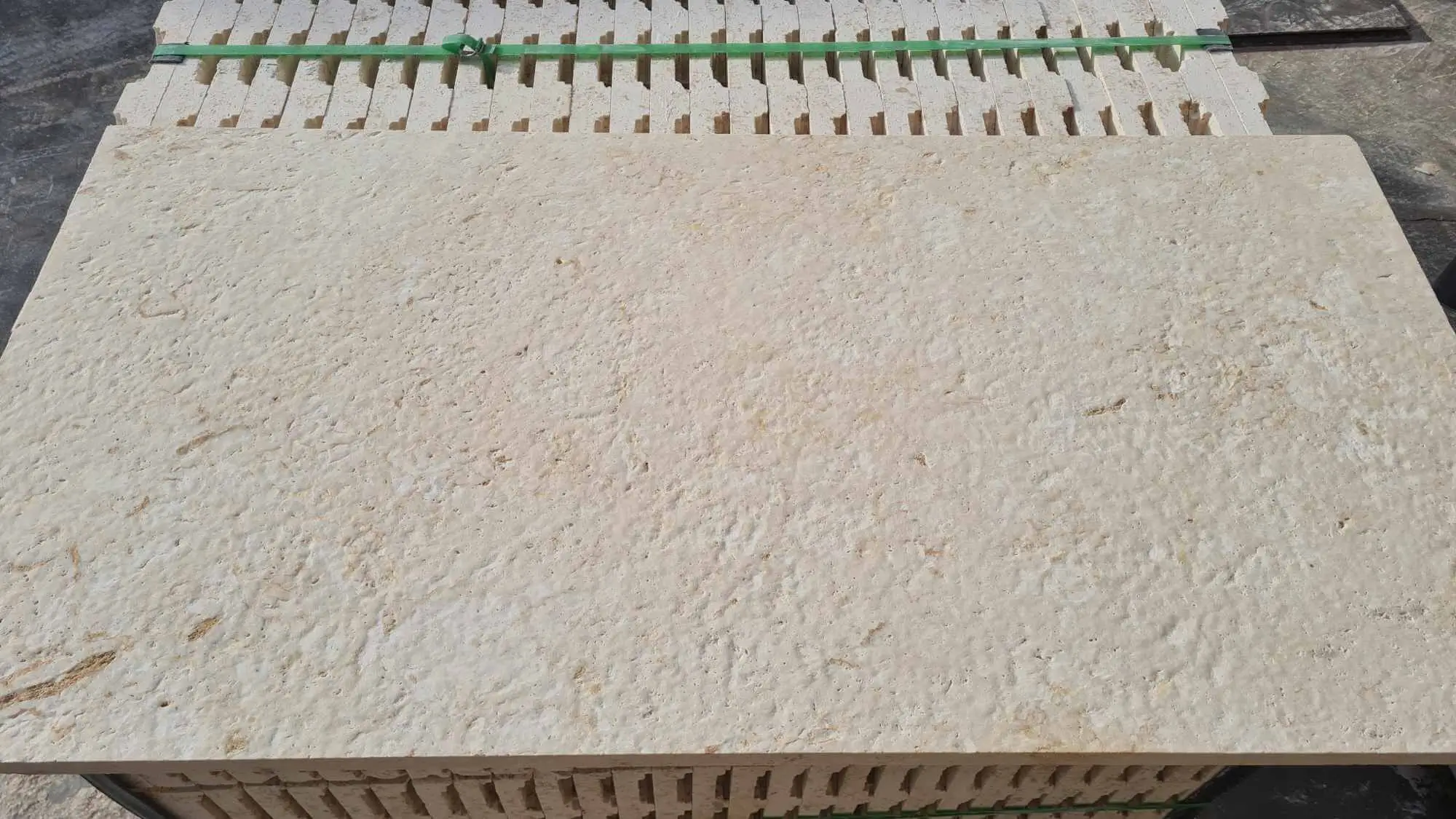
Your profile choice does more functional work than most designers acknowledge upfront. The two dominant profiles for gray travertine pool coping are the bullnose and the drop-face (also called cantilever) edge. Bullnose profiles suit rectilinear contemporary pools where a flush, continuous horizontal plane is the design goal. Drop-face profiles create a visible overhang — typically 1.5 to 2 inches — that hides the pool shell’s bond beam and provides a natural hand-grip point for swimmers.
Thickness is the next variable. Standard residential coping comes in 2-inch nominal thickness, but for cantilevered profiles spanning more than 4 inches beyond the bond beam, specifying 3-inch material is the correct call. Travertine’s modulus of rupture under ASTM C1528 governs this decision — thinner pieces under cantilevered load cycles will develop hairline fractures at the nosing within a few years. The 3-inch spec costs more upfront but eliminates a failure mode that’s expensive to remediate once the pool surround is finished.
Finish Options and Slip Safety at the Water’s Edge
The finish specified for gray travertine pool coping directly controls both slip resistance and long-term maintenance burden. Tumbled finishes produce a naturally aged surface with micro-texture that delivers a static coefficient of friction above 0.6 when wet — the minimum threshold recommended for pool-edge applications. Honed finishes look cleaner and suit contemporary pool designs, but their static COF when wet can drop to 0.42–0.50 depending on fill density, which sits uncomfortably close to the lower bound for barefoot wet use.
Per PHTA pool deck and coping safety standards, pool coping surfaces should maintain a minimum COF of 0.5 under wet conditions — a threshold tumbled travertine clears comfortably, and honed travertine approaches but doesn’t always exceed without a penetrating sealer that adds micro-grip. Brushed finishes split the difference well: you get a controlled linear texture that reads as refined without sacrificing the friction coefficient needed at the water’s edge.
Travertine Porosity and the Sealing Protocol That Protects It
Travertine’s interconnected pore structure — the feature that makes it visually distinctive — is also the property requiring the most attention in a pool environment. Chlorinated water, salt chlorination brine, and pool chemicals are all mildly aggressive to calcium carbonate if they’re allowed to pool in surface voids. Your sealing protocol needs to address this specifically, not generically.
Apply a penetrating silane-siloxane sealer before installation and repeat every 18–24 months in high-use pools. Avoid topical coatings — they trap moisture vapor migrating up through the stone and blister within two seasons in pools with subgrade water tables. According to ASTM C1527 travertine dimension stone standard specifications, absorption rates for travertine typically range from 0.40% to 1.20% by weight — higher-absorption material warrants a denser sealer application cycle. Testing your specific lot with a water-drop absorption test before installation takes five minutes and tells you exactly where your material falls in that range.
Base Preparation and Joint Spacing for Thermal Cycling
Here’s where most pool coping installations run into trouble — not at the material selection stage, but at the structural preparation stage. Gray travertine pool coping set over a rigid mortar bed without adequate expansion joints will experience cumulative stress from thermal cycling that no stone can absorb indefinitely. Temperature ranges between early morning lows and peak afternoon highs can exceed 50°F in many regions. Over a full calendar year, those daily cycles accumulate into significant movement at the bond beam interface.
The practical specification is straightforward: place expansion joints every 8 to 10 linear feet along the coping run, and always at internal corners and pool-to-deck transitions. Use a polyurethane or polysulfide joint sealant rated for pool chemical exposure — standard silicone fails within 18 months in chlorinated environments. Your mortar bed should be a polymer-modified thin-set rather than straight Portland mix; the polymer component adds the flex tolerance that keeps the bond intact through freeze-thaw cycles in regions where overnight temperatures drop below freezing seasonally.
You can review a range of our gray travertine pool edge options to match profile, finish, and thickness to your specific pool geometry before committing to a layout plan.
Color Consistency and Veining in Gray Travertine
Grey travertine pool coping varies more in tone and vein pattern than most quarry brochures suggest. The gray palette spans from warm greige with gold undertones to cool blue-gray with silver veining — and both can come from the same quarry in different extraction blocks. For a coping run of 80 to 150 linear feet, visual inconsistency between pieces is the most common complaint heard after installation. It’s not a defect — it’s a quarry-geology reality that requires proactive specification.
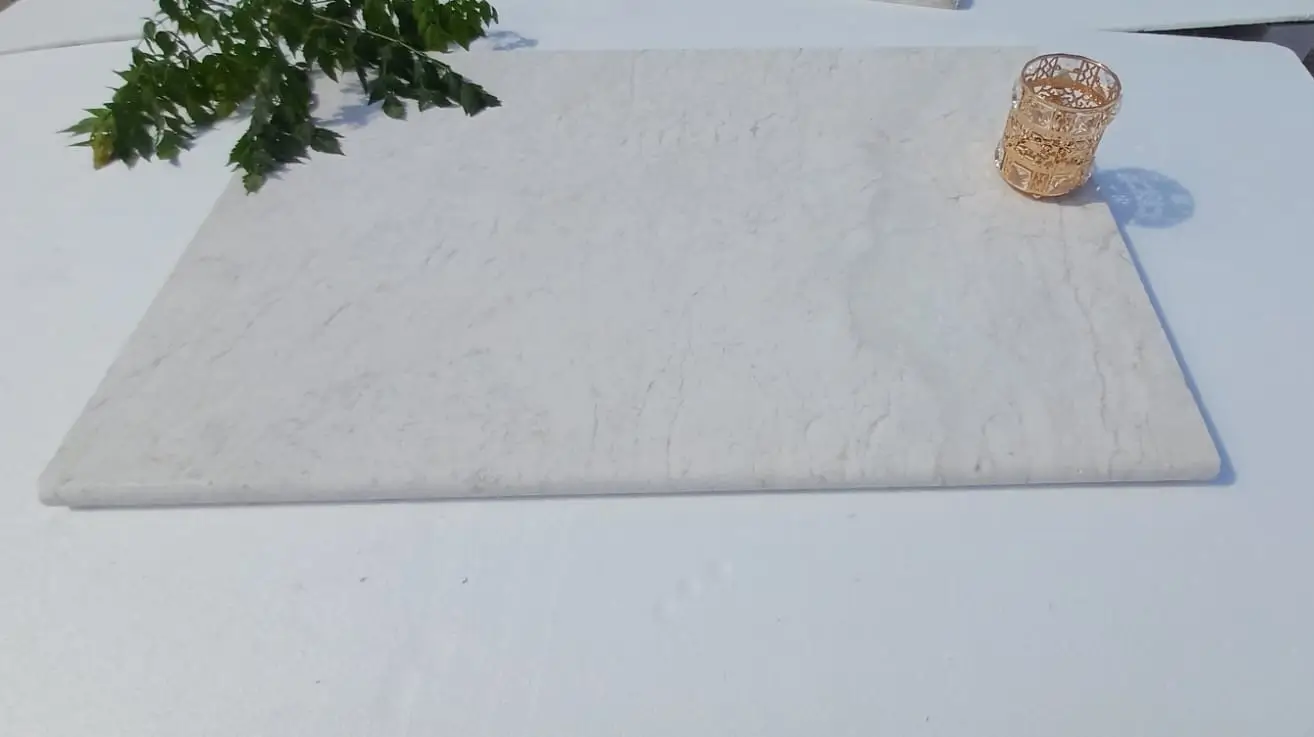
The solution is batch ordering from a single quarry lot rather than drawing from mixed stock. At Citadel Stone, we source grey travertine pool coping in coordinated lot pulls, which means the material arriving on your truck comes from the same quarry extraction block. Dry-laying the pieces before setting — fanning them across the pool deck to blend tone gradients — takes an extra hour but eliminates the patchy appearance that’s impossible to fix once the mortar cures.
Extending the Material Palette: Travertine Tile for Bathroom Applications
Designers and homeowners who specify gray travertine pool coping frequently carry the material indoors as well. Travertine tile for bathroom applications — floors, feature walls, and wet-area surrounds — creates a cohesive indoor-outdoor visual language that’s particularly effective in pool-adjacent bathrooms and changing areas. The specification requirements shift slightly indoors: absorption and COF remain relevant, but thermal cycling is replaced by moisture cycling from steam and humidity as the primary performance stressor.
For bathroom floors using the same gray travertine family, specify filled and honed finish to close surface voids that would otherwise trap soap residue. The Natural Stone Institute travertine properties and outdoor suitability guidance confirms that filled travertine performs well in wet interior environments when sealed appropriately, with maintenance cycles of 12–18 months for travertine tile for bathroom floor applications. This is shorter than the pool coping cycle because bathroom cleaning chemicals are often more alkaline than pool water.
How to Lay Travertine Floor Tile for Consistent Results
Whether extending gray travertine indoors or planning a complementary interior floor, the process to lay travertine floor tile correctly starts with substrate flatness. Travertine is unforgiving of lippage because its surface texture draws the eye to height variation between adjacent pieces. Your substrate must meet a maximum 1/8-inch deviation over a 10-foot straightedge before any tile work begins — fix high spots by grinding, not by building up mortar beneath them.
- Use back-buttering on every piece: apply a skim coat of thin-set to the tile back in addition to the combed bed to achieve full-coverage bond above 90%
- Maintain consistent joint widths — 1/16 inch for honed material, 1/8 inch for tumbled — to allow for the minor dimensional variation typical in natural stone
- Allow mortar to cure for a minimum of 48 hours before grouting in cooler ambient temperatures, as travertine’s low thermal conductivity slows the cure rate at the bed interface
- Fill all surface voids with matching grout during the grouting stage — unfilled voids in floor applications collect grit that acts as an abrasive and accelerates finish wear
- Seal before grouting if working with a topcoat-sensitive stone lot — this prevents grout haze from bonding into the open pore structure
Knowing how to lay travertine floor tile correctly from the substrate up is the single greatest factor in avoiding callbacks. Checking warehouse stock levels before scheduling an installation is also worth doing early — travertine lots from the same dye-batch can be depleted quickly on larger projects, and substituting a second lot mid-floor creates a tonal break that no amount of blending can fully disguise.
Ordering, Delivery, and Project Scheduling
Logistics planning for gray travertine pool coping differs from standard paver orders in one important respect: coping pieces are larger-format, heavier, and more susceptible to edge chipping in transit than field pavers. Delivery should be scheduled with unloading equipment on site — a pallet jack at minimum, a forklift for orders above 500 square feet. Pieces transported loose without pallet wrapping almost always arrive with corner damage that compromises the nosing detail.
Citadel Stone ships gray travertine pool coping on banded pallets with corner protection, which reduces transit damage significantly compared to loose-loaded deliveries. Lead times from warehouse stock typically run 5 to 10 business days for standard profiles, with custom fabricated drop-face or specialty bullnose profiles requiring 2 to 3 additional weeks. Build that window into your project schedule before committing a pool contractor to a coping installation date.
Parting Guidance on Gray Travertine Pool Coping Specification
Gray travertine pool coping rewards precise specification work at every stage — profile selection, thickness calculation, finish choice, joint spacing, and sealer selection each contribute to whether the installation reaches 20 years or requires remediation at year eight. The material itself is genuinely durable when the surrounding decisions are made correctly. Focus specification attention on thermal cycling accommodation, slip-resistance verification, and batch-consistent material sourcing — those three factors account for the majority of field performance variation encountered in practice. For planning the full tile scope of a pool project, calculating travertine tile quantities for pools is a useful next step to ensure your material order covers the full surround without unnecessary waste. Matching veining across a full coping run is a consideration Citadel Stone addresses by offering batch-consistent gray travertine pulled from the same quarry lot.
Related reading: travertine pool coping colors · travertine bullnose pool coping.