

What Limestone Edging Stone Actually Costs
Limestone edging stone pricing isn’t a single number — it’s a range driven by thickness, profile, finish, and how much material your project genuinely needs. You’ll typically encounter pricing between $8 and $28 per linear foot for standard residential edging profiles, with premium hand-cut or tumbled pieces pushing past $35 per linear foot when sourced from specialty quarries. That spread exists because limestone edging stone isn’t a commodity product: formation density, calcium carbonate purity, and quarry origin all create meaningful performance differences that directly affect how long your installation holds up under mechanical stress. Understanding where your project sits within that range — and why — is what separates a specification that delivers on budget from one that surprises you mid-project.
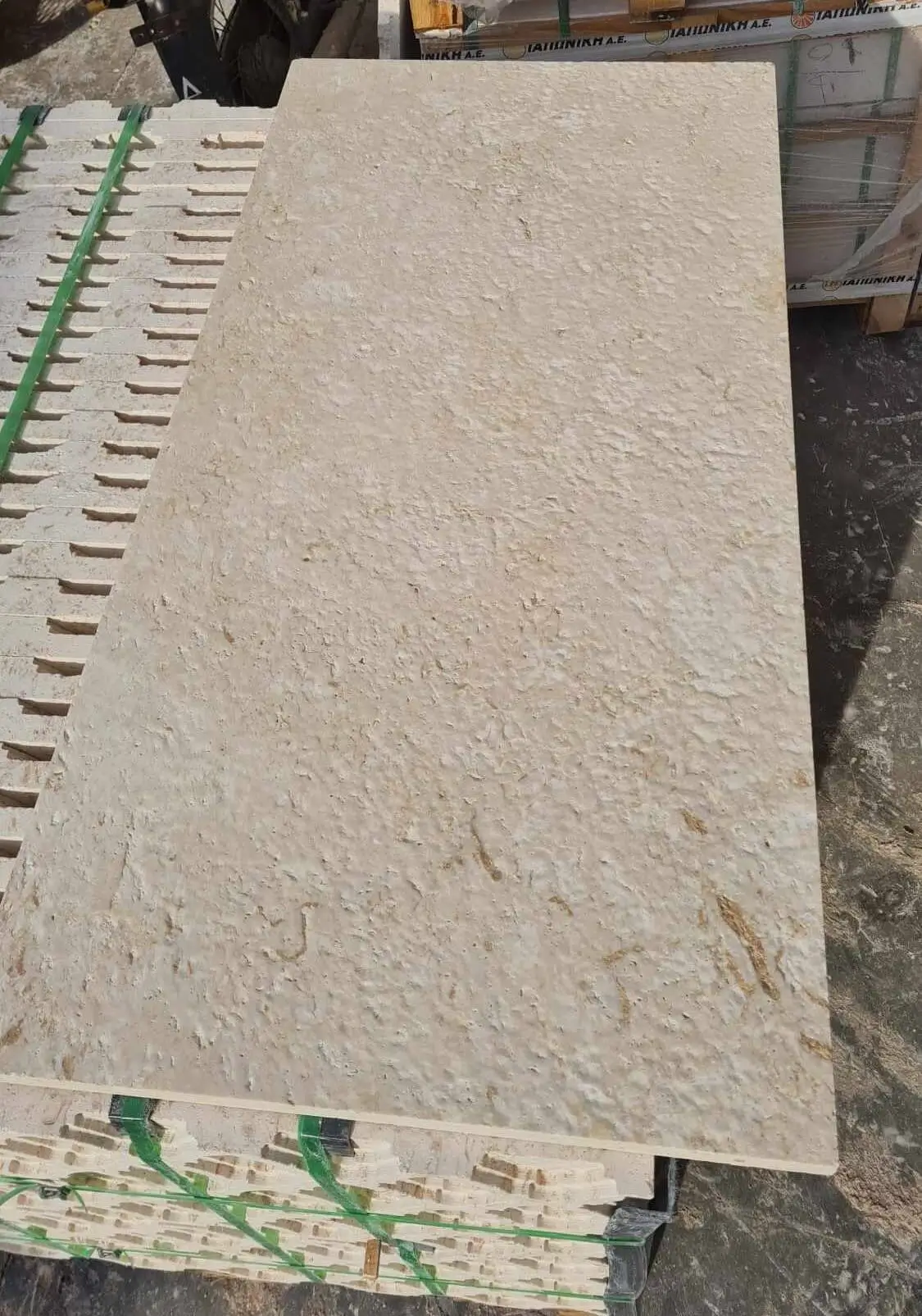
Cost Variables That Move the Price
Several factors shift the cost of limestone edging stones well beyond the base material price. Each one is worth evaluating before you commit to a quantity or profile.
- Thickness: 2-inch edging handles standard residential bed transitions and light vehicle overhang. Stepping up to 3-inch or 4-inch material adds 30–50% to unit cost but significantly improves resistance to lateral displacement under freeze-thaw cycles and wind-driven soil movement.
- Profile type: Straight-sawn pieces are the most economical. Bullnose, beveled, and hand-chiseled profiles add $3–$8 per linear foot in fabrication cost but improve joint performance under impact — hail and wind-thrown debris cause chipping at sharp corners that rounded profiles largely avoid.
- Finish: Sawn or split-face finishes cost less and provide natural grip. Honed or polished finishes increase the price and require more careful sealing to prevent saturation in wet conditions.
- Pallet quantity: Ordering by the full pallet typically reduces per-unit cost by 12–18% compared to partial pallet pricing, and it gives you buffer material for field cuts and future repairs.
- Delivery logistics: Your site’s truck access — tight residential lanes, weight-restricted roads, or long haul distances from the warehouse — can add meaningful freight charges that aren’t visible in the per-linear-foot price you see listed.
Thickness and Density: The Structural Case
Field experience consistently shows that specifiers underestimate how much lateral force limestone rock edging absorbs over its service life. Edging isn’t static — it resists soil expansion, frost heave, root pressure, and the lateral thrust of wind-driven saturated soil during storm events. A 1.5-inch nominal piece set in compacted gravel handles normal residential loads, but it’s genuinely marginal when freeze-thaw cycling occurs across multiple seasons or when storm runoff saturates the adjacent bed soil repeatedly.
The material’s compressive strength — typically 8,000–15,000 PSI for quality limestone depending on formation density — is rarely the failure point. The failure mode is almost always joint displacement or tipping, which traces back to insufficient base depth or undersized section thickness, not stone fracture. According to NSI limestone properties and specifications, formation density directly influences absorption rate, which in turn affects how much freeze-thaw cycling a piece can sustain before surface spalling begins. Specifying 3-inch material where your budget tempts you toward 1.5-inch is one of the most cost-effective decisions you can make over a 15-year horizon.
Limestone Rock Edging Installation Cost Breakdown
Material cost is only part of what you’re budgeting. Installation for limestone rock edging runs $6–$14 per linear foot depending on base preparation complexity, and that number moves considerably when site conditions complicate the work.
- Base preparation: A properly compacted aggregate base — minimum 4 inches for standard residential applications — is non-negotiable. Skipping or reducing this step is the single most common reason edging installations fail within five years.
- Setting method: Dry-set into compacted gravel is standard for landscape applications. Mortar-set or concrete-footed installations cost more but are appropriate where lateral forces are elevated — particularly on slopes or in areas with documented soil movement history.
- Joint treatment: Polymeric sand joints cost more than standard sand but resist wash-out under wind-driven rain and maintain joint integrity through seasonal soil movement cycles far more reliably.
- Labor rates: Installation labor typically ranges from $45–$85 per hour depending on crew skill level and project complexity. More complex profiles and tighter radiuses take longer to set correctly.
- Removal of existing edging: If you’re replacing deteriorated material, demo and disposal adds $2–$5 per linear foot to your total.
How Storm and Wind Conditions Affect Your Specification
Most edging specifications focus on aesthetics and freeze-thaw performance — and that’s appropriate in many contexts. But if your project is in an area with documented storm exposure, severe wind events, or intense seasonal rainfall, your limestone edging stone specification needs to account for mechanical stress in ways that standard residential guidelines don’t fully address. Wind-driven rain infiltrates joints at rates that calm-weather installations never experience, and the hydrostatic pressure that builds in saturated soil adjacent to edging can generate lateral forces that exceed what lightweight edging profiles are designed to resist.
Edge restraint strength becomes critical in these conditions. The geometry of your edging profile — specifically, how much of the piece is embedded below grade versus exposed — determines how effectively it resists both lateral and rotational displacement under storm-generated soil pressure. A general rule derived from field observation: your embedment depth should be at least 40% of total piece height for exposed or slope-adjacent installations. Hail impact is a secondary but real consideration for exposed limestone surfaces; the material’s fracture behavior under point impact differs significantly from dense igneous stones, and a heavily weathered piece with pre-existing micro-fractures is far more vulnerable than fresh stock. USGS limestone composition data confirms that calcium carbonate mineral structure affects both absorption and fracture resistance — factors that matter most when mechanical stress from weather events compounds normal service loading.
You can browse our limestone rock edging range to review profile dimensions and thickness options before committing to a specification that may need adjustment for your specific exposure conditions.
Cost Per Linear Foot by Application Type
Different applications within the same project carry different cost profiles. Running a single budget number across every edging context in your design will leave you short on premium zones and overspend on straightforward runs.
- Straight bed borders: The most economical application. Sawn limestone edging stones in standard lengths run $8–$14 per linear foot installed, making this the baseline for budget planning.
- Curved or radius installations: Field cutting or sourcing pre-curved pieces adds $4–$9 per linear foot. Tight radiuses below 24 inches are particularly labor-intensive.
- Driveway or paving perimeters: These applications warrant heavier profiles and deeper embedment. Budget $16–$26 per linear foot installed for material with adequate section strength to resist vehicle overhang and occasional impact.
- Step edging and tread nosing integration: Where limestone edging transitions to stone steps, the detailing complexity increases installation cost to $20–$35 per linear foot, but the material integration looks far more resolved than mixing stone families.
- Retaining or raised bed applications: Taller edging acting as a low retaining element requires engineering consideration for lateral earth pressure. Material and installation cost scales with retained height — plan for $22–$40 per linear foot for anything retaining more than 8 inches of soil.
Ordering and Logistics: What Affects Your Delivered Cost
Your delivered cost per linear foot can diverge significantly from the listed price depending on how your order is structured and how it’s shipped. Citadel Stone maintains warehouse inventory that allows standard orders to ship within 1–2 weeks — which is meaningfully faster than the 6–8 week lead time typical of direct import sourcing and gives you flexibility to phase orders around installation schedules rather than holding large volumes on site.
Pallet configuration matters more than most buyers realize. Limestone edging stone ships best when pieces are consistent in length and thickness — mixed pallets with varied profile dimensions increase void space and shift during transit, which is the primary cause of corner chipping on otherwise sound material. Confirm with your supplier that pieces are bundled by profile and length before the truck leaves the warehouse. Your site’s access constraints should also be resolved before the delivery date: boom truck delivery to tight residential sites or second-access-only properties can add $150–$350 in freight charges that aren’t captured in the base material quote.
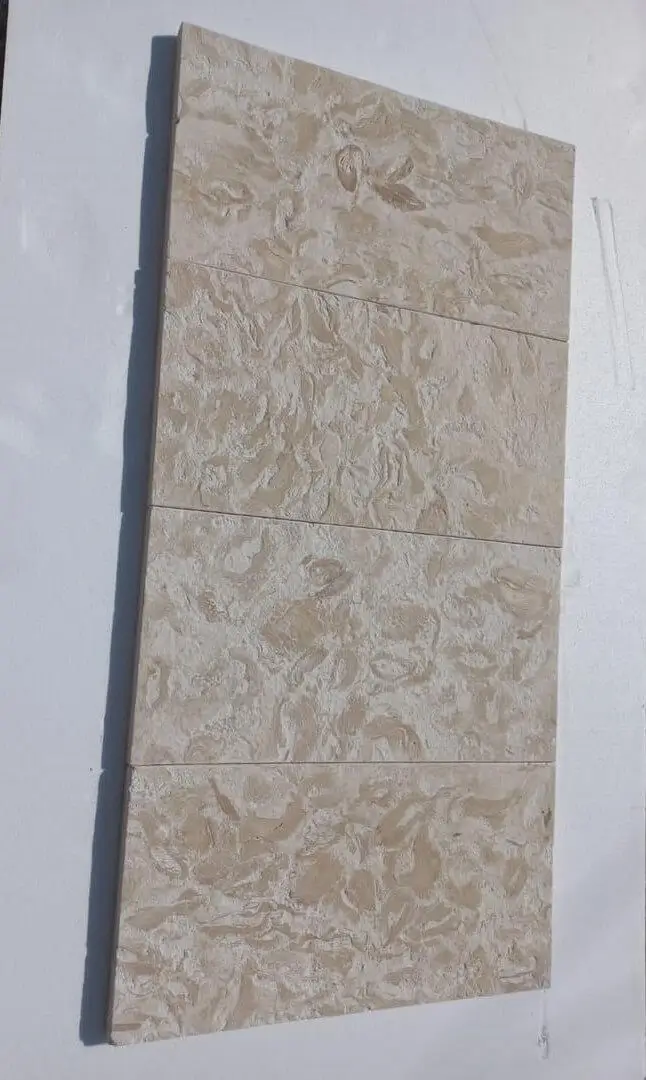
Sealing and Long-Term Maintenance Cost
Sealing isn’t optional for limestone edging stone in most outdoor applications — it’s part of the total cost of ownership that too many budgets ignore at the specification stage. A penetrating impregnator sealer appropriate for exterior limestone runs $0.80–$1.50 per square foot of exposed surface in material cost, applied on a biennial cycle for standard exposure conditions. High-exposure installations — those subject to significant wind-driven moisture, soil contact on multiple faces, or heavy organic debris accumulation — warrant annual inspection and sealing as needed.
The long-term maintenance calculus is straightforward: a properly sealed limestone edging stone installation maintained on schedule realistically delivers 20–30 years of service before replacement becomes relevant. An unsealed installation in a moisture-exposed environment can begin showing surface degradation within 5–8 years, and joint failure often precedes surface deterioration by creating water infiltration pathways. According to Britannica’s geological overview of limestone, the mineral’s inherent porosity — which gives it excellent workability and texture — also makes it responsive to moisture cycling in ways that denser igneous materials are not. Factor sealing into your five-year maintenance budget from day one rather than discovering the cost when deterioration prompts the conversation.
Comparing Limestone Edging to Alternative Materials
The cost comparison between limestone edging stones and alternative materials is more nuanced than a per-linear-foot price comparison suggests. Concrete edging products typically run $4–$8 per linear foot installed — roughly half the cost of natural limestone for standard profiles. That gap narrows substantially when you factor in concrete’s shorter aesthetic lifespan, higher maintenance frequency in freeze-thaw regions, and the replacement cost when sections crack under lateral stress.
- Concrete edging: Lower initial cost, higher long-term replacement frequency. Cracking under point impact is common, particularly in freeze-thaw regions.
- Brick edging: Comparable cost to entry-level limestone, but absorption rates in most common brick profiles exceed limestone at equivalent density, increasing freeze-thaw vulnerability.
- Granite edging: Superior hardness and lower absorption than limestone, but significantly higher cost — typically 40–70% more per linear foot. Appropriate where maximum durability under heavy mechanical stress justifies the premium.
- Plastic or composite edging: Lowest initial cost, shortest service life, and no material integration with natural stone projects. Rarely appropriate where adjacent paving is natural stone.
- Limestone edging stone: Mid-range cost with excellent aesthetic integration, good compressive strength, and a service life that competes with granite when properly maintained.
The ASLA’s guidance on landscape edging and border stone design reinforces the value of material selection based on long-term performance rather than initial unit cost — a principle that consistently favors natural stone in applications where aesthetics and durability must coexist.
What Matters Most in Your Limestone Edging Stone Specification
The cost of limestone edging stone is ultimately a function of three decisions: the profile and thickness you specify, the installation method appropriate for your site conditions, and the maintenance commitment you’re willing to make over the installation’s service life. Getting the first two right dramatically reduces the third. Undersized profiles and inadequate base preparation are consistently more expensive over a ten-year period than the upfront savings suggest — a reality that becomes obvious the first time a contractor quotes you for resetting displaced sections or replacing chipped corner pieces after a severe storm season.
Your specification should start with thickness and embedment depth before it addresses aesthetics. Once you’ve confirmed that the structural decisions are sound, the finish, profile, and sourcing choices can be made with confidence that you’re specifying around a stable foundation. For projects where natural stone edging connects to broader landscape stone decisions, landscape limestone edging options and selection guidance covers how different profiles and formats perform across varied project applications. Matching your edging specification to the full scope of your project from the start — rather than treating it as an afterthought — is what separates installations that look resolved for decades from those that read as incomplete within a few seasons. Delivered from quarries across the Mediterranean and Middle East, edging stone ships palletized to reduce breakage in transit.
Related reading: landscape limestone blocks · outdoor stone planters · limestone driveway edging.