

What Patio Limestone Pavers Actually Cost — and Why the Numbers Vary
Patio limestone pavers priced at $8 per square foot and patio limestone pavers priced at $28 per square foot can both be legitimate market quotes — the spread isn’t negotiable wiggle room, it reflects genuine differences in density, finish, thickness, and origin. Understanding exactly where your project falls in that range is what this breakdown is designed to clarify. The variables aren’t arbitrary, and once you see the logic behind each cost driver, specifying and budgeting becomes significantly more straightforward.
Material Cost Tiers: Breaking Down the Per-Square-Foot Range
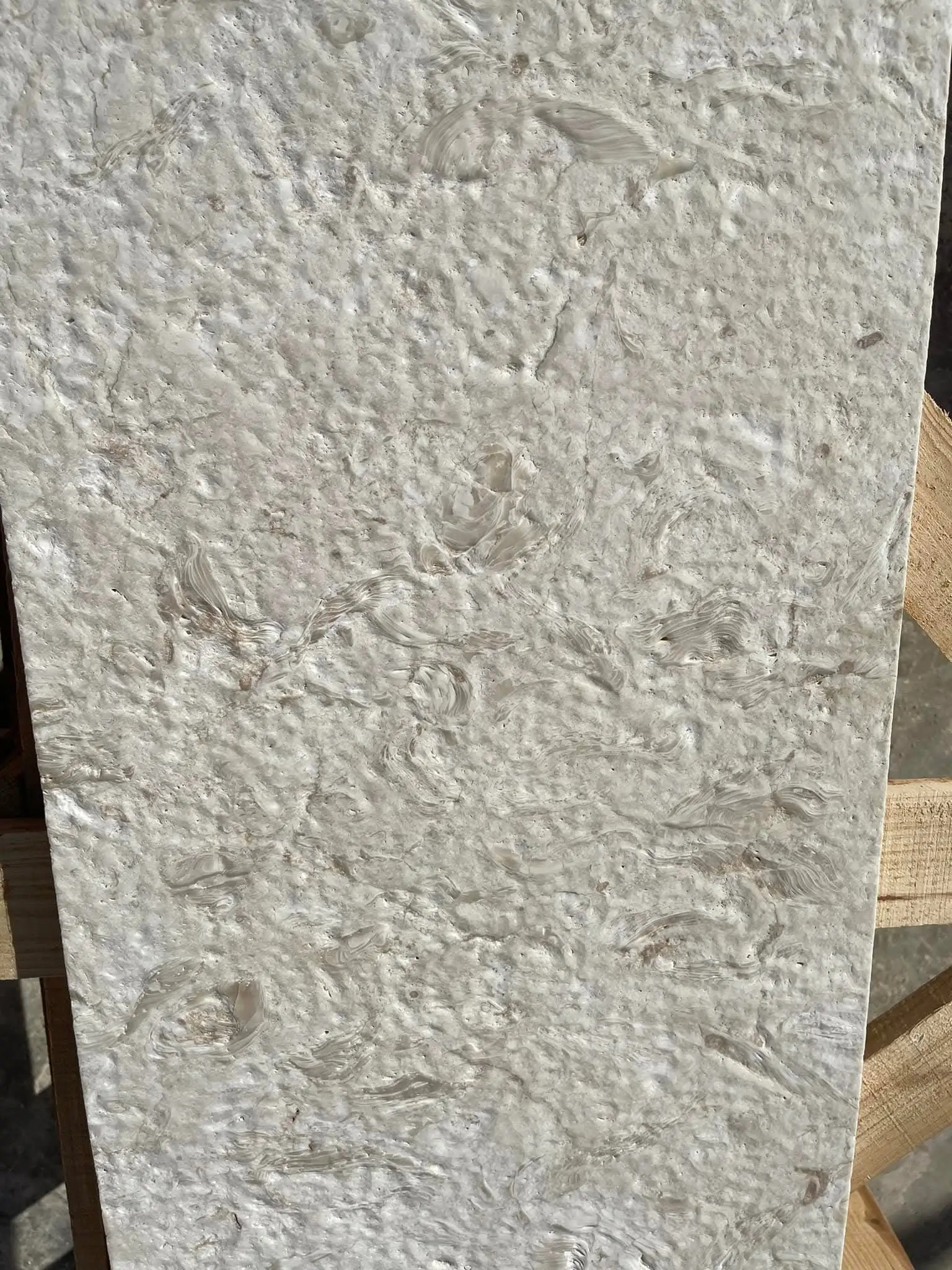
The material cost of exterior limestone pavers falls into three reasonably distinct tiers based on quality indicators that experienced specifiers can assess on sight. Entry-level material — typically thinner nominal cuts from secondary quarry runs — lands in the $8–$12 range. Mid-grade pavers with consistent colour, uniform thickness tolerances within 3mm, and a proper honed or sawn finish run $13–$19. Premium-grade pavers — those with controlled absorption rates, tight dimensional tolerances, and traceable quarry origin — typically price between $20 and $28 per square foot before logistics.
- Thickness drives cost significantly: 3/4-inch nominal pavers suit light pedestrian applications; 1.25-inch pavers handle standard residential loads; 2-inch material is specified for heavier outdoor furniture, commercial-grade patios, and jurisdictions with high live load requirements
- Surface finish affects both price and performance — tumbled finishes add texture and slip resistance at modest cost, while brushed or bush-hammered finishes add a premium for their tactile grip on wet surfaces
- Colour consistency within a pallet matters enormously for large patio installations; quarries with rigorous colour sorting command higher prices, and that premium is worth it when you’re laying 600 square feet of continuous field
- Absorption rate is a cost driver often overlooked at the specification stage — lower absorption limestone (under 3%) commands a premium but performs dramatically better in freeze-thaw regions where repeated moisture cycling attacks porous stone
According to Natural Stone Institute limestone technical data, absorption rate and compressive strength are the two primary performance metrics separating limestone grades — and both directly correlate to long-term installed cost when you account for replacement cycles.
Installation Cost Breakdown: What Gets Added to Material Price
Your total installed cost for a limestone paver patio is typically 2.2 to 2.8 times the raw material cost — a ratio that holds across most residential and light commercial projects. Breaking that multiplier down gives you leverage in budget conversations with contractors and helps you identify where cost-saving decisions carry real risk versus where they’re genuinely safe.
Base preparation consistently accounts for 30–40% of total installed cost, and it’s the line item most homeowners push back on incorrectly. A proper compacted aggregate base — typically 4 to 6 inches for residential pedestrian patios, 8 inches or more for heavier-use areas — isn’t negotiable when you’re dealing with a rigid material like limestone. Compress the base spec and you’ll see lippage and cracking within 3–5 years on any soil with moderate expansion coefficients.
- Excavation and disposal: $2–$4 per square foot depending on soil type and haul distance
- Compacted aggregate base (4–6 inch): $3–$5 per square foot installed
- Setting bed (sand or mortar): $1.50–$3 per square foot; mortar-set installations cost more but are required on many commercial specifications and slopes over 2%
- Labour for field cutting, pattern layout, and edge detailing: $6–$14 per square foot depending on pattern complexity and labour rates
- Jointing compound (polymeric sand or grout): $0.50–$1.50 per square foot
- Initial sealer application: $0.75–$1.25 per square foot for penetrating impregnator-grade sealers appropriate for exterior limestone
Code Compliance and Structural Requirements That Affect Your Specification
Building codes influence patio limestone paver specifications more directly than most homeowners realise, and ignoring them creates both liability and performance problems. Frost line depth is the structural variable with the most immediate impact: in jurisdictions where frost penetrates 24 inches or deeper, your base design must account for heave forces that will systematically destroy a shallow installation regardless of how good the stone is.
The International Residential Code and its adopted local variants typically require a minimum compacted base depth that places the bottom of your installation below the local frost line — or, alternatively, a free-draining base design that eliminates the water retention that drives heave in the first place. Your local building department can confirm the frost line depth and whether a permit is required for patio construction above a certain square footage threshold. In many jurisdictions, patios over 200 square feet or those within setback zones require a permit and a simple drainage compliance review.
- Frost line depths range from essentially zero in warm southern regions to 48–60 inches in northern zones — base depth specifications must be calibrated accordingly
- Seismic zones present a separate consideration: in high-seismic areas, mortar-set installations require expansion joints at closer intervals (typically every 10–12 feet rather than the standard 15–20 feet) to absorb lateral movement without cracking field stone
- Load-bearing requirements for patios adjacent to structures may require engineered base design if the patio is within the zone of influence of a foundation — typically 1.5 times the foundation depth horizontally
- Edge restraint requirements: most codes and all best-practice specifications require a permanent edge restraint system; plastic spike-down restraints are the minimum, but poured concrete curbs or dimensional stone borders perform significantly better under thermal cycling
- ADA compliance applies to any patio with public access: surface levelness requirements (maximum 1/4-inch change in 2 feet) and cross-slope limits (2% maximum) both affect layout and base grading decisions
For projects where your patio connects to a permitted structure, check whether your jurisdiction follows IBC Chapter 4 live load tables — a 40 psf live load requirement for exterior occupied spaces is standard, and your stone thickness and base design must support it. Quality limestone achieves compressive strengths well above 4,000 psi, which satisfies structural requirements handily — but only when the base underneath can actually transfer those loads uniformly.
Cost of Limestone Pavers by Format and Size
Format selection affects both the cost of limestone pavers and the labour cost of installation — these two variables move in opposite directions in ways that aren’t always intuitive. Larger format pavers (24×24 inches and above) carry a higher per-square-foot material cost due to quarrying yield losses and handling complexity, but they reduce labour hours because fewer pieces cover the same area. Smaller formats like 12×12 or modular sets have lower per-piece material costs but higher installed labour due to increased cut count and layout complexity.
- 12×12-inch pavers: $8–$14/sq ft material; moderate installation complexity
- 16×16-inch pavers: $10–$16/sq ft material; good balance of material cost and installation efficiency
- 24×24-inch pavers: $14–$22/sq ft material; premium quarrying cost offset by faster field installation on large, simple layouts
- Random or ashlar pattern sets: $11–$18/sq ft material; higher labour cost due to pattern fitting and cut frequency
- Tumbled irregular flagstone: $9–$15/sq ft material; highest labour hours per square foot of any format due to fitting complexity
For a standard 400-square-foot limestone paver patio installation using 16×16-inch honed material with a 4-inch compacted aggregate base, mortar-set on a stable subgrade, expect a total installed range of $45–$68 per square foot in most markets — that’s a realistic all-in budget figure that accounts for material, base, labour, sealing, and edge restraint.
Sealing and Ongoing Maintenance: The Real Long-Term Cost Factor
The ongoing maintenance cost of a limestone paver patio is predictable and manageable if you budget for it from the start — and it’s the variable most buyers underestimate when comparing limestone to alternative materials. Exterior limestone pavers require a penetrating impregnator sealer applied every 18–24 months in high-UV, high-traffic environments, or every 3–4 years in milder conditions. Professional resealing runs $1–$2 per square foot per application; DIY resealing with quality product is $0.30–$0.60 per square foot.
The sealer type matters more than most maintenance guides admit. Solvent-based penetrating impregnators provide superior protection on dense limestone with absorption rates under 3%, but water-based formulations perform comparably on more porous material and are preferable in enclosed or low-ventilation settings. Never use a topical film-former sealer on exterior limestone — it traps moisture beneath the surface and accelerates spalling, particularly in any region with seasonal freeze-thaw cycles.
- Year 1–2: Initial sealer applied at installation; no additional cost
- Year 3–4: First reseal; professional application approximately $400–$800 for a standard 400 sq ft patio
- Year 7–10: Joint sand replenishment typically needed; polymeric sand reapplication runs $200–$400 for the same area
- Year 15–20: Stone surface may benefit from light honing to restore original finish; cost varies widely but plan for $3–$6 per square foot if desired
- No replacement cycle needed on well-specified, properly maintained installations — limestone patio pavers in good substrate conditions routinely reach 30-year service life
How the Cost of a Limestone Paver Patio Compares to Alternatives
Concrete pavers consistently undercut limestone on material cost — typically by $4–$8 per square foot at equivalent dimensions. But that comparison collapses when you factor in UV fade, thermal expansion cracking at colour pigment interfaces, and the inability to regrind or refinish concrete to restore surface quality. Limestone ages in ways that concrete simply doesn’t — the patina that develops on exterior limestone pavers over 10–15 years is a genuine aesthetic asset rather than a degradation signal.
Travertine is the closest natural-stone alternative in terms of cost and origin — both materials often share Mediterranean quarry regions — but travertine’s open-pore structure requires more frequent sealing and carries higher risk of surface cratering in freeze-thaw environments without filled-and-honed specification. Bluestone costs comparably to mid-grade limestone but offers higher density and lower absorption, which can be advantageous in very wet climates without a corresponding maintenance premium.
You’ll find Citadel Stone paver options across the material spectrum — from budget-appropriate formats to premium quarry-selected stone — which makes direct cost comparison straightforward without having to source multiple suppliers for a single project.
Ordering, Logistics, and Delivery: What Gets Added at the End
Delivery cost is the line item that surprises most buyers, particularly on full-pallet orders. Patio limestone pavers ship on pallets — typically 40–60 square feet per pallet depending on thickness and format — and a 400-square-foot patio requires 7–10 pallets. Freight cost for natural stone averages $150–$400 per pallet depending on distance from the distribution point and accessibility of the delivery site.
Your project’s truck access constraints are worth confirming before you place an order. A standard flatbed delivery truck requires a minimum 12-foot clearance width and reasonable proximity to the unload point — most drivers won’t carry pallets more than 50 feet from the truck without a site-appropriate forklift or pallet jack. Factor that into your site logistics early, particularly for backyard patio installations with limited access.
- Always order 10–12% overage to account for cuts, breakage, and future repairs — under-ordering limestone mid-project creates colour match problems that can’t always be resolved from warehouse stock
- Verify warehouse availability before finalising your project timeline — lead times from stock inventory are typically 1–2 weeks, but made-to-order cuts or low-inventory formats can extend to 6–8 weeks
- Pallet weight for 2-inch limestone runs 2,800–3,400 lbs — confirm your delivery surface can handle that axle load before the truck arrives
- Inspect every pallet at delivery before signing the freight receipt; damage claims require documented evidence at the time of delivery, not after the driver has left
At Citadel Stone, we recommend confirming your exact square footage and format selection before generating a freight quote — the per-pallet cost difference between a 6-pallet and a 10-pallet order on the same route can be significant enough to affect your material tier decision.
Performance Benchmarks That Justify the Cost of Exterior Limestone Pavers
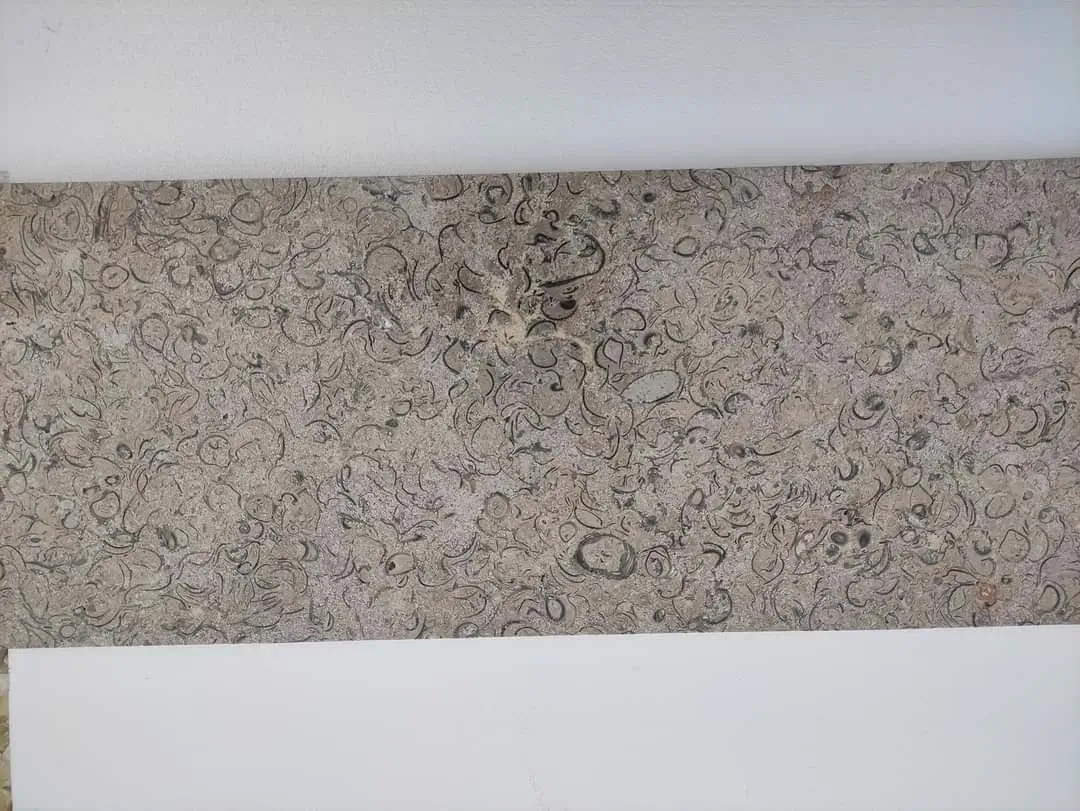
The performance case for exterior limestone pavers isn’t built on aesthetics alone — the material’s physical properties translate directly into long-term value. Quality limestone tested to ASTM C568 standards achieves compressive strengths of 4,000–12,000 psi depending on density classification, which covers every structural demand a residential or light commercial patio will face. The thermal mass of a 1.25-inch limestone slab also creates a measurable surface temperature benefit on summer days — dense limestone surfaces run 15–22°F cooler than comparably exposed concrete or dark-coloured stone, which matters considerably in hot, dry climates where barefoot comfort is a design criterion.
Slip resistance is the performance variable that deserves more attention in patio specifications than it typically receives. A honed finish on exterior limestone produces a coefficient of friction (COF) in the 0.42–0.55 range when dry — adequate for most residential applications but marginal for areas with regular water exposure. A brushed or tumbled finish pushes that number to 0.60–0.75, which meets the threshold recommended by the ASLA outdoor patio material selection guidance for exterior occupied surfaces adjacent to water features or in high-rainfall environments.
- Specify to the ANSI A326.3 minimum wet DCOF of 0.42 for any patio surface exposed to regular moisture — specify brushed or tumbled finish accordingly
- Flexural strength of 1,000–2,500 psi determines how well pavers bridge minor voids in the base — thicker pavers bridge more effectively, which is why 1.25-inch minimum is strongly recommended for any installation over compactable gravel
- Thermal expansion coefficient for limestone averages 4.4–5.1 × 10⁻⁶ per °F — lower than concrete and granite, which simplifies joint spacing calculations in thermally variable environments
- Colour stability over UV exposure is excellent in dense, low-iron limestone; iron-rich material can develop surface staining within 3–5 years if not sealed, so request iron content data from your supplier on warm-toned pavers
Getting Your Limestone Paver Patio Specification Right
Every cost figure in a patio limestone paver budget traces back to a specification decision — thickness, finish, format, base depth, and sealer type all compound on each other in ways that make low-ball estimates genuinely misleading. The projects that run into budget overruns aren’t usually the ones where material cost was too high; they’re the ones where base preparation was undersized, edge restraint was skipped, or code compliance wasn’t confirmed before the first shovel went in. Getting the specification right from the start is where value is created, not on the material cost line alone. The Natural Stone Institute limestone specifications provide a strong technical foundation for verifying the performance parameters your project demands before you commit to a material grade.
For your next step in the specification process, limestone patio installation detail covers the base and setting bed decisions that underpin every durable installation. Whether you’re working through a contractor or managing the spec directly, the performance data and cost context here give you the foundation to make decisions that hold up over time. Direct from quarries in Turkey, the Mediterranean, and beyond, Citadel Stone keeps patio limestone paver pricing transparent per pallet.
Also worth reading: How to Install Limestone Pavers for a Patio.
Related reading: flagstone patio vs pavers · how to build a paver patio · crushed limestone patio.