

Why Scale Changes Everything in Stone Landscaping
Large limestone rocks landscaping decisions hinge on a variable most designers underestimate — the relationship between stone mass and visual hierarchy. A boulder that reads as substantial on a supplier’s yard can disappear entirely once it’s set into a sprawling garden bed. Think in terms of proportional weight, not absolute size, before committing to a quantity or placement scheme. The pieces that anchor a composition tend to be heavier and more irregular than your initial instinct suggests.
Field experience consistently shows that the most convincing naturalistic installations use a minimum three-to-one size ratio between anchor stones and accent stones. Scatter identically-sized rocks and the eye reads them as a pattern — something manufactured, not found. Vary the mass deliberately, and suddenly the same material reads as geology.
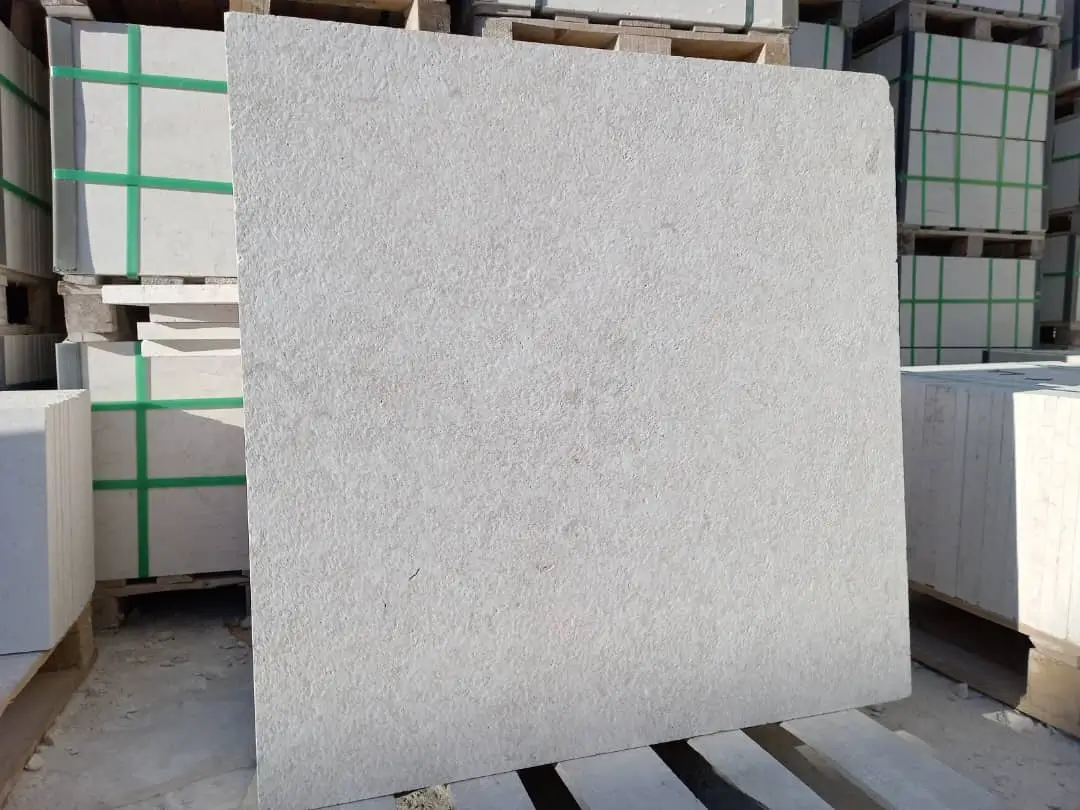
Design Ideas That Actually Hold Up Over Time
The strongest large limestone rocks landscaping concepts share one trait — they use the stone’s natural geometry to do structural work, not just decorative work. Consider these approaches that consistently perform well in real garden settings:
- Dry-stack boulder clusters positioned at grade transitions create natural-looking level changes without the formality of a built retaining wall — effective for slopes of 18 inches or less
- Limestone outcroppings partially buried at a 15-to-20-degree backward lean mimic how stone naturally emerges from soil, which reads far more convincingly than stones simply placed on top of grade
- A single large limestone rock positioned at a pathway junction serves as a wayfinding anchor, drawing the eye and creating a decision point that feels organic rather than engineered
- Boulder groupings of odd numbers — three or five pieces — arranged in loose triangular compositions avoid the symmetry that betrays a planned installation
- Partial burial of your largest specimens so that roughly one-third remains below final grade adds stability and visual mass simultaneously
- Limestone set along water feature edges integrates naturally because the material’s light-toned surface reads well against dark water and green planting
The burial depth rule deserves more emphasis than it typically receives. Stones placed entirely on grade tend to heave, shift, and eventually tilt as soil conditions change beneath them. Burying a portion isn’t purely aesthetic — it’s structural.
Placing Large Limestone Boulders for Maximum Impact
Large limestone boulders carry enough mass that placement becomes a logistics challenge before it becomes a design challenge. Your installation sequence matters as much as your design intent. Move the heaviest anchor pieces into position first, before any finish grading, so equipment access remains clear. Trying to maneuver a 400-pound specimen around established planting beds is a reliable way to damage both the plants and your patience.
The ground beneath each boulder needs attention before placement. According to NSI limestone specifications, natural stone placed directly on unstable or poorly compacted subgrade will shift over time regardless of the stone’s own durability. Excavate a shallow seat — typically 4 to 6 inches deeper than your intended burial depth — and compact the base with granular fill before setting the stone.
Orientation is the detail that separates an expert placement from an amateur one. Every piece of limestone has a natural bedding plane — the axis along which it was deposited. Align all your large limestone boulders with that plane running roughly horizontal and you’ll achieve a cohesive, geological reading. Tilt pieces randomly without regard to bedding and the composition looks like a parking lot edge, not a landscape feature.
Soil Conditions and Subgrade Preparation
The long-term stability of any large stone installation depends less on the stone itself and more on what’s beneath it. Expansive clay soils present the most common challenge — clay expands significantly when wet and contracts when dry, and that seasonal movement will gradually shift even heavy limestone specimens out of their intended positions. The approach in clay-heavy ground is to either excavate and replace with compacted granular material or, for smaller placements, to use a geotextile fabric barrier beneath a gravel base layer to isolate the stone from direct contact with the expansive soil.
Sandy soils present a different issue: they drain well but lack the bearing capacity to support heavy stones without settlement. A compacted aggregate base of at least 6 inches — crushed limestone or gravel at 95% compaction — resolves this for most residential-scale boulders. For pieces exceeding 800 pounds, consult with a geotechnical professional about bearing capacity at your specific site. Caliche layers, common in some regions, can complicate excavation but actually provide excellent bearing once broken through. Rocky subgrade generally simplifies installation since it’s naturally stable, though it limits how deeply you can seat a boulder for the buried-look effect.
The USGS limestone composition data documents limestone’s density at approximately 160 pounds per cubic foot — useful when you need to calculate the load any given boulder places on your subgrade and confirm your prepared base is adequate.
Using Large Stone in Garden Beds and Planting Zones
Large stone placed within planting beds creates a functional microclimate, not just a visual anchor. Limestone’s thermal mass absorbs heat through the day and releases it slowly through the night, which moderates soil temperature fluctuations in adjacent planting zones. For heat-sensitive perennials or early-season plantings, positioning a large limestone rock on the south side of a planting area can meaningfully extend the effective growing season.
Limestone also naturally raises the pH of the surrounding soil over time as it weathers. This is beneficial for plants that prefer alkaline conditions — many ornamental grasses, lavender varieties, and native prairie species actually thrive in limestone-adjacent soil. For acid-loving species like azaleas or rhododendrons, maintain at least 18 inches of separation between the stone and the root zone, or select a different material for those specific planting areas.
For garden designers sourcing accent and anchor pieces together, Citadel Stone large stone for gardens offers a range of natural limestone forms that complement boulder groupings with consistent material character across a single project.
Dry Creek Beds and Water Features With Limestone
Dry creek bed designs represent one of the highest-return applications for large limestone rocks landscaping projects. The material’s natural weathering pattern — slightly rough surfaces, irregular edges, occasional fossil detail — reads as authentic stream geology in a way that manufactured concrete alternatives simply don’t achieve. A creek bed design will look convincing when you follow a few structural rules that mirror how real streambeds form.
- Use your largest stones at the outer curve of any bend, where erosion would naturally deposit heavy material
- Graduate stone size from large at the edges to smaller rounded gravel at the center channel — this replicates natural water sorting
- Partially bury edge boulders so they appear to emerge from the bank rather than sitting on top of it
- Vary spacing irregularly — consistent gaps read as manufactured, inconsistent gaps read as natural
- Mix a few pieces of large stone into the gravel zone to simulate debris deposition from upstream
For actual water features with circulating systems, limestone’s moderate porosity means you’ll want to seal contact surfaces to prevent excessive water absorption and mineral transfer into the system. A penetrating limestone-compatible sealer applied before installation addresses this cleanly.
Ordering, Logistics, and Project Planning
Planning your large stone order requires more lead time than most project schedules allow for. Natural boulders and large irregular pieces aren’t manufactured to specification — they’re selected from available inventory, which means warehouse stock levels fluctuate and specific sizes or profiles can sell through quickly during peak season. Verify availability before finalizing your design’s stone count rather than designing first and sourcing second.
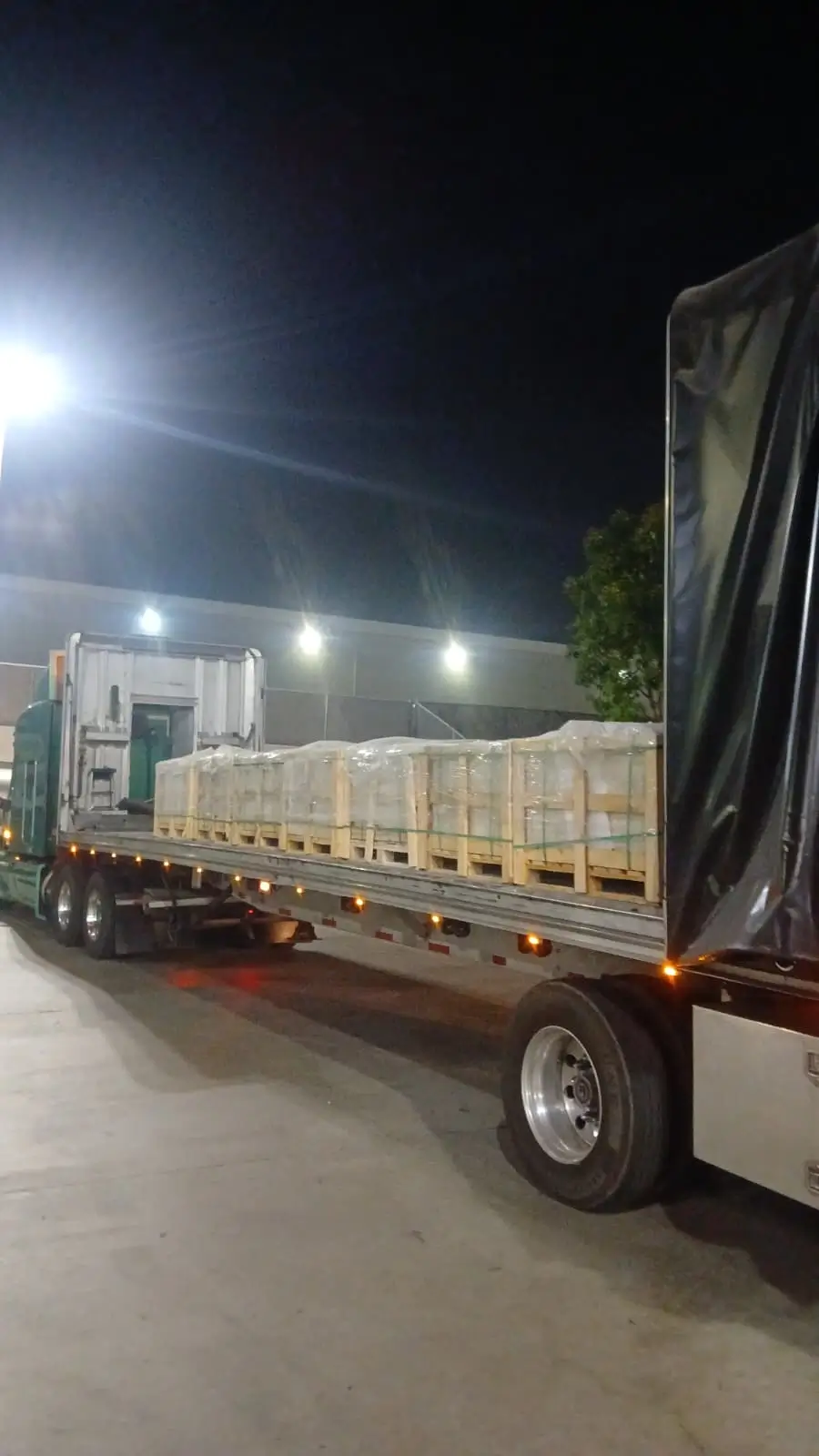
Truck access to your site is the most overlooked logistics variable for large stone projects. A flatbed delivery carrying 3,000 to 5,000 pounds of limestone boulders requires adequate turning radius, acceptable ground clearance, and a workable unloading zone. Your contractor should walk the delivery route before the truck arrives, not after it’s stuck. At Citadel Stone, we recommend confirming truck access dimensions — typically a minimum 10-foot-wide gate and 14-foot overhead clearance — as part of your pre-order consultation, not as an afterthought the morning of delivery.
Citadel Stone maintains warehouse inventory of large limestone rocks and boulders across national distribution points, which typically compresses lead times compared to project-specific import orders. For large limestone rocks landscaping projects, a 1-to-2-week lead time from confirmed order to truck delivery is achievable when warehouse stock is confirmed at the time of order placement.
Combining Large Limestone With Other Hardscape Materials
Large stone rarely performs in isolation on a well-designed property. The material relationships between your boulders, your paved surfaces, and your planting beds determine whether the overall composition reads as intentional or accidental. Limestone pairs naturally with itself across scales — limestone’s sedimentary formation characteristics produce consistent coloration within a geological deposit, meaning large limestone boulders and smaller limestone paving elements will carry compatible tonal values even when drawn from different product categories.
Consider these material pairings that work consistently well:
- Large limestone boulders with decomposed granite pathways — the contrasting textures read clearly without competing for visual dominance
- Limestone outcroppings alongside limestone flagstone terraces — material unity across the full composition creates cohesion
- Large stone groupings adjacent to steel landscape edging — the industrial-organic contrast reads well in contemporary garden styles
- Boulders combined with native groundcovers that trail into crevices — the planted gaps soften edges and increase the natural reading of the stone
Where you’re combining large limestone rocks with formal paving elements, maintain consistent joint coloring across materials. A mismatched mortar or polymeric sand color breaks the visual unity between material types more than most designers anticipate.
What Matters Most in Large Limestone Rocks Landscaping
Every large limestone rocks landscaping project comes down to decisions made before the first stone leaves the warehouse — placement logic, subgrade preparation, delivery access, and material relationships all set the ceiling for what the finished installation can achieve. There’s no compensating in the field for a design that ignored site conditions or an order that arrived without adequate ground preparation completed first. The installations that age well share a common foundation: soil addressed properly, stones oriented along their natural bedding planes, and enough mass variation in the composition to read as geology rather than decoration.
The ASLA’s outdoor materials guidance reinforces that natural stone selected and installed with site-specific attention consistently outperforms substitute materials over long project lifespans — a finding that aligns with what field experience confirms on project after project. As you develop your specification, exploring how large stone works alongside structural applications is worth your time — limestone retaining wall construction covers related applications where mass and stability intersect in the same material family. Citadel Stone’s large limestone rocks are sourced in irregular natural forms, giving garden designers the organic shapes that manufactured stone alternatives rarely replicate convincingly.
Related reading: how to identify limestone · How to Remove Limestone Stains Without Damage · large limestone planters guide.