

What Black Limestone Pavers Actually Deliver
Black limestone pavers exhibit a compressive strength typically ranging from 8,000 to 15,000 PSI depending on quarry origin and formation density — a performance envelope that puts them well ahead of concrete pavers in load-bearing applications while retaining the thermal mass behaviour you’d expect from dense sedimentary stone. The colour depth comes from elevated concentrations of organic matter and iron sulfides within the calcium carbonate matrix, which means two slabs from different quarry seams can read quite differently under directional light. That tonal variation is something you need to plan for at the specification stage, not after the pallet arrives on site.
The material’s porosity sits in a tighter range than most limestones — typically 0.5% to 3% absorption by weight — which translates directly to better stain resistance and lower maintenance burden over the life of the installation. According to NSI limestone technical specifications, density and absorption rate are the primary predictors of long-term exterior performance in limestone products, and black limestone generally occupies the denser end of that spectrum. That said, you should still verify the specific absorption figures for any batch you’re specifying — quarry source matters enormously here.
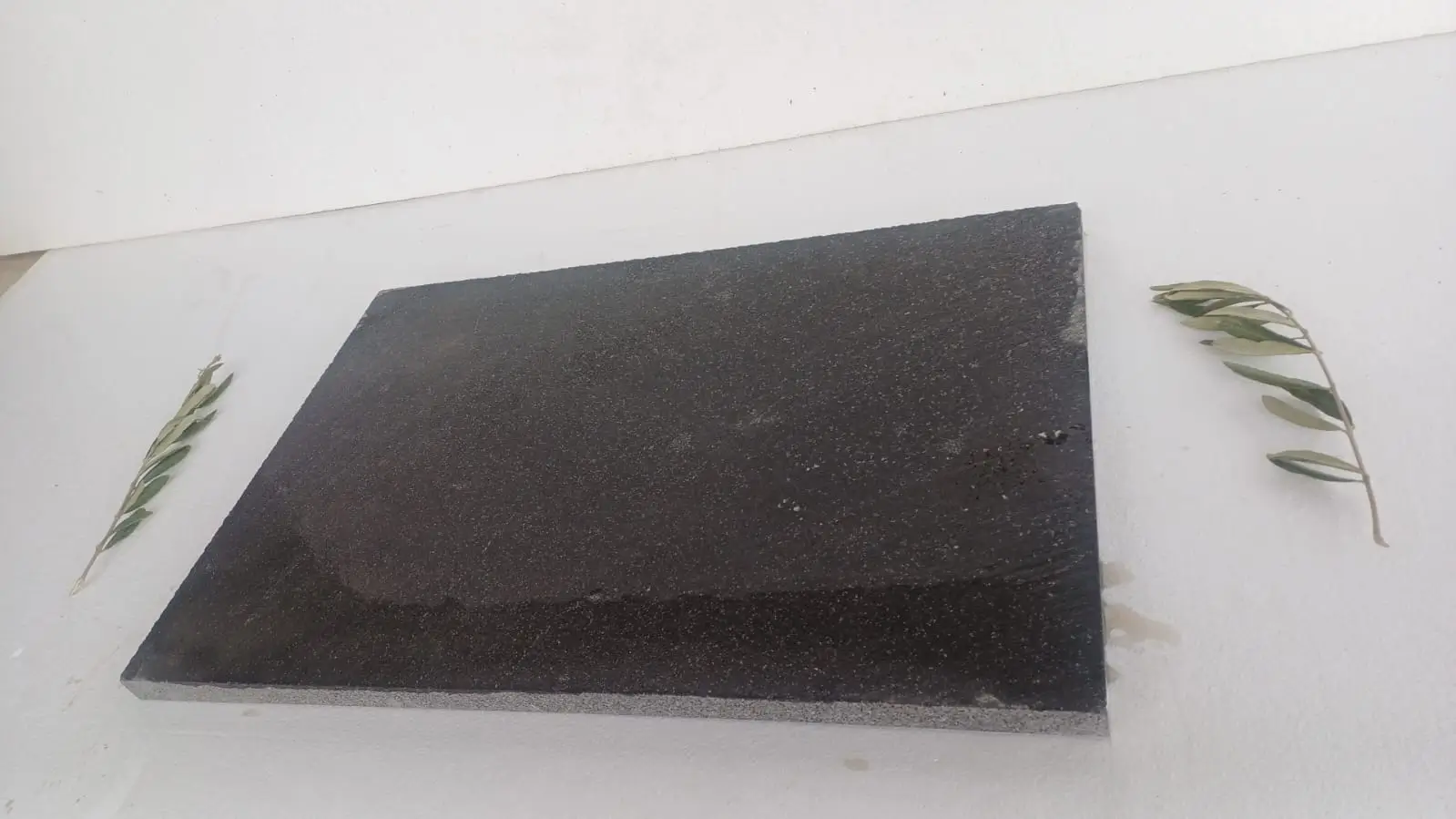
Standard Sizes and Formats for Black Limestone
Format selection shapes how the finished surface reads — both visually and structurally — so getting your size specification right before ordering matters more than most project managers anticipate. Black limestone tiles and pavers are available in a wider range of formats than you might expect from a single material category, and each format carries specific structural and installation implications.
- 300 x 300 mm and 400 x 400 mm: Traditional module sizes that work well for interior floor grids and smaller courtyard applications where precise joint alignment is important
- 600 x 300 mm and 600 x 600 mm: The most commonly specified exterior format — the longer dimension creates visual flow in walkways and terrace layouts without demanding the large-slab base tolerances that 900+ mm formats require
- 900 x 600 mm and 900 x 900 mm: Large-format pavers that read as architectural slabs rather than traditional paving — your subbase needs to be flat to within 3mm over a 2m straightedge to avoid rocking
- Irregular/random: Cut to approximate dimensions with slight variation — useful for informal garden paths and areas where a handcrafted aesthetic is intentional
- Black limestone slab material cut to custom dimensions: Available for bespoke terrace projects, though lead times from the warehouse extend to 3–4 weeks for non-standard cuts
Thickness follows application load more than format. For pedestrian-only terraces and residential paths, 20mm is the standard minimum. Driveways and areas with occasional vehicular access should be specified at 30mm minimum, and you’ll want to confirm that the base preparation matches — a 30mm paver on an inadequately compacted aggregate base will develop differential settlement regardless of stone quality.
Finish Options and Performance Trade-Offs
The finish you specify on black limestone changes its performance profile more substantially than with lighter stones, because the dark base colour amplifies the visual difference between surface textures. Here’s what each finish actually delivers in practice:
Honed Finish
Honed black limestone has a smooth, matte surface with a slight sheen — it doesn’t reflect light the way polished material does, but it shows the stone’s natural depth of colour more effectively than any other finish. You’ll find honed black limestone floor material specified most often for interior corridors, bathrooms, and covered outdoor areas. Slip resistance on a honed surface typically achieves a static coefficient of friction (SCOF) around 0.5–0.6 when dry, which drops significantly when wet — that trade-off needs to be part of your exterior specification decision.
Brushed Finish
Brushing opens the surface texture slightly without creating the aggressive profile of a sandblasted finish. It’s the finish that handles outdoor use most reliably across varied conditions — the micro-texture improves wet slip resistance measurably, typically reaching SCOF values of 0.6–0.7 wet, while retaining enough surface smoothness to clean easily. For terraces, pool surrounds, and entry paths, brushed is often the most defensible specification choice.
Sandblasted Finish
Sandblasted black limestone creates a pronounced surface texture with excellent grip — wet SCOF values commonly exceed 0.8 — but the aggressive profile traps fine debris and requires more frequent maintenance to keep clean. In high-foot-traffic commercial applications or areas where slip risk is the dominant concern, the maintenance trade-off is usually worth accepting.
Polished Finish
Polished black limestone floor tiles deliver a mirror-like reflectivity that makes the stone read almost jet black under artificial lighting. The finish is genuinely striking, but it comes with real limitations outdoors: surface scratching is visible, wet slip resistance is poor without anti-slip additive treatments, and the polish will dull in exterior conditions over time. Polished material belongs indoors — specify it for interior feature floors, foyers, and wall cladding where the aesthetic impact justifies the care requirements.
Where Black Limestone Pavers Perform Best
Your application context should drive format and finish selection as much as aesthetics do. Black limestone pavers have a genuinely broad application range, but their performance is not uniform across all uses.
- Exterior terraces and patios: Brushed or sandblasted 600 x 600 mm or 600 x 300 mm pavers with a proper fall to drain — the material handles outdoor exposure well when drainage geometry is correctly designed
- Pool surrounds: Brushed finish only — the dark colour absorbs more solar radiation than lighter stones, so surface temperature management matters; ensure adequate shading or specify lighter grout joints to reduce heat retention
- Interior flooring: Honed or polished black limestone tiles suit high-end residential and commercial interiors where the visual drama of the material is the design intention
- Driveways and hardstanding: 30mm brushed or sandblasted pavers on a 150mm compacted aggregate base with appropriate edge restraints — the stone handles vehicle loading well when the base is right
- Courtyard walls and water features: Black limestone slab material cut to thinner profiles works well for vertical cladding where the colour contrast against lighter rendered walls is intentional
- Retail and hospitality interiors: Large-format honed slabs create the monolithic floor plane that commercial interior designers frequently specify for luxury environments
According to USGS limestone composition and construction applications, limestone’s calcium carbonate base makes it responsive to acid-based cleaning agents and organic acids — something to factor into both maintenance planning and application context. Kitchen floors and outdoor areas near vegetation should have sealant protocols in place from day one.
Drainage Design and Base Preparation for Exterior Installations
The single factor that determines whether an exterior black limestone paver installation performs for 20 years or starts showing problems at year 5 is almost always the drainage design — not the stone quality. You can specify the densest, lowest-absorption black limestone pavers available and still end up with a failing installation if water has nowhere to go beneath the surface.
For standard residential terraces, a minimum 1:80 fall across the surface is the starting point. In areas that experience intense rainfall events — heavy storm seasons, high-precipitation climates, regions with concentrated monsoon-pattern rain — increasing that to 1:60 and adding a perimeter linear drain to intercept sheet flow before it backs up against the building fabric is the stronger approach. The base preparation needs to match the drainage intent: a blinded compacted aggregate layer with a geotextile membrane below it keeps fine particles from migrating into the drainage voids over time, which is the primary cause of differential settlement in otherwise well-constructed terraces.
Jointed dry-lay installations give you more flexibility in drainage management than fully bedded systems — water can move vertically through open joints into the aggregate below. But this approach requires joint sand maintenance every 1–2 years to keep the profile stable, particularly after high-rainfall events that flush fine material out of the joints. For fully bedded installations, the surface fall becomes your only active drainage mechanism, so specifying it correctly at the design stage is non-negotiable. You can explore the full range of black limestone formats and base preparation guidance through Citadel Stone black limestone to match your project’s drainage requirements to the right product specification.
Freeze-thaw regions add another layer of consideration: water that penetrates joint interfaces and then freezes generates expansive pressure that can fracture even dense black limestone over multiple cycles. In those environments, a penetrating silane-siloxane sealer applied to dry stone before installation significantly reduces water ingress at the joint edges — it’s a 20-minute application step that adds years to the installation’s life expectancy.
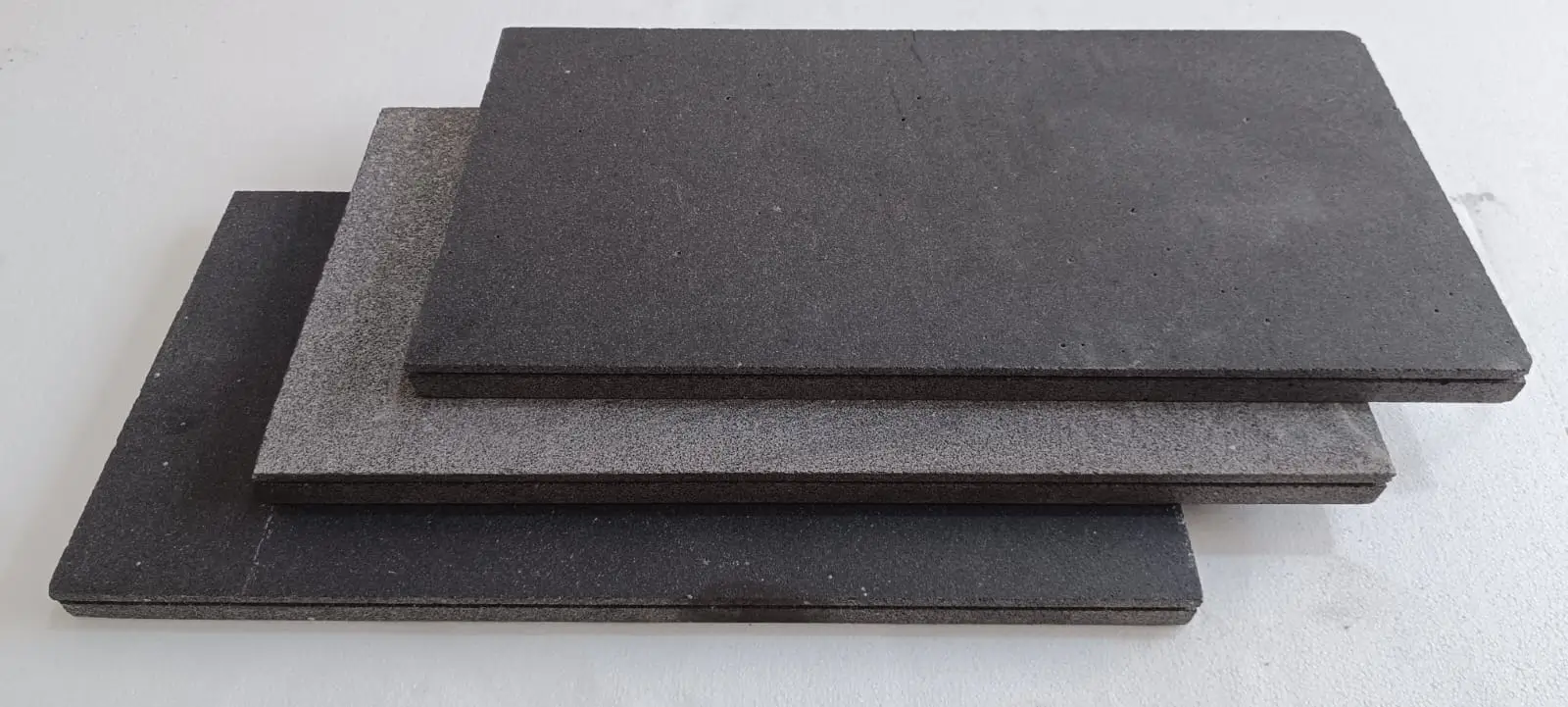
Sealing and Maintenance Requirements
Black limestone pavers are not a set-and-forget material — but the maintenance burden is significantly lower than most installers warn clients about, provided the initial sealing protocol is correct. The colour depth of black limestone actually works in your favour here: light surface scratches and minor etching are far less visible against a dark base than they would be on white or cream limestone.
- Initial sealing: Apply a penetrating impregnator sealer to clean, dry stone within 48 hours of grouting — this is the treatment that matters most for long-term stain resistance
- Sealer type: Use a silane or siloxane-based penetrating sealer rather than a surface coating — coatings trap moisture below and can cause spalling in exterior conditions
- Resealing frequency: Every 2–3 years for exterior installations with normal foot traffic; annually for pool surrounds and high-use commercial floors
- Daily maintenance: pH-neutral cleaner only — avoid vinegar, citrus-based products, and any acid-containing cleaning agents that will etch the calcite surface
- Efflorescence management: A white salt bloom on the surface in the first 6 months is common in newly installed exterior black limestone — it’s a moisture-driven phenomenon that resolves once the installation dries out fully, and it doesn’t indicate a material defect
The Britannica reference on limestone formation and characteristics confirms that calcium carbonate’s reactivity with acidic compounds is inherent to the mineral structure — understanding this helps you set realistic client expectations about cleaning product selection from the outset.
Ordering, Logistics and Project Planning
Black limestone pavers are not universally stocked at the same depth across all formats and finishes — the 600 x 300 mm brushed format in 20mm thickness tends to be the most readily available because it’s the most commonly specified. Less common formats, particularly 900 x 600 mm and anything above 30mm thickness, may require warehouse lead times of 3–6 weeks depending on current stock levels and your required quantity.
Your quantity calculation should include a 10% wastage allowance for standard rectangular formats and 15% for irregular or complex layout patterns. Order all material for a given project from the same production batch wherever possible — black limestone’s tonal variation between batches is the most common source of visible inconsistency in large installations. At Citadel Stone, we grade incoming stock by tone consistency and flag batch boundaries so your project doesn’t end up mixing material from different quarry seams without notice.
For large commercial projects where truck delivery scheduling matters, confirm site access dimensions before finalising your order. Full-pallet deliveries of 30mm black limestone slab material can reach 800–1,000 kg per pallet — you’ll need to verify that your site can receive a standard delivery truck without requiring crane offloading, which adds cost and lead time to the logistics chain. Citadel Stone’s national warehouse network means most areas receive standard pallet deliveries within 5–7 business days for stocked formats.
Comparing Black Limestone to Alternative Dark Stones
The dark-stone category is more competitive now than it was a decade ago, and understanding where black limestone sits relative to alternatives helps you make a defensible specification decision.
- Black limestone vs. black granite: Granite is harder (Mohs 6–7 vs. limestone’s 3–4), more scratch-resistant, and requires no acid sensitivity management — but it reads differently under light, with a crystalline sparkle that some designers find less refined than the matte depth of black limestone
- Black limestone vs. black basalt: Basalt is denser and more frost-resistant than limestone, making it the better choice for severe freeze-thaw environments — but it’s heavier, costs more to transport, and offers fewer finish options in standard supply
- Black limestone vs. black slate: Slate splits naturally along cleavage planes and is lighter per unit area, but it’s prone to delamination in high-moisture environments and doesn’t carry vehicle loading as reliably as a solid limestone paver
- Black limestone vs. dark porcelain: Porcelain offers zero absorption and consistent colour, but it cannot replicate the tonal depth and natural variation that makes genuine black limestone tiles a specification choice rather than a substitute — and it performs very differently under foot in terms of thermal mass
The honest trade-off with black limestone is the acid sensitivity and the resealing cycle. If your project context involves acidic exposure — outdoor kitchen areas, planters with acidic mulch, or pools with aggressive water chemistry — you need to account for that in both the sealing protocol and the client maintenance briefing. For projects where those factors are manageable, black limestone delivers a depth of colour and material character that none of the alternatives match convincingly.
Getting Black Limestone Paver Specifications Right
Specifying black limestone pavers well comes down to matching the right format and finish to the application load, getting the drainage geometry right before the first paver goes down, and building a sealing protocol that the end user will actually follow. The material rewards good specification with genuine longevity — 25-year installations are common where drainage, sealing, and joint maintenance have been properly managed from the start. Shortcuts in any of those three areas shorten the performance window considerably, which is where most field complaints about limestone originate. As you plan your project, it’s also worth considering how the same material performs in other applications — our guide on black limestone for countertops and surfaces covers how the material behaves in a very different but complementary context. Black limestone from Citadel Stone arrives from internationally sourced quarries, graded for even tone across every batch.
Related reading: black limestone shower ideas · black limestone fireplace ideas · does black limestone fade.