

What the Decision Actually Comes Down To
Slab fabrication vs prefab is not primarily a cost argument — it is a question of how much control your project requires over thickness, edge profile, veining orientation, and seam placement. Custom countertop fabrication preserves every one of those variables; prefab fixes them at the factory before the material ever reaches your project. For most residential kitchens and commercial installations involving complex geometry, irregular dimensions, or premium material selection, those variables are the difference between a result that looks designed and one that looks installed.
How Prefab Countertops Are Made and Where They Fit
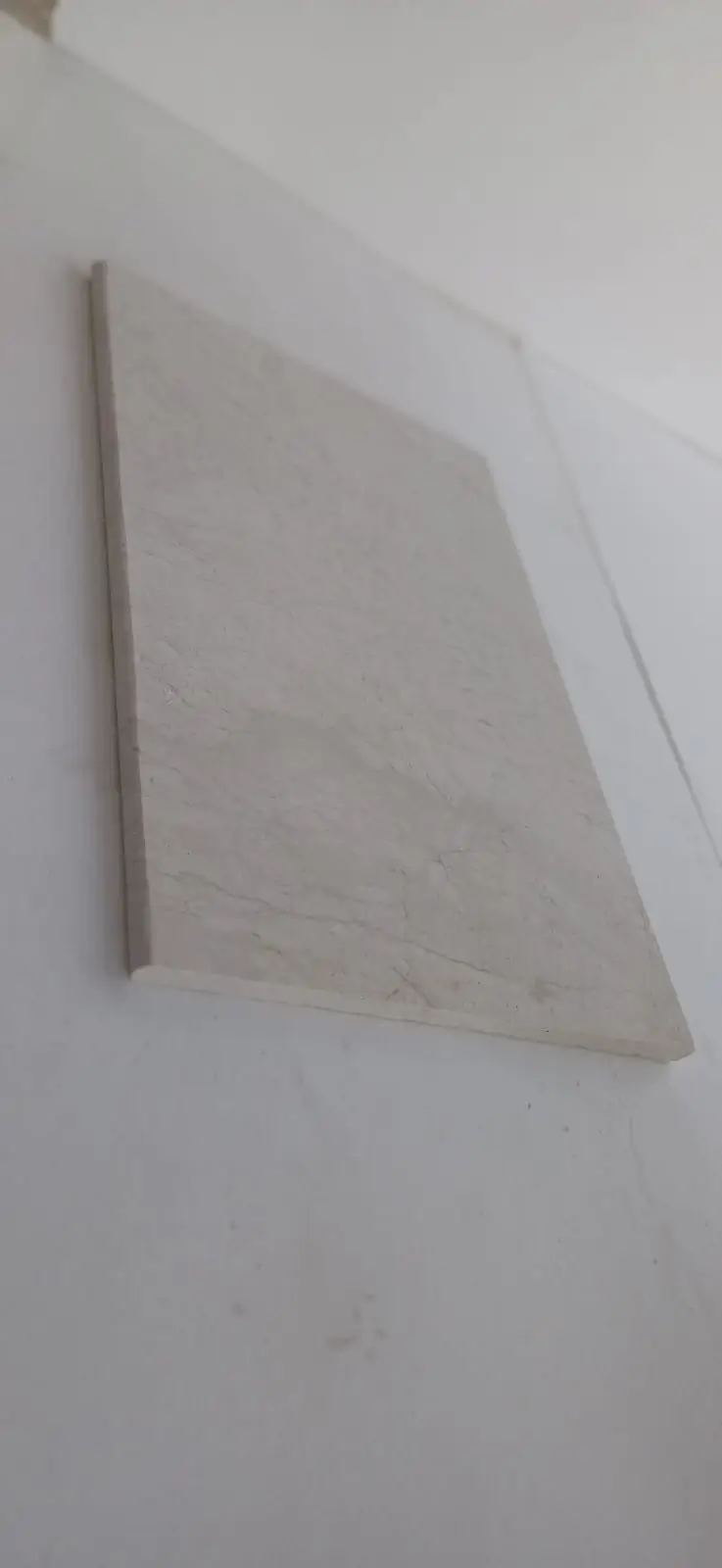
Prefabricated countertops are cut and finished at a processing facility to fixed dimensions — typically 25.5-inch depth with an integrated 4-inch backsplash — then shipped to distributors or big-box retailers. The stone is real: you’ll find prefab granite and quartzite options that are genuinely attractive. The limitation isn’t the material — it’s the standardization. You’re specifying around what the factory produced rather than specifying what the project needs.
Prefab makes strong economic sense in a narrow set of scenarios:
- Standard base cabinet runs with no interruptions or cutouts beyond a single sink
- Rental property upgrades where budget discipline outweighs aesthetic customization
- Fast-turnaround projects where warehouse stock availability matters more than material selection
- Applications where the granite slab cost differential genuinely justifies the constraint
Outside those scenarios, the compromises compound. Seam placement is dictated by the prefab piece dimensions, not by your layout. Edge profiles are limited to what the factory stocks. And if your base cabinets run even slightly out of standard dimension — which they often do in older construction — you’re templating and trimming anyway, which erodes much of the cost advantage.
Full-Slab Fabrication: What the Process Delivers
Custom countertop fabrication starts with a full slab — typically 9 to 10 feet long and 5 to 6 feet wide — that a fabricator templates directly from your cabinets, then cuts and finishes to your exact specifications. That process unlocks a different level of outcome. You choose the specific slab from the yard, which means you’re selecting the actual veining pattern and coloration that appears in your finished kitchen — not trusting a catalog photo.
The technical advantages stack up across several dimensions:
- Seam placement is engineered around your layout — positioned at natural break points and minimized wherever the slab yield allows
- Edge profiles range from simple eased edges to complex ogee or waterfall details, fabricated to match your design intent
- Material thickness is your specification — 2 cm for lighter applications, 3 cm for structural countertops, or laminated edges for an even heavier visual profile
- Cutouts for sinks, cooktops, and fixtures are templated precisely, not approximated to standard dimensions
- Matching material across multiple surfaces — island, perimeter, bar top — comes from the same slab lot, keeping veining and coloration consistent
For projects involving waterfall islands or full-height backsplash panels, slab fabrication vs prefab is not a preference debate — full fabrication from complete slabs is the only viable path. Prefab pieces simply don’t have the dimensional capacity to execute those details. You can review our full-slab fabrication work to understand how material selection and precision cutting interact across complex kitchen and commercial layouts.
Granite Slab Cost: Understanding the Real Numbers
The granite slab cost gap between prefab and full-slab fabrication is real but often misrepresented. Prefab granite runs roughly $30–$60 per linear foot installed for standard configurations. Full custom countertop fabrication typically starts at $60–$100 per square foot installed for mid-range granite, climbing to $150–$250 for premium book-matched or exotic material. That spread sounds significant until you account for what disappears with prefab.
Here’s what the prefab cost calculation frequently omits:
- Templating and trim charges apply the moment your layout deviates from standard — and most layouts do
- Return trips and remediation when prefab pieces don’t align with field conditions add labor cost that the fabrication quote never anticipated
- The material you don’t get to select — vein direction, background tone variation, surface movement — has real value that only becomes apparent after installation
- Resale and appraisal value for full-slab fabricated countertops consistently outperforms prefab in equivalent properties
According to Natural Stone Institute fabrication standards, professionally fabricated natural stone countertops installed from full slabs are assessed differently than prefab stone products in property valuation contexts — a distinction worth factoring into renovation ROI calculations. The true granite slab cost comparison requires honest accounting on both sides of the ledger.
Material Selection and Slab Yield Planning
Your material choice shapes the fabrication process more than most specifiers anticipate. Granite is the dominant full-slab countertop material for a reason: it machines predictably, polishes to a hard, consistent surface, and performs across both residential and commercial use cases. Quartzite offers similar workability with more dramatic veining. Marble fabricates beautifully but demands more careful sealing protocols and realistic client conversations about etching.
Slab yield planning is where experienced fabricators separate themselves from order-takers. A well-planned layout minimizes waste, positions seams strategically, and ensures that material from the same slab lot covers all surfaces in one install. At Citadel Stone, we work directly with selected quarries across multiple continents to ensure slab lots have enough consistent material to support complex multi-surface layouts without mid-project restocking delays.
The ASTM natural stone fabrication and quality testing standards establish minimum requirements for dimensional stone used in countertop fabrication — including thickness tolerance, flexural strength, and surface finish consistency. Specifying material that meets or exceeds those thresholds matters most in high-use applications like kitchen countertops and commercial bar surfaces where daily mechanical stress and thermal cycling are facts of life.
UV Exposure and Finish Selection for Outdoor Stone
The slab fabrication vs prefab comparison extends beyond kitchen countertops into outdoor applications — exterior kitchen counters, bar tops, and entertaining surfaces where UV exposure becomes a genuine performance variable. Fabricated stone performs differently under sustained sun exposure depending on finish selection, and this is a detail that prefab’s limited finish options cannot address adequately.
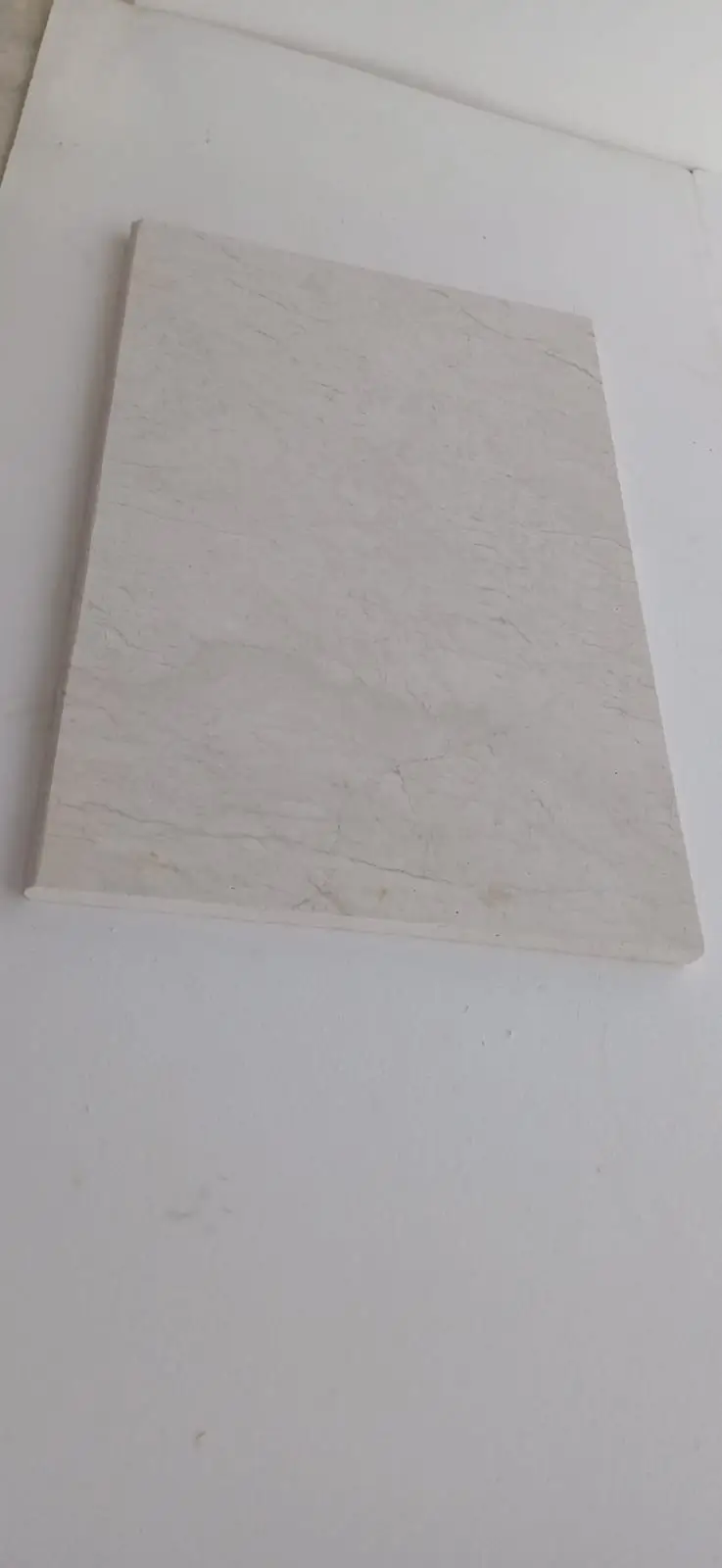
Polished surfaces on lighter granites and marbles reflect UV energy effectively but show oxidation and color drift in prolonged exposure faster than honed or leathered finishes do. Honed finishes scatter light rather than concentrating it at the surface, which reduces the optical effect of UV-driven surface bleaching over time. For outdoor fabricated countertops in sun-exposed installations, a honed or brushed finish paired with a UV-stable penetrating sealer applied every 12–18 months delivers markedly better long-term appearance retention than a polished surface with inconsistent sealing.
Prefab pieces typically offer polished finishes only — which means you’re defaulting to the finish with the greatest UV sensitivity for outdoor use. Full custom countertop fabrication lets you specify the finish appropriate to the installation environment, not the one the factory ran that week. Consider sealing schedules and finish durability early in the specification process for any sun-exposed outdoor surface.
Installation Variables That Shift the Math
Fabrication method doesn’t exist in isolation — it interacts with your cabinet configuration, support structure, and installation crew’s capabilities in ways that affect both cost and outcome. Standard prefab pieces assume standard cabinet depths. The moment you’re working with European-style frameless cabinetry, custom depth islands, or any appliance integration that pushes cutout dimensions past standard, prefab’s convenience advantage evaporates.
Full-slab fabrication requires a precise template — typically a digital CNC template or a physical template cut in the field — which adds a step but also catches field conditions that would otherwise create problems at installation. Cabinets that are out of level by more than 1/8 inch across a run, walls that aren’t plumb, or islands that aren’t perfectly square all get resolved at the template stage rather than discovered during installation. That pre-resolution is worth more than the template cost in avoided callbacks and remediation.
Truck delivery logistics also differ meaningfully between the two paths. Prefab pieces typically ship boxed on pallets and can arrive via standard freight. Full fabricated slabs for countertop installation require careful handling — slab orientation during transport matters, and your receiving conditions need to accommodate pieces that may run 8–10 feet in length. Citadel Stone coordinates truck delivery logistics to ensure slab material arrives in installation-ready condition, which reduces handling damage that creates project delays.
Specifying for Commercial vs Residential Applications
The slab fabrication vs prefab decision tilts more decisively toward full fabrication in commercial contexts. Restaurant countertops, hotel bathroom vanities, retail display surfaces, and commercial bar tops all involve daily use patterns that demand precise specifications — thickness for structural performance, edge profiles for safety and cleanability, and material selection for chemical resistance. Prefab’s standardization cannot accommodate those requirements.
Commercial projects also typically involve quantities that make slab yield planning critical. A restaurant with 40 linear feet of bar top and 20 linear feet of prep surface needs material from consistent lot runs — color consistency across that volume requires warehouse coordination and slab matching that prefab distribution channels aren’t structured to provide.
According to USGS dimension stone fabrication and wholesale industry data, commercial fabrication accounts for a substantial and growing share of dimensional stone processing volume nationally — a trend that reflects the shift toward specifying fabricated stone in applications where performance requirements exceed what standardized prefab products can deliver. Your specification strategy for commercial work should default to full custom countertop fabrication unless budget constraints make a compelling case otherwise.
Final Considerations: Slab Fabrication vs Prefab
Slab fabrication vs prefab is ultimately a question of how much control your project requires over material, geometry, and outcome. Prefab earns its place in budget-driven, standard-dimension applications where speed and cost efficiency outweigh customization. Full custom countertop fabrication earns its place everywhere else — and in practice, that covers the majority of projects where natural stone is the specified material. The seam control, finish selection, material continuity, and dimensional precision that fabrication delivers are not luxury features. They’re the fundamentals of a stone installation that performs and looks the way it was intended to.
As you finalize your specification decisions, the long-term care requirements for your fabricated surfaces deserve equal attention — caring for fabricated stone surfaces covers the sealing schedules, cleaning protocols, and maintenance practices that protect your investment across its full service life. Full slabs from our established selected quarries across multiple continents give Citadel Stone flexibility that prefab pieces cannot match.
Related reading: granite countertops fabrication cost · Slab Fabrication Problems: Causes and Fixes · how to choose stone fabricator.