

What Sets These Two Materials Apart
Slate stone’s cleavage planes — those naturally occurring splits along parallel mineral layers — give it a structural reliability that volcanic alternatives simply don’t replicate. You’re working with a metamorphic rock where foliation runs through every slab, and that directional grain is exactly what makes slate tile floors in kitchen environments so well-suited to high-traffic wear. The compression strength typically runs between 10,000 and 15,000 PSI depending on quarry origin, which positions slate stone firmly above most sedimentary competitors. Understanding how this compares to lava stone from the outset shapes every specification decision that follows.
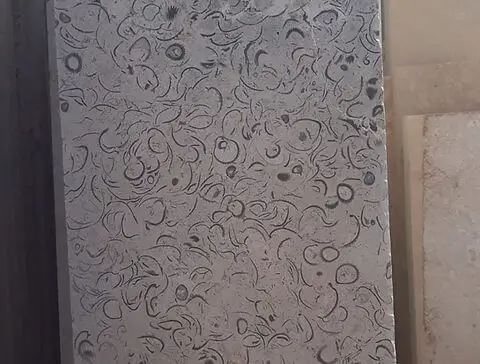
Lava Stone: The Volcanic Alternative
Lava stone — commercially sourced basaltic volcanic rock — forms under entirely different geological conditions than slate. Where slate builds up through heat and pressure over sedimentary layers, lava stone solidifies rapidly from molten material, producing an open-cell, porous matrix that behaves very differently under moisture exposure and thermal cycling. According to USGS basalt rock properties and composition, basalt’s crystalline structure contributes directly to its high density and hardness ratings, which sit around 6–7 on the Mohs scale — competitive with slate’s typical 3–4 range.
That hardness advantage matters in abrasion-heavy applications, but it cuts both ways. Lava stone’s porosity — often in the 10–20% range before sealing — demands more aggressive sealing protocols than slate requires. You’ll want to apply a penetrating impregnator before grouting and again within six months of installation in wet environments. Miss that window and the open cells trap grime permanently, producing a surface that looks aged within two years rather than twenty.
- Lava stone Mohs hardness: 6–7, versus slate at 3–4
- Porosity before sealing: 10–20% for lava stone, 1–4% for dense slate varieties
- Thermal mass capacity: lava stone absorbs and holds heat longer due to higher density
- Surface texture: naturally pitted and irregular versus slate’s smooth cleaved face
- Colour stability: lava stone holds darker tones without surface oxidation risk
Slate Stone Performance Under Real Conditions
Field performance data on slate dimension stone consistently highlights one variable that spec sheets underplay: delamination risk. According to ASTM C629 slate dimension stone technical specifications, slate must meet minimum modulus of rupture values that vary by grade and application — and lower-grade product sourced without proper quarry vetting routinely falls below those thresholds. Your specification should call out ASTM C629 Grade S1 explicitly for exterior applications and high-traffic interiors.
The slate stone comparison that matters most for most projects isn’t hardness — it’s how each material handles freeze-thaw cycling. Dense Welsh or Turkish black slate with absorption rates under 0.3% performs exceptionally well through repeated freeze-thaw cycles. Softer green and purple slates from certain quarry regions absorb enough moisture that spalling becomes a realistic concern after five to seven winters in freeze-thaw regions. Always request absorption test certificates alongside visual samples before you commit to a large order.
- Grade S1 slate: exterior and high-traffic interior standard per ASTM C629
- Absorption rate under 0.3% is the benchmark for freeze-thaw resilience
- Modulus of rupture minimum: check quarry certificates, not just visual grade
- Delamination risk spikes with product sourced from unverified suppliers
- Black and charcoal varieties typically outperform lighter colour ranges in density testing
Honed vs Polished Stone: Finish Decisions That Change Performance
The honed vs polished stone debate applies differently to slate and lava stone, and conflating the two leads to mis-specified finishes. Slate doesn’t genuinely polish to the mirror finish that marble or granite achieves — its mica content creates a sheen, but not a reflective plane. A honed slate surface sits at around 400 grit, producing a matte face that reads clean without looking raw. That finish maintains a static coefficient of friction above 0.6 when wet, which clears the slip-resistance threshold most building codes require for interior floor use.
Lava stone responds to grinding and honing more predictably because its uniform crystalline structure doesn’t have the cleavage variability that slate presents. A honed lava stone surface at 600 grit produces a consistent matte plane across the whole slab face. The trade-off is that those open cells become slightly more visible after honing than after bush-hammering or flame-finishing, so you’ll need to seal within 24 hours of completing the surface preparation. For kitchen flooring specifically, a honed vs polished stone decision almost always favours the honed finish for lava stone because the slight texture reduces grease-slip incidents meaningfully.
Kitchen and Interior Floor Applications
Your kitchen floor specification narrows the field quickly. Slate tile floors in kitchen environments need to handle thermal shock from dropped pots, acid exposure from food spills, and consistent foot traffic — all without the grout lines becoming the weakest point in the system. Slate handles acid exposure poorly at pH below 4, so citrus and vinegar spills need to be wiped up within minutes, not hours. That’s not a deal-breaker for most kitchens, but it’s an honest limitation you should communicate to clients who prioritise low-maintenance surfaces.
For Citadel Stone flooring materials, our technical team consistently recommends 12mm minimum thickness for kitchen floor slate to handle the point loads that chair legs and appliance feet generate over time. Lava stone in kitchen contexts is less common but growing — its hardness makes it chip-resistant at edges, and the natural surface texture conceals minor scratches better than the smooth face of honed slate. The warehouse carries both in standard 600×300mm and 600×600mm formats, with lead times of typically one to two weeks from confirmed order.
- Minimum slate thickness for kitchen floors: 12mm nominal
- pH sensitivity: slate stone degrades with prolonged exposure below pH 4
- Lava stone edge chipping resistance: superior due to higher Mohs rating
- Grout joint width for kitchen slate: 3mm minimum to accommodate thermal movement
- Sealer reapplication cycle: every 18–24 months in active kitchen environments
Landscape Design and Aesthetic Fit
Beyond performance data, the design context shapes which material actually belongs in your project. Slate stone carries an aesthetic gravity that integrates naturally with traditional colonial architecture, dark-timber landscape frameworks, and formal garden arrangements where structured lines define the composition. The fine-grain surface and natural cleft texture read as refined and intentional — qualities that complement clipped hedging, stone walls, and symmetrical planting beds without competing for visual attention.
Lava stone occupies a different design register. Its raw, pitted surface and deep charcoal tones align naturally with modern minimalist landscapes, desert xeriscaping schemes, and tropical planting designs where textural contrast is a deliberate composition strategy. Paired with ornamental grasses, bold-leafed tropicals, or decomposed granite ground covers, lava stone reads as elemental and bold rather than refined. The material has strong visual mass that works in favour of contemporary outdoor rooms but can overwhelm more delicate traditional garden compositions.
- Slate: pairs well with formal gardens, colonial architecture, dark timber detailing
- Lava stone: aligns with modern minimalist, tropical, and desert xeriscaping styles
- Colour palette consideration: slate’s greens, purples, and blacks offer cooler tones; lava stone delivers consistent deep charcoal
- Surface texture contrast: lava stone’s pitted face creates tactile interest in minimalist schemes; slate’s cleaved plane reads as more refined
- Scale sensitivity: lava stone has stronger visual mass — better suited to larger format applications in open landscape compositions
Installation Base and Substrate Requirements
The substrate requirements for a slate stone versus lava stone installation reveal a practical gap that affects project budgeting directly. Slate’s directional cleavage means it can flex very slightly across its face without cracking — but only within a narrow tolerance. Your substrate deflection limit should not exceed L/600 for slate interior floors, tighter than the L/360 minimum most concrete substrates naturally achieve. Any movement beyond that tolerance telegraphs through the cleavage planes and produces hairline fractures that widen progressively.
Lava stone’s denser, more isotropic structure tolerates slightly more substrate movement before visible cracking appears — but its higher mass per square metre (typically 28–32 kg/m² at 20mm thickness) places greater demand on the structural slab beneath it. You’ll need to verify load capacity for upper-floor lava stone installations particularly, since that weight differential versus slate (typically 22–26 kg/m² at the same thickness) accumulates across large floor areas. According to basalt volcanic rock formation and construction properties, basalt’s density of approximately 2.7–3.1 g/cm³ directly accounts for this load difference and should be factored into every structural review before specification is confirmed.
- Substrate deflection limit for slate: L/600 minimum
- Lava stone floor load: 28–32 kg/m² at 20mm thickness
- Slate floor load: 22–26 kg/m² at the same thickness
- Expansion joint spacing: every 4.5–6m in interior slate floors, every 3.5–5m for lava stone
- Adhesive selection: use flexible modified thinset (S2 classification) for both materials
Ordering, Logistics, and Lead Times
Project timelines hinge on stock availability more than most specifiers account for at the design stage. The material comparison you run during selection needs to extend into supply chain reality — lava stone is sourced from fewer active quarries globally, meaning warehouse stock levels fluctuate more than they do for slate. Confirming inventory before you finalise your specification prevents the scenario where a truck delivery arrives short and your installation crew is held up for a two-week restock cycle.
Citadel Stone maintains national warehouse inventory across both slate and basaltic lava stone formats, which typically compresses lead times to one to two weeks rather than the six to eight week import cycles that smaller suppliers manage. Verify stock of your chosen format and thickness before locking in your installation start date — particularly for larger orders above 100 square metres where partial shipments create sequencing problems on site. The truck logistics for oversized format slabs (anything above 900×600mm) also require confirmed vehicle access at the delivery point, so communicate site constraints early.
Maintenance, Sealing, and Long-Term Care
Maintenance cycles differ enough between these two materials to affect lifetime cost calculations meaningfully. Dense slate stone with absorption rates under 0.4% can often go three to four years between sealer applications in moderate-traffic interior environments. Lava stone’s open-cell structure demands resealing every 12–18 months in comparable conditions — and every 12 months in wet areas like bathrooms and covered outdoor kitchens where humidity stays elevated. That’s not a reason to avoid lava stone, but it’s an honest cost that needs to factor into the client conversation.
According to the Natural Stone Institute stone variety technical specifications, sealer selection should match the stone’s absorption class and the application environment — a low-viscosity penetrating impregnator suits dense slate, while a higher-solids content formulation works better in lava stone’s coarser pore structure. Surface-coating sealers should be avoided on both materials for exterior use, as UV degradation causes them to peel within 18–24 months, creating a maintenance burden that far exceeds the effort of periodic impregnator reapplication.
- Slate resealing interval: every 3–4 years in interior moderate-traffic applications
- Lava stone resealing interval: every 12–18 months in comparable conditions
- Sealer type for slate: low-viscosity penetrating impregnator
- Sealer type for lava stone: higher-solids penetrating formulation
- Avoid surface-coating sealers on exterior applications of both materials
- Annual inspection of grout integrity prevents moisture ingress at joints
Making the Right Slate Stone Decision for Your Project
The slate stone versus lava stone decision ultimately comes down to three converging factors: the design register of your project, the substrate conditions you’re working with, and the maintenance commitment your client is prepared to sustain. Slate stone delivers refined aesthetic control, strong freeze-thaw resilience in dense grades, and a well-documented specification pathway through ASTM C629 — it’s the default choice for formal interiors, traditional landscape frameworks, and projects where long sealing intervals matter. Lava stone earns its place in modern minimalist and tropical landscape compositions, high-abrasion applications where surface hardness is the priority, and installations where its visual weight and textural depth are assets rather than constraints. As you plan your stone selection, related hardscape projects can inform your broader material strategy — laying a durable stone path covers how Citadel Stone materials perform across another common outdoor application worth reviewing alongside your floor specification. Slate from Citadel Stone is sourced from premium quarries in Turkey and the broader Middle East region, milled to even thickness.
Related reading: patio ideas with stone · How to Install a Stone Edge Around Garden Beds · pebble stone.