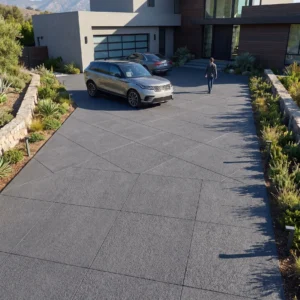
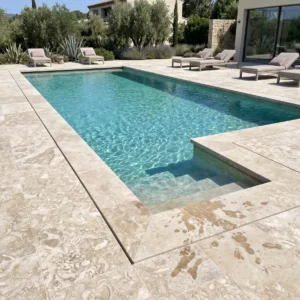
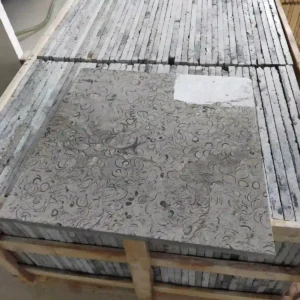
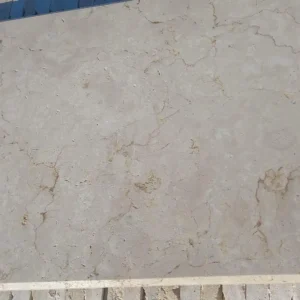
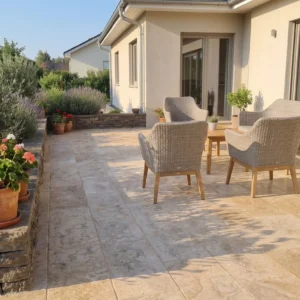

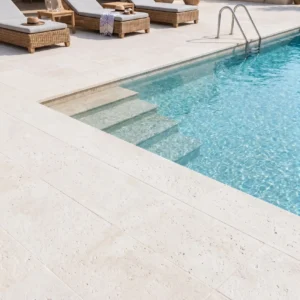
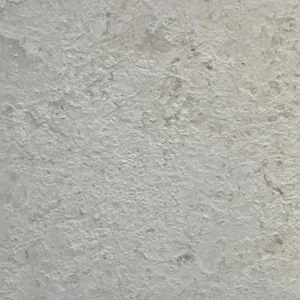
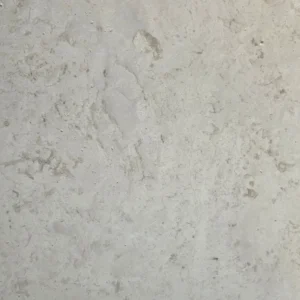
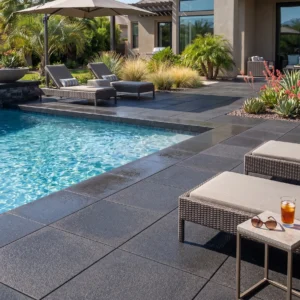
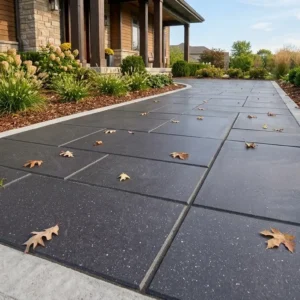
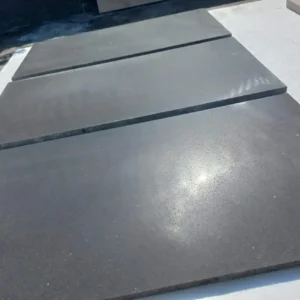




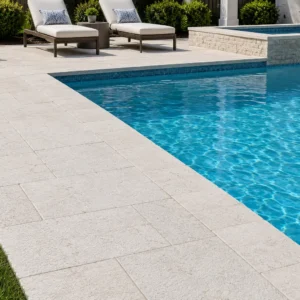
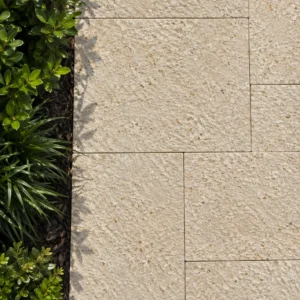
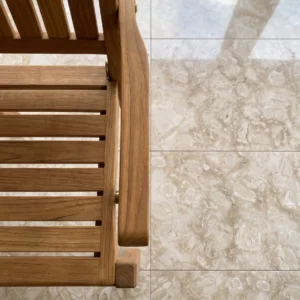
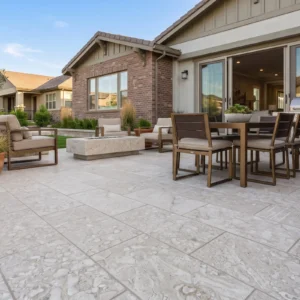
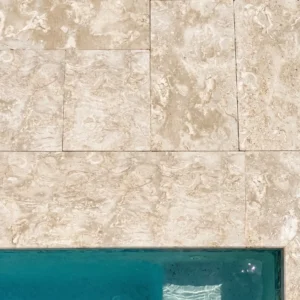
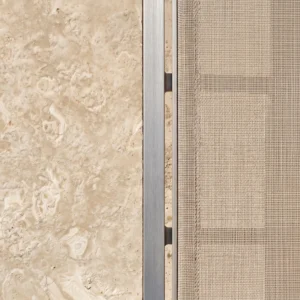
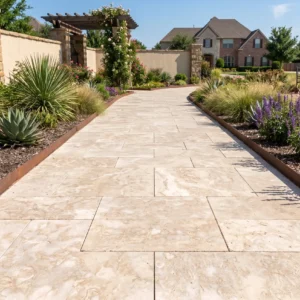
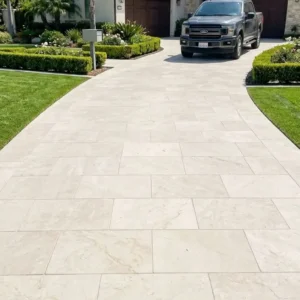
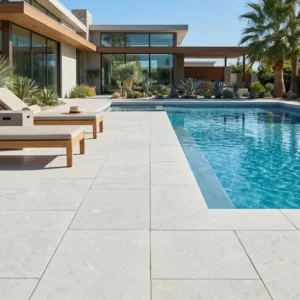
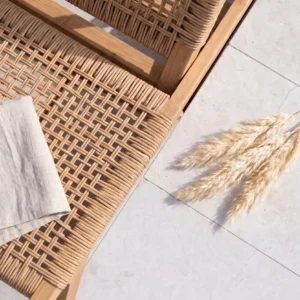
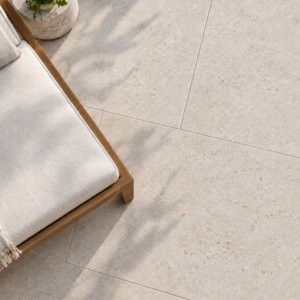
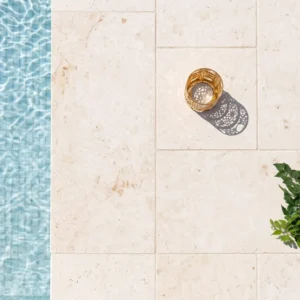
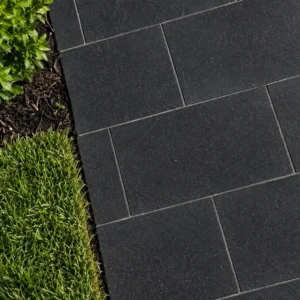
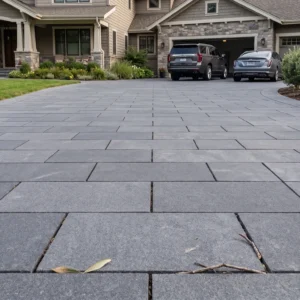
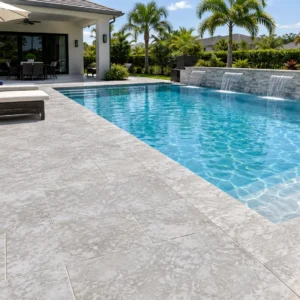


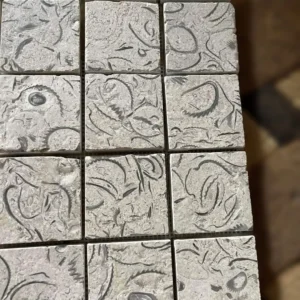
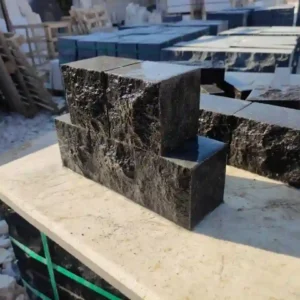
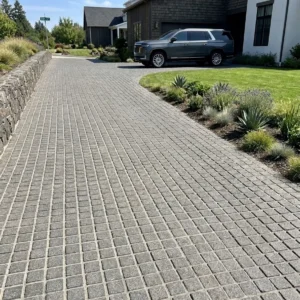
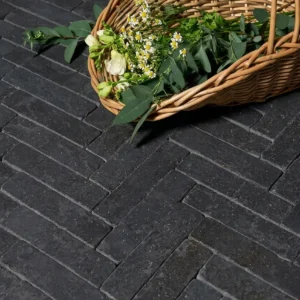

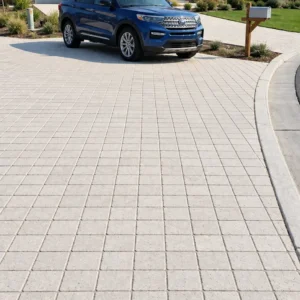
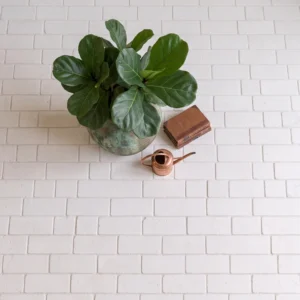
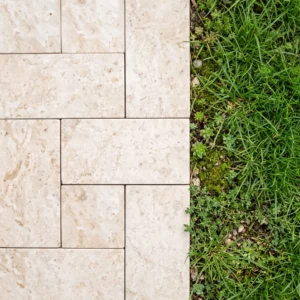
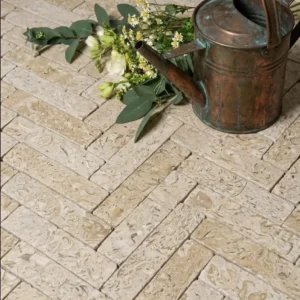

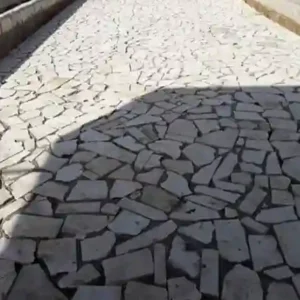

When you’re specifying large travertine tile in Arizona, you’re working with one of the most versatile natural stones available for both commercial and residential applications. Citadel Stone’s expansive tile selections—ranging from 20×20 travertine tile in Arizona installations to premium 36 x 36 travertine tile in Arizona projects—deliver the thermal performance and aesthetic durability that desert climates demand. You’ll find that larger formats reduce grout lines, simplify maintenance, and create visual continuity across open floor plans. The key factor here is understanding how Arizona’s extreme temperature swings, intense UV exposure, and low humidity affect travertine’s long-term performance.
Citadel Stone materials exhibit natural porosity that actually works to your advantage in dry climates. Unlike denser stones that can trap subsurface moisture, travertine’s interconnected pore structure allows for breathability while maintaining structural integrity. Water absorption varies between travertines used in exterior applications in arid regions; request the test report for the batch you are buying. What’s really happening here is that the stone’s cellular composition provides thermal mass benefits—it absorbs heat during peak sun exposure and releases it gradually as temperatures drop at night.
Material Specifications and Thermal Behavior
Citadel Stone’s large travertine floor tiles in Arizona handle thermal expansion differently than manufactured pavers. You’ll need to account for thermal movement: a 36 x 36 travertine tile in Arizona sees a wide swing between night lows and afternoon highs, and the tile moves with it. Take the coefficient of expansion from the test report for the material you specify. This is why your joint spacing becomes critical—you should specify a minimum 1/4-inch joint for interior applications and 3/8-inch for exterior installations where thermal cycling is more extreme.
- Compressive strength for Citadel Stone travertine determines whether it suits foot traffic or light vehicular loads when properly supported — request the test report for the batch you are buying
- Density varies with the specific quarry source and vein structure — request the test report for the batch you are buying
- Surface finishes dramatically affect slip resistance: request the wet DCOF test report for the finish you specify
- Thickness tolerances on big travertine tiles in Arizona installations should stay within +/- 1/8 inch for consistent setting bed depth
The reality is that Citadel Stone’s larger format tiles require more attention to flatness tolerances during substrate preparation. You can’t compensate for wavy concrete slabs with mortar adjustments when you’re working with 36-inch tiles—the industry standard of 1/4 inch over 10 feet becomes your absolute maximum deviation. Most specifiers miss this, but lippage issues on large format installations trace back to substrate prep failures more than any other factor.
Finish Selection and Performance Trade-offs
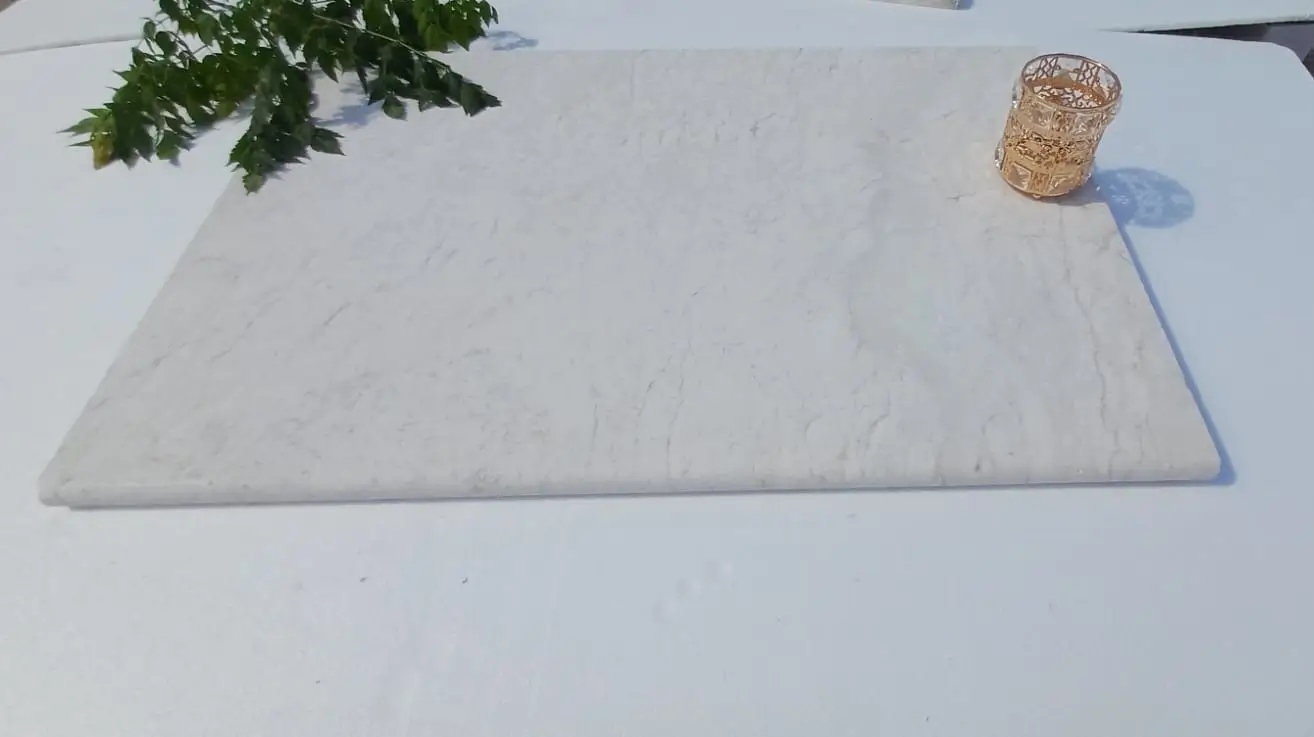
When you’re choosing between honed, tumbled, or brushed finishes for travertine tile large in Arizona applications, you’re making decisions that affect both aesthetics and long-term maintenance requirements. Citadel Stone offers each finish type with distinct performance characteristics that matter in desert environments. Honed surfaces provide smooth, contemporary aesthetics but show dust accumulation more readily in Arizona’s windswept conditions. You’ll find yourself specifying more frequent cleaning protocols for honed finishes in high-traffic commercial spaces.
Tumbled finishes hide surface wear better and provide superior slip resistance, making them ideal for pool decks and outdoor living areas where water exposure occurs. The trade-off comes in slightly higher initial cost—typically 15-20% more than honed—and increased difficulty in cleaning because the textured surface holds debris in its undulations. For Citadel Stone’s big travertine tiles in Arizona, brushed finishes split the difference, offering moderate texture with easier maintenance than tumbled while providing better slip resistance than honed.
Filled Versus Unfilled Considerations
You need to decide early whether you want filled or unfilled travertine, because this choice affects installation methods and long-term appearance. Citadel Stone’s filled travertine uses color-matched resins to fill the natural voids and pitting characteristic of the stone. This creates a smoother walking surface and simplifies cleaning, but the fill material can wear differently than the stone itself over time. In Arizona’s intense UV environment, some resin fills may fade or oxidize within 3-5 years, creating visual contrast as the stone patinas naturally.
Unfilled travertine maintains the stone’s authentic character with visible voids and texture variations. You’ll want to seal unfilled material more frequently—typically every 18-24 months in Arizona versus every 3-4 years for filled versions. The advantage is that unfilled surfaces age more uniformly, and you avoid the fill-stone color differential that can develop. For 20×20 travertine tile in Arizona installations in resort settings where authentic Mediterranean aesthetics matter, unfilled material often delivers better long-term visual consistency.
Substrate Preparation and Critical Factors
Don’t make the common mistake of under-specifying base preparation for Citadel Stone large format tiles. You’re dealing with units that weigh 18-22 pounds per square foot at standard 1.25-inch thickness, which means substrate deflection standards become more stringent. For interior installations over wood framing, you need deflection limited to L/720 under live load—that’s significantly more rigid than the L/360 standard for smaller tiles. Most structural systems won’t meet this requirement without supplemental support.
- Concrete slabs should cure for minimum 28 days before tile installation and show moisture content below 3% using calcium chloride testing methods per ASTM F1869
- Exterior setting beds require a minimum 4-inch compacted aggregate base, increased to 6 inches for vehicular applications or unstable soil conditions
- Slope exterior surfaces at minimum 1/4 inch per foot to ensure positive drainage—standing water accelerates efflorescence in travertine’s porous structure
- Apply waterproof membranes on all exterior installations and wet interior areas, using products compatible with large format tile and modified thin-set mortars
Here’s what you need to know about mortar selection: Citadel Stone recommends modified thin-set mortars specifically formulated for large format natural stone. You’re looking for products rated for tiles with at least one edge exceeding 15 inches, which means ANSI A118.4 or A118.15 compliance. The polymer additives in modified mortars provide flexibility that helps accommodate the differential thermal movement between travertine and substrate materials. Your coverage should reach 95% contact for large travertine floor tiles in Arizona to prevent voids that can telegraph as hollow spots or contribute to cracking.
Joint Spacing and Expansion Requirements
Pay particular attention to movement accommodation when specifying 36 x 36 travertine tile in Arizona. The combination of large format dimensions and significant diurnal temperature swings creates expansion forces that inadequate jointing can’t accommodate. You should specify soft joints at a maximum spacing of 20-25 feet in both directions for interior applications. Exterior installations require perimeter expansion joints at all fixed vertical elements—walls, columns, planters—with joint widths of at least 3/8 inch.
One critical factor that often surprises specifiers is the seasonal movement difference between summer and winter installations. Citadel Stone’s Citadel Stone 36×36 travertine installed during July when ambient temperatures exceed 110°F will contract as temperatures moderate in winter months. You’ll want to account for this by installing during moderate temperature periods when possible, or by adjusting joint widths to accommodate the installation temperature relative to the expected service temperature range.
Grout Selection and Joint Maintenance
Citadel Stone installations benefit from epoxy grouts in Arizona’s harsh climate, particularly for exterior applications. Epoxy provides superior stain resistance and doesn’t require sealing, which reduces long-term maintenance costs despite the higher initial material expense. You’re looking at approximately 40-50% cost premium for epoxy versus cementitious grout, but the performance difference in pool decks and outdoor kitchens justifies the investment. Epoxy grouts maintain color consistency better under UV exposure and don’t support biological growth in joints that occasionally see moisture.
For interior residential applications where budget constraints matter, high-performance cementitious grouts with polymer additives provide acceptable performance. You’ll need to seal these grouts every 2-3 years to maintain stain resistance. The color selection matters more than most realize—lighter grout colors show dirt accumulation and staining more readily in Arizona’s dusty conditions, while mid-tone earth colors provide better long-term appearance with less frequent cleaning.
Sealing Protocols and Maintenance
When you specify big travertine tiles in Arizona, you’re committing to a sealing protocol that protects both the stone and grout from staining, moisture intrusion, and surface degradation. Citadel Stone materials should receive penetrating sealers that work below the surface rather than topical coatings that can trap moisture or create unnatural surface gloss. You’re looking for products that provide water and oil repellency while maintaining vapor permeability—typically siloxane or fluoropolymer-based formulations.
The sealing schedule depends heavily on traffic levels and exposure conditions. Interior residential installations with moderate traffic typically need resealing every 3-4 years. Commercial applications with heavy foot traffic require annual sealing, particularly in entries where moisture and soil tracking occur. Exterior travertine tile large in Arizona applications exposed to direct sun and occasional water exposure should be sealed every 18-24 months to maintain protection levels.
- Test sealer performance by applying water droplets to the surface—properly sealed stone will bead water for at least 30 seconds before absorption begins
- Apply sealers when stone temperature remains between 50-80°F for optimal penetration and curing, which means early morning or late evening application in Arizona summers
- Remove previous sealer residues before reapplication using appropriate strippers to ensure new sealer penetrates effectively rather than layering on the surface
- Allow newly installed tiles to cure for minimum 72 hours before initial sealing to ensure mortar and grout reach adequate strength
Color Selection and Heat Reflection
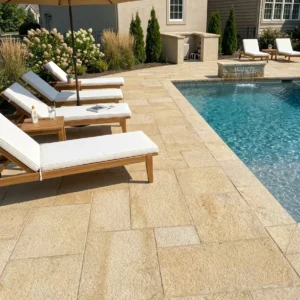
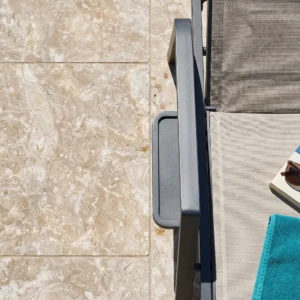
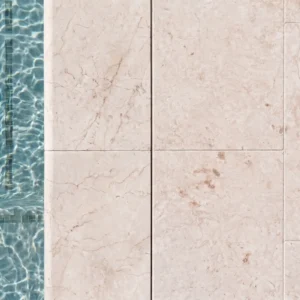
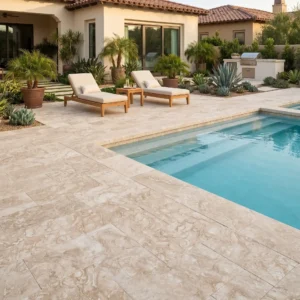
Citadel Stone’s color palette for large travertine tile in Arizona ranges from ivory and beige tones through warmer gold and walnut shades. These color choices affect surface temperatures significantly in exterior applications. Light-colored travertines reflect 60-70% of solar radiation, which keeps surface temperatures 15-25°F cooler than darker stones under identical sun exposure. This difference matters enormously for pool decks and patios where bare feet contact the surface.
You’ll find that Citadel Stone’s ivory and light beige selections work best for Arizona’s outdoor living spaces. The thermal comfort difference between light travertine at 115°F surface temperature versus darker pavers reaching 140°F determines whether spaces remain usable during summer afternoons. Don’t overlook the maintenance trade-off though—lighter colors show staining and biological growth more readily in areas that see occasional moisture, requiring more frequent cleaning to maintain appearance.
Vein Pattern and Visual Consistency
When you’re working with 20×20 travertine tile in Arizona or larger formats, vein patterns and color variations become more visible than in smaller tiles. Citadel Stone sources travertine from multiple quarries, each producing distinct vein characteristics. You should always review full-size samples and request material from the same quarry lot to ensure visual consistency across large installations. The industry allows for natural variation, but substantial color or vein pattern differences between tiles become glaring issues in contemporary designs with minimal grout lines.
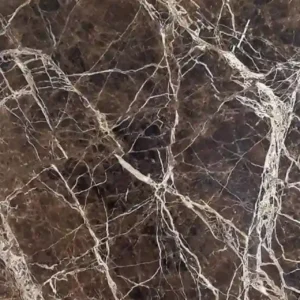
Cross-cut travertine shows linear vein patterns that run parallel to the tile edges, creating striped appearances that some designers embrace for dramatic effect. Vein-cut material displays more random, cloudy patterns with less directional veining. For large travertine floor tiles in Arizona in open-concept commercial spaces, vein-cut materials often provide better visual flow because the random patterning doesn’t create directional lines that can conflict with architectural geometries.
Edge Details and Installation Methods
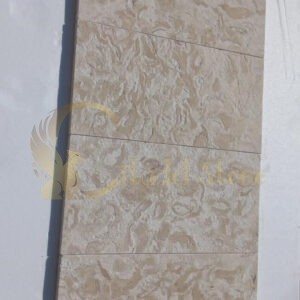
Citadel Stone’s big travertine tiles in Arizona installations require careful edge detail planning, particularly where tile transitions to other flooring materials or terminates at doors and walls. You have several options: natural cleft edges left exposed, honed edges for crisp contemporary lines, or bullnose pieces fabricated for step nosings and pool coping. Natural edges work well in rustic designs but can chip more easily under impact. Honed edges provide clean geometry but require fabrication time and add 30-40% to material costs for perimeter pieces.
The installation method affects both cost and long-term performance. Thin-set installations over properly prepared concrete substrates work well for interior applications and protected exterior areas. You’ll want mortar bed thickness of 1/4 to 3/8 inch applied with a notched trowel sized appropriately for large format tiles—typically 1/2 x 1/2 inch square notch or larger. Back-buttering each tile ensures complete coverage without voids that can lead to cracking under point loads.
- Mud-set installations using traditional mortar beds work better for exterior applications with drainage concerns or substrate irregularities, providing a setting bed that can incorporate slope for water management
- Mechanical anchoring systems allow for raised installations over pedestals, creating ventilated cavities beneath the tile that reduce thermal buildup and provide access to utilities
- Dry-set installations over sand beds work only for pedestrian applications and require edge restraints to prevent lateral movement, plus they show more settlement issues than bonded installations
Arizona Climate-Specific Challenges
You’re dealing with unique environmental factors when specifying travertine tile large in Arizona that don’t apply in more moderate climates. The extreme UV exposure at Arizona’s elevations causes accelerated degradation of sealers and resin fills. You should expect sealer life to be 30-40% shorter than manufacturer specifications developed for more temperate regions. This translates to more frequent maintenance cycles and higher long-term costs that need to factor into your project budgets.
Dust intrusion presents another challenge specific to Arizona’s desert environment. Citadel Stone’s travertine installations require more frequent cleaning than similar applications in humid climates because airborne particulates settle into the stone’s surface texture and grout joints. Commercial applications should specify cleaning protocols that include dry dust mopping daily and damp mopping weekly minimum to prevent abrasive soil accumulation that accelerates surface wear.
Alkalinity and Efflorescence Management
Arizona’s soil and water chemistry contribute to efflorescence issues in travertine installations. The alkaline soils common throughout the state, combined with mineral-rich groundwater, create conditions where soluble salts migrate through the stone and mortar bed to deposit white crystalline residues on the surface. You’ll minimize this by using low-alkali mortars and ensuring complete substrate drying before installation. Proper drainage design prevents water from wicking up through the tile assembly.
When efflorescence appears on Citadel Stone materials, don’t just seal over it—that traps the salts beneath the surface where they’ll continue to cause problems. You need to remove efflorescence using mild acidic cleaners specifically formulated for travertine, then address the moisture source before resealing. In exterior applications, this often means improving subsurface drainage or installing vapor barriers to block groundwater migration through the setting bed.
Cost Factors and Budget Planning
When you’re budgeting for 36 x 36 travertine tile in Arizona projects, you’re looking at material costs that typically range from $8-18 per square foot for Citadel Stone products, depending on grade, finish, and thickness. Premium selections with consistent coloration and minimal voids command the higher end of this range. Installation costs add another $8-15 per square foot for professional placement, though this varies significantly based on substrate conditions, accessibility, and project size. You’ll find that larger format tiles actually reduce installation labor per square foot compared to smaller tiles because there are fewer individual pieces to set.
The total installed cost for big travertine tiles in Arizona, including materials, installation, and initial sealing, generally falls between $18-35 per square foot. This positions travertine competitively against other premium flooring options while delivering superior thermal performance and longevity in desert climates. Don’t forget to budget for periodic maintenance—figure approximately $0.75-1.25 per square foot annually for cleaning and sealing to maintain optimal performance and appearance over the material’s multi-decade service life.
Citadel Stone Warehouse and Logistics
Citadel Stone maintains substantial warehouse inventory of large format travertine to support Arizona’s active construction market. When you’re planning project timelines, you should verify current stock levels for your specific size and finish requirements. Standard sizes like 20×20 travertine tile in Arizona and 36 x 36 travertine tile in Arizona typically ship within 5-7 business days from the warehouse, but custom sizes or specialty finishes may require 6-8 weeks from the quarry. This lead time difference affects your construction schedule and may influence material selection when project deadlines are tight.
Truck delivery logistics matter more for large format tiles because of weight and handling requirements. A typical delivery of 36-inch tiles requires liftgate service or forklift access at the job site—standard hand-unloading isn’t practical for pallets weighing 2,000-3,000 pounds. You’ll want to coordinate delivery timing with your installation crew’s schedule and ensure adequate covered storage on site, because exposure to moisture before installation can complicate the setting process. Most installers prefer to receive material 48-72 hours before starting work, which allows for acclimation to site conditions while minimizing storage duration.
Citadel Stone’s Premium Large Format Travertine Solutions for Arizona Applications
This section provides professional guidance on how Citadel Stone would approach large travertine tile in Arizona installations across diverse municipal contexts. The recommendations reflect Citadel Stone’s expertise in desert climate applications and demonstrate the versatility of 36 x 36 travertine tile in Arizona projects ranging from residential estates to commercial developments. These hypothetical scenarios illustrate how Citadel Stone materials address Arizona’s unique combination of thermal extremes, UV exposure, and soil chemistry challenges while delivering the aesthetic and performance characteristics that specifiers demand.
Phoenix Urban Applications
For Phoenix’s metropolitan projects, Citadel Stone would typically recommend filled, honed travertine in light ivory tones for commercial lobbies and multi-family common areas. The urban heat island effect in Phoenix adds 5-10°F to already extreme summer temperatures, making light-colored materials essential for outdoor amenity spaces. You’d want to specify 36 x 36 travertine tile in Arizona for these applications to minimize grout lines and create the expansive visual flow that contemporary designs require. Citadel Stone’s warehouse proximity to Phoenix enables responsive delivery scheduling that keeps fast-paced urban projects on timeline, with truck access typically requiring coordination during off-peak hours to avoid downtown traffic congestion.
Tucson Residential Estates
Tucson’s residential market favors authentic Mediterranean aesthetics that benefit from Citadel Stone’s unfilled travertine options. For estate properties in the Catalina Foothills and similar settings, you’d typically specify tumbled finishes on large travertine floor tiles in Arizona to provide slip resistance around pools and outdoor kitchens while maintaining the textured, aged appearance that complements Southwestern architecture. The slightly higher elevation in Tucson creates marginally more moderate summer temperatures than Phoenix, but thermal performance remains critical. Citadel Stone materials in warm beige and light walnut tones integrate naturally with Tucson’s desert landscape palette and adobe color schemes.
Scottsdale Luxury Specifications
Scottsdale’s luxury residential and resort markets demand the highest grade materials with premium finishes. Citadel Stone would recommend select-grade travertine tile large in Arizona with minimal vein variation and consistent coloration for these high-end applications. You’d specify honed finishes for interior great rooms and covered outdoor living spaces, transitioning to brushed or tumbled for pool decks and exposed patios. The 20×20 travertine tile in Arizona format works well for more intimate spaces like master baths, while 36-inch tiles create dramatic impact in open-concept living areas. Scottsdale projects typically include architectural review requirements that Citadel Stone’s technical documentation supports with comprehensive specifications and sample submittals.
Flagstaff Climate Adaptations
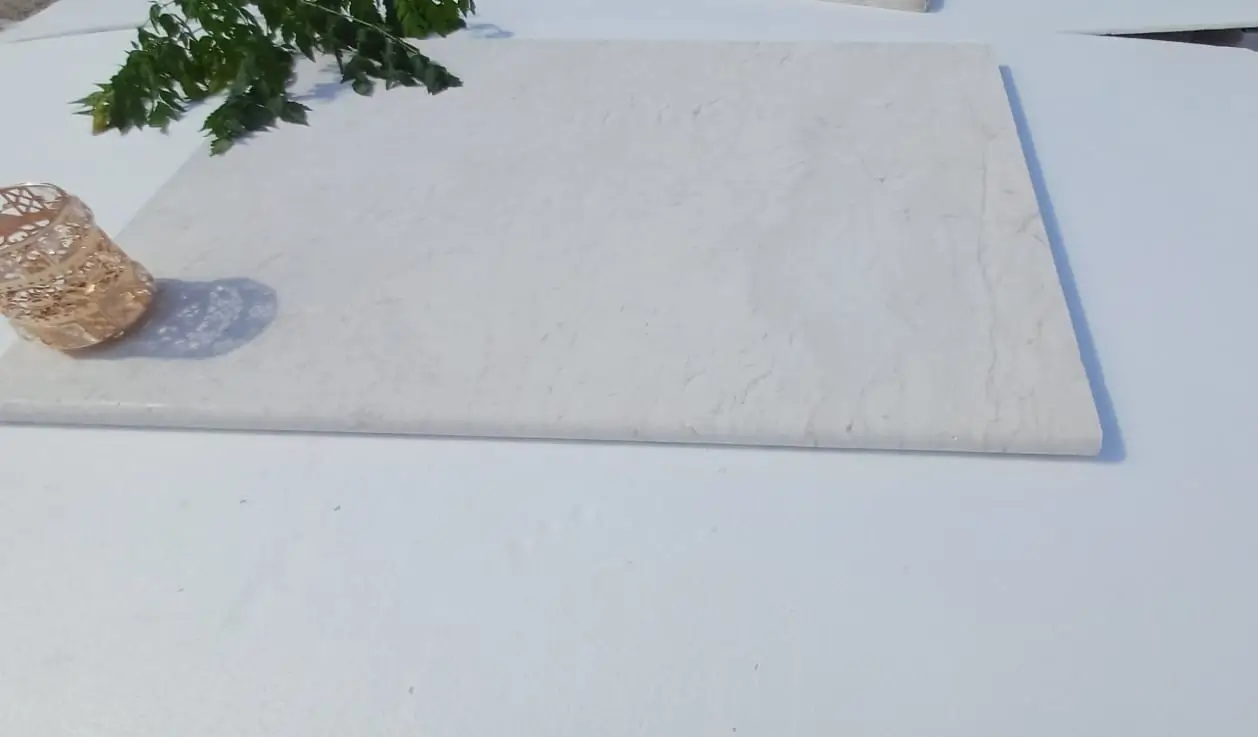
Flagstaff’s higher elevation and actual winter freeze-thaw cycles require different specifications than lower desert cities. Citadel Stone would recommend denser travertine selections with lower water absorption rates—below 3% by weight—for Flagstaff applications. You’d want to verify ASTM C666 freeze-thaw resistance testing for any exterior installation at this elevation. The big travertine tiles in Arizona still perform well here, but joint spacing needs to increase to 1/2 inch minimum for exterior applications to accommodate ice expansion. Citadel’s technical team would typically advise on supplemental winter protection measures and modified sealing schedules that account for snow melt and ice dam conditions that don’t occur in Arizona’s desert regions.
Sedona Natural Integration
Sedona’s stunning red rock context influences material selection toward travertine colors that complement rather than compete with the natural environment. Citadel Stone’s warm beige and medium walnut travertines work particularly well in Sedona applications, creating visual harmony with the surrounding geology. For resort and hospitality projects in Sedona, you’d typically specify large format tiles in outdoor living spaces that frame red rock views, using the stone’s neutral tones to enhance rather than distract from the landscape. Sedona’s strict design review processes benefit from Citadel Stone’s comprehensive specification documentation and willingness to provide samples that review boards can evaluate in context with the natural setting.
Yuma Extreme Heat Performance
Yuma’s position as one of the hottest cities in the United States makes thermal performance the absolute priority for Citadel Stone travertine specifications. You’d specify only the lightest ivory tones for any exterior application, and you’d want to incorporate shade structures or vegetation screening to reduce direct solar exposure during peak summer months. The 36 x 36 travertine tile in Arizona format delivers optimal thermal mass benefits in Yuma’s climate, absorbing heat during the day and releasing it slowly at night to moderate temperature extremes. Citadel Stone would recommend elevated installation systems for commercial plaza applications in Yuma to create air circulation beneath tiles that significantly reduces surface temperatures compared to direct-set installations.
Long-Term Performance Expectations
When you install Citadel Stone large travertine tile in Arizona correctly, you’re looking at service life exceeding 50 years in most applications. The stone’s inherent durability, combined with proper installation and reasonable maintenance, creates essentially permanent flooring that appreciates in value as it develops natural patina. You’ll see some surface wear in high-traffic areas after 10-15 years, but this typically enhances rather than detracts from the material’s character. The stone can be professionally refinished if necessary, restoring original surface characteristics through diamond grinding and repolishing.
The reality is that installation quality affects longevity more than material selection in most cases. Citadel Stone products perform exceptionally when proper substrate preparation, appropriate mortar selection, and adequate movement accommodation are specified and executed. Failures almost always trace to shortcuts in these areas rather than inherent material deficiencies. You should expect some efflorescence in the first 6-12 months as residual salts leach from mortar and substrate, but this typically resolves with routine cleaning as the system equilibrates.
Final Considerations
Specifying large travertine floor tiles in Arizona requires balancing thermal performance, aesthetic goals, and budget realities while addressing the unique challenges of desert climate installations. Citadel Stone’s comprehensive material selection and technical support enable you to navigate these considerations with confidence. You’ll want to involve installers early in the planning process to address site-specific conditions that affect substrate preparation and material handling. The investment in proper specification and installation pays dividends through decades of reliable performance and timeless aesthetic appeal that manufactured materials simply can’t replicate.
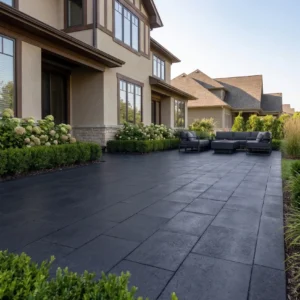
When you’re comparing options, remember that travertine’s natural variation and authentic material character distinguish it from engineered alternatives. Citadel Stone takes pride in providing materials that improve with age rather than deteriorating like synthetic products. For comprehensive guidance on related finish options and regional performance factors, review comparing honed and tumbled travertine finishes for Arizona climates before finalizing your project specifications. Open-concept floors showcase Citadel Stone’s expansive 36 x 36 travertine tile for seamless modern living.