

What Makes Yorkstone Paver Performance Distinct
Yorkstone paver stock varies more than most specification sheets acknowledge — and that variation is where most project decisions get made or unmade. The compressive strength range for authentic yorkstone paver material runs between 40 and 80 MPa depending on bed orientation, which means a paver installed on its natural bed versus its edge behaves like a fundamentally different material under repeated point loading. Understanding that distinction before you finalize your specification is the difference between a surface that performs across decades and one that begins delaminating within three to five years.
Yorkstone is a fine-grained sandstone — technically a gritstone — quarried from millstone grit formations. Its distinctive buff-to-grey coloration comes from iron oxide mineral banding, which also explains why color consistency across a batch requires careful grading at the quarry level. The laminar structure that gives yorkstone its characteristic natural cleft finish is also its most structurally sensitive characteristic: split along the wrong plane and you lose a significant portion of its load-bearing capacity.
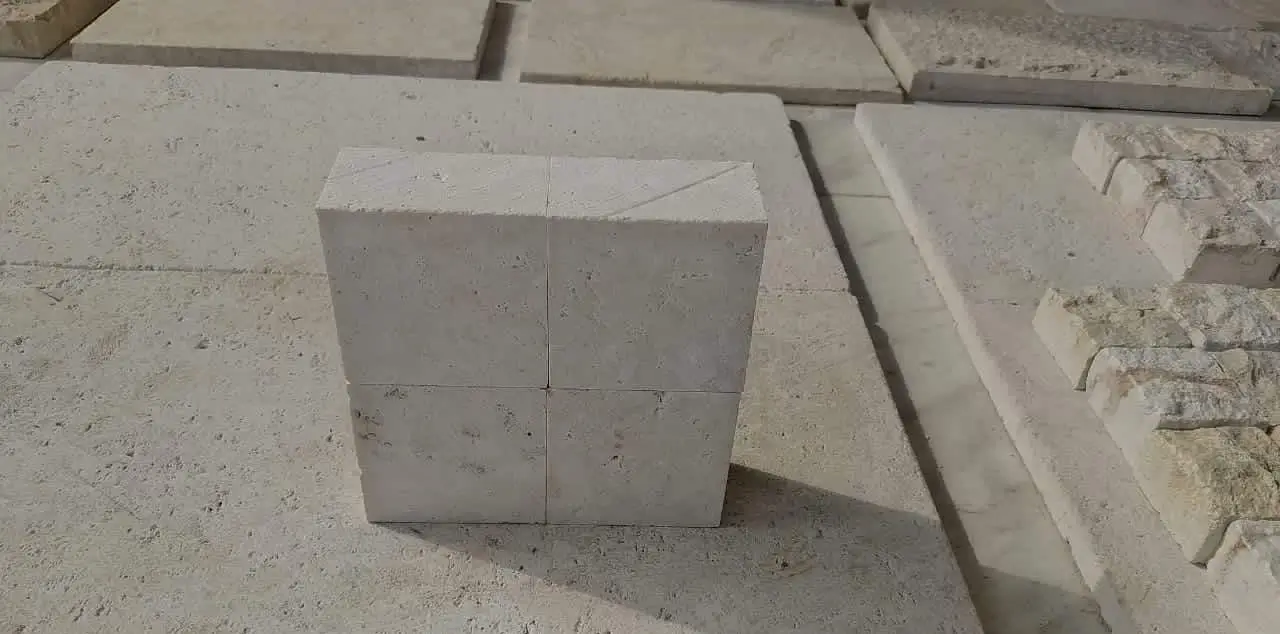
Standard Sizes and Thickness Ranges for Yorkstone Paving
Your project’s size selection will determine both the laying pattern options available to you and the structural load capacity of the finished surface. Yorkstone pavers typically come in three thickness categories: 30 mm for pedestrian-only applications, 50 mm for light vehicular and patio use, and 65–75 mm for driveways and commercial pedestrian zones subject to concentrated foot traffic or occasional vehicle override.
The most common modular sizes in the market are 400 × 400 mm, 600 × 300 mm, 600 × 600 mm, and 900 × 600 mm. Irregular flagstone sizing — sometimes marketed as natural flagstone paving — runs from approximately 300 × 300 mm up to 900 × 600 mm in random lengths. The larger formats suit contemporary residential designs where minimal joint lines are the aesthetic goal, but they demand a more precise sub-base because any deviation in base flatness shows immediately across a broad face.
- 30 mm thickness: pedestrian walkways, courtyards, and light garden paths with stable compacted sub-base
- 50 mm thickness: patios, terraces, pool surrounds, and light commercial foot traffic areas
- 65–75 mm thickness: driveways, public realm installations, and applications with occasional service vehicle access
- Irregular flagstone formats: best for informal garden settings where joint variation is part of the design intent
- Modular formats: preferred for formal layouts, grid patterns, and stretcher-bond configurations
Thickness also affects thermal mass. Thicker slabs absorb and release heat more slowly, which creates a more stable surface temperature throughout the day — a practical consideration for any patio or terrace used in the evening hours.
Where Yorkstone Pavers Perform Best
Yorkstone paver installations cover an impressive range of applications, but the material has genuine performance sweet spots that most specifiers overlook. Pedestrian plazas and formal garden paths are where yorkstone has historically excelled — the natural cleft finish provides reliable grip without mechanical texturing, and the visual warmth of the buff and grey tones integrates naturally with brick, timber, and steel detailing.
Pool surrounds are a more demanding application that yorkstone handles well when you specify the right finish and thickness. The natural cleft surface maintains a wet coefficient of friction well above the 0.6 threshold that most safety standards require, provided you avoid any honed or polished processing. According to NSI stone variety specifications, natural cleft sedimentary surfaces consistently outperform machine-finished alternatives in wet-condition slip resistance — a performance characteristic that makes yorkstone a legitimate option for pool deck specification where you might otherwise default to travertine.
Driveway use requires more careful consideration. Yorkstone’s laminar grain structure makes it susceptible to compressive edge failure if a vehicle tire repeatedly tracks across the same joint line. Specifying 65 mm minimum thickness, a class 1 MOT sub-base compacted to 95% Proctor density, and full mortar bed laying — rather than a sand-set approach — addresses this vulnerability directly.
Base Preparation and Installation Standards
The base you build beneath a yorkstone paver installation determines far more than the surface does. A properly graded, compacted granular sub-base with adequate drainage geometry will outlast almost any surface failure. The reverse is not true — the best-quality yorkstone laid on a poorly prepared base will show movement, lippage, and joint cracking within two to three seasonal cycles.
For mortar-set installations, your granular sub-base should reach a minimum depth of 150 mm for pedestrian use and 200 mm for driveway applications, compacted in two lifts. The mortar bed above that should be a semi-dry mix at 40–50 mm depth, with full continuous contact across the underside of each paver. Spot bedding — placing mortar only at the corners and center — is a practice that compromises long-term joint integrity and accelerates edge fracture under repeated loading. Avoid it entirely.
- Sub-base depth: 150 mm minimum for pedestrian, 200 mm for vehicular — compacted in two lifts
- Semi-dry mortar bed: 40–50 mm at a mix ratio of approximately 4:1 sharp sand to cement
- Full bed contact: no spot bedding — the entire underside of the paver must be in contact
- Joint width: 10–15 mm for natural flagstone paving formats, 5–8 mm for modular cut sizes
- Drainage fall: minimum 1:80 gradient away from structures — 1:60 preferred in regions subject to heavy rainfall events
Sand-set laying is appropriate for lightly trafficked garden paths and informal settings, but it demands a geotextile membrane at the base and a 75 mm clean angular gravel layer above it. Without those elements, the sand migrates and the surface becomes unstable within a single winter cycle.
Yorkstone Durability Under Severe Weather Conditions
Storm events, wind-driven rain, and freeze-thaw cycling are the three mechanical stressors that yorkstone paver installations face most frequently — and the material’s response to each is worth understanding before you specify it for an exposed site. Yorkstone’s sedimentary grain structure gives it genuine freeze-thaw resistance when properly installed: water absorption rates for quality-graded yorkstone typically fall between 2 and 6%, which keeps the expansion pressure during freezing well below the fracture threshold of the stone itself. According to USGS dimension stone production data, sandstone varieties within this absorption range demonstrate consistent long-term performance in freeze-thaw regions when installations meet minimum base depth and drainage specifications.
Wind-driven rain is a more nuanced challenge. The real risk is not surface saturation — yorkstone manages that well — but joint erosion. If your mortar joints are not fully cured and tooled to a slightly recessed profile before the installation faces its first significant storm, you’ll see progressive joint washout that undermines the bedding layer from below. Pointing mortar should cure for a minimum of 72 hours before the surface is subjected to heavy rain, and the finished joint profile should sit 2–3 mm below the paver face to direct surface water away from the joint edges.
Edge restraint integrity becomes especially important on exposed terraces and elevated decks where wind uplift can act on any paver with compromised bedding. Perimeter restraints should be set in continuous haunched concrete, not just spot-fixed, and any paver within 600 mm of a free edge on an elevated surface warrants additional mechanical fixings in severe-exposure zones. The Britannica flagstone entry on sedimentary paving stone characteristics confirms that laminar sandstones — which yorkstone represents — perform reliably under mechanical stress when edge conditions are properly detailed.
How Lueders Limestone Compares as an Alternative
Specifiers who evaluate yorkstone pavers often consider lueders limestone as a parallel option — both materials share a natural cleft finish aesthetic and a broadly similar application range. The key performance differences come down to three variables: compressive strength, coloration consistency, and availability.
Lueders limestone carries a compressive strength typically between 55 and 90 MPa, which places it above the lower end of the yorkstone range and makes it competitive for driveway and vehicular applications. Its coloration is more consistent across a batch — the calcium carbonate matrix that gives lueders limestone its cream-to-buff tone is more homogeneous than the iron-banded gritstone of yorkstone, which tends to show more natural variation. For projects where color matching across a large area is a priority, lueders often presents fewer field challenges during installation.
- Yorkstone: 40–80 MPa compressive strength, wider natural color variation, distinctive laminar texture
- Lueders limestone: 55–90 MPa compressive strength, higher color consistency, calcium carbonate base
- Both materials suit pedestrian and light vehicular applications at appropriate thicknesses
- Yorkstone offers a more pronounced natural cleft texture — preferred for traditional and heritage design contexts
- Lueders limestone absorbs sealant more uniformly, simplifying maintenance protocols
The choice between the two materials often comes down to design intent as much as structural performance. Yorkstone’s warm, characterful variation suits naturalistic and heritage project aesthetics. Lueders limestone suits cleaner contemporary palettes where tonal evenness matters more than rustic variation.
Yorkstone Paver Cost Factors and Budget Planning
Your yorkstone paver budget should account for four distinct cost components: material supply, base preparation, installation labor, and finishing. Material pricing for cut and calibrated yorkstone typically falls between $18 and $45 per square foot depending on thickness, format size, and finish. Natural cleft irregular material at the lower thickness runs toward the lower end of that range; large-format calibrated slabs at 65 mm run toward the upper end.
For a complete, installed square foot cost, budget an additional $12 to $25 for base preparation and mortar bed installation for a straightforward pedestrian patio. Driveways with deeper sub-base requirements and heavier mortar specifications add $8 to $15 per square foot to that figure. Pointing, cleaning, and sealing typically add $3 to $6 per square foot as a finishing cost. A realistic all-in installed cost for a quality yorkstone paver terrace runs $33 to $70 per square foot depending on site complexity, labor rates, and material specification.
Warehouse lead times are a genuine budget variable that most project managers underestimate. Citadel Stone yorkstone pavers are held in domestic warehouse inventory, which typically shortens your supply timeline significantly compared to projects that rely on direct-import sourcing with 10–14 week lead cycles. Confirming warehouse stock levels against your project schedule before you commit to an installation date protects you from costly program delays.
Sealing and Maintenance Protocols for Yorkstone
Yorkstone’s open-pore sandstone structure requires a different sealing approach than limestone or granite. The material is genuinely porous — absorption rates between 2 and 6% mean that an unsealed surface in a domestic setting will show oil staining, biological growth, and progressive joint erosion within the first two to three seasons. Sealing is not optional for any yorkstone paver installation in a residential or commercial setting.
Use a breathable, penetrating silane-siloxane sealer rather than a film-forming acrylic. Film-forming sealers trap moisture beneath the surface, and in freeze-thaw regions that moisture expansion causes spalling and surface delamination. A penetrating sealer maintains vapor permeability while dramatically reducing liquid water absorption — the correct trade-off for a natural cleft sandstone in an outdoor application.
- Initial seal: apply within 28 days of installation, after mortar joints have fully cured
- Sealer type: breathable penetrating silane-siloxane — avoid acrylic film-forming products
- Re-sealing cycle: every 2–3 years for pedestrian applications, every 18–24 months for driveway surfaces
- Cleaning: pH-neutral stone cleaner only — avoid acid-based cleaners which etch the silica matrix
- Biological growth: treat annually with a dilute biocide in shaded or damp environments
- Joint inspection: check mortar joint integrity after each winter season and repoint any voids promptly
The most common maintenance failure in yorkstone paver installations is not the surface itself — it’s deferred joint repointing. A failed joint allows water to penetrate directly to the mortar bed, which progressively softens the base and creates the rocking and settlement that eventually makes individual pavers a trip hazard. Keeping joints at 90–95% fill capacity is the single highest-impact maintenance action you can take.
What Is Flagstone Paving and Where Yorkstone Fits
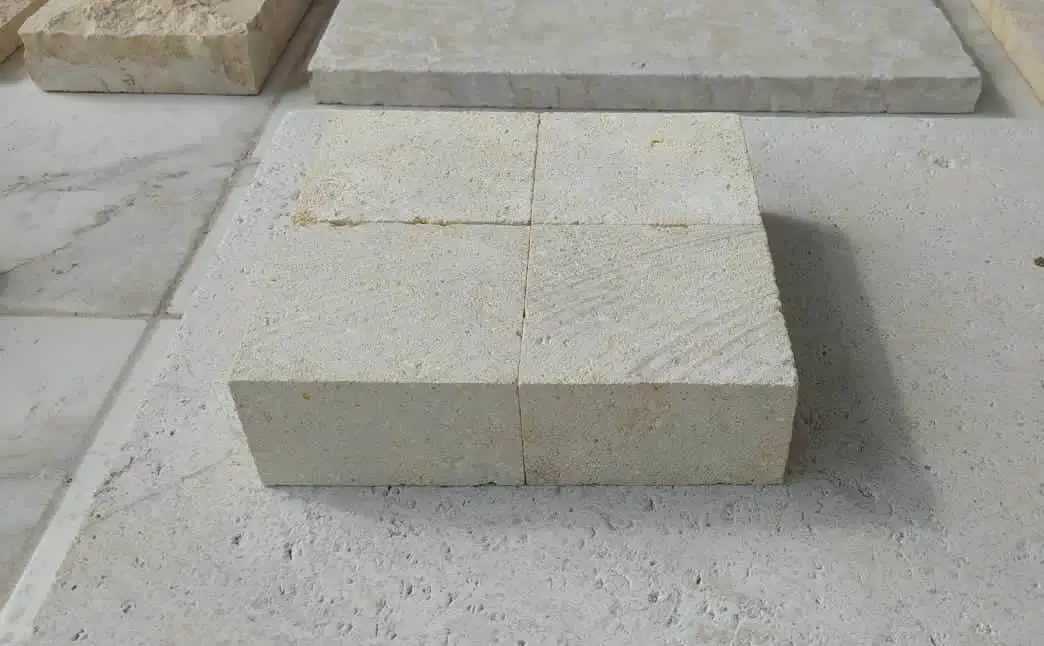
The term flagstone paving describes any flat sedimentary stone used in a horizontal paving application — and yorkstone is one of the defining historical examples of that category. Understanding what is flagstone paving in a technical sense helps you communicate correctly with suppliers, contractors, and design professionals when assembling your project team.
Flagstone is not a mineral classification — it describes a physical form: flat, split or sawn stone with a thickness-to-face ratio that allows it to function as a pavement unit. Yorkstone qualifies as a flagstone both by its physical form and its historical use — it has been used as pavement in public spaces across the UK and internationally for over two centuries, which gives it one of the longest documented performance records of any natural paving material. According to ASLA natural stone paving guidance, sedimentary flagstones with appropriate surface texture and base preparation consistently outperform man-made alternatives on long-term sustainability and lifecycle cost metrics.
For your specification, clarifying whether you want yorkstone in a flagstone format — irregular, natural cleft, random sizing — or a calibrated modular format is the first decision that drives all subsequent choices about laying method, joint width, and base preparation depth. Both formats use the same stone, but they suit different project aesthetics and different installation workflows.
Ordering, Delivery, and Logistics Planning
Getting yorkstone paver material to site requires more coordination than most clients anticipate, particularly for large format slabs at 65 mm thickness. A square meter of 65 mm yorkstone weighs approximately 165 kg — which means a 100 m² terrace project involves roughly 16.5 tonnes of material. Your truck access and unloading capability needs to accommodate that weight, and most residential sites require crane-offloaded pallets or a telehandler at the delivery point.
Citadel Stone sources yorkstone pavers through internationally verified selected quarrieships, which allows our technical team to confirm batch color consistency and bed orientation compliance before material is released for shipment. That quarry-level grading process is what prevents the color banding and strength inconsistencies that cause field problems when yorkstone is sourced through unvetted intermediaries. Confirming your truck access, unloading equipment, and on-site staging area before your delivery is scheduled protects both the material and your installation timeline.
Plan your delivery sequencing so that material arrives no more than two weeks before your installation crew begins work. Yorkstone stored outdoors on pallets for extended periods is vulnerable to biological staining from ground contact and moisture cycling — staging the delivery close to your installation window keeps the material in the best possible condition for laying.
Getting Your Yorkstone Paver Specification Right
Specifying a yorkstone paver installation that performs across decades comes down to decisions made before a single stone is laid: bed orientation confirmed at the quarry, sub-base depth calibrated to the actual load case, mortar bed coverage verified across the full paver underside, and joint integrity maintained through a disciplined maintenance cycle. The material has the compressive strength, the surface texture, and the documented performance history to justify its position at the premium end of the natural paving market — but it requires a specification that respects its structural characteristics rather than treating it as a generic slab.
As you plan your broader hardscape project, other natural stone materials may complement or inform your yorkstone selection. For a closer look at how granite performs as a contrasting hardscape element, granite cobblestone performance details covers durability, sizing, and application considerations worth reviewing alongside your yorkstone specification. Yorkstone pavers from Citadel Stone arrive from internationally sourced quarries, graded for even color across a batch.
Related reading: tumbled setts paving · cobblestone setts · joint fill for cobblestone setts.