

Granite cobblestone compressive strength regularly exceeds 19,000 PSI — a performance threshold that separates it from virtually every other paving material in the residential and commercial hardscape market. That number isn’t just impressive on paper; it’s the reason granite cobblestone installations laid in the early twentieth century still carry vehicle loads today without meaningful deflection. Understanding what drives that durability, and more importantly how to specify and install it correctly, is what separates a cobblestone project that looks great for three decades from one that starts rocking within five years.
What Granite Cobblestone Actually Is
The term “cobblestone” gets used loosely in the hardscape trade, so let’s establish a working definition. True granite cobblestone — also called a sett — is a hand-cut or machine-cut block of igneous granite, typically measuring between 3.5 and 4.5 inches in height, with a face dimension ranging from roughly 3×3 inches up to 4×6 inches depending on the application. The key structural distinction is depth: granite cobblestone is a full-depth unit, not a veneer or thin paver. That depth is what allows it to resist point loads, freeze-thaw cycling, and the lateral creep that undermines thinner materials over time.
Granite’s igneous origin gives it a crystalline, interlocked mineral structure — primarily quartz, feldspar, and mica — that creates an extremely low absorption rate, typically below 0.5% by weight. According to Natural Stone Institute granite durability and application specifications, this low porosity is a primary reason granite outperforms sedimentary stones in freeze-thaw environments, where moisture absorption is the chief driver of spalling and surface degradation. For specifiers, that distinction matters enormously when comparing options across climatic zones.
Finish Options and What They Mean for Performance
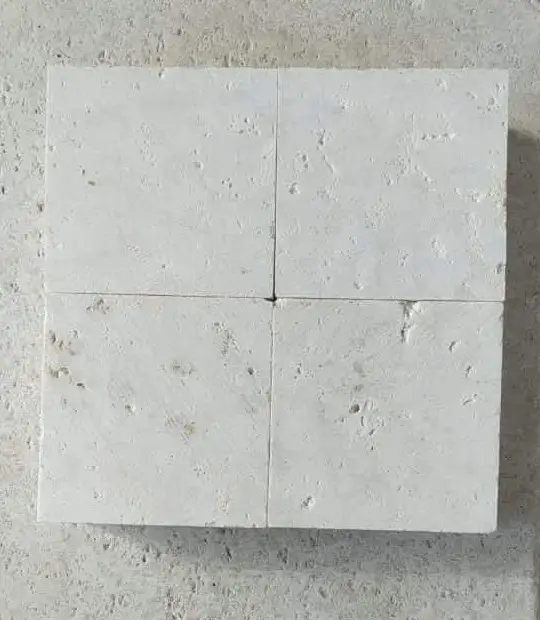
Your finish selection determines far more than appearance — it directly affects slip resistance, long-term maintenance requirements, and how the surface weathers under UV and mechanical wear. Granite cobblestone is typically available in three primary finishes, and each has a specific best-use context.
- Split-face finish exposes the natural cleft of the stone by fracturing along natural grain lines. The resulting texture is irregular, high-relief, and excellent for drainage — surface friction coefficients typically exceed 0.6 wet, which meets OSHA general industry guidelines for pedestrian surfaces. Split-face cobblestone is the standard specification for driveways, street-level commercial entries, and any surface where vehicle tires or foot traffic in wet conditions are routine concerns.
- Tumbled finish rounds the arris edges and softens the face texture through a mechanical tumbling process. You get a more aged, European aesthetic with moderate texture — appropriate for garden paths, courtyard features, and residential projects where the design language is more relaxed. Slip resistance remains acceptable for pedestrian use but should be evaluated carefully near water features or in applications where standing water accumulates.
- Sawn or honed top with split sides gives you dimensional precision on the bed face combined with natural texture on the exposed perimeter faces. This hybrid approach is common in formal landscape architecture where consistent joint widths and level paving planes are specified, but the natural stone character still needs to read visually.
The finish also affects thermal absorption. Split-face and tumbled surfaces, by virtue of their micro-relief texture, scatter incident solar radiation more effectively than a flat honed surface. In high-heat climates, this isn’t trivial — a split-face cobblestone surface can run 8–12°F cooler at midday than a comparably sized honed paving slab in the same exposure.
Limestone vs. Granite: A Real Performance Comparison
The limestone vs granite question comes up on nearly every project where cobblestone is being seriously considered. Both are legitimate choices, but they’re not interchangeable, and the right answer depends on your specific application, budget, and long-term maintenance commitment.
Granite wins decisively on hardness and abrasion resistance. The Mohs hardness of granite runs 6–7, compared to 3–4 for most commercial limestone. That gap translates directly to surface wear under vehicle traffic — limestone cobblestone in a high-volume driveway application will show measurable surface erosion within 10–15 years, while granite cobblestone in the same application shows essentially no surface loss under normal use. For driveways, parking courts, and commercial entries that see regular vehicle traffic, granite is the defensible specification.
- Limestone is a sedimentary material with calcium carbonate composition — reactive to acid rain, citrus spills, and cleaning chemicals with low pH values
- Granite’s silica-dominant chemistry makes it highly resistant to water to acidic attack under normal environmental conditions
- Limestone cobblestone absorbs moisture at rates of 2–7% depending on density and quarry source; granite typically stays below 0.5%
- In freeze-thaw regions, that absorption differential is the primary determinant of long-term survival — limestone requires diligent sealing maintenance to remain viable
- Aesthetically, limestone offers warmer tones and more variation in sedimentary layering; granite provides harder-edged crystalline patterns in greys, blacks, pinks, and multicolour blends
The limestone decorative rock category — loose-placed or mortared accent stone in landscape beds and borders — is a separate use case where limestone’s softness and warm colour palette are genuine advantages. That application doesn’t subject the material to traffic loads, so the hardness differential becomes irrelevant. Matching material selection to the actual load and exposure conditions is the core of good specification work. When evaluating limestone decorative rock alongside granite paver stones for a mixed-material project, the performance gap between the two materials in trafficked zones should drive the zone-by-zone specification decision.
Base Preparation: The Specification Decision That Defines Longevity
More granite cobblestone failures trace back to inadequate base preparation than to any issue with the stone itself. The material is essentially indestructible under normal conditions — what fails is the system beneath it. Here’s the base specification that actually delivers long-term performance across varied soil conditions.
Your subgrade preparation needs to start with a minimum 95% Standard Proctor compaction on native soil. In expansive clay soils, that often means mechanical compaction in 4-inch lifts with a vibratory plate compactor — don’t rely on a single pass. Over that prepared subgrade, you need a crushed aggregate base of compacted gravel or crushed stone, with depth scaled to application:
- Pedestrian pathways and low-traffic residential applications: minimum 4-inch compacted aggregate base
- Residential driveway applications: 6–8 inches of compacted crushed aggregate, with the upper 2 inches being clean, angular stone for drainage
- Commercial vehicle applications or heavy truck access: 10–12 inches minimum, potentially with geotextile fabric separation between subgrade and aggregate where soft or variable soils are present
- Setting bed depth for mortared installations: 1.5–2 inches of dry-pack mortar or polymeric sand bedding over the aggregate base
- Sand-set installations require the aggregate base to be graded to within ±⅛ inch over a 10-foot straightedge before laying any bedding sand
One detail that gets missed in nearly every spec sheet: the perimeter restraint system. Granite cobblestone’s mass means it will migrate laterally over time without a proper edge restraint. Mortared concrete soldier course edging, steel edging at a minimum 6-inch stake depth, or a poured concrete haunch are all acceptable — but the restraint must be installed before field cobbles, not after. Retrofitting edge restraints around placed cobblestone is one of those field repairs that costs three times what it would have cost to do right the first time.
Granite Paver Stones: Joint Filling and Locking Systems
Joint filling for granite paver stones is a specification decision that carries long-term consequences, and the field has evolved significantly over the past decade. The traditional approach — kiln-dried jointing sand swept in and left to settle — is no longer best practice for anything beyond low-traffic ornamental applications.
Polymeric sand has become the dominant joint-filling specification for good reason. Properly activated with water, the polymer binders create a semi-rigid joint that resists ant and weed intrusion, reduces washout during heavy precipitation, and provides measurable lateral support to adjacent units. Application technique matters critically: the surface must be completely dry at the time of application, the sand must be compacted into joints in at least two passes, and the activation water must be applied as a fine mist rather than a direct flow to avoid washing the binder out of the joint before it sets.
For high-traffic commercial applications or any project where vehicle loads are anticipated, a resin-bound joint filler provides superior performance. These two-part epoxy or polyurethane systems are flexible enough to accommodate minor thermal movement while maintaining structural integrity — the key performance advantage over rigid mortar, which cracks as individual cobbles shift micro-fractionally over seasonal cycles. ASTM C615 granite dimension stone quality standards provide the baseline material acceptance criteria, but joint system selection remains a critical specification layer beyond the stone itself. Specifying granite paver stones without a matched joint system is one of the more common oversights in otherwise well-detailed project documents.
Cost Factors: Budgeting Your Granite Cobblestone Project
Granite cobblestone carries a higher upfront material cost than concrete unit pavers or most manufactured clay brick — and it’s worth understanding where that cost comes from and how to budget intelligently around it. Material-to-labor cost ratios for cobblestone installations typically run 40:60 to 45:55, meaning the labor component dominates total project cost. That ratio has direct implications for how you approach value engineering.
Freight distance is a significant variable in final delivered cost. Granite for cobblestone production is primarily quarried and processed in Brazil, China, India, and Portugal, and domestic US supply is limited to a handful of quarry operations. For projects in the interior of the country, freight from a port or warehouse can add meaningfully to per-unit cost — in some cases adding 15–25% to the base stone price. Verifying warehouse stock availability before committing to a project timeline is essential: material in a domestic warehouse ships in 1–2 weeks, while imported granite on a lead order can run 10–14 weeks from order to delivery.
- Split-face cobblestone typically prices lower per unit than tumbled finish, because the tumbling process adds processing time and reduces yield from each raw block
- Irregular sizes with natural variation cost less than calibrated, machine-cut cobblestone specified to tight dimensional tolerances
- Installation labor for granite cobblestone runs higher per square foot than for large-format paving slabs — figure 1.5 to 2× the installation rate, because each unit requires individual placement and adjustment
- Labor market conditions vary by region; in areas with strong union labor or high prevailing wages, the labor component can push total installed cost significantly above national averages
- Mortar-set installations add material and labor cost compared to dry-set, but the reduced long-term maintenance and repair cost often justifies the premium for commercial or high-traffic applications
Value engineering granite cobblestone projects most effectively means reducing the installed area rather than switching to a lower-cost material. A well-specified cobblestone entry feature in a defined zone — a motor court apron, a pedestrian entry corridor, a bordered pathway — delivers the design impact at a controlled budget while keeping lower-cost permeable paving or concrete in surrounding utilitarian areas. That hybrid approach delivers the aesthetic return without the full-site material cost.
For projects where cobblestone is the right material but the full-project budget is under pressure, exploring both granite and limestone cobblestone options side by side makes sense. The Citadel Stone natural sett collection provides a comparison point between material types at current inventory pricing, which helps narrow specification decisions before finalizing contractor bids.
Installation Mechanics for Lasting Results
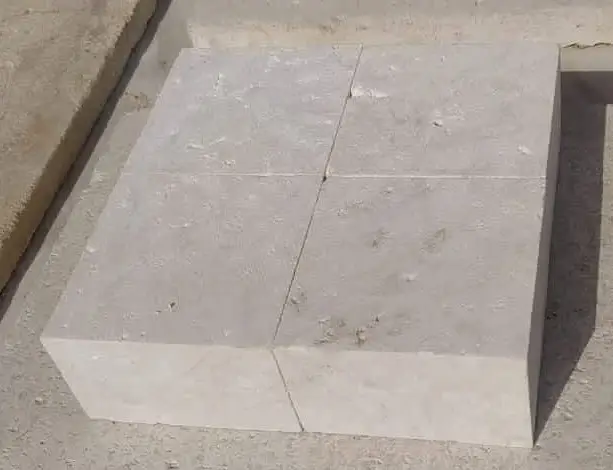
The physical mechanics of laying granite cobblestone successfully depend on a few details that don’t always make it into generic installation guides. Pattern selection is the first variable. Running bond and herringbone patterns distribute loads more effectively than stack bond for trafficked surfaces — herringbone in particular, because the angular interlocking geometry resists the lateral creep that causes cobblestone to fan out from the center of a paved area over time.
Setting tolerance for granite cobblestone is less forgiving than for large-format pavers. Because each unit is small and has four exposed edges, height differentials between adjacent units are immediately visible and create trip hazard conditions at much smaller offsets than a large slab would. For pedestrian applications, maintain height differential between adjacent units at or below ⅛ inch. For vehicle applications, that tolerance can relax to ¼ inch, but any unit higher than its neighbors by more than that becomes a point-load concentration site that accelerates base failure around it.
- Establish string lines at 3-foot intervals across the work area before placing any stone — don’t rely on a single perimeter string for large areas
- Check diagonal measurements across each 10×10-foot section to verify square before proceeding
- Use a rubber mallet for final seating — steel hammers crack granite cobblestone at the arris edges even at low impact
- After full placement and joint filling, run a plate compactor over the surface with a rubber pad or compaction mat — direct plate contact can fracture the thinner units
- Allow polymeric joint filler to cure for a minimum of 24 hours before opening the surface to foot traffic and 72 hours before vehicle traffic
Thermal expansion in granite runs approximately 4.4–7.9 × 10⁻⁶ per °C depending on mineral composition and quarry source. For most cobblestone installations, individual unit size is small enough that thermal expansion is managed by joint width rather than dedicated expansion joints — but where cobblestone interfaces with a rigid concrete or masonry structure (a building foundation, a concrete curb, a pool deck edge), a minimum ½-inch compressible expansion joint filled with closed-cell backer rod and sealant is the correct detail. Omitting that joint at hard interfaces is where cracking originates in otherwise well-installed projects.
Sealing and Long-Term Maintenance
Granite cobblestone’s low absorption rate means sealing is optional rather than mandatory — a meaningful distinction from limestone or travertine, where sealing is a structural maintenance requirement. That said, sealing granite cobblestone in high-visibility applications — entry courts, formal garden paths, commercial frontages — offers real practical benefits worth evaluating.
A penetrating impregnator sealer (silane-siloxane chemistry) applied to dry, clean granite cobblestone reduces oil and organic stain penetration without altering the surface appearance or texture. You’re not creating a surface film — you’re lining the microscopic pore structure with a hydrophobic barrier that causes liquids to bead and allows the surface to be cleaned before staining occurs. Application cycle for granite cobblestone in outdoor use: every 3–5 years for pedestrian applications, every 2–3 years for areas subject to vehicle fluids or food and beverage service.
- Avoid topical sealers (acrylic or epoxy film-forming types) on exterior cobblestone — they trap moisture beneath the film, which causes delamination and surface whitening under freeze-thaw cycling
- Never apply sealer to wet or damp stone — moisture trapped beneath a penetrating sealer causes efflorescence and reduces sealer adhesion
- Joint maintenance is the most consequential long-term task — inspect polymeric sand joints annually and refill any sections where washout or ant intrusion has created void depth exceeding ½ inch
- Pressure washing granite cobblestone is safe at pressure settings below 2,500 PSI with a fan-tip nozzle; direct-stream tips at high pressure can erode polymeric joint filler and should be avoided
According to USGS granite production and construction use statistics, granite remains the most widely specified dimension stone for high-durability exterior paving in the United States — and the maintenance data supports that preference. Properly installed and maintained granite cobblestone installations routinely achieve 40–60 year service lives in residential applications and 25–35 year service lives in commercial traffic environments before requiring any structural intervention.
Granite Cobblestone Specification: Getting It Right
Granite cobblestone specification rewards the professionals who take the time to understand the full system — not just the stone itself, but the base, the joint filler, the edge restraint, and the finish selection relative to the actual use environment. The material doesn’t ask much of you once it’s properly installed, but it asks a great deal of precision during the design and installation phase. Getting the base right, choosing the finish for your traffic and aesthetic conditions, specifying appropriate joint systems, and building in proper edge restraint — these are the decisions that separate a 40-year installation from a 10-year repair project. At Citadel Stone, we work with contractors and landscape architects nationally to make sure material selection and delivery logistics align with project timelines and budget frameworks — warehouse inventory confirmation before bid finalization is a step we consistently recommend to avoid schedule disruptions when truck deliveries need to coordinate with installation crews. As you move from specification to procurement, related natural stone pathway projects often inform cobblestone detailing decisions, and building a natural stone walkway step by step provides a useful technical reference for adjacent scope. Sourced from select natural stone quarries worldwide, granite cobblestone reaches sites in split-face and tumbled finishes.
Related reading: cobblestone paver cost guide · Tumbled Setts vs Sawn Setts: Texture and Slip Compared · Cobblestone Sett Settling Problems and How to Fix Them.