

Surface Finish Determines Performance — Not Just Appearance
Tumbled setts vs sawn setts is a specification decision that directly governs slip resistance, drainage behavior, joint tolerance, and long-term maintenance load — consequences that extend well beyond surface aesthetics. Sawn setts present clean, machine-cut faces with tight dimensional tolerances, typically held to ±2mm, making them the specification of choice when contemporary geometry or precise jointing is non-negotiable. Tumbled setts introduce deliberate surface irregularity — rounded arrises, micro-textured faces, and slight dimensional variation — that shifts the performance profile in ways worth understanding before you commit to either approach.
Understanding the Finishing Process Behind Each Sett Type
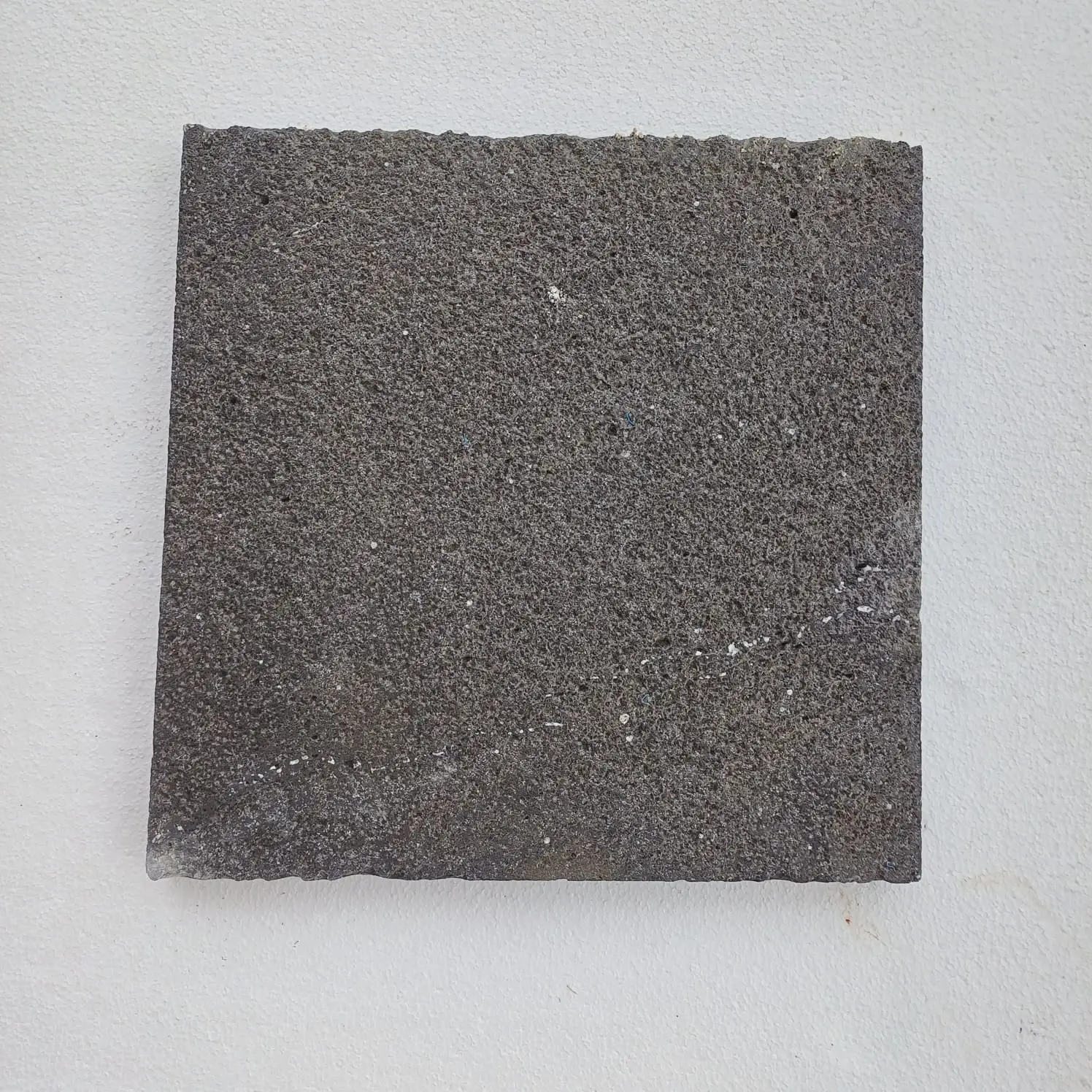
Sawn setts are produced by diamond-wire or gang-saw cutting, leaving faces with a consistent, near-planar surface. The cutting action closes the stone’s surface pores to a degree, which slightly reduces initial water absorption but can also diminish natural traction. Tumbled block pavers go through a rotating barrel or drum system — abrasive contact chips the arrises, softens sharp edges, and scours the face into a matte, pitted texture that mimics centuries of weathering in a matter of hours.
What the tumbling process does to the internal structure is worth knowing. The micro-fracturing at arrises, while cosmetically attractive, creates a zone of slightly reduced tensile strength at the edges. For pedestrian paving this is inconsequential — compressive loading dominates, and natural stone setts routinely test above 8,000 PSI compressive strength regardless of finish. For heavy vehicular applications, though, verify arris integrity on the specific material you’re sourcing, particularly for chiseled limestone variants where bedding plane orientation can amplify edge vulnerability.
Slip Resistance Compared: Tumbled vs Sawn
Your slip resistance specification starts with the wet dynamic coefficient of friction (DCOF), and this is where finish makes a measurable, testable difference. Tumbled setts paving carries substantially more surface texture than a sawn face; for pedestrian surfaces specify against the ANSI A326.3 wet DCOF threshold (0.42). Sawn setts — particularly those with a smooth-sawn finish — carry noticeably less texture, which places them nearer the acceptable minimum depending on the specific stone and cutting method.
The practical field implication: tumbled block pavers offer a meaningful margin of safety in wet conditions without any additional surface treatment. Sawn setts in exposed, high-traffic, or moisture-prone installations frequently require a bush-hammered or flamed secondary finish to recover the traction that sawing removes. That secondary processing adds cost to the sawn option — a detail that matters when you’re comparing like-for-like installed pricing. Consider the following performance benchmarks:
- Tumbled limestone or granite setts: pronounced texture — generally suitable for pedestrian applications
- Smooth-sawn setts: noticeably smoother — may require finish upgrading for public or commercial use
- Bush-hammered sawn setts: texture is restored — functionally comparable to tumbled but at higher processing cost
- Honed sawn setts: very little texture remains — unsuitable for exterior use without anti-slip coating
Texture and Drainage Dynamics Across Both Finishes
Texture and drainage are linked more directly than most project teams acknowledge during design. Tumbled setts paving holds slightly wider joint widths by necessity — dimensional variation across tumbled setts means joints run 8–15mm rather than the 3–6mm achievable with sawn units. That wider joint allows more inter-joint drainage, which is a genuine performance advantage in high-rainfall applications or surfaces that receive frequent wash-down.
Sawn setts with narrow joints create a near-continuous surface plane. This looks cleaner, but it concentrates surface runoff rather than distributing it through the joint matrix. You’ll need to compensate with more deliberate cross-fall — typically 1:60 to 1:80 for sawn sett paving versus the 1:80 to 1:100 that tumbled block pavers can tolerate given their better inter-joint drainage. Get the cross-fall wrong on a sawn sett installation and you’ll have standing water that eventually weakens the bedding layer through cyclic saturation.
Dimensional Tolerances and Jointing Precision
What often gets overlooked in the specification phase is that tumbled setts are not dimensionally chaotic, but they are intentionally imprecise by comparison to sawn units. Standard tumbled cobble production allows ±5–8mm variation in plan dimensions and ±3–5mm in depth. This means your installer needs to sort and grade on site before laying — a labor step that sawn sett installations don’t require. Plan for it in your labor pricing or the installation quality will suffer.
Sawn sett installations benefit from tight tolerances, but they’re also less forgiving of base imperfections. A sawn sett pattern on an uneven bedding course shows irregularity immediately — the flat, precise face telegraphs any deviation in the sub-base. Tumbled block pavers, with their inherent surface variation, visually absorb minor bedding inconsistencies that would be obvious under a sawn unit. This is why tumbled block pavers are sometimes the more practical choice for retrofit installations over existing bases where achieving perfect bedding uniformity is difficult. Citadel Stone’s tumbled cobble setts are produced to a consistent nominal depth of 100mm, which simplifies bedding calculations even where plan dimensions vary within the tumbling tolerance.
Material Selection, Total Project Cost, and Sourcing Realities
The material-to-labor cost ratio shifts noticeably between these two finish types, and where you’re sourcing from compounds that difference. Tumbled setts — particularly tumbled granite or chiseled limestone — typically carry a lower unit price than comparably specified sawn-and-finished alternatives. The additional processing steps for sawn setts (precision cutting, potential secondary finishing for traction) add to the ex-warehouse unit cost before any freight calculations.
Freight is the variable that most project budgets underestimate. Natural stone is dense — granite setts run approximately 160–165 lbs per cubic foot — and truck capacity fills by weight before volume on most deliveries. Longer haul distances increase freight cost per ton disproportionately, which means the material price advantage of one finish over the other can shift or reverse depending on warehouse stock proximity to your project site. At Citadel Stone, we maintain distributed warehouse inventory to reduce freight distance for projects across the country, which typically brings delivery lead times to 1–3 weeks rather than the 8–12 week import cycle some specialty suppliers require.
- Tumbled setts: lower unit material cost, higher on-site labor for sorting and grading
- Sawn setts: higher unit cost, lower on-site sorting labor, but potential secondary finishing cost for slip compliance
- Freight impact: at 160+ lbs per cubic foot, even moderate haul distances can add $0.80–$2.50 per square foot to installed cost
- Value engineering option: tumbled chiseled limestone in high-traffic non-vehicular areas, sawn granite setts at entry and feature zones — hybrid specifications reduce total material cost without compromising aesthetics
Labor market conditions also factor in. Tumbled sett laying is skilled work that experienced stone setters handle efficiently — but sorting and coursing irregular units takes 15–25% more laying time than sawn sett installation on equivalent-sized projects. In high-labor-cost markets, that difference is meaningful. The USGS dimension stone production data confirms that granite sett production has grown consistently as demand for durable paving alternatives to concrete increases — which supports competitive pricing across both finish types in the current supply environment.
Aesthetic Performance Over Time
Tumbled block pavers age in a way that sawn setts do not. The weathered aesthetic of a tumbled surface becomes more convincing over time — biological growth in the micro-pitting of the face actually enhances the aged character rather than detracting from it. Sawn setts require more active maintenance to preserve their clean-cut appearance; moss and lichen in joints and on the face surface are more visually jarring against the precision of a sawn face than they are on a tumbled one.
For heritage streetscapes, courtyard renovations, or any project where the paving is meant to read as established and timeless from day one, tumbled setts are the clear choice. The softened arrises, slight color variation from the tumbling process, and textured face all contribute to an immediate sense of permanence that sawn units take years — sometimes decades — to develop naturally. Sawn setts are the right call where the design intent is deliberately contemporary, where tight joint geometry is part of the aesthetic concept, or where the surrounding architecture demands precision and linearity.
Application-Specific Recommendations for Each Finish
Your application context should drive the finish decision more than aesthetic preference alone. The performance differences in the tumbled setts vs sawn setts comparison become decisive in specific use cases, and specifying against application requirements protects both the installation and the client relationship. The Natural Stone Institute granite specifications outline durability benchmarks that both tumbled and sawn granite setts comfortably exceed for standard paving applications — the differentiator is finish-specific performance, not base material strength.
Use tumbled setts for:
- Pedestrian plazas and public realm paving where wet-weather slip compliance is a primary concern
- Heritage or period-appropriate streetscape installations
- Garden paths and residential driveways where the aged aesthetic adds value
- Retrofit projects over existing bases where slight dimensional variation is an installation advantage
- High-moisture environments — courtyards, poolside surrounds, garden features
Specify sawn setts for:
- Contemporary commercial or civic projects where precision geometry defines the design intent
- Installations where tight joint widths are structurally or aesthetically required
- Indoor-to-outdoor transition zones where material continuity with interior tile work matters
- Projects where chiseled limestone or split-face detailing is used at perimeter edges as a contrast element
- Vehicular paving where consistent depth is critical to structural performance under load
Sealing and Maintenance Requirements by Finish Type
Maintenance protocols differ between the two finishes in ways that affect long-term cost of ownership — a factor worth raising with clients during specification. Tumbled setts paving presents a high surface area due to its micro-textured faces and wider joints, which increases sealer consumption. Expect to apply 15–20% more sealer by area than you would on a sawn sett installation of equivalent size. A penetrating impregnator rather than a topical sealer is the correct product for both types — topical sealers trap moisture under the finish and accelerate spalling in freeze-thaw regions.
Sawn setts with narrow joints are easier to pressure-wash and maintain in the short term, but the narrow joint is also more vulnerable to weed ingress if polymeric sand is not correctly installed and compacted. Tumbled block pavers with wider joints actually perform better with flexible joint fillers that accommodate the slight dimensional variation without cracking. Your jointing specification should reflect the finish: rigid mortar in tumbled sett joints cracks as units shift within their natural tolerance range — flexible pointing compound or dry-lay polymeric sand is the correct approach.
Specifying Tumbled Setts vs Sawn Setts: The Bottom Line
The tumbled setts vs sawn setts comparison ultimately resolves into two parallel performance profiles that suit different project types — neither is universally superior, and the right answer comes from matching finish characteristics to your specific application demands, budget structure, and aesthetic intent. Tumbled block pavers deliver inherent slip compliance, an aged aesthetic, and practical installation advantages on complex or retrofit sites. Sawn setts provide geometric precision, tighter joint control, and a contemporary finish that suits modern architectural contexts. Budget your installation honestly: account for sorting labor on tumbled units, secondary finishing costs on sawn setts requiring traction upgrades, and freight distance on both — these line items often matter more than the unit price difference between finish types. As you refine your project budget and stone sourcing approach, our cobblestone paver cost breakdown provides additional context on how material, freight, and installation variables stack up across natural stone sett specifications. Sawn and chiseled setts from Citadel Stone deliver a crisper joint line and a more contemporary aesthetic compared to the softened, aged look of their tumbled counterparts.
Related reading: pavers vs natural stone · crazy paving pattern · limestone paver base preparation.