What Tumbling Actually Does to Limestone
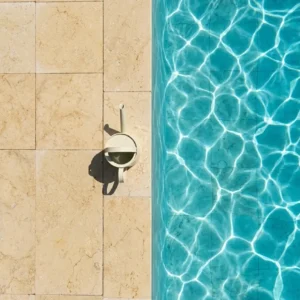
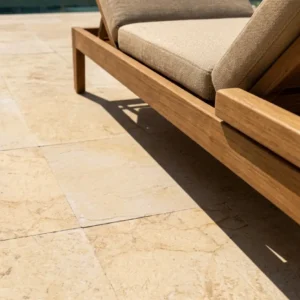
Tumbled grey limestone paving earns its distinctive character through a mechanical process that mimics centuries of natural wear in a matter of hours — and understanding that process changes how you approach finish selection. Raw sawn limestone tiles emerge from the quarry with sharp arrises and a predictably flat face; tumbling loads those tiles into a rotating drum with abrasive media, rounding every edge and creating the micro-pitting across the face that defines the material’s texture. The result is not a surface finish applied on top — it’s a structural alteration to the geometry of every individual piece, and it’s what separates tumbled grey limestone paving from every other finish category in the same material family.
What that means practically is that the texture variation you see in tumbled grey limestone paving is genuine material character, not a manufactured pattern. No two pieces look identical, and the tonal range within a single grey palette — cool blue-grey to warmer buff-grey — gives installed surfaces a depth that honed or polished finishes simply can’t replicate. According to NSI limestone finish and variety data, the interconnected pore structure exposed by tumbling also directly affects absorption rates and sealing requirements, which is a specification detail worth carrying forward into your project documentation.
Reading the Grey Palette: What the Colour Range Tells You
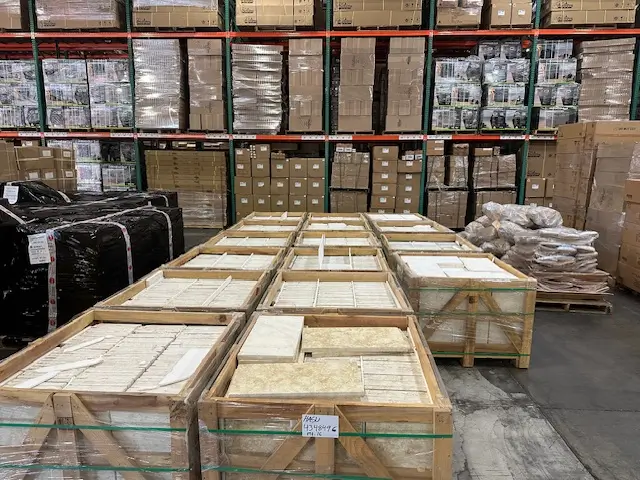
Grey limestone isn’t a single colour — it’s a family of related tones produced by variations in mineral content, iron oxide concentration, and the proportion of fossilised material embedded in the stone matrix. Your specification needs to account for that range rather than assume a uniform result. Most grey limestone quarries produce material that shifts between cool blue-grey, mid-tone silver-grey, and warmer charcoal-beige depending on the block’s position in the quarry face and the season of extraction.
The tumbling process tends to lighten the overall appearance by exposing fresh stone at worn edges and abraded face areas. So the grey you see in a sample tile will look marginally lighter once it’s installed at scale across an open area — particularly in bright conditions. You should request a loose-lay sample of at least twelve to sixteen pieces before signing off on a full order. This isn’t over-specification; it’s the difference between a finished project that reads as intended and one that surprises everyone at practical completion. The geological characteristics of limestone formation explain why mineral banding and fossil inclusions create tonal variation that’s inherent to the material, not a quality defect.
Thickness, Compressive Strength, and Structural Specification
For pedestrian applications, tumbled grey limestone paving in the 22–30mm nominal thickness range handles the point loads and distributed loads of normal foot traffic comfortably, provided the base preparation meets specification. Vehicular applications are a different matter — you’ll want a minimum of 40–50mm nominal thickness for occasional light vehicle use, and that specification needs to be paired with a correctly engineered sub-base rather than treated as a standalone upgrade. The limestone itself carries compressive strength values typically between 55 and 80 MPa depending on the quarry source and the density of the particular block.
You can explore the full range of our grey limestone paving slabs to compare thickness options and slab formats before committing to a specification. Matching format size to sub-base quality is critical — larger slabs (600×900mm or above) amplify any inconsistency in the bedding layer, which is why full-bed mortar or high-polymer adhesive systems are preferable to spot-bedding for anything over 500mm in any direction. At Citadel Stone, we recommend specifying a minimum compressive strength of 55 MPa for external pedestrian use, and we can confirm the testing data for each batch at the point of order.
Secondary Stone Types Worth Knowing About
Understanding tumbled grey limestone paving is easier when you have reference points from adjacent material categories. Egyptian limestone paving slabs share the calcium carbonate base chemistry of most grey limestones but tend to exhibit a tighter, denser pore structure and a cooler baseline tone — the result of specific formation conditions in the Nile sedimentary basin. When choosing between sources, Egyptian limestone paving slabs often offer more consistent colour banding within a consignment, which matters on large-format projects where visual coherence across hundreds of square metres is a design priority.
A limestone hearth slab uses the same base material but is specified at greater thickness — typically 50–80mm — because of the point load and thermal cycling demands of the installation context. The tumbled finish remains appropriate for hearth surrounds where a rustic aesthetic is the goal, but you’ll need to verify that the stone’s low thermal conductivity doesn’t become a problem if the hearth is recessed into an inset fireplace where heat retention is a design goal. A limestone hearth slab in a high-heat application should always be cross-checked against the manufacturer’s thermal rating before specification is finalised. Red limestone is a less commonly specified variant produced by elevated iron oxide content during formation; red limestone occupies a different tonal niche entirely and is typically used for feature banding or accent elements rather than whole-surface paving.
Base Preparation Across Varied Site Conditions
Terrain has a direct influence on how you design the sub-base for tumbled grey limestone paving, and this is an area where shortcuts create problems that are expensive to remediate. On flat or gently graded sites, a standard 150mm compacted MOT Type 1 sub-base beneath a 50mm sharp sand or semi-dry mortar bedding layer delivers consistent results. Sloped or hillside sites introduce two variables that flat-site specifications don’t account for: lateral water movement and differential settlement caused by uneven soil loading across the gradient.
- On slopes exceeding 1:20 gradient, install cross-fall drainage channels at regular intervals to intercept lateral groundwater before it undermines the bedding layer
- Hillside installations benefit from a 200mm compacted aggregate base rather than the standard 150mm — the additional depth resists the creep forces that gradients exert on the sub-base over time
- Grade management at the perimeter of a sloped installation requires edging restraints substantial enough to prevent the pavement from migrating downhill under thermal and load cycling
- Low-lying or poorly draining sites require assessment of the water table depth before specifying the bedding system — hydrostatic pressure beneath a limestone slab can cause heave that no thickness specification will overcome without drainage infrastructure
- On elevated terraces and stepped garden installations, verify that retaining walls and level changes are designed to handle the additional hydrostatic load created by paved areas above them
The USGS data on limestone composition and construction applications provides context on the material’s absorption and density characteristics that inform both sub-base loading calculations and drainage requirements in challenging terrain conditions.
Sealing, Jointing, and Maintenance Expectations
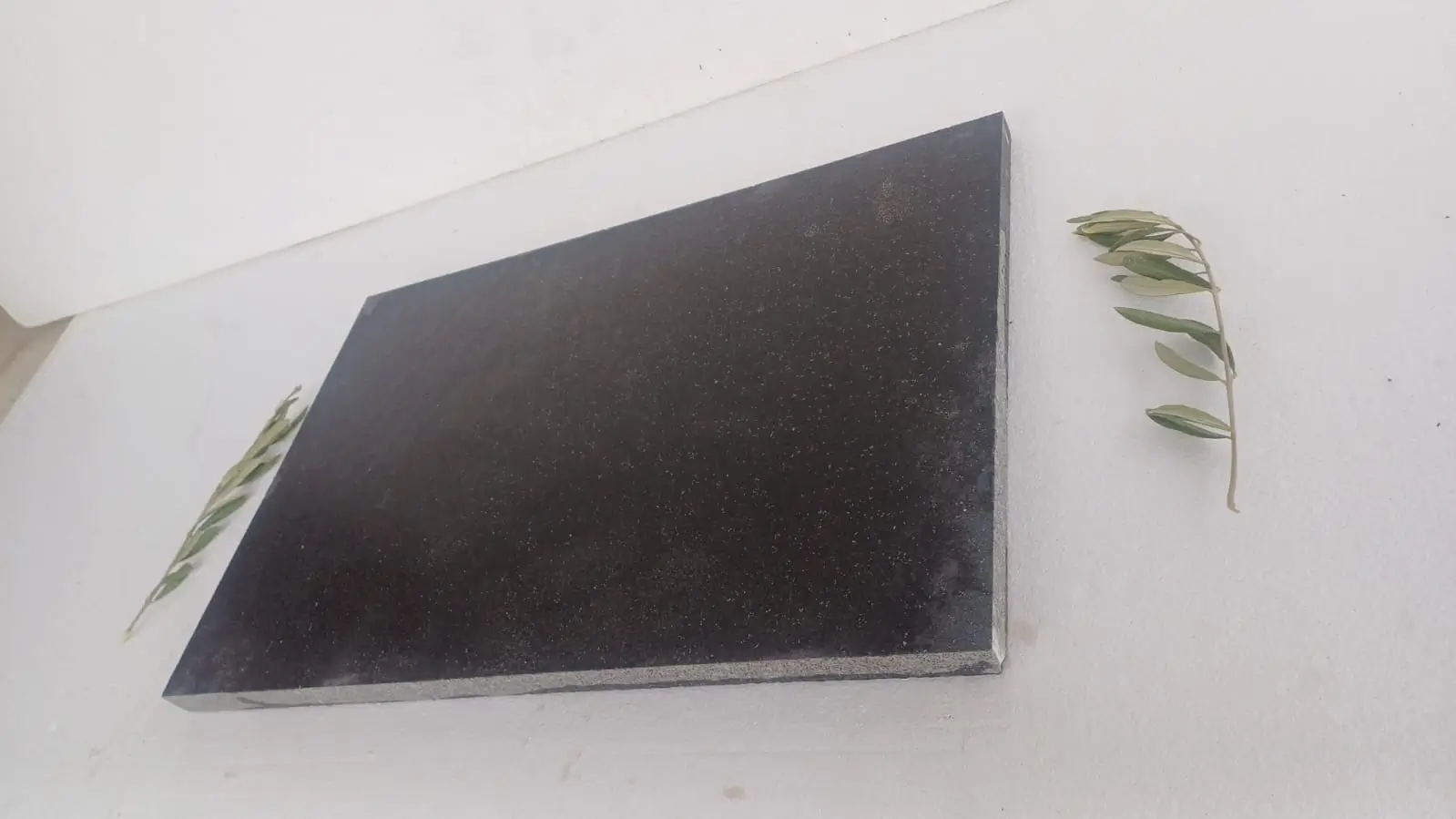
Tumbled grey limestone paving sits in the medium-porosity category — absorption rates for most grey limestone sources fall between 3% and 8% by weight, which means sealing is recommended but the timing is less critical than it would be for a polished finish. Your first sealing application should follow the full curing of any bedding mortar, typically 28 days after installation. Use a breathable impregnating sealer rather than a surface-coating product — coating sealers trap moisture beneath the surface and create the efflorescence and spalling conditions you’re trying to prevent.
Joint material selection interacts with the tumbled texture in a way that’s worth thinking through before installation begins. A brush-in polymeric sand or resin-based joint compound suits the irregular profile of tumbled edges better than a conventional mortar joint, because the variation in edge geometry across tumbled pieces creates small inconsistencies in joint width that a rigid mortar will crack across rather than accommodate. Resealing cycles on external tumbled grey limestone paving run every three to five years in normal service conditions — longer than many specifiers assume, because the matte surface doesn’t exhibit the visual degradation signals that a polished stone would show at the same point in the maintenance cycle.
Ordering, Warehouse Stock, and Lead Times
Project planning for tumbled grey limestone paving needs to account for the material’s supply chain characteristics. Limestone of this type is quarried internationally — primarily from quarries in Egypt, Turkey, and Portugal — and lead times from the originating quarry to a distribution warehouse typically run six to ten weeks for non-stocked material. Citadel Stone maintains warehouse inventory of core grey limestone formats nationally, which compresses that timeline significantly for standard sizes; most in-stock orders move from warehouse to site within one to two weeks of confirmation.
Your order quantity should include a 10–12% wastage allowance for tumbled material — marginally higher than the 8% typically applied to rectified tiles, because the irregular edge geometry of tumbled pieces generates more cut-waste when working around obstacles and fixed boundaries. Confirm warehouse stock levels against your required delivery window before committing to a programme-critical installation date, and establish whether the available stock lot is from a single quarry batch. Tonal consistency across a large area depends on batch uniformity, and mixing consignments from different extraction periods is the most common source of colour complaints on completed limestone projects.
- Order a minimum of 10–12% over net area to cover cut-waste from tumbled edge profiles
- Confirm that all packs in your consignment originate from the same quarry batch for tonal consistency
- Allow 28 days post-installation before first sealing application to permit full mortar cure
- Verify truck access dimensions at the delivery site — full-size flatbed deliveries require a minimum 3.5m clearance width and a turning radius that residential sites sometimes cannot provide
- Store material on-site on level timber bearers under a breathable cover to prevent moisture entrapment before installation
Getting Your Tumbled Grey Limestone Paving Specification Right
Tumbled grey limestone paving delivers a finish that improves with age rather than degrading visibly — the worn, irregular surface absorbs the wear patterns of normal use in a way that manufactured materials can’t replicate. Your specification decisions at the front end of the project — thickness, base depth, joint type, sealing system — determine whether that durability delivers over 20-plus years or whether you’re managing problems at the five-year mark. Get the sub-base right for your site’s drainage characteristics and terrain, specify the appropriate sealer at 28-day cure, and select your consignment from a single warehouse batch for colour consistency. As you plan your broader hardscape project, it’s also worth understanding how limestone performs in driveway contexts — limestone driveway performance and suitability covers the structural and loading considerations that differ from standard pedestrian paving. Sourced via international selected quarries, Citadel Stone offers tumbled grey limestone paving with a worn, matte texture that hides everyday wear.
Related reading: tumbled limestone tile · limestone paving for pool areas · crazy paving limestone.