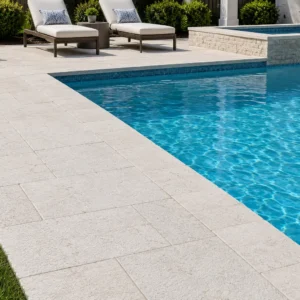
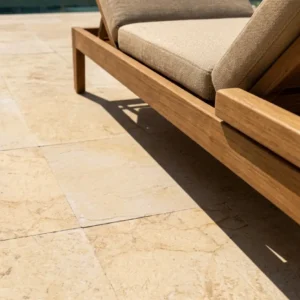
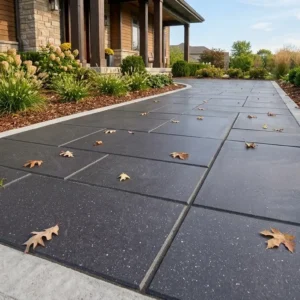
Why Your Cleaning Approach Defines Long-Term Results
Travertine stone tile care starts with one chemical reality that most maintenance guides understate: this material is calcium carbonate, and calcium carbonate reacts instantly with acids. That’s not a minor caveat — it’s the single most important fact governing every cleaning decision you’ll make. A common household cleaner with a pH below 7 can etch the surface in seconds, leaving dull patches that no amount of resealing will reverse. Understanding that vulnerability from day one changes how you approach every routine task.
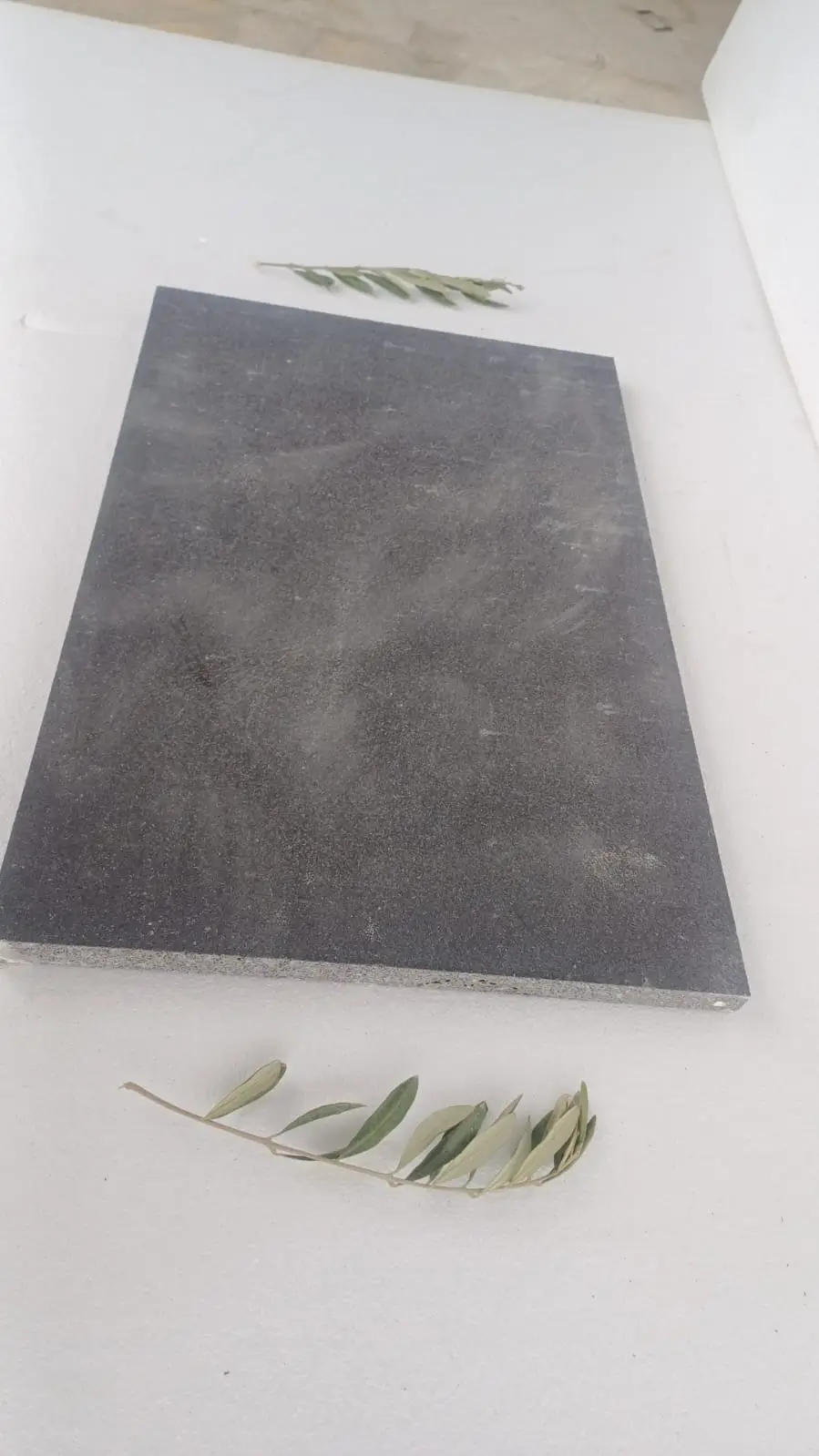
Daily and Weekly Maintenance for Travertine Floors and Tiles
For travertine floors in bathroom settings or high-traffic areas, daily dry sweeping is the single most protective habit you can develop. Grit and fine debris act like sandpaper underfoot, gradually abrading honed finishes and dulling the surface long before any stain sets in. A microfiber dust mop captures particles without pushing them across the stone.
Weekly wet mopping should use a pH-neutral cleaner diluted in warm water — nothing stronger. The mop itself should be wrung out thoroughly. Travertine’s porous structure means standing water migrates into the stone, and in filled-tile applications, prolonged moisture can loosen the grout-and-filler compound used to bridge the natural voids. According to TCNA natural stone tile installation standards, moisture management at the surface is a primary performance factor for calcium-carbonate-based tiles in wet environments. Rinse the floor with clean water after mopping and dry it promptly.
- Use pH-neutral stone cleaners only — never vinegar, lemon juice, or ammonia-based products
- Dry-sweep or dust-mop before any wet cleaning to remove abrasive grit
- Wring mops until barely damp — travertine absorbs standing water quickly
- Rinse thoroughly after mopping to remove any residual cleaner film
- Place absorbent mats at entries to reduce grit tracking across travertine floors
Caring for Travertine Shower Tile
Travertine shower tile presents a more demanding maintenance environment than any other application. The combination of daily hot water, soap residue, and the enclosed humidity of a shower enclosure creates conditions that accelerate mineral deposit buildup and can compromise the surface sealer faster than any other scenario. Hard water leaves calcium and magnesium deposits — mineral cousins of the stone itself — that bond tightly to the surface over time.
Squeegee the walls after every shower. This single habit reduces mineral deposit accumulation by roughly 80% compared to surfaces left to air-dry. For existing soap scum or light hard-water haze, a diluted solution of a stone-safe, pH-neutral cleaner applied with a soft brush works without etching the surface. The Natural Stone Institute travertine performance data confirms that open-pore surfaces like travertine require more frequent sealer maintenance in consistently wet environments than denser igneous alternatives. Plan to reseal travertine shower tile every 6 to 12 months depending on water hardness and usage frequency.
- Squeegee shower walls after each use — this is non-negotiable for mineral deposit control
- Apply stone-safe cleaner weekly with a soft-bristle brush; avoid scrubbing pads
- Inspect grout lines monthly for early signs of moisture infiltration or cracking
- Reseal travertine for shower applications every 6 to 12 months — more frequently in hard-water regions
- Ventilate the shower space thoroughly after use to reduce ambient humidity
Sealing Protocols That Actually Hold
Sealer selection and application technique are where most travertine stone tile care programs fall apart. Penetrating impregnator sealers — not topical coatings — are the correct choice for honed and filled travertine. Topical sealers sit on the surface, trap moisture vapor beneath them, and eventually peel or haze. An impregnator penetrates the pore structure and repels liquid from within, which is exactly what you need for a material with travertine’s interconnected void network.
Test the existing sealer before any reapplication by placing a few drops of water on the surface. If the water beads up, the sealer is still active. If it absorbs within 3 to 4 minutes, resealing is overdue. Clean the surface thoroughly, let it dry for a minimum of 24 hours, and apply the impregnator in thin, even coats — not flooded. Excess sealer that pools in voids or low points will cure as a hazy film that requires aggressive mechanical removal to clear. For our honed ivory travertine tile, a single coat of a quality impregnator applied correctly outperforms two rushed coats every time.
Stain Removal by Type — What Works and What Damages
Different stains require completely different approaches, and using the wrong method on travertine stone tile maintenance can permanently alter the surface. Oil-based stains — cooking grease, body oils, cosmetics — respond to a poultice made from an absorbent powder like talc or diatomaceous earth mixed with a food-grade hydrogen peroxide solution. Apply the paste, cover with plastic wrap, and allow it to draw the oil out over 24 hours. The ASTM natural stone tile absorption and testing standards highlight that travertine’s absorption rate makes it particularly responsive to poultice extraction methods precisely because the same pore network that allows stains to penetrate also allows the drawing agent to pull them back out.
- Oil-based stains: talc-and-hydrogen-peroxide poultice left covered for 24 hours
- Organic stains (coffee, wine, plant material): hydrogen peroxide and powder poultice with a 12-hour dwell
- Rust stains: commercial stone-safe rust remover — never hydrochloric acid-based products
- Ink or dye stains: acetone on a cotton ball, tested in an inconspicuous area first
- Etch marks (dull spots from acid contact): require professional honing — no DIY cleaner will correct them
How Subgrade Conditions Affect Your Tile Over Time
Here’s something that rarely appears in cleaning guides but matters considerably for travertine stone tile care: the performance of your surface long-term is directly connected to what’s happening beneath it. Expansive clay soils, for instance, shift seasonally with moisture content — swelling when saturated, contracting during dry periods. That movement telegraphs upward through the slab, creating micro-deflection at the tile plane. Hairline cracks in grout joints, loose tiles, and re-cracking of filled voids are often symptoms of subgrade movement, not installation failure or poor maintenance habits.
Your floor’s grout joints and filled travertine voids act as early warning indicators. Check them annually. If you’re seeing recurring cracked fill in the same locations, the issue is almost certainly base movement rather than a surface maintenance failure. Sandy or poorly compacted subgrades create a similar problem — differential settlement causes isolated low spots where tiles crack along their unsupported edges. Addressing the structural cause before repairing the surface is always the right sequence. Filling and resealing over a moving substrate produces results that last one season, not one decade.
A Practical Travertine Maintenance Schedule
Consistency matters more than intensity in travertine stone tile care. A realistic schedule prevents the accumulation of problems that require expensive remediation.
- Daily: dry-sweep or dust-mop all travertine floor surfaces; squeegee travertine shower tile after each use
- Weekly: pH-neutral damp mop for floors; soft-brush clean for travertine for shower applications
- Monthly: inspect grout lines, filled voids, and sealer condition; address loose grout promptly
- Every 6 to 12 months: reseal shower tile; perform water-bead test on all other travertine surfaces
- Every 12 to 18 months: reseal travertine floors in bathroom settings and other moderate-traffic areas
- Every 2 to 3 years: professional deep clean and full reseal for high-traffic or outdoor travertine installations
How Finish Type Changes Your Maintenance Demands
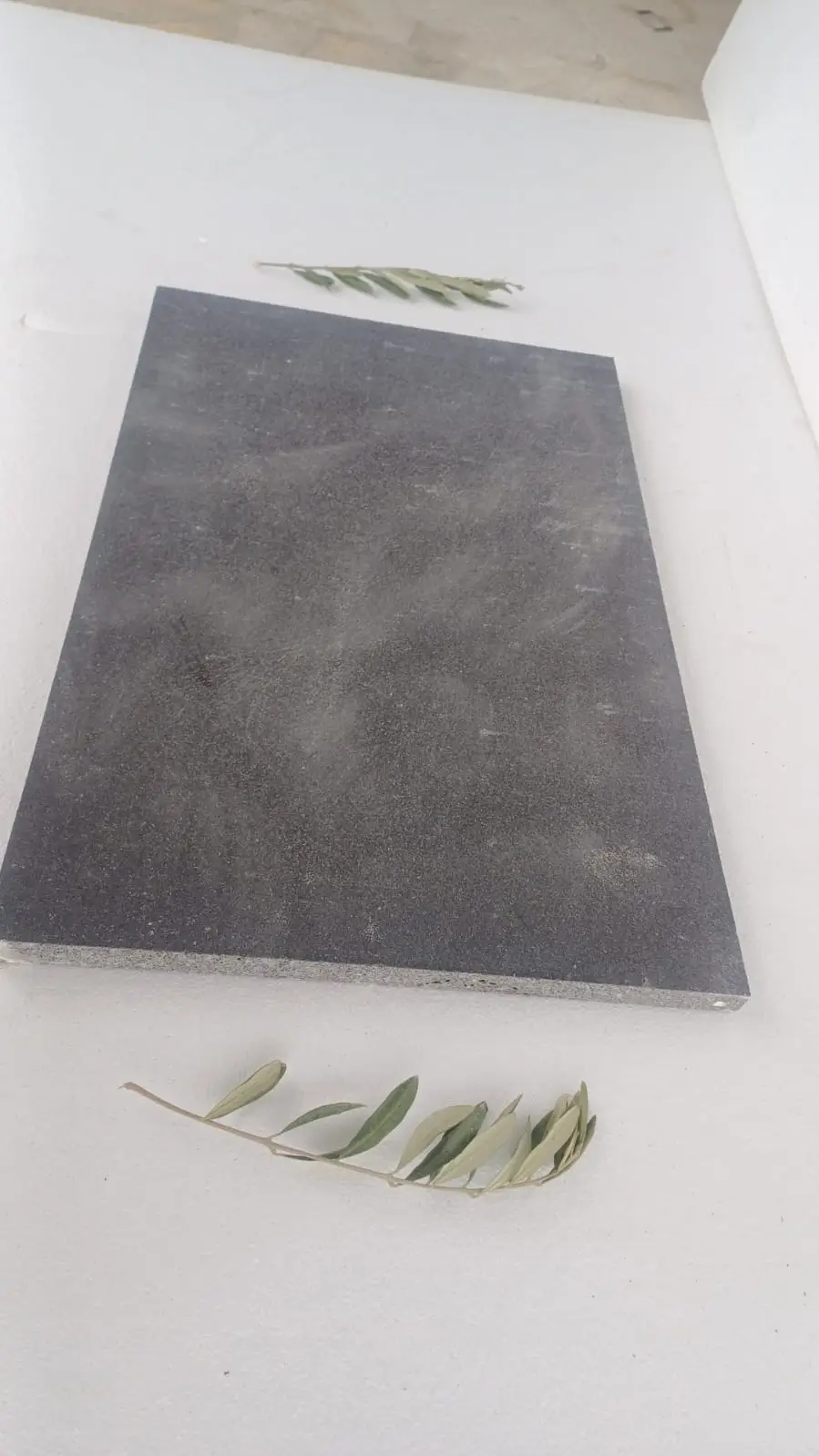
Honed travertine stone tile maintenance differs meaningfully from polished or tumbled finishes, and treating them all the same is one of the most common mistakes in long-term care programs. Polished travertine shows etch marks and scratches with brutal clarity — that reflective surface amplifies every imperfection. Honed finishes are more forgiving visually but absorb contaminants faster because the micro-texture of the surface provides more contact area for oils and grime. Tumbled finishes hide everyday wear well but their irregular surface profile makes thorough cleaning harder, requiring softer brushes and more attention to grout and void areas where debris accumulates.
Your cleaning frequency and sealer reapplication intervals should reflect the finish, not just the location. A polished travertine floor in a low-traffic study needs less frequent sealing than honed travertine floors in bathroom areas that see daily steam and moisture. Citadel Stone’s technical team can advise on finish-specific protocols based on your application — getting that guidance before problems appear saves significant remediation cost later.
Ordering, Stock Verification, and Long-Term Supply Planning
One practical consideration that affects travertine stone tile care programs at the planning stage: always order and hold back a reserve quantity. Matching travertine from the same production batch months or years later for repairs is notoriously difficult — dye lots, fill color, and surface texture vary between quarry pulls. A 5 to 10% overage kept in warehouse storage protects you against the scenario where a cracked or damaged tile cannot be matched.
Citadel Stone maintains warehouse inventory of travertine tile stock, which typically means lead times of 1 to 2 weeks rather than the 6 to 8 week import cycles common with custom or specialty orders. Verify current warehouse availability before finalizing your project timeline, especially for large-format tiles where production runs are less frequent. Truck delivery scheduling for larger quantities is worth confirming early — access constraints at the site affect whether a standard truck can deliver, or whether you’ll need to arrange offloading accommodation.
Travertine Stone Tile Care: What Determines Long-Term Success
The installations that look as good at year fifteen as they did on day one share a common thread: the owners understood the material’s chemistry from the start and built a maintenance habit around it rather than reacting to problems after they appeared. Proper travertine stone tile care is genuinely straightforward once you internalize that acid is the enemy, consistent sealing is non-negotiable, and the floor beneath the tile is part of the system. Beyond travertine, if your project includes complementary natural stone elements, the classic ivory travertine buyer guide covers specification and selection detail worth reviewing before you commit to a tile choice. Tile from Citadel Stone is supplied with care notes, helping owners keep honed ivory travertine bright through regular gentle mopping.
Related reading: ivory split face travertine · ivory travertine vs porcelain tile · porcelain pool tile vs travertine.