Stone veneer supply decisions that look straightforward on paper have a way of becoming complicated fast once you’re standing on a job site with a facade to clad and a schedule to keep. The grade differential between two pallets labeled identically can translate directly into rejected panels, mortar waste, and rework costs that dwarf any savings from cutting specification corners. Understanding what separates a well-sourced stone veneer supply order from a problematic one requires you to look well past surface aesthetics and into the structural and dimensional variables that determine whether your installation performs over decades or starts failing in the first few winters.
How Veneer Grades Actually Work in Practice
The term “grade” gets used loosely in the stone veneer market, and that imprecision causes real problems. Grades in dimensional stone supply aren’t standardized the way lumber grades are — different quarries and distributors apply their own classification systems, which means a “Grade A” from one source might not match the same label from another. What you actually need to evaluate is the underlying set of variables each grade is supposed to control: dimensional tolerance, face consistency, bed depth uniformity, and structural integrity.
Dimensional tolerance is the specification detail most buyers underestimate. For thin veneer panels running under 1.5 inches, a ±3/8-inch thickness variation across a pallet doesn’t just create an uneven surface — it forces your installers to compensate with mortar builds that can crack under thermal cycling. In freeze-thaw regions where temperatures swing 40 to 60 degrees between day and night across shoulder seasons, that mortar inconsistency becomes a direct failure mechanism. The joint fills and expands at different rates depending on depth, and over three or four annual cycles, you’ll see delamination starting at the thickest mortar zones first.
- Face consistency: look for documentation on face texture variation, not just color range — texture inconsistency affects mortar key depth and long-term adhesion
- Bed depth uniformity: a ±1/4-inch tolerance across a pallet is acceptable for most applications; beyond that, you’re building your installer’s problem into the spec
- Structural integrity screening: ask specifically whether each lot is checked for micro-fractures along bedding planes — this is the failure point that grade labels rarely address explicitly
- Back-relief specification: veneer panels with mechanically routed back relief provide a consistent mortar key regardless of face variation — this detail separates commodity supply from specification-grade material
According to Natural Stone Institute stone veneer installation and wall stone guidance, proper dimensional consistency and back preparation are critical factors in achieving long-term adhesion performance in veneer facade applications.
Cut Types and What They Actually Specify
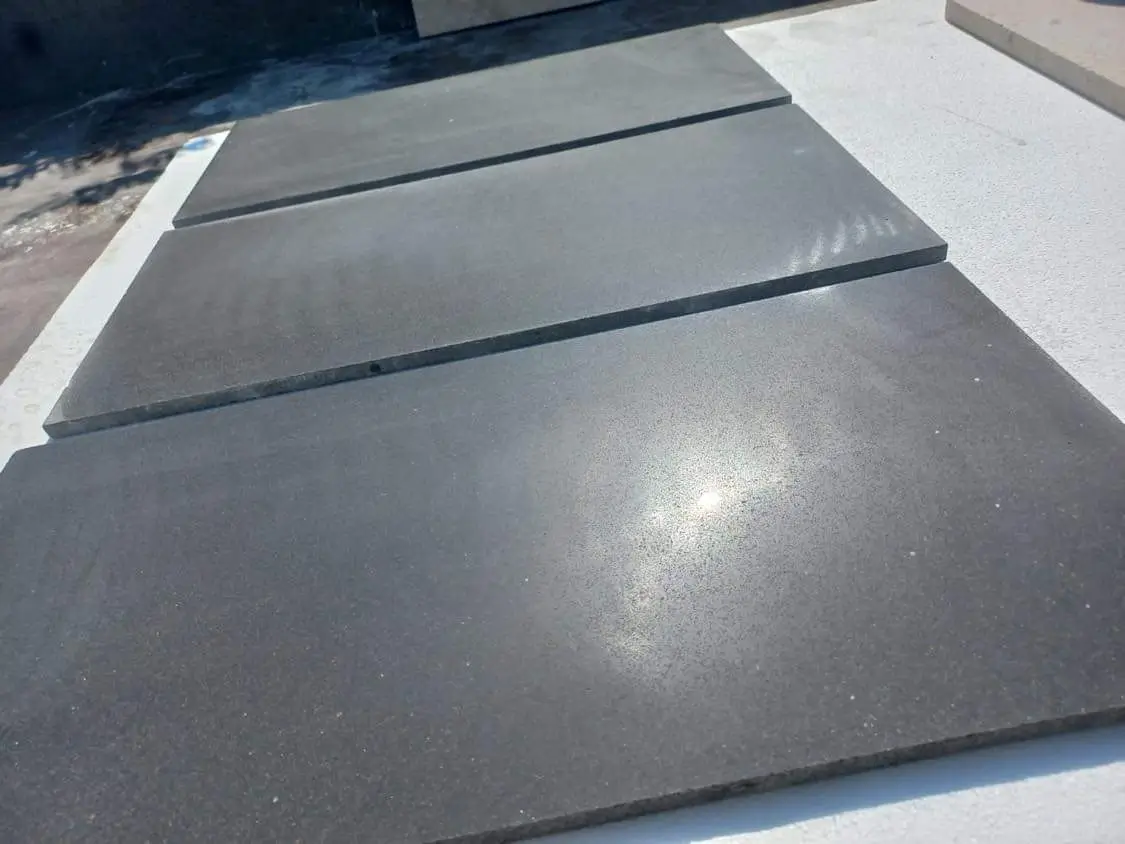
Your cut selection drives more downstream decisions than almost any other spec point in a veneer project. The four principal cut categories — ashlar, ledgestone, mosaic, and dimensional panel — each carry a different set of installation demands, and choosing based on aesthetics alone without accounting for those demands is where projects get into trouble.
Ashlar cuts give you the most controlled installation environment. The coursed horizontal lines simplify layout and reduce the skilled-labor dependency of the installation. Mortar joint widths are predictable, expansion joint placement is straightforward, and you can calculate your material quantities from dimensions with reasonable precision. The trade-off is that ashlar reads formal — it’s not always the right aesthetic for naturalistic or rustic applications, and any dimensional inconsistency in the bed depth is visually obvious in a coursed layout in ways it isn’t in random patterns.
Ledgestone is the cut that generates the most field surprises. The projecting horizontal layers create a shadow line that looks dramatic on a sample board, but the overhangs create water-trapping geometry. In climates with significant temperature cycling between seasons, water sitting in those horizontal ledges expands on freezing and exerts lateral pressure against the face of the stone. Over multiple freeze-thaw cycles, you’ll see spalling originate at the ledge edges — the thinnest cross-section of the cut — well before the field of the panel shows any distress. Specify a minimum ledge projection depth in your document and require a back-seal treatment at all horizontal ledge faces when using this cut in exposed exterior applications.
- Ashlar: best dimensional control, easiest installation calculation, most formal visual result
- Ledgestone: highest visual impact, requires water management detailing at horizontal ledge faces, vulnerable to freeze-thaw spalling without protective treatment
- Mosaic: highest labor intensity, most naturalistic result, material waste factor runs 15–20% higher than coursed cuts due to fitting requirements
- Dimensional panel: most predictable installation, highest cost per square foot, best performance in high-thermal-cycling environments due to consistent expansion geometry
Thickness Ranges and Structural Performance
The thin veneer versus full-bed veneer decision is partly aesthetic and largely structural — and it needs to happen before your wall assembly is detailed, not after. Thin veneer (typically 3/4 inch to 1.5 inches nominal) is a surface cladding system, full stop. It contributes negligible structural capacity to the wall assembly and must be treated as a finish, not as a structural element. Full-bed veneer (1.5 inches to 3.5 inches or more) can participate in the wall’s mass and thermal performance, but it requires a structural substrate capable of handling the load, which typically runs 15–25 pounds per square foot depending on stone density.
The thickness tolerance specification deserves its own line item in your project document. Specifying “1-inch nominal” without a tolerance range leaves your order open to field-wide variation that creates real installation problems. A reasonable tight-tolerance spec for a high-visibility facade is 1 inch ± 3/16 inch. For utility or secondary applications where the aesthetic standard is lower, ± 3/8 inch is workable but should be stated explicitly so your installer can plan the mortar system accordingly. At Citadel Stone, we specify these tolerance ranges at the point of sourcing — not as an afterthought at delivery — because catching dimensional variance at the warehouse is exponentially less expensive than resolving it on-site.
Freeze-Thaw Performance and Thermal Cycling in Veneer Specification
For any facade application in a region with meaningful temperature cycling, absorption rate is the specification variable that separates durable installations from premature failures. Stone that absorbs water freely — even stone that looks dense and tight at the face — will experience internal pressure on freeze-thaw cycles as that absorbed water expands approximately 9% in volume upon freezing. In a thin veneer panel with limited cross-section thickness, that expansion has nowhere to go but outward, and the result is surface spalling that typically becomes visible after three to five years of exposure.
The ASTM C97 absorption test is your baseline requirement here. For exterior veneer applications in freeze-thaw environments, specify a maximum absorption rate of 3% by weight. Many limestone and sandstone veneers run above that threshold in their natural state — which doesn’t necessarily disqualify them, but it does require you to build a penetrating sealer application into your specification and your maintenance schedule. Silicone-based penetrating sealers applied before installation and reapplied on a 3–5 year cycle can reduce effective absorption rates substantially, but this needs to be a documented maintenance requirement, not an assumed practice.
Thermal expansion coefficients matter as much as absorption for long-term performance. Natural stone typically expands at rates between 3.0 × 10⁻⁶ and 8.0 × 10⁻⁶ per degree Fahrenheit depending on the mineral composition. In a facade system with temperature swings of 80 to 100 degrees Fahrenheit between winter night lows and summer afternoon highs — a range that applies in many continental climates regardless of region — a 10-foot run of stone veneer can expand and contract by 3/16 to 3/8 of an inch seasonally. Expansion joints placed at intervals matching that movement range are non-negotiable in climates with significant diurnal and seasonal temperature cycling. The IBC and the Masonry Society both address this in their veneer assembly requirements, and according to IBC Chapter 21 natural stone masonry and veneer building code requirements, proper anchoring and joint allowance for thermal movement are code-mandated elements in exterior veneer systems.
- Specify ASTM C97 absorption rate: 3% maximum by weight for exterior freeze-thaw exposure
- Calculate thermal expansion over your full temperature range, not just seasonal averages
- Place expansion joints at intervals that accommodate seasonal dimensional change: typically every 20 linear feet for standard veneers, every 15 feet in high-cycling environments
- Require a penetrating sealer spec with application before installation and scheduled reapplication intervals — document this in the project spec, not in the installer’s verbal guidance
The Right Questions to Ask Your Stone Veneer Supplier
Most supply conversations focus on price and lead time, which are real concerns but not the ones that determine whether your project succeeds. The questions that actually matter are the ones that reveal how much your supplier knows about what they’re sourcing and whether their quality control is systematic or incidental. Here’s what to ask, and why each question matters.
Start with lot consistency documentation. Ask whether the panels you’ll receive are from a single quarry extraction lot or assembled from multiple lots. Material from a single extraction will have consistent color, texture, and mineral composition. Mixed-lot supply introduces variation that shows up as banding across your finished facade — not dramatic enough to reject on delivery, but visible enough to generate client complaints after installation. If your supplier can’t confirm lot consistency or doesn’t maintain that documentation, that tells you something important about their supply chain.
The question about back-relief depth is one that separates suppliers with real product knowledge from those reselling commodity stone. Back relief — the mechanically routed channels on the bonding face of a veneer panel — controls the mortar key depth and determines how securely the panel bonds to the substrate. Panels without back relief or with inconsistent relief depth require your installer to build mortar keys manually, which adds labor cost and introduces bonding variability. For large-scale facade work, this detail alone can determine whether your mortar waste runs at 10% or 25% of material volume. Our sourcing standards address this directly — you can review our stone veneer sourcing standards for the specific dimensional benchmarks we apply at the point of warehouse inspection before any pallet ships.
- Ask for lot consistency documentation — single-quarry extraction confirmation in writing
- Request the dimensional tolerance spec for the specific product, not a general range
- Confirm back-relief depth and routing pattern — ask for a sample panel if you’re ordering at scale
- Ask what their warehouse rejection rate is for incoming stone — a supplier with zero rejections isn’t doing incoming inspection
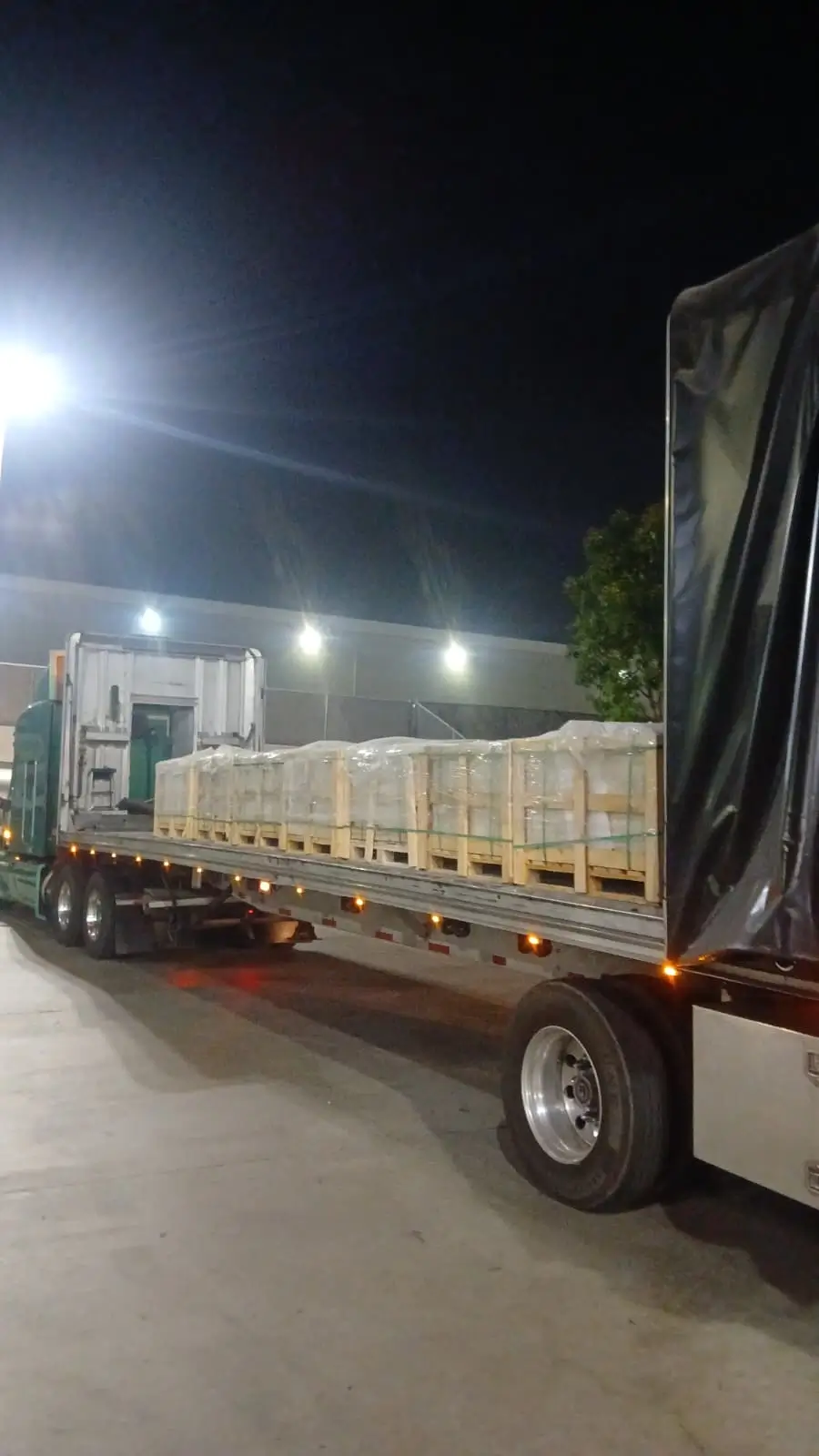
- Confirm the truck delivery format: palletized or loose-stacked determines how you receive and stage material on site
Material Quantity Calculation and Logistics Planning
Your quantity calculation for a stone veneer supply order needs to account for more variables than the facade square footage. The standard waste factor for ashlar and dimensional panel cuts runs 10–12% for a competent installation crew. Ledgestone and mosaic cuts run 15–20% due to fitting and trimming. Add another 3–5% if your facade has significant window and door openings with returns, since the cut-to-fit work at those transitions generates disproportionate waste relative to field material.
Delivery sequencing is a logistics variable that gets underplanned on projects where the veneer is being installed in phases. Stone veneer supply from a single lot will be consistent — but if your project runs long and you need a second delivery six months after the first, lot consistency becomes a real risk. Order full-project quantities in a single warehouse pull if your site has storage capacity and your schedule permits. Citadel Stone maintains inventory across a national distribution network, which shortens truck lead times to 1–2 weeks on most orders — substantially better than the 6–10 week cycle common for imported stone where lot consistency is hardest to guarantee across multiple shipments.
Site access for truck delivery affects your material cost more than most project managers realize. A standard flatbed truck delivering palletized veneer stone needs 14 feet of vertical clearance and a staging area of at least 40 feet to maneuver. If your site doesn’t provide that — or if your truck access is restricted to specific hours due to permit conditions — you’re looking at smaller delivery vehicles, additional handling, and costs that erode the value of any volume discount on the stone itself. Confirm your truck access constraints with the site super before you commit to a delivery format.
- Ashlar and dimensional panel waste factor: 10–12% above net facade area
- Ledgestone and mosaic waste factor: 15–20% above net facade area
- Add 3–5% for facades with significant opening returns
- Order full-project quantity in a single warehouse pull to ensure lot consistency
- Confirm truck access dimensions before scheduling delivery: 14-foot clearance minimum, 40-foot staging area minimum
Installation System Compatibility with Stone Veneer Supply
The mortar system you specify for your stone veneer supply has to be matched to the absorption characteristics of the specific stone, not selected generically from a masonry mortar catalog. High-absorption limestone veneers will pull moisture aggressively from a standard Type S mortar mix, causing the mortar to cure too rapidly, which reduces bond strength and increases the risk of delamination within the first few years. The field fix for this — pre-wetting the stone panels before installation — works, but it’s a practice that needs to be in your spec and your pre-installation meeting agenda, not discovered by your installer as a corrective measure.
For stone veneer panels with absorption rates above 6%, specifying a polymer-modified mortar provides more working time and better bond development regardless of how quickly the stone draws moisture. The polymer component compensates for the absorption differential and maintains plasticity long enough for proper adhesion to develop. This is a material cost premium of roughly 15–20% on the mortar line, but the performance benefit in high-absorption stone applications is well documented and strongly supported by The Masonry Society natural stone wall construction standards for veneer systems where substrate and stone absorption interact.
Substrate preparation is the installation variable most often cited in premature veneer failure investigations. A concrete masonry unit substrate needs to be clean, free of form release agents, and at a minimum surface absorption condition — fully cured and not bone dry, which requires wetting in hot, low-humidity conditions. A wood-frame substrate requires a minimum two-layer weather-resistive barrier and a metal lath system with the right fastener pattern for the veneer weight you’re installing. The lath fastening spec for a 15-pound-per-square-foot veneer is materially different from one designed for a 25-pound-per-square-foot product, and substituting without recalculating the fastener schedule is a code violation in most jurisdictions.
Getting Your Stone Veneer Supply Specification Right
The decisions that define a stone veneer installation’s long-term performance get made before a single panel is set. Grade selection, cut type, thickness tolerance, absorption specification, thermal expansion allowance, and mortar system compatibility — these are the variables that separate a 25-year facade from one that generates callbacks in year four. The specification document is where you lock these variables in, and the supplier conversation is where you verify that the material you’re ordering actually meets them.
Your quantity calculation, lot consistency requirement, and delivery logistics plan need to be in place before you commit to a product or a schedule. Vague ordering creates vague results. Specific specifications — lot numbers, dimensional tolerances, absorption test results, back-relief depth — give your supplier something to confirm against and give your installation team something to inspect to. For projects where long-term maintenance matters, the material choices you make at specification also determine the ongoing care requirements — exploring natural stone care after installation will help you plan maintenance protocols that match the specific veneer material you’ve specified. Stone veneer from Citadel Stone is selected for consistent face texture and back-relief depth, reducing mortar waste during large-scale facade installations.
Related reading: stone supply company comparison · stone veneer supply guide · paving stone supply cost.