Heat underfoot is a year-round question
The Virgin Islands do not get a cool season to fall back on. Across St. Thomas, St. John and St. Croix the gap between summer and winter temperatures runs to about five degrees Fahrenheit, so a floor that reads hot in August reads hot in February too. Surface temperature is a permanent design input here, and one of the last things a specifier can influence once orientation, glazing and overhangs are settled.
Stone is not cool by default. What it does is take up heat slowly and give it back slowly, and whether that helps or hurts depends on the room.
What thermal mass does in a tropical room
A dense limestone floor lags behind the air around it. In a shaded, cross-ventilated room that lag is an asset: the floor stays below peak air temperature through the worst of the afternoon and never spikes. Put the same floor behind unshaded west glazing and the mass charges all afternoon, then releases into the room long after sunset, which is exactly when the house should be cooling down.
- Shaded rooms with air moving through them get the most from a heavy stone floor.
- Rooms with long afternoon sun need shade devices first; the stone follows.
- Covered galleries sit between the two and usually want a lighter tone.
- A floor bonded to a ground-bearing slab behaves differently from one over a ventilated void.
Tone, finish and the surface you touch
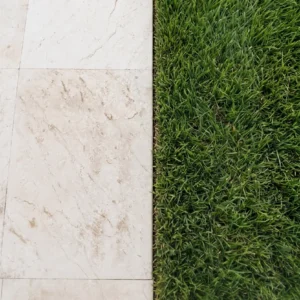
Reflectance does more for barefoot comfort than density does. Pale limestone throws back a large share of the light that lands on it, while a dark surface converts most of it to heat within the top fraction of an inch. Finish counts as well, because a textured face scatters light and holds a thin film of air against the skin.
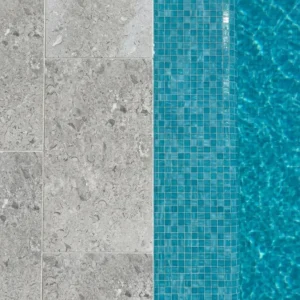
- Pale tones for sun-touched thresholds, gallery floors and pool surrounds.
- Mid tones indoors, where glare off a very light floor can be tiring.
- Textured faces where feet are bare and the surface catches direct sun.
- Smoother faces in shaded interiors, where cleaning matters more than grip.
- Sample every candidate on site, in the real light, before the schedule closes.
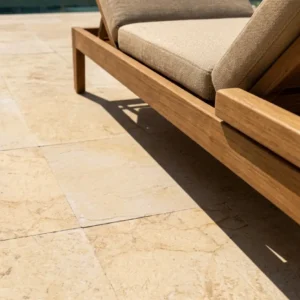
Where a room is genuinely shaded, cool-running limestone tile for interiors in a pale to mid tone will hold a comfortable surface all day with no mechanical help at all.
Basalt, aggregate and a distinction worth stating
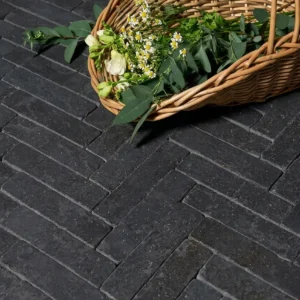
Dark stone is a different conversation here, because the territory has basalt of its own. Aggregate Inc. runs the Ham’s Bluff Quarry on St. Croix, producing bluestone basalt as construction aggregate, from road base to stone for asphalt and ready-mixed concrete, and barging it out to the Leeward islands. That material and the basalt Citadel supplies are not competing products. One is construction aggregate; the other is dimension-sawn, calibrated architectural paving. Same rock family, different product category, different place in the build-up.
For heat comfort the point is simpler. Dark basalt gets hot in direct sun, so use it where shoes are worn and loads concentrate, and keep pale limestone where feet are bare.
Three islands, three exposures
Treating the three islands as one market is an outsider habit. They differ in terrain, in what gets built and in how a delivery reaches the door.
- St. Thomas is steep, and work around Charlotte Amalie often means tight access.
- St. John is steep as well and weighted toward villa work near Cruz Bay.
- St. Croix is the largest and flattest, with Christiansted and Frederiksted at opposite ends.
- Vehicles here drive on the left, which changes access planning on a narrow site.
The build-up matters as much as the tile
The Virgin Islands sit on the boundary between the North American and Caribbean plates. The reference event is the earthquake of 18 November 1867 in the Anegada trough between St. Croix and St. Thomas, magnitude 7.5, two shocks about ten minutes apart, with Charlotte Amalie and Frederiksted both heavily affected. Movement joints, sound bedding and honest edge restraint are not paperwork here.
Weather asks the same discipline. Irma crossed St. Thomas and St. John on 6 September 2017, Maria reached St. Croix roughly two weeks later, and officials reported that around 90% of buildings in the territory were damaged or destroyed.
Landing the stone, and the customs surprise
The Virgin Islands are a US territory, yet they sit outside the US customs territory and run their own customs law through the Virgin Islands Bureau of Customs. A container leaving Florida for Crown Bay is not a domestic move for customs purposes, and duty and tax are worked out on the CIF value.
- Duty is generally 6% ad valorem on goods originating outside the sovereignty of the United States.
- Goods of US origin are exempt from that duty but fall under the separate excise tax.
- Under 33 V.I.C. section 525, credit is given for duty already paid to the United States.
- There is no sales tax in the territory; a gross receipts tax sits on the VI seller.
Plan stone delivered into Crown Bay around the clearance sequence rather than the other way round, and have a customs broker price the duty and excise lines before the order is confirmed.
Before you commit to a floor
Ask for absorption and density data rather than adjectives. Ask how the tile is calibrated and what the thickness tolerance is. Ask what the finish does to grip when wet, then put a sample down in the room it is meant for, in its real light. Specify the floor for the room, the aspect and the way the house is actually used, and the heat question mostly answers itself.