Why Stone Selection Defines the Build
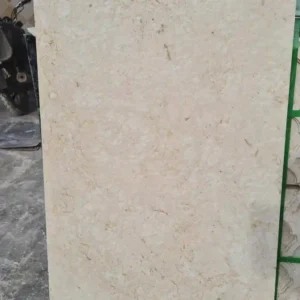
A stacked flagstone fireplace lives or dies by the stone you choose before the first course goes down. Flagstone’s natural cleavage planes and variable thickness — typically ranging from 1.5 to 3 inches in structural fireplace applications — determine how cleanly courses stack, how much mortar you’ll need to compensate, and whether the finished face reads as intentional craftsmanship or a rushed pile. Evaluating flagstone for consistent bedding planes, not just color, is the non-negotiable first step.
Density and absorption rate matter here more than most installers acknowledge. A flagstone with an absorption rate above 3% will cycle moisture into the joint system with every weather event, accelerating mortar breakdown at the face. For interior and exterior fireplaces alike, stone testing at or below 2% water absorption is the target — a spec that eliminates a lot of the softer sedimentary options people default to based on looks alone. According to flagstone sedimentary rock characteristics and paving use, flagstone’s composition varies significantly across quarry sources, which is exactly why sourcing consistency matters so much for stacked fireplace work.
Building a Flagstone Fireplace vs. a Patio: Key Differences
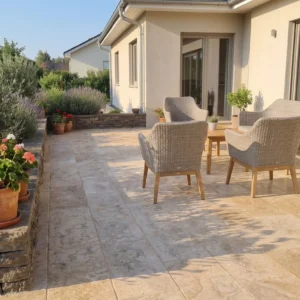
The jump from building a flagstone patio to building a vertical stacked flagstone fireplace structure catches a lot of experienced hardscape contractors off guard. Horizontal patio work is fundamentally about load distribution over a prepared base — the stone sits, the base supports it, and gravity does most of the work. Vertical stacked work reverses that relationship entirely. Every course has to bear the cumulative weight above it while managing thermal expansion and contraction that shifts direction with every fire cycle.
Compressive strength becomes the primary selection criterion at that point. Flagstone with compressive strength above 8,000 PSI is the standard for fireplace applications — lower-strength stone will develop micro-fractures at mortar interfaces over two to three heating seasons. The mortar joint itself needs to be refractory-grade for any surface within 36 inches of the firebox opening, transitioning to standard Type S or Type N mortar for the decorative face stone above the mantel line. Don’t let anyone talk you into using standard mortar throughout — the thermal gradient across a fireplace face is steeper than most people assume.
Flagstone Color and Course Planning
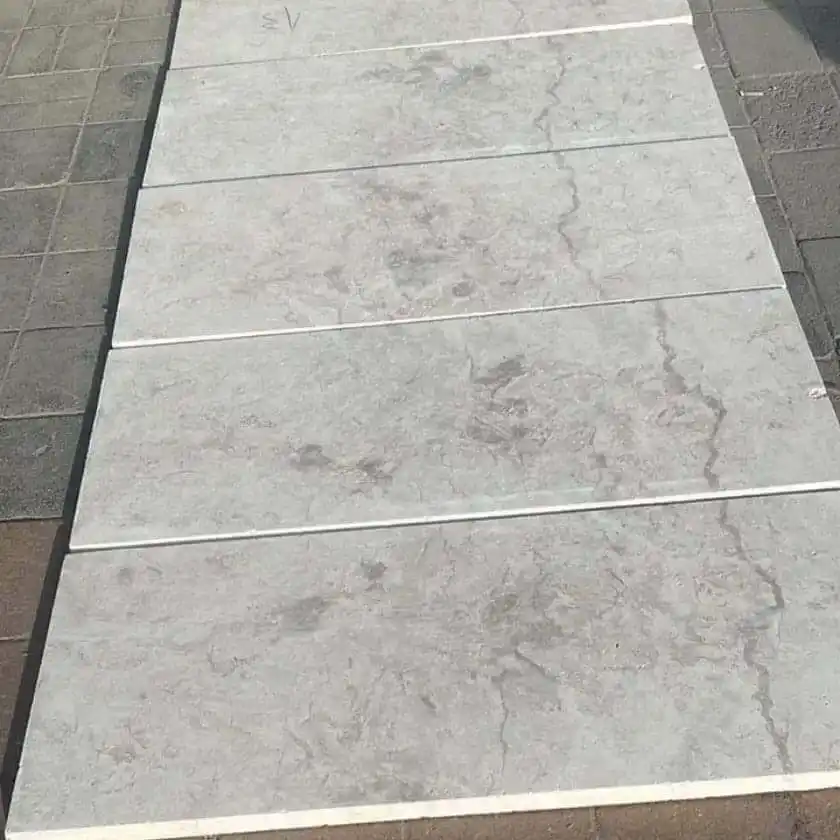
Flagstone color selection for a fireplace face is a design decision that also carries structural implications, which is a nuance worth understanding before you order. Darker stones — deep charcoals, slate blues, and iron-rich browns — absorb and re-radiate more radiant heat than lighter-toned material. That differential heating creates a more aggressive thermal expansion cycle at the stone face, which directly affects joint integrity over time.
Course planning should account for flagstone color variation across the pallet as a layout tool, not an afterthought. Dry-stacking the entire face before mixing mortar lets you distribute tone variations intentionally — grouping similar colors creates banding, while alternating light and dark pieces produces a more organic, quarried look. Pre-layout consistently catches fit problems that would otherwise require re-cutting mid-installation, costing time and risking chipped finished faces.
- Sort stone by thickness before layout — consistent bed depths per course simplify leveling
- Mark each stone’s orientation after dry-fitting so you don’t lose the layout when mixing begins
- Keep flagstone color transitions gradual across the face — abrupt shifts read as material inconsistency rather than intentional design
- Reserve the flattest, most even-bedded pieces for the courses at eye level — that’s where scrutiny is highest
Mortar Joint Specs and Thermal Cycling
This is where most stacked flagstone fireplace installations fail over time, and it’s almost always a joint specification problem rather than a stone problem. The thermal cycling a fireplace face experiences — expanding and contracting with each fire cycle, plus seasonal outdoor temperature swings on exterior fireplaces — puts constant fatigue stress on mortar joints. Refractory mortar rated to at least 2,000°F is non-negotiable within the heat zone, but even on the decorative face above, joint width and depth matter more than most specs acknowledge.
Keep face joints between 0.5 and 0.75 inches wide for standard fireplace applications. Narrower joints look cleaner but fail faster under thermal movement because there’s insufficient mortar mass to absorb micro-movement at the interface. Wider joints give more working depth but tend to read as sloppy from a distance if they’re not tooled consistently. For exterior fireplaces in regions with significant day-night temperature swings, joint depth should be held to a minimum of 0.75 inches — shallow pointing is the first casualty of freeze-thaw cycling, where water infiltration and ice expansion can eject pointed mortar within two to three seasons. According to ASLA natural stone and flagstone outdoor paving guidance, joint integrity under cycling conditions is a primary performance variable in natural stone exterior applications.
- Use refractory mortar for all joints within 36 inches of the firebox opening
- Tool joints to a consistent concave profile — this sheds water more effectively than flush or proud pointing
- Allow full cure time (72+ hours) before first fire — premature heating causes joint shrinkage and cracking
- Inspect and repoint face joints every two to three years on exterior installations in freeze-thaw climates
Base and Footing Requirements
A stacked flagstone fireplace needs a footing sized to carry the actual dead load — and that load is heavier than most first-time estimators calculate. Dense flagstone runs between 160 and 175 pounds per cubic foot. A modest outdoor fireplace with a 48-inch-wide face and 6-foot overall height, built at 12 inches of average depth, carries roughly 3,500 to 4,500 pounds of stone before adding the firebox structure. That requires a reinforced concrete footing of at least 12 inches depth, extending below the frost line in any climate that sees sustained freezing temperatures.
Skimping on footing depth is the most common structural error in fireplace stone work. Even a shallow frost penetration of 8 to 10 inches will move an undersized footing enough to crack mortar joints through the entire stack — sometimes in the first winter after construction. The repair is invasive and expensive, which is why USGS flagstone and dimension stone paving data consistently emphasizes structural base requirements as the primary determinant of long-term performance in stacked stone applications. Get a geotechnical assessment when building on fill, clay-heavy soil, or any site with known drainage issues.
Sourcing and Ordering Stacked Fireplace Stone
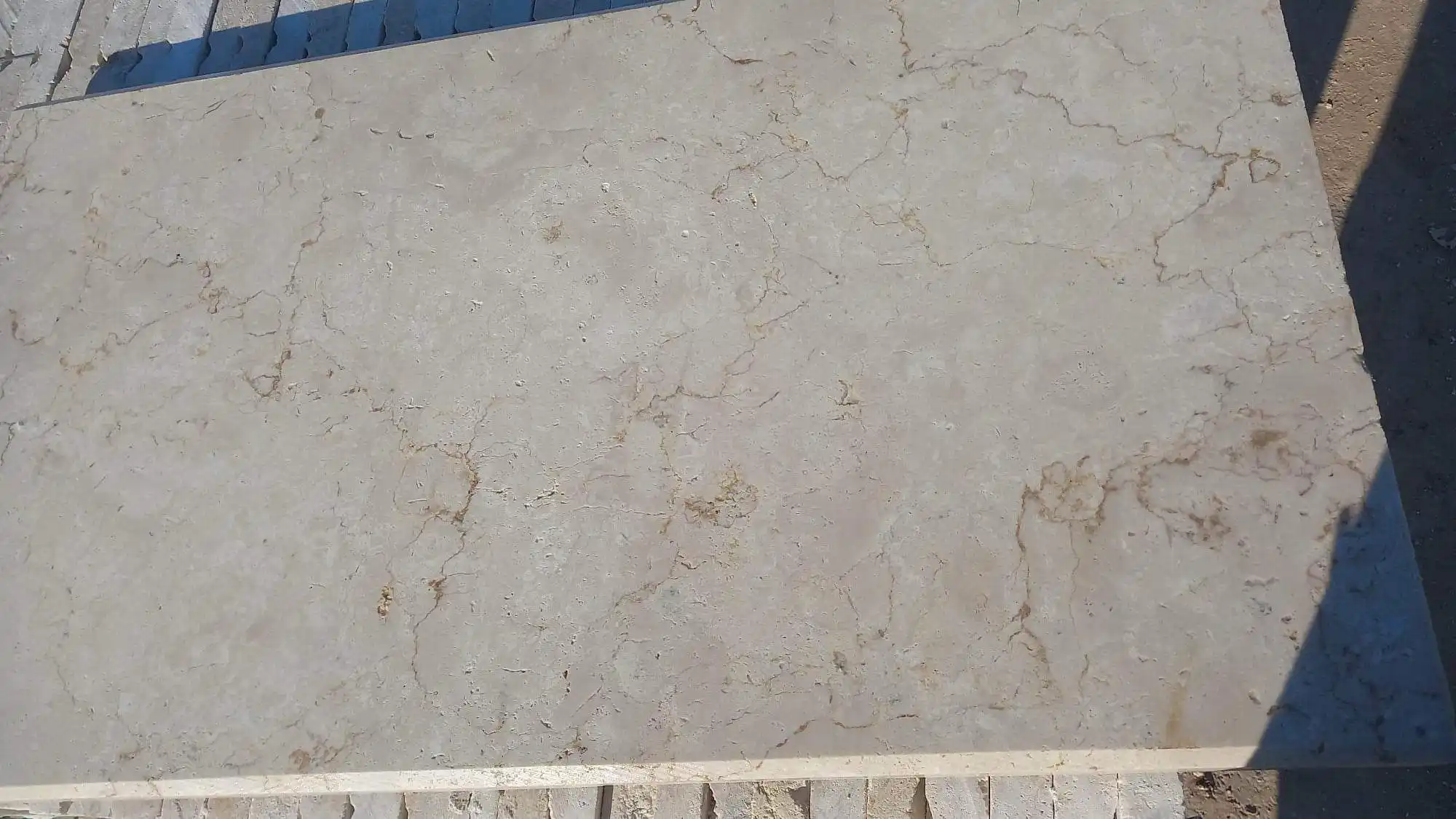
Getting the stone order right before the project starts saves you from the worst-case scenario: running short mid-installation when the warehouse has moved to a different production lot. Flagstone color and surface character vary between quarry pulls, and even stones from the same source can shift in tone when a new extraction area opens. Order everything needed — plus a 15% overage for cuts, breakage, and future repairs — from a single warehouse pull.
For a stacked flagstone fireplace, think through truck delivery logistics before the stone lands on site. Flagstone pallets typically run 3,500 to 4,500 pounds each, and a standard residential driveway or side yard may not support direct pallet placement from a flatbed without damage to the surface below. Stage the truck delivery to a hard-surface area and use a pallet jack or forklift for final positioning. At Citadel Stone, we recommend confirming warehouse availability for your stone profile at least three weeks before the project start date — high-demand patterns can sell through quickly, and substituting mid-project creates matching challenges that no amount of skill fully resolves. Review current availability and discuss project requirements through our Citadel Stone stacked stone supply page.
Installation Sequence for a Clean Stacked Face
The installation sequence for a stacked flagstone fireplace follows a logic that experienced masons internalize over years of field work — but it’s worth making explicit for anyone working through their first major stacked project. Start from the base course and work upward, setting corner stones first at each course before filling the field. Corners establish the height datum for each lift and prevent the drift that accumulates when working from center outward.
- Wet stone faces before setting — dry flagstone pulls moisture from mortar too fast, weakening the bond
- Back-butter each stone with a minimum 0.5-inch mortar bed before placement
- Check plumb every three to four courses — small errors compound quickly on vertical work
- Stagger vertical joints by at least 4 inches between courses for structural integrity
- Don’t attempt to fill large gaps with mortar alone — cut or select a better-fitting piece instead
- Keep mortar off the stone face during setting and clean within 30 minutes before it skins over
The biggest field mistake in stacked fireplace work is rushing the mortar cure between courses. Full load-bearing strength develops over 28 days for standard mortar — but at least 48 hours between every three to four courses is required before adding significant weight above. Pushing that timeline, especially in low-humidity or cold conditions, creates invisible bond failures that only reveal themselves when the structure is fully loaded.
Sealing and Long-Term Maintenance
Sealing a stacked flagstone fireplace is optional for interior installations in low-humidity environments, but it becomes a genuine performance specification decision for exterior or covered outdoor fireplaces. A penetrating impregnator sealer — specifically one rated for high-temperature applications — protects the stone matrix from soot absorption and airborne grease without altering the natural surface character. Avoid topical sealers on fireplace faces; the heat cycling will cause them to blister and peel within two to three fire seasons.
Plan for resealing every three to five years on exterior installations, and inspect the joint system at the same interval. Hairline joint cracks are normal after the first two to three years as the structure settles and accommodates thermal movement — these can be addressed with a flexible refractory caulk in matching color without requiring full repointing. Larger joint failures, particularly those with water infiltration staining, need full repointing with fresh mortar before the next freeze-thaw season to prevent progressive structural damage.
Expert Summary
A well-executed stacked flagstone fireplace is one of the most durable and visually compelling stone features you can build — but the margin for error in specification and installation is narrower than most homeowners or first-time contractors expect. Stone absorption rate, mortar specification by zone, footing depth, and joint width are the variables that separate a 30-year installation from one that needs significant remediation within a decade. Every decision compounds, which is why getting the specification right before breaking ground matters more than any single installation technique.
As you complete the fireplace project, natural flagstone works equally well in other hardscape applications around the property. Explore flagstone walkway design ideas to see how the same material family translates to pathways, garden access routes, and connecting hardscape features that complement a feature fireplace. Sourced from premium quarries in Turkey and the broader Middle East region, stacked fireplace stone ships pre-sorted by tone at Citadel Stone.
Related reading: flagstone for patio · landscaping with flagstone · making flagstone walkway.