Why Base Preparation Decides Everything
Making flagstone walkway installations that hold up over decades starts well below the surface — the base preparation phase accounts for more long-term failures than any other variable, including stone selection or jointing method. Most walkways that crack, shift, or heave within five years trace the problem directly to an undersized aggregate base or inadequate compaction. You’ll want at least 4 inches of compacted crushed stone base for pedestrian-only paths, and 6 inches if the path crosses a driveway apron or sees any occasional vehicle overhang.
The aggregate gradation matters as much as the depth. A well-graded crushed stone — typically a 3/4-inch clean crush or a crusher-run blend — compacts into a stable, interlocking matrix that resists lateral displacement. Rounded pea gravel might look similar in a wheelbarrow, but it never truly locks. Settlement follows within the first freeze-thaw cycle, and no amount of re-leveling fixes that root cause without pulling the stones and starting over.
Geotextile fabric between the subgrade and aggregate base is worth including on any flagstone path longer than 20 feet, particularly in clay-dominant soils where moisture migration pushes fine particles upward over time. That upward fines migration — called pumping — is slow and invisible until one section of your walkway suddenly sits half an inch lower than the rest.
Choosing the Right Flagstone Thickness
Thickness selection is the specification decision that most homeowners underestimate and most contractors quietly get wrong to save on material cost. For a dry-laid flagstone walk, you need a minimum nominal thickness of 1.5 inches — and 2 inches is a more defensible specification for any path that will see regular foot traffic. Thinner slabs in the 3/4-inch to 1-inch range are tempting because they’re lighter and cheaper, but they flex under point loads and eventually crack across the span between support points in your base.
The relationship between slab span and thickness follows a practical rule: unsupported spans longer than 12 inches need flagstone at 1.5 inches minimum; spans approaching 18 inches warrant the full 2-inch nominal. This matters most in irregular flagstone layouts where large pieces bridge gaps in the aggregate bed. Professionals often check the underside of each piece before setting it — any piece with a natural fault line or thin spot goes to the edge of the path where spans are shorter and support is better.
- 1.5-inch nominal thickness: adequate for average residential pedestrian paths with consistent base support
- 2-inch nominal thickness: recommended for high-traffic areas, larger irregular pieces, or any span over 14 inches
- Pieces under 1.25 inches nominal: restrict to decorative borders or areas fully bedded in mortar on a concrete slab
- Verify thickness at multiple points on each piece — natural stone varies, and a nominal 1.5-inch piece may taper to 1 inch at one corner
According to flagstone sedimentary rock characteristics and paving use, flagstone splits along natural bedding planes, which is precisely why thickness consistency across a single piece can vary by as much as 30%. Factor that into your ordering quantities and your base bed depth.
Setting Methods: Dry-Laid vs. Mortar-Set
The choice between dry-laid and mortar-set installations has real consequences for maintenance, drainage, and long-term performance — and the right answer depends on your base conditions, not just aesthetic preference. Dry-laid flagstone path installations are more forgiving of minor settling, easier to repair, and allow water infiltration that eliminates the hydrostatic pressure that cracks mortar beds. A mortar-set flagstone walk on a properly prepared concrete slab delivers a more rigid, uniform surface that suits formal designs and areas with heavy foot traffic, but any movement in the substrate translates directly into cracked joints or dislodged stones.
Here’s what most installation guides skip: mortar-set applications require expansion joints every 8 to 10 feet, not the 15 to 20 feet that generic concrete guidelines suggest. Natural stone and mortar have different thermal expansion coefficients, and that differential creates stress at the bond line in temperature-volatile conditions. Skipping or spacing expansion joints too far apart is the single most common cause of premature mortar joint failure in outdoor flagstone applications.
- Dry-laid on compacted aggregate: best for irregular flagstone, natural drainage, easier long-term repair
- Mortar-set on concrete slab: best for formal designs, uniform joint widths, high-traffic commercial applications
- Hybrid method (dry-set in concrete sand on a base course): compromise approach that allows minor adjustment during installation while limiting long-term movement
- Expansion joint spacing for mortar-set: 8 to 10 feet maximum in temperature-variable regions
Flagstone Species and Performance Comparison
The term “flagstone” covers a wide range of sedimentary and metamorphic rock types — bluestone, limestone, sandstone, slate, and quartzite all qualify as flagstone based on how they split and their physical form, not their mineralogy. Each species brings a different performance profile that affects your specification decisions for a walkway with flagstone.
Limestone flagstone delivers a warm, neutral palette and excellent workability, but its calcium carbonate base makes it vulnerable to acid etching from fertilizer runoff and leaf tannins in high-moisture environments. Bluestone (a dense sandstone variety) offers superior hardness and slip resistance in its natural cleft finish — the ASLA natural stone walkway and stepping stone design guidance highlights natural cleft finishes as preferable for walkway traction performance. Quartzite sits at the hard end of the flagstone spectrum, resisting staining and abrasion with minimal maintenance, but its density makes it heavier to handle and harder to cut cleanly in the field.
- Limestone flagstone: warm tones, easier to cut, requires sealing in high-moisture or acid-exposure environments
- Bluestone flagstone: dense, high traction in natural cleft finish, darker palette, performs well in freeze-thaw regions
- Sandstone flagstone: variable hardness depending on silica content, good color variety, softer grades absorb more moisture
- Quartzite flagstone: hardest common flagstone species, low maintenance, challenging to cut without diamond blade equipment
- Slate flagstone: excellent layering and color depth, delamination risk in pieces under 1.25 inches thick in exposed applications
For walkway with flagstone applications where slip resistance is a non-negotiable factor, natural cleft or thermal finishes consistently outperform honed or polished surfaces. The ADA walkway surface firmness and accessibility standards establish firm, stable, and slip-resistant as the baseline criteria for any public or accessible walkway surface — standards that should inform residential specification decisions as well.
Layout Patterns and Joint Spacing Fundamentals
Your layout pattern affects both the visual character of the path and its structural behavior. Random irregular patterns — the most common choice for natural flagstone paths — require careful piece selection to avoid long continuous joint lines that run the full width of the path. Those continuous lines create a structural fault that channels water, accelerates freeze-thaw damage, and allows the path to split cleanly into sections under repeated loading. Break up any joint line that approaches 60% of the path width.
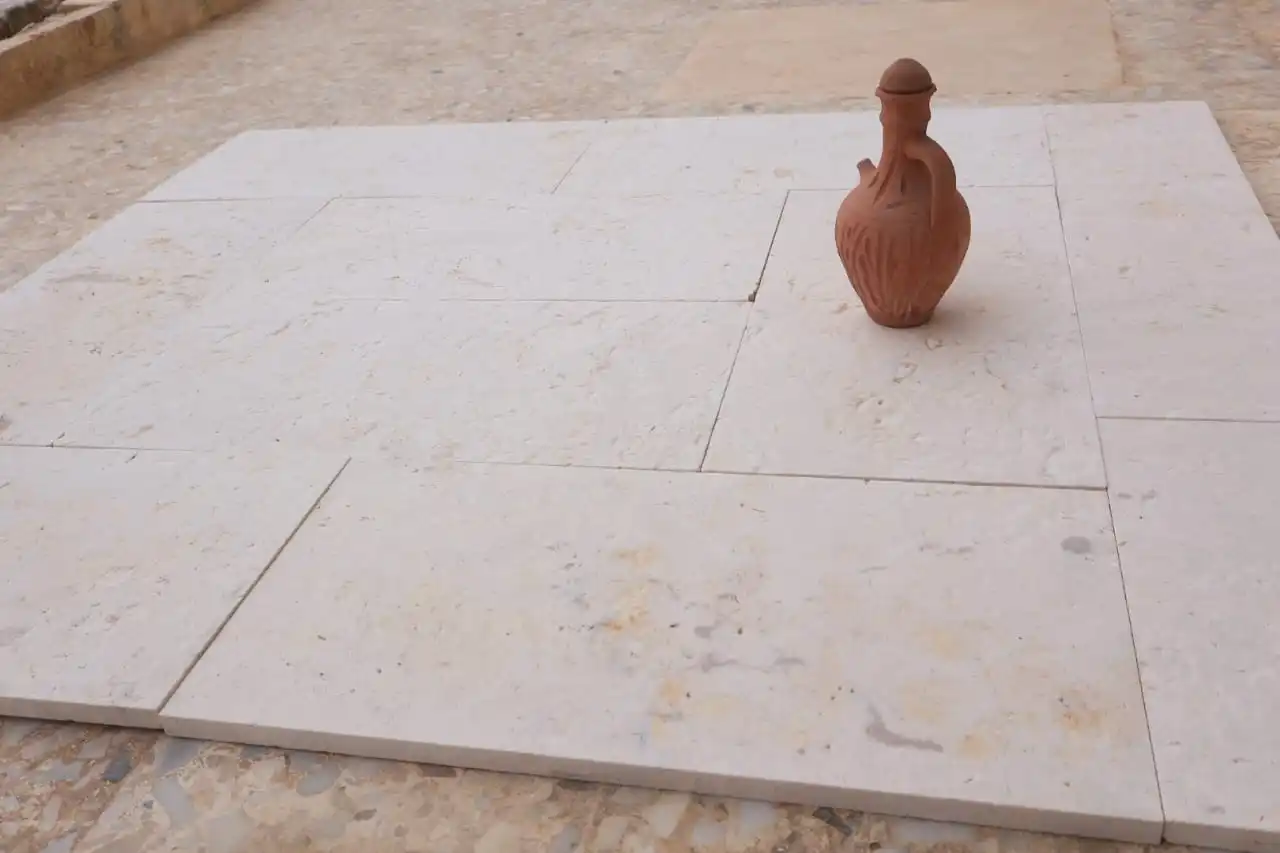
Joint width for dry-laid flagstone path applications should target 1 to 2 inches to allow for ground cover planting or polymeric sand filling. Tighter joints in the 1/4-inch to 1/2-inch range look cleaner but require more precise fitting, and they leave less tolerance for the minor settlement that every dry-laid installation experiences in the first two seasons. At Citadel Stone, we recommend a 1 to 1.5-inch joint target for most residential walkways — it balances appearance with practicality and gives you room to re-sand without the path looking unkempt.
For formal or rectilinear flagstone layouts, consistent joint width depends on sourcing material with predictable dimensional tolerances. Irregular flagstone that varies widely in edge angle makes consistent jointing nearly impossible without significant on-site cutting. Factor that cutting labor into your project budget — it adds time and equipment cost that often surprises homeowners budgeting from material cost alone.
Cost Factors, Sourcing, and Budget Planning
The total cost of making a flagstone walkway breaks down into three categories: material, delivery, and labor — and the ratio between them shifts significantly depending on where your project sits relative to stone supply sources. Material cost per square foot for natural flagstone typically ranges from $3 to $10 depending on species, thickness, and finish, but that number is only part of the picture. Freight distance from the warehouse to your job site can add $1 to $3 per square foot on top of material cost for projects far from distribution points, which is a meaningful swing on a 200-square-foot path.
Labor-to-material ratios for flagstone walkways skew heavily toward labor compared to concrete or unit paver alternatives. Installation labor for irregular flagstone typically runs 1.5 to 2.5 times the material cost on residential projects, driven by the time required for piece selection, fitting, and adjustment. In markets with tighter labor availability, that multiplier pushes higher. Scheduling installation outside peak landscaping season often brings better subcontractor availability and more competitive pricing if your project timeline is flexible.
- Material cost: $3–$10 per square foot depending on species and thickness
- Freight premium: $1–$3 per square foot additional for projects distant from warehouse distribution points
- Installation labor: typically 1.5x to 2.5x material cost for irregular dry-laid flagstone
- Base preparation materials: factor $1.50–$3.00 per square foot for aggregate, geotextile, and sand bed
- Value engineering option: specify consistent-thickness cut flagstone to reduce on-site fitting labor and offset higher material cost with lower installation time
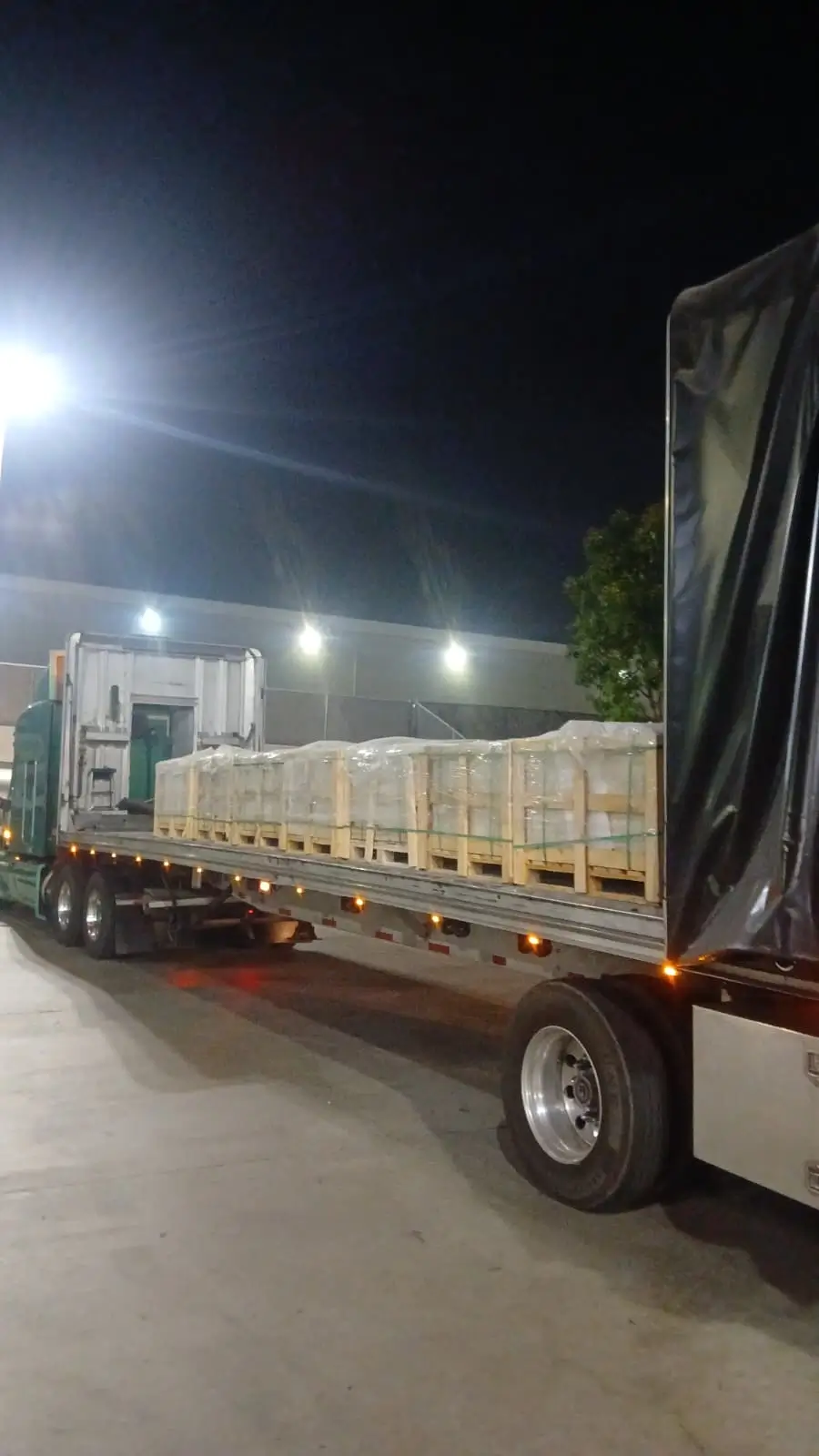
Sourcing decisions also affect project timelines. Citadel Stone maintains national warehouse inventory, which typically compresses lead times to one to two weeks — a significant advantage over the six-to-eight-week import cycles that affect projects relying on direct overseas orders. Confirm warehouse stock availability before finalizing your project schedule, particularly for larger pieces in less common species that may require replenishment.
For projects where material and labor budgets are tight, pre-cut or calibrated flagstone pieces offer genuine value engineering. The premium per square foot over irregular raw flagstone is real, but the reduction in on-site cutting, waste, and fitting time can offset that cost on any project larger than 150 square feet. Run both scenarios before committing — the numbers often surprise installers who default to irregular stock without pricing the labor differential. When comparing options, Citadel Stone path flagstone offers a range of species and calibrated thickness options worth reviewing early in your specification process.
Jointing Materials: Polymeric Sand, Mortar, and Ground Cover
Joint filling is the detail that determines how well your completed flagstone walk handles weed pressure, ant activity, and moisture movement over time. Polymeric sand — the most common modern jointing material for dry-laid applications — activates with water to form a semi-rigid bond that resists weed germination and erosion far better than standard concrete sand. The critical detail most installers miss is that polymeric sand requires dry stone surfaces and dry weather conditions for proper activation. Applying it to damp flagstone or in humid conditions before a rainstorm produces a gummy, unactivated mess that washes out in the first heavy rain.
Ground cover plants between joints — thyme, sedum, or Irish moss — add texture and drainage benefit but require joint widths of at least 1.5 inches to establish properly. The trade-off is that root systems from ground cover can slowly displace thin or poorly bedded flagstone over three to five years as root mass accumulates under the edges. Reserve planted joints for paths with heavier stone and well-consolidated bases.
- Polymeric sand: apply to completely dry surfaces, sweep to full joint depth, compact lightly, then activate with a fine mist — avoid heavy spray that displaces material
- Standard concrete sand: lower upfront cost, requires annual top-up as material migrates, higher weed pressure over time
- Mortar joints: durable in mortar-set installations, requires expansion joints and ongoing monitoring for cracking
- Ground cover plants: visually rich option, suited to informal paths with wider joints and robust stone thickness
Drainage, Slope, and Water Management
A flagstone path that holds water becomes a slip hazard and a freeze-thaw vulnerability simultaneously. The minimum cross-slope for surface drainage on a pedestrian walkway is 1% — that’s roughly 1/8 inch per foot — and 2% is a more reliable target in most conditions. The challenge with irregular flagstone is that individual stone surfaces rarely align precisely enough to maintain a uniform pitch, so you’re engineering drainage into the base geometry rather than relying on surface planarity.
Your aggregate base should slope continuously toward a drainage outlet, swale, or lawn area. Setting your base to drain and then adjusting individual stones to approximate the slope gives you a more consistent result than trying to tilt each stone independently. On paths parallel to a slope, you need to manage cross-fall while preventing the path from becoming a channel that accelerates water toward structures. A slight crown in the center — with drainage to both sides — works well on wider paths exceeding 4 feet.
The USGS flagstone and dimension stone paving data documents the dimensional and physical properties of the major flagstone types used in paving applications — a useful reference when specifying stone for installations where water management and long-term surface stability are primary performance criteria.
Sealing, Maintenance, and Long-Term Care
Not every flagstone species needs sealing, and applying a sealant to the wrong stone or at the wrong time creates problems rather than preventing them. Dense quartzite and most bluestone flagstones have low enough absorption rates that sealing adds minimal protection and can trap moisture if the stone isn’t fully cured and dry at application. Limestone and sandstone flagstones, by contrast, benefit meaningfully from a penetrating impregnating sealer that reduces moisture absorption and limits staining from organic material.
The practical sealing schedule for walkway stone that warrants treatment is application at installation (after a minimum 28-day cure for mortar-set, or 30 days after installation for dry-laid to allow initial settlement), then re-application every two to three years depending on traffic and UV exposure. A water-based penetrating sealer rather than a film-forming topcoat keeps the surface breathable, which is essential for outdoor stone that cycles through wet and dry conditions. Film-forming sealers trap moisture, and the result is spalling and delamination within two to three seasons in consistently wet or freeze-thaw conditions.
- Test sealer absorption on a scrap piece first — if the stone barely darkens when wetted, sealing adds minimal value
- Clean the surface thoroughly before sealing — efflorescence, oil, or biological staining under a sealer locks in the problem permanently
- Apply sealer in shade or on overcast days — direct sunlight accelerates cure before penetration is complete
- Re-sand polymeric sand joints after the first full winter, as thermal cycling causes minor initial settlement in all dry-laid installations
Before You Specify Your Flagstone Walkway
The decisions made before the first stone is placed — base depth, species selection, thickness, jointing method — account for the vast majority of a flagstone walkway’s long-term performance. Making flagstone walkway installations that hold up over decades isn’t about choosing the most expensive material; it’s about matching the specification to the actual site conditions and traffic demands. A well-specified 1.5-inch limestone flagstone walk on a properly prepared 6-inch compacted aggregate base will consistently outlast an over-budget quartzite installation on a thin, poorly drained foundation.
Your project budget benefits from early sourcing decisions. Confirming material availability and freight costs before finalizing design dimensions prevents the mid-project substitutions that ripple through labor estimates and timeline commitments. As you refine your hardscape plans beyond the walkway itself, flagstone ideas for broader landscape use covers how flagstone materials perform across a wider range of landscape applications. Sourced direct from quarries in Turkey, the Mediterranean, and beyond, walkway stone from Citadel Stone is sorted for consistent joint spacing.
Related reading: laying a flagstone patio · install flagstone walkway · Flagstone Color Guide: Choosing the Right Stone Tone.