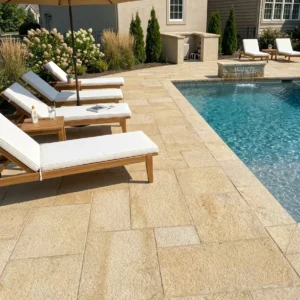
Stone thickness and surface finish get most of the attention in flagstone for patio specifications — but the variables that actually determine long-term performance sit further down the stack, in your base system and your stone selection criteria. Get those two right, and the aesthetic decisions almost take care of themselves. Get them wrong, and you’ll be reletting joints or replacing cracked flags within five years regardless of which stone you chose.
What Makes Flagstone Work for Patios
Flagstone’s natural irregularity is both its greatest visual asset and its primary technical challenge. Unlike uniform pavers, individual flags carry thickness variation — sometimes 3/8 inch across a single piece — which means your setting bed has to compensate rather than just bond. That compensation is the foundation of a durable installation. A dry-laid flagstone patio with a properly compacted aggregate base and screeded sand setting bed will outlast a mortared system on an unstable subgrade every time, because it can move with the ground rather than fight it.
The sedimentary layering that gives flagstone its cleft character also governs its performance under load. According to flagstone sedimentary rock characteristics and paving use, flagstone’s laminar structure means compressive strength is highest perpendicular to the bedding plane — exactly the orientation you want under foot traffic and furniture loading. This is why you should always install flags with their natural cleft face up: you’re loading them in their strongest direction.
Understanding these structural basics shapes every selection decision that follows, from stone species to minimum thickness to joint treatment.
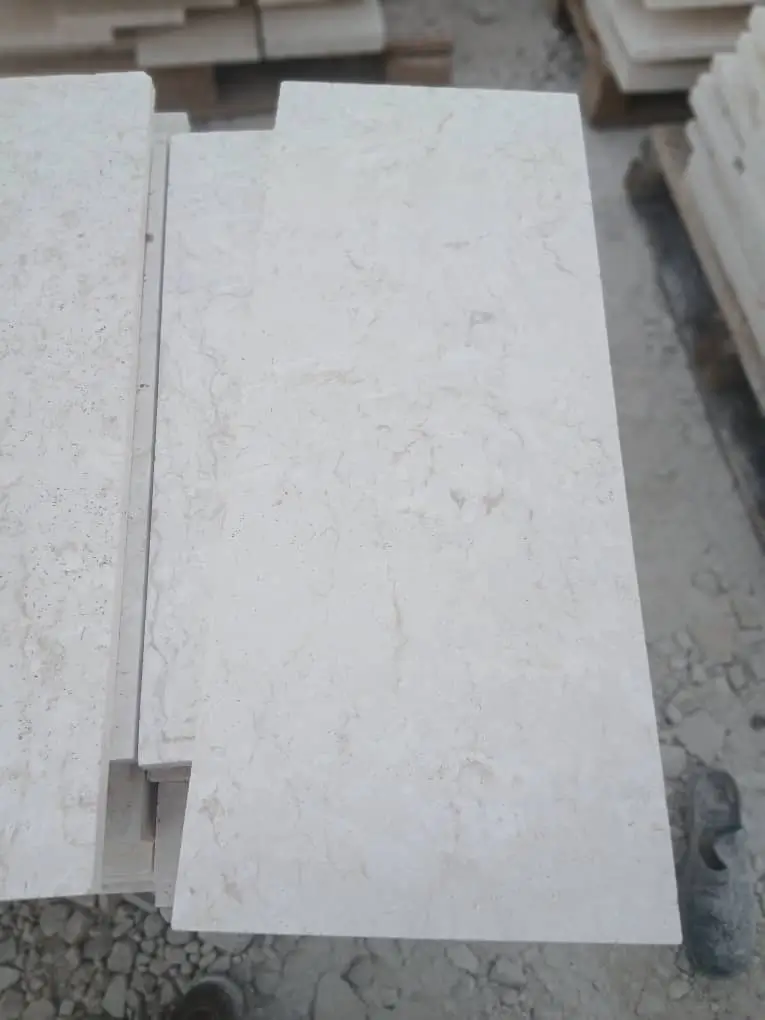
Flagstone Species: What Each Stone Actually Delivers
Your first real decision is stone type, and the options behave very differently in service. The four species that dominate patio applications — bluestone, limestone, quartzite, and sandstone — share a general format but diverge significantly on density, porosity, thermal behavior, and maintenance demand.
Bluestone
Bluestone is a fine-grained sandstone or argillite with compressive strength in the 10,000–14,000 PSI range, depending on quarry source. Its tight grain structure keeps absorption below 3% in well-graded material, which translates to excellent freeze-thaw resistance and low maintenance in wet-climate installations. The natural cleft surface delivers a coefficient of friction above 0.6 when dry — adequate for most residential use — but you should specify thermal finish or bush-hammered texture for any patio surface that stays shaded and damp for extended periods.
Limestone Flagstone
Limestone flags offer a warmer palette and a softer visual weight than bluestone, but the performance spread within the limestone category is wide. Dense, low-porosity limestone with absorption under 5% handles outdoor exposure well. Higher-porosity material above 10% absorption will require annual sealing and is susceptible to surface spalling in freeze-thaw regions. Always request absorption test data — not just hardness ratings — before specifying limestone for a flagstone rock patio in exposed conditions. The Natural Stone Institute limestone technical specifications outline the absorption classes and service exposure ratings that should anchor your spec.
Quartzite
Quartzite is the performance benchmark of the flagstone family. Metamorphic recrystallization produces a near-zero absorption rate and compressive strength exceeding 20,000 PSI in quality material. It’s the right choice when you need maximum durability with minimal maintenance — particularly for patios adjacent to pools or in high-traffic areas. The trade-off is cost: quartzite runs 25–40% more per square foot than limestone or sandstone in most markets, and its hardness makes field cutting slower and blade-intensive.
Sandstone
Sandstone sits at the softer end of the spectrum, with absorption rates ranging from 5% to over 15% depending on cementation quality. It’s visually rich — warm reds, golds, and buffs that age beautifully — but it requires more diligent sealing protocols and performs better in hot, dry climates than in regions with persistent moisture. For a patio with flagstone in a shaded, damp setting, sandstone is the highest-maintenance choice and should be specified only when the aesthetic is a project priority.
Thickness and Size: The Numbers That Matter
Flagstone for patio applications should be specified at a minimum nominal thickness of 1.5 inches for dry-laid systems and 1.25 inches for fully mortared installations on reinforced concrete slabs. These are minimums — not targets. In practice, 2-inch material gives you a meaningful safety margin against cracking under point loads from furniture legs, and it accommodates the thickness variation inherent in natural stone without exposing thin spots at flag edges.
Size selection affects both aesthetics and structural performance. Larger flags — 24 inches and above in the shortest dimension — span more ground but flex more under load. Pairing oversized flags with a rigid mortar bed on an unstable subgrade is a reliable path to cracked stone. Your safest large-format specification is a minimum 2-inch thickness on a concrete slab with isolation membrane, or 2.5-inch thickness on a compacted aggregate base with a sand setting bed.
- 1.25 to 1.5 inches nominal: appropriate for mortared installation on reinforced concrete only
- 1.5 to 2 inches nominal: standard range for dry-laid aggregate base systems
- 2 inches and above: recommended for large-format flags over 36 inches, high-traffic patios, and any installation over expansive clay subgrade
- Thickness variation within a single pallet should not exceed 3/8 inch — request this tolerance in writing when ordering
Thinking about how size mix affects cutting waste is equally important. A patio with flagstone set in a random irregular pattern typically generates 12–18% waste from field cutting. Specifying a mixed-size pallet with a range of 12-to-24-inch pieces reduces cuts at borders and around features, bringing waste closer to 8–10%.
Base Preparation: Where Soil Conditions Decide Everything
Here’s what most flagstone patio projects underestimate: the subgrade is doing more structural work than the stone. Your base preparation strategy has to start with a realistic assessment of what’s underneath, because the same installation detail that performs flawlessly in sandy, well-draining soil will fail within two winters in expansive clay.
Expansive clay — common across wide swaths of the country — absorbs water and swells, then shrinks as it dries. The vertical movement this generates at the surface can exceed half an inch seasonally, which is more than enough to crack mortared flags or shift dry-laid stones out of plane. The correct response is not a deeper base alone; it’s excavating beyond the active clay layer, installing a geotextile separation fabric, and compacting angular crushed stone that resists lateral migration. A 6-inch compacted aggregate base on stable soil becomes a 10-to-12-inch base when you’re working over clay with a plasticity index above 15.
Sandy soils present a different challenge: they drain well, which is an advantage, but they’re prone to erosion and migration under the base if the installation isn’t properly contained at edges. Caliche — the calcium carbonate hardpan common in arid regions — can actually function as a stable subgrade if it’s continuous and well-bonded, but fractured or discontinuous caliche creates differential settlement that cracks flags at the joints between stable and unstable sections. When you encounter caliche during excavation, probe for continuity before deciding whether to build on it or remove it.
- Expansive clay subgrade: excavate to stable depth, geotextile fabric, minimum 10-inch compacted angular base, edge restraint mandatory
- Sandy subgrade: geotextile fabric critical to prevent base migration, 6-inch compacted base minimum, contained edges
- Rocky or caliche subgrade: probe for continuity, fill voids before base compaction, do not assume uniform bearing
- Organic or fill subgrade: remove entirely — no natural stone patio should be built on fill material without engineered compaction certification
The USGS flagstone and dimension stone paving data provides useful context on how regional stone performance data intersects with installation environment — worth reviewing if you’re specifying for variable conditions across a large project.
Finish Options and What They Mean for Your Flagstone Patio
The finish you specify changes the patio’s character, maintenance schedule, and slip resistance simultaneously. Natural cleft is the default for flagstone and the finish most buyers picture — the texture left by splitting the stone along its natural bedding plane. It’s the most slip-resistant option dry, ages gracefully, and hides minor surface abrasion. The limitation is its variability: cleft depth can range from subtle to aggressive, and very deep cleft surfaces catch debris and are harder to clean around furniture.
Sawn-top flags offer a flatter, more controlled surface that’s easier to clean and works better with precision-laid joints. You sacrifice some slip resistance compared to cleft — particularly when wet — so sawn-top material in areas that collect moisture should be spec’d with a light sandblasted or bush-hammered secondary finish to restore texture. Thermal finish — achieved by flame-treating the surface — raises texture on dense stone like bluestone and quartzite and is the specification of choice when slip resistance under wet conditions is a priority.
- Natural cleft: highest texture, best slip resistance, variable surface profile, ideal for informal or garden-style patios
- Sawn top: flat and consistent, better for furniture stability, requires secondary texture treatment in wet-exposed areas
- Thermal/flamed: best wet-weather slip resistance for dense stone, not appropriate for high-porosity material
- Tumbled: softened edges and antique character, lower relief than natural cleft, works well in mixed flagstone and planting designs
Layout and Joint Design: The Details That Define Appearance
Your layout approach shapes the entire visual character of a flagstone rock patio before a single stone is set. The three dominant patterns — random irregular, cut irregular, and ashlar — each require different stone selection, base precision, and installation time.
Random irregular uses native-shape flags with natural edges and organic joint lines. It’s the most forgiving pattern for a mixed-size stone order and creates the most natural landscape integration, but it demands skilled stone fitting in the field. Cut irregular uses flags that have been trimmed to fit tighter joints while retaining organic shapes — it reads cleaner than random irregular and is worth the extra cutting time on formal projects. Ashlar sets flags in coursed horizontal bands, creating a more architectural character that pairs well with contemporary architecture and concrete bases.
Joint width is more consequential than most specifications acknowledge. Narrow joints — under half an inch — in dry-laid systems are vulnerable to sand washout and weed intrusion. Joints of 1 to 1.5 inches allow polymeric sand to be fully compacted and create a stronger interlock system. For mortared installations, joints under 3/4 inch are difficult to point consistently and often crack at the flag interface within the first two freeze-thaw cycles. Specify 3/4 to 1.5 inches for mortared flagstone patio joints and use a Type S mortar mix rather than standard portland — the added flexibility matters more than the marginal strength gain.
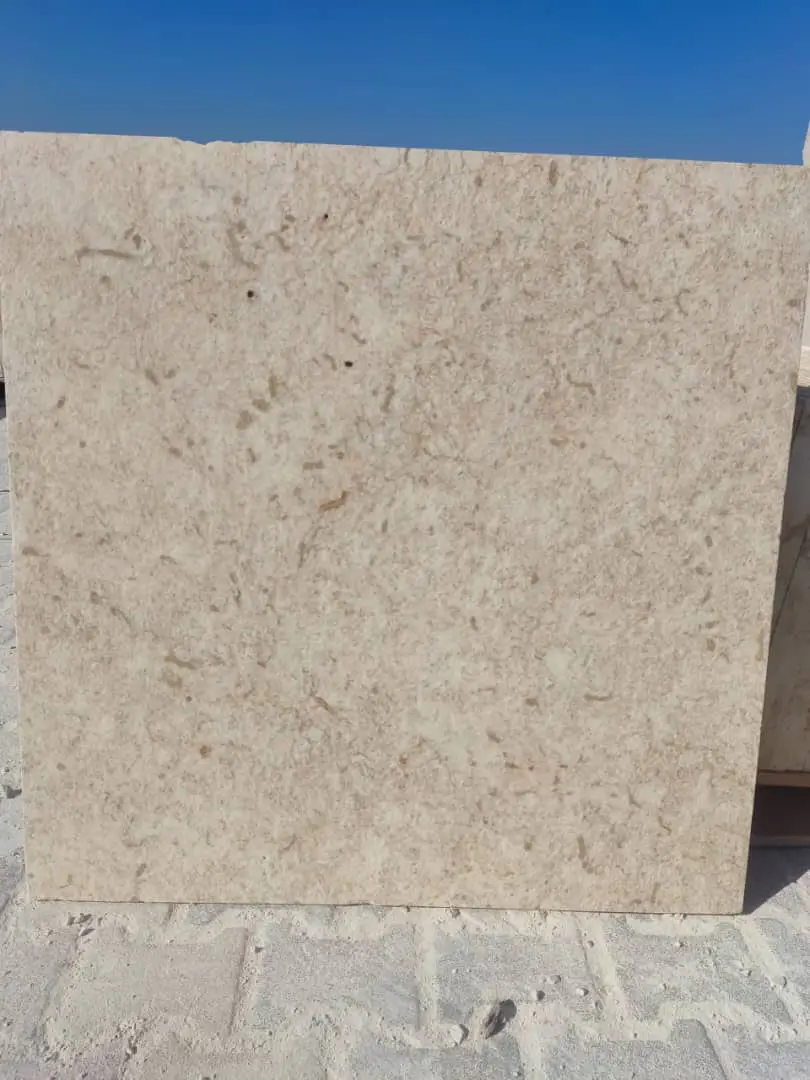
Sealing and Maintenance: What Actually Works
Sealing flagstone pavers for patio use is not a one-size answer — whether to seal, and with what product, depends on the stone species and the surface finish. Dense, low-porosity materials like quartzite and well-graded bluestone don’t absorb sealers efficiently and don’t need them for structural protection. An enhancing impregnator can deepen their color if that’s a design intent, but it’s optional maintenance rather than required protection.
Porous limestone and sandstone flags are a different calculation. An impregnating penetrating sealer applied to clean, dry stone reduces absorption from 10–15% to under 3% in laboratory testing, which meaningfully extends surface life and reduces staining from organic material. The application window matters: new flagstone should be allowed to cure for 28 days before sealing if it was set in mortar, and should be cleaned with a pH-neutral stone cleaner before any sealer is applied. Sealing over efflorescence or residual joint compound traps salts that will eventually spall the surface from below.
- Quartzite and dense bluestone: sealing optional, color enhancer only if aesthetically desired, clean with pH-neutral cleaner annually
- Limestone and sandstone: penetrating impregnator required, reapply every 2–3 years depending on exposure and traffic
- All species: never seal before joints are fully cured, never seal over efflorescence, never use topical film-forming sealers on exterior flagstone
- Restoration cleaning before resealing: dilute phosphoric acid solution at 1:10 ratio, neutralize, rinse thoroughly, allow full dry-out before applying sealer
The ASLA natural stone and flagstone outdoor paving guidance addresses sustainable material selection and long-term surface management — a useful reference when maintenance protocols need to align with landscape design standards.
Ordering, Lead Times, and Project Planning
Natural flagstone ordering has more variables than manufactured paver purchasing, and those variables affect your project schedule in ways that are easy to underestimate. Stone is sold by the ton or by the square foot, but the conversion between them depends on the specific gravity of the material and the average thickness of the pallet — both of which vary by species and quarry. Bluestone at 1.5-inch nominal runs roughly 9–10 square feet per 100-pound unit; limestone at the same thickness runs slightly more because of its lower density. Always request the actual coverage rate from the warehouse, not the catalog average.
Verifying warehouse stock levels before committing to project timelines is essential. Popular species in standard sizes — 1.5-inch irregular bluestone and buff limestone in mixed sizes — typically ship within one to two weeks from national warehouse inventory. Less common species, oversized formats, or custom thickness orders may require four to six weeks if the material needs to be sourced to order. Citadel Stone maintains a broad range of flagstone species in warehouse stock, which significantly compresses lead times compared to import-cycle sourcing for most residential and commercial projects.
For truck delivery logistics, your site access determines the delivery method. Full-pallet flagstone on a standard flatbed truck requires adequate overhead clearance and a firm surface capable of supporting a loaded vehicle. For sites with restricted access, request a smaller truck delivery or plan for manual offloading at a staging point. Factor this into your installation timeline — stone that sits on a staging area in wet conditions for extended periods can develop surface staining that adds cleaning work before installation.
Explore the Citadel Stone patio stone range to review available species, thickness options, and current warehouse stock before finalizing your specification.
Getting Your Flagstone Patio Specification Right
A well-specified flagstone for patio installation comes down to matching stone species to site conditions, sizing your base system to your actual subgrade — not the generic spec — and choosing finish and joint treatments that serve both performance and aesthetics. The material decisions and the ground preparation decisions are inseparable: one informs the other at every step. Shortcuts in base depth or subgrade assessment show up as cracked flags and uneven surfaces within a few seasons, while a properly prepared installation on the right stone species will still be performing well two decades out with minimal intervention.
Your patio project may also lead you toward related stone applications that complement the main surface. For context on how flagstone pavers perform in a pathway or stepping format, flagstone stepping stone selection covers specification considerations for that adjacent use case. Flagstone from Citadel Stone arrives sorted by size and color, helping designers plan patio layouts with minimal on-site cutting.
Related reading: How to Lay a Flagstone Patio: Step-by-Step Guide · How to Lay a Flagstone Walkway: Methods and Tips · flagstone color guide.