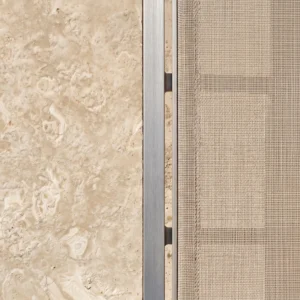
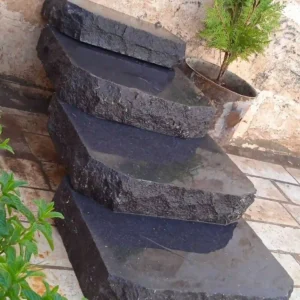
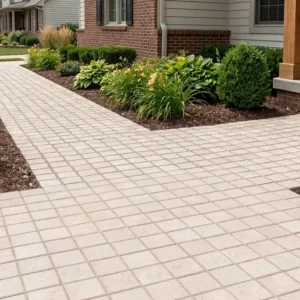
Smooth stone’s performance in floors and countertops hinges on a variable most specifiers underestimate: the relationship between surface porosity and finish type. A honed finish on a dense limestone behaves entirely differently from a polished finish on the same slab — absorption rates can shift by 30–40%, which directly affects your sealing schedule and long-term stain resistance. Get that pairing wrong and you’re managing maintenance problems from year one rather than enjoying a 20-year installation.
Why Finish Dictates Performance More Than Material Alone
Your smooth stone selection starts with understanding that “smooth” is a spectrum, not a single specification. Polished finishes achieve a reflective depth by closing the surface pores through mechanical buffing — the stone’s crystal structure actually compacts at the micro level, reducing absorption to as low as 0.2% by weight in dense materials like granite. Honed finishes stop short of that closure, leaving a matte surface that reads as smooth to the touch but retains measurably higher porosity. For countertops specifically, that distinction determines whether a spilled glass of red wine is a 30-second wipe-down or a permanent record.
The NSI ASTM stone specifications outline absorption thresholds by stone category — and the numbers reveal why material choice and finish must be evaluated together, never separately. A polished granite countertop at 0.4% absorption handles kitchen acids far better than a honed limestone at 3.5%, even if both surfaces feel equally smooth underfoot. Your specification decisions should always lead with these technical benchmarks rather than visual preference alone.
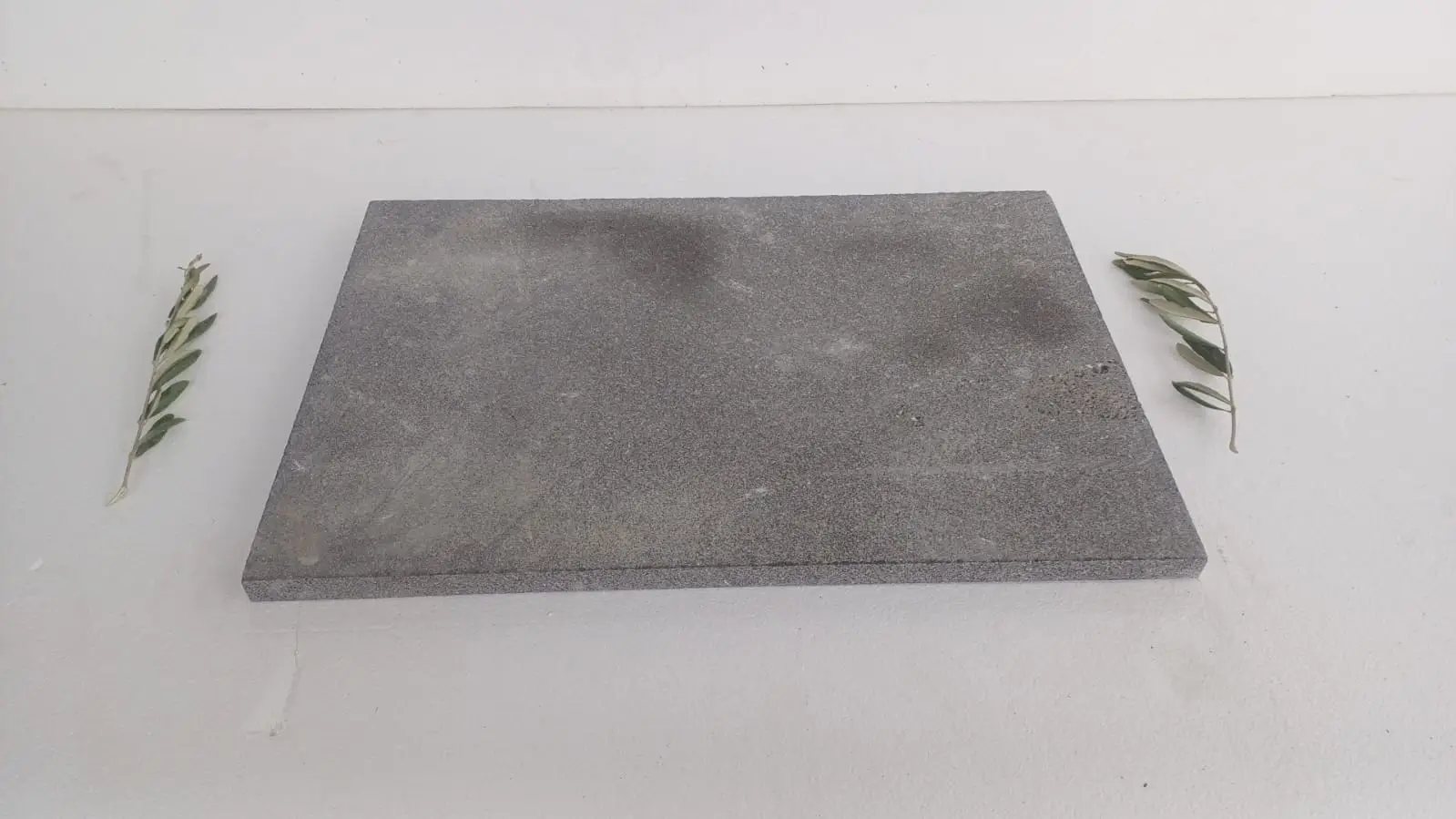
Natural Stone Flooring Types That Achieve Smooth Surfaces
Natural stone flooring types vary considerably in how well they accept and hold a smooth finish over time. Granite consistently tops the performance list — its interlocking crystalline structure resists scratching at the surface level, which means a polished finish stays reflective through years of foot traffic. Marble delivers that signature luminous smoothness, but its calcite composition makes it reactive to acidic cleaners and citrus, so flooring applications in kitchens require deliberate maintenance commitment. Limestone occupies the middle ground: softer than granite, more consistent in tone than marble, and responsive to honing in ways that produce a warm, flat surface ideal for living areas and bedrooms.
- Granite: hardness rating 6–7 on the Mohs scale, ideal for high-traffic smooth floor applications
- Marble: Mohs 3–4, excellent for low-traffic areas where visual impact outweighs durability concerns
- Limestone: Mohs 3–4, best suited to interior residential floors with regular sealing maintenance
- Travertine: naturally porous, requires filling before honing to achieve a genuinely smooth surface
- Basalt: Mohs 5–6, dense volcanic stone that hones to an exceptionally even, contemporary-looking surface
Travertine deserves a specific note here because it generates frequent specification confusion. Its natural void structure means a raw honed travertine slab still has micro-cavities that trap debris and moisture. You need to specify filled-and-honed travertine explicitly — unfilled honed is a distinct product that reads more rustic than smooth, and suppliers won’t always flag that distinction unless you ask directly.
Types of Natural Stone Countertops for Smooth Surface Applications
Types of natural stone countertops fall into two broad performance categories once you’re specifying for smooth surfaces: those that can be polished to a mirror finish and hold it under daily kitchen use, and those that look exceptional but require more deliberate care. Granite and quartzite sit firmly in the first category — both achieve polished surfaces above 1,000-grit that resist thermal shock from hot pans and hold up to the abrasive contact of cutting activity at the slab edge. The ASTM stone testing standards for flexural strength put quartzite at 7,000–12,000 PSI, comparable to granite, which explains why both materials have dominated kitchen countertop specifications for decades.
- Granite: polished finish, low maintenance, wide colour range, resists heat and scratch
- Quartzite: harder than granite in many variants, distinctive veining, premium aesthetic
- Marble: luxurious polished surface, requires sealing every 6–12 months, vulnerable to etching from acids
- Soapstone: naturally smooth, non-porous, develops a patina over time rather than etching
- Limestone: honed finish works well for bathroom vanities and low-contact countertop areas
Soapstone gets overlooked in most specification conversations, which is a mistake. Its talc-heavy composition means it won’t etch the way calcite-based stones do, and it naturally resists bacteria — a practical advantage in kitchen environments. The trade-off is softness: soapstone scratches relatively easily, though scratches can be sanded out with fine-grit paper and mineral oil in a way that’s impossible with harder materials.
Natural Stone Flooring Ideas for Different Interior Contexts
Natural stone flooring ideas shift significantly based on the room’s function, traffic patterns, and light quality. In entry halls and corridors, a polished dark granite or black basalt creates a high-contrast, architectural effect — the reflective surface amplifies natural light in a way that makes narrow spaces feel wider. For living areas, honed limestone in warm buff tones delivers a grounded, organic quality that polished surfaces can’t replicate; the matte finish reduces glare and feels more residential in scale. Bathrooms present a specific technical challenge because smooth floors become hazardous when wet, which means your finish selection needs to account for slip resistance as a primary criterion, not an afterthought.
- Entry and hallways: polished granite or basalt for durability and light amplification
- Living rooms: honed limestone or travertine for warmth and visual comfort
- Kitchens: honed granite or quartzite — polished works but shows water spots more visibly
- Bathrooms: brushed or lightly textured finishes where wet-area slip resistance is required
- Bedrooms: honed marble or limestone for softness underfoot and quiet aesthetics
Here’s what most specifiers miss when designing bathroom floors with smooth natural stone: the coefficient of friction drops substantially when the surface is wet. A polished marble floor that feels secure dry can become slick once wet — ANSI A326.3 sets a minimum wet DCOF of 0.42 for level surfaces that will be walked on wet, so ask for the wet DCOF test report for the finish you specify. Your smooth stone floor specification for bathrooms should target brushed or bush-hammered finishes that maintain visual elegance while carrying visible surface texture — confirm the wet DCOF test report for the finish you specify.
Slab Thickness and Substrate Requirements
Your smooth stone selection for countertops typically involves 2cm or 3cm slab thickness, and that choice cascades into structural decisions that affect your entire project. A 2cm slab requires continuous substrate support — typically ¾-inch plywood — because the unsupported spans that 3cm handles independently will crack 2cm material under normal kitchen loading. The 3cm specification gives you cantilever capacity of up to 12 inches on countertop overhangs without additional steel support, which matters significantly in island designs where seating overhangs are a priority.
For flooring, smooth stone in 3/8-inch to 5/8-inch thickness handles residential loads without issue when your subfloor deflection is within L/360 tolerances. That deflection standard — deflection equal to the span divided by 360 — isn’t optional; it’s the threshold below which grout joints crack under dynamic loading. Check the subfloor before you commit any stone specification, because no amount of quality material compensates for an inadequate base. At Citadel Stone, we recommend requesting deflection calculations from your structural team before finalising any large-format smooth stone order, particularly for spans over 10 feet.
How Weather Exposure Affects Smooth Stone in Exterior Applications
Smooth stone selection extends beyond interiors for projects that incorporate covered patios, outdoor kitchen countertops, or transitional indoor-outdoor floors. This is where mechanical stress from weather becomes a real specification variable. Wind-driven rain forces moisture into joint interfaces at pressures that static water contact never achieves — the American Society for Testing and Materials documents this effect in its standards for stone absorption under pressure differential. For exterior smooth stone countertops specifically, you need to verify that your setting mortar and sealant system maintains joint integrity under wind-load conditions, not just ambient moisture exposure.
Hail impact is another consideration that interior-focused specifiers typically ignore. A polished granite countertop on an outdoor kitchen in a storm-exposed region should be specified at minimum 3cm thickness — the additional mass absorbs impact energy rather than concentrating stress at the surface. Smooth stone selection for outdoor applications in storm-exposed zones should also avoid large-format single slabs without adequate edge restraint, since unsupported edges are the first point of failure under combined wind load and impact stress. According to the TCNA stone installation standards, edge restraint systems for exterior stone applications should be engineered for the local wind uplift values, not just the material weight.
Sealing Protocols for Smooth Stone Surfaces
Sealing is where smooth stone selection decisions get validated or undermined in the field. A polished granite countertop with 0.4% absorption may need sealing only once every 3–5 years under normal kitchen conditions. A honed limestone floor at 3.5% absorption needs attention every 12–18 months, and in high-moisture zones, every 12 months is the practical minimum. The test is straightforward: place a tablespoon of water on the surface and observe. If it beads within 5 minutes, your sealer is performing. If it absorbs within 2–3 minutes, you’re overdue.
- Penetrating sealers are the correct choice for smooth stone — they enter the pore structure without altering surface appearance
- Topical sealers create a film that changes sheen level and can peel over time, particularly under thermal cycling
- Apply sealer to clean, dry stone — moisture in the pore structure prevents penetrating sealers from bonding correctly
- Allow 48–72 hours cure time before exposing sealed surfaces to water or cleaning agents
- For polished marble, use a sealer specifically formulated for calcite-based stone — generic sealers can cause hazing at the surface
One detail worth knowing from experience: sealers applied in cold conditions — below 50°F ambient temperature — cure significantly slower and often incompletely. If you’re sealing stone in a space without climate control during installation, factor that into your scheduling. An incomplete cure means the stone goes into service without full protection, and the next cleaning cycle strips what little sealer bonded at the surface.
Ordering Logistics and Lead-Time Planning
Smooth stone selection for countertops requires you to account for slab viewing before finalising your order — natural stone varies from slab to slab even within the same quarry block, and what reads as consistent in a sample chip can show significant veining variation in a full 9-foot slab. Visit the warehouse before cutting begins, or request high-resolution photography of the specific slabs allocated to your order. Matching slab sequence matters particularly for kitchen islands where two slabs meet — the book-match or flow between them reads immediately in a finished installation.
Citadel Stone maintains warehouse inventory across multiple stone categories, which typically reduces lead times to 1–2 weeks for in-stock material compared to the 6–8 week import cycle that special-order stone requires. For large residential or commercial projects, confirm warehouse availability before your project timeline locks in the stone installation date. Truck delivery logistics also affect your planning: countertop slabs require flat-bed transport and on-site equipment for unloading — a 3cm granite slab at 9 × 5 feet weighs approximately 400–450 pounds, which rules out standard parcel delivery regardless of the supplier’s default process.
Final Considerations for Your Smooth Stone Specification
Getting smooth stone right across floors and countertops means making connected decisions rather than isolated ones. Your finish choice affects your sealing schedule. Your sealing schedule affects your long-term maintenance budget. Your slab thickness affects your substrate requirements. Your substrate requirements affect your installation sequencing. None of these decisions live in isolation, and the projects that age well are almost always the ones where the specifier thought through the full chain before committing to materials.
As you build out your material list, complementary natural stone elements can add dimension to the overall project — pebble stone for outdoor surfaces covers how smaller-format natural stone performs in accent and landscape applications that often pair with smooth interior selections. Choose your stone with the full performance picture in mind, and you’ll end up with surfaces that reward the investment for decades. Smooth stone from Citadel Stone is sourced from select natural stone quarries worldwide, milled to uniform slab thickness.
Related reading: how to lay stone pavers for walkway · slate tile floors in kitchen · Stone Texture Guide: Finishes for Every Surface.