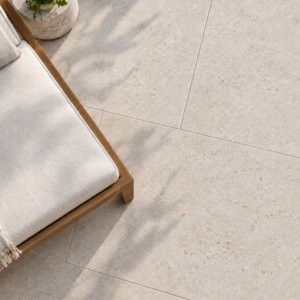
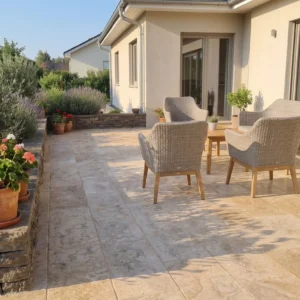
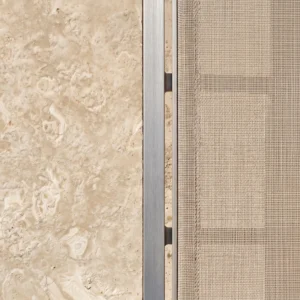
Cut and Finish Variables That Drive Performance
Slabs of limestone don’t arrive at your project as identical blanks — the cut direction, finish process, and nominal thickness each shape how the material behaves under load, foot traffic, and long-term exposure. A honed surface on a cross-cut slab reads completely differently, both visually and functionally, than a brushed finish on a vein-cut piece pulled from the same block. Understanding these distinctions before you commit to a specification is how you avoid the costly mid-project pivot that delays schedules and inflates budgets.
The cut direction matters more than most buyers initially expect. Cross-cut limestone exposes the transverse face of the sedimentary layers, revealing the fossil record, colour banding, and crystalline pockets embedded over millennia. Vein-cut production slices parallel to those layers, producing a more linear, consistent grain pattern — cleaner for minimalist interiors, less overtly geological. Your choice here isn’t purely aesthetic: vein-cut slabs typically show tighter surface variation, which can simplify matching across large floor areas, while cross-cut pieces introduce the kind of character you genuinely can’t replicate with engineered materials.
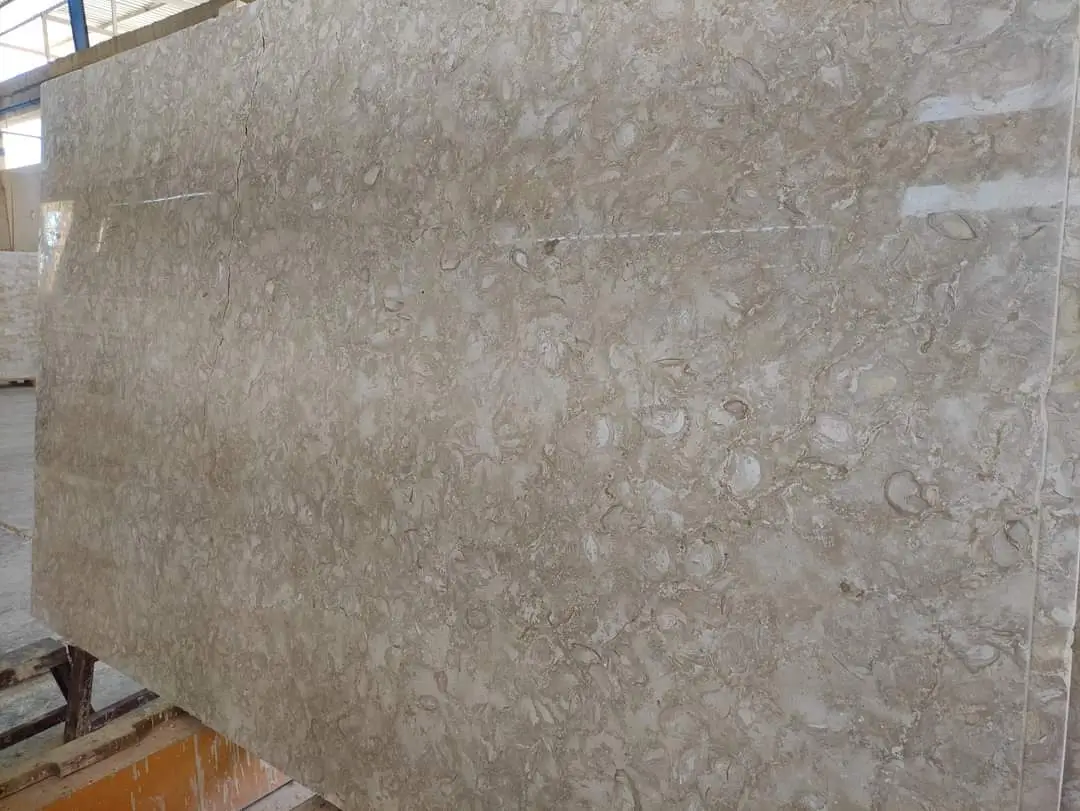
Finish Types Compared: Honed, Brushed, Sandblasted and Polished
Your finish selection is one of the most consequential spec decisions you’ll make, because it simultaneously determines slip resistance, maintenance burden, and visual register. According to NSI limestone specifications, finish treatment directly influences absorption rate and surface texture — two factors that govern both performance and long-term upkeep in exterior applications.
- Honed finish: a matte, smooth surface with consistent light diffusion — ideal for interior flooring, wall cladding, and sheltered outdoor areas where a refined look is the priority
- Brushed finish: wire-brushed to open the surface slightly, adding tactile texture while retaining most of the material’s natural tone — the go-to for pool surrounds and commercial walkways where static coefficient of friction needs to hold above 0.6
- Sandblasted finish: aggressive surface abrasion produces a uniform, slightly roughened face — effective for high-traffic exterior paving, particularly on grades where foot traffic encounters any slope
- Polished finish: rare for exterior use, but occasionally specified for interior reception areas and countertops — requires rigorous resealing at 12-18 month intervals to maintain appearance and limit staining
- Tumbled finish: edges and corners are rounded through mechanical tumbling, producing an aged, rustic look — popular for garden paths and courtyard applications
Here’s what often gets overlooked with polished limestone slabs in interior commercial projects: the polish amplifies colour depth dramatically, which means your sample approval process needs to account for the full-size install effect. A small polished sample almost always reads lighter than a 600-square-foot floor under artificial lighting. Request a dry-lay approval of at least a 4×4 metre section before sign-off.
Understanding Limestone Slabs with Fossils
Fossil content is one of limestone’s most distinctive characteristics — and one of the most misunderstood from a specification standpoint. Limestone slabs with fossils are the product of marine sedimentary environments where shell fragments, coral structures, and organic material became embedded in calcium carbonate deposits over geological timescales. The result is a material that carries genuine visual narrative. As Britannica’s limestone formation data confirms, the fossil record in limestone varies dramatically by quarry origin, formation age, and extraction depth.
From a performance perspective, fossil inclusions don’t weaken the slab structurally — most inclusions are calcite-filled voids that have consolidated with the surrounding matrix over millions of years. What you do need to manage is surface porosity variation around inclusion zones. These micro-areas can absorb sealant unevenly, so your sealing protocol should include a second pass over fossil-dense sections to ensure full penetration. Budget for a penetrating sealer with a 10-year reapplication cycle rather than a topical coat, which will peel around the irregular surface relief. When specifying limestone slabs with fossils for large floor areas, factor in additional material yield loss — the quarry blocks that produce the richest fossil character typically deliver lower usable slab yield per extraction run.
Dark Limestone Slabs: Where They Perform Best
Dark limestone slabs — typically quarried in grey-black to deep charcoal ranges — present a different performance profile than their cream and beige counterparts. The higher density of dark limestone varieties generally corresponds to lower porosity: absorption rates as low as 0.3-0.8% in some formation types, compared to 1.5-3.5% for lighter, more open-structured varieties. That tighter matrix translates to improved stain resistance, reduced freeze-thaw damage in exposed applications, and a surface that holds its finish longer under abrasive conditions.
- Dark limestone slabs perform well as exterior cladding on facades where thermal mass is beneficial — the material absorbs and releases heat gradually, moderating surface temperature swings
- Interior flooring applications in commercial settings benefit from the material’s density, which supports heavy rolling loads without surface bruising
- Pool surrounds and water features in dark limestone require a brushed or sandblasted finish to maintain slip resistance — polished dark limestone near water is a liability
- The colour depth of dark varieties makes minor surface scratches more visible than on lighter stone, so specify a honed rather than polished finish for high-traffic areas
Your slab thickness for dark limestone applications follows the same load-bearing logic as any dense stone: 20mm for wall cladding and sheltered floor areas, 30mm as the minimum for any exterior paving subjected to pedestrian traffic, and 40mm or above for vehicular-rated installations. Don’t let the material’s density create a false sense of structural security — undersized thickness remains the primary cause of field cracking regardless of stone variety.
Thickness and Format Selection Guide
The format decisions for slabs of limestone hinge on three interconnected variables: the structural load the slab must carry, the base system underneath, and the visual scale of the space. Getting these three factors aligned before ordering eliminates the most common field problem — slab cracking that traces back to a mismatch between nominal thickness and actual support conditions.
Consider how your base preparation interacts with slab format. Large-format slabs — anything above 600x600mm, and particularly the 900x900mm to 1200x600mm range — require a full mortar bed rather than dot-and-dab adhesive application. The contact area needs to exceed 95% of the slab underside to prevent hollow spots that concentrate point loads and initiate cracks. For exterior applications where you’re dealing with a compacted aggregate sub-base rather than a concrete slab, your mortar bed should be a minimum of 50mm to account for minor surface irregularities in the base without creating high or low spots in the finished plane.
- 600x600mm to 800x800mm: the practical sweet spot for most residential and light commercial interior flooring — manageable weight for installation crews, predictable cutting, and efficient waste ratios
- 1200x600mm: increasingly the default for contemporary commercial interiors — requires a rigid base, precision levelling, and experienced installation teams; material weight per piece typically runs 35-50kg depending on thickness
- Custom-cut slabs for specific architectural dimensions: budget a 15-20% material uplift and a 4-6 week lead time beyond standard warehouse stock
- Irregular format and random-lay slabs: used primarily for courtyard and garden applications — require more on-site labour for fitting but reduce material waste in non-rectilinear spaces
Site Terrain, Drainage Design, and Base Preparation
Your site’s topography has a direct influence on which slab format and thickness you should specify — and this is a variable that often gets underweighted until the base preparation phase reveals problems that are expensive to correct. On sloping or hillside sites, the combination of gravity-driven water movement and differential settlement creates specific demands on your sub-base engineering that flat-site specifications simply don’t address.
For installations on grades steeper than 1:20, your drainage design needs to be integrated into the base preparation rather than treated as a separate surface-level consideration. A well-graded compacted aggregate sub-base on a slope must include perforated drainage pipe at the low-drainage intercept points to prevent hydrostatic pressure from building under the slab plane. Hydrostatic lift — where water pressure underneath a slab exceeds the stone’s weight per square metre — is one of the primary mechanisms that causes large-format limestone slabs to heave and crack on sloped sites, particularly after heavy rainfall events. According to USGS limestone composition data, the material’s calcium carbonate matrix is susceptible to long-term dissolution when water is allowed to pool and stagnate under the slab surface.
For elevated or terraced installations where the slab surface transitions across multiple grade changes, expansion joints become critical at every grade break — not just at the standard 4-5 metre intervals you’d use on a flat plane. The differential movement between sections at different elevations can be significant enough to initiate edge cracking if the joint system isn’t designed to accommodate it. Plan for 10-12mm movement joints at grade transition points, filled with a polyurethane sealant rated for exterior use. You can browse Citadel Stone slab stock to confirm available thicknesses and formats before finalising your base specification.
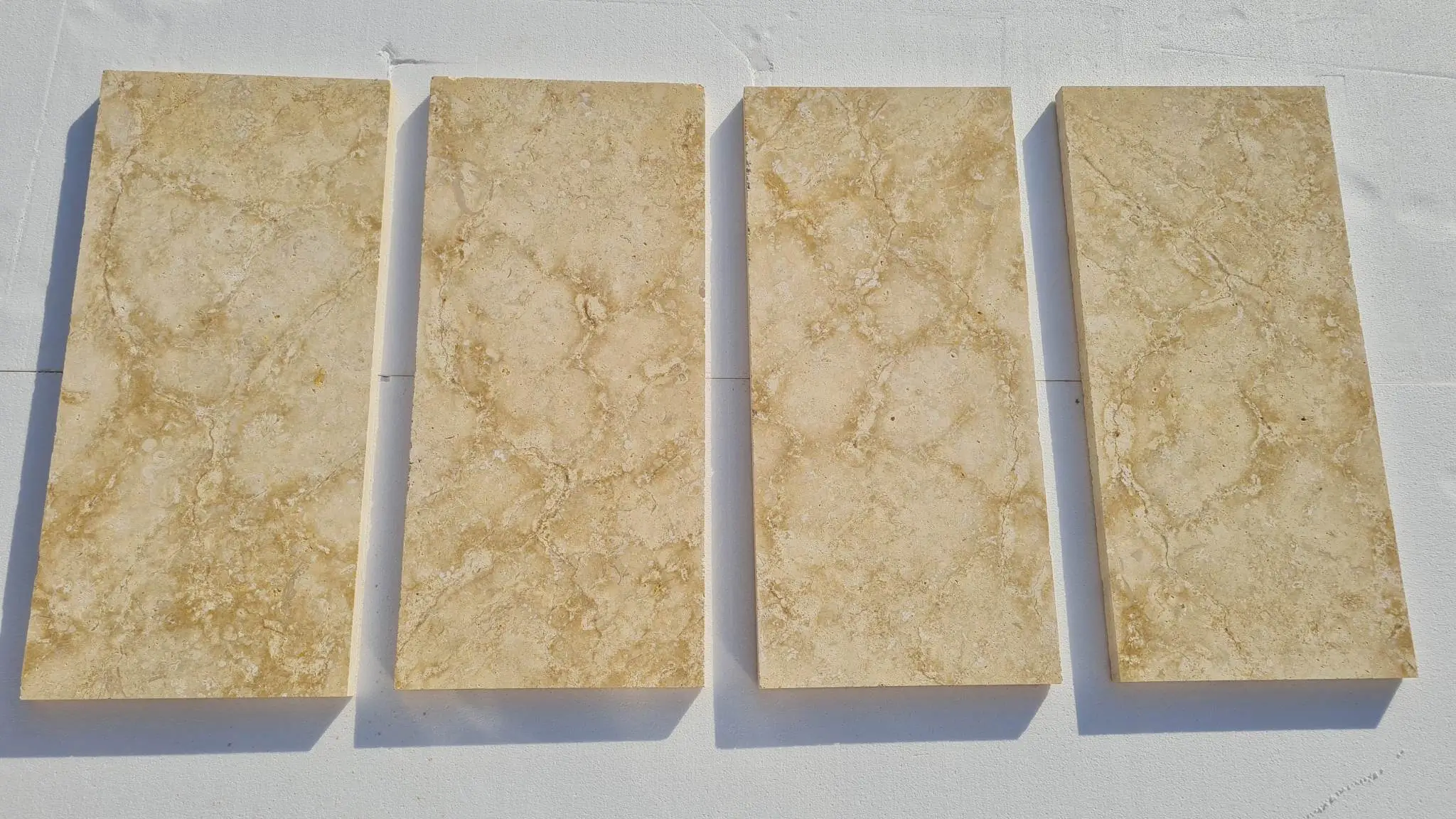
Understanding the Cost of Limestone Slabs
The cost of limestone slabs varies across a wider range than most buyers anticipate — and the variation is driven by factors that aren’t always obvious at the point of quotation. Formation origin, extraction depth, fossil density, surface finish complexity, and slab format all feed into the final price per square foot, and mixing up these variables when comparing supplier quotes is a reliable path to budget surprises.
- Entry-level cream and beige limestone in standard honed finish, 20mm thickness: typically $8-$18 per square foot depending on format and volume
- Mid-range cross-cut varieties with visible fossil content in brushed or sandblasted finishes: $18-$32 per square foot — the fossil character commands a premium because material yield per block is lower
- Dark limestone slabs in large format with tight porosity and factory-calibrated thickness tolerance: $28-$45 per square foot, with the upper end reflecting premium quarry provenance and precision fabrication
- Custom-cut oversized slabs, polished dark varieties, or antique-finish material: $40+ per square foot before delivery — these specifications require dedicated fabrication runs rather than standard warehouse allocation
Your freight and delivery costs deserve the same scrutiny as the material price. Limestone slabs — particularly large-format pieces — are dense, and truck freight on a 500-square-foot order adds meaningful cost per square foot. Coordinating your delivery schedule to align with warehouse stock availability rather than ordering against an import lead time typically saves 3-5 weeks on project timeline and reduces the risk of holding costs on other trades waiting for the stone to arrive.
Sealing Protocols and Long-Term Maintenance
Sealing limestone slabs correctly at installation sets the performance baseline for the material’s entire service life — and the specification decision here isn’t simply “seal or don’t seal.” It’s about matching the sealant chemistry to the finish, the application environment, and the expected maintenance cycle your client can realistically commit to.
For exterior honed and brushed limestone in pedestrian applications, a penetrating fluoropolymer-based impregnator is the correct specification. These products work by lining the pore structure without sealing the surface — the stone continues to breathe, which is critical for preventing sub-surface moisture pressure from developing in freeze-thaw regions. Surface-applied topical sealers create a film that can delaminate, particularly on exterior stone that experiences thermal cycling. The Natural Stone Institute’s guidance on limestone performance characteristics underscores that breathability is a primary consideration in exterior sealing specifications.
- Apply penetrating sealer to dry stone — surface moisture content should be below 3% before application; use a moisture meter rather than relying on a visual check
- First application: two coats within a 20-minute window while the first coat is still tacky — this double-saturation technique ensures full pore penetration in more open-structured varieties
- Reapplication schedule: every 3-5 years for interior applications, every 2-3 years for exterior exposure, and annually for pool surrounds and coastal environments
- Acid-based cleaning products are incompatible with limestone — the calcium carbonate matrix etches on contact; specify pH-neutral cleaners for routine maintenance from day one
Decision Points for Slabs of Limestone
Choosing slabs of limestone comes down to a sequence of decisions that build on each other — and making them in the right order prevents the specification drift that creates field problems. Start with the application load and base conditions, which determine thickness and format. Then resolve the finish based on slip resistance requirements and maintenance realism. Then select colour and fossil character based on the aesthetic brief. Reversing this sequence — leading with aesthetics and retrofitting the structural specification — is where most specification errors originate.
Your ordering timeline should account for warehouse stock availability before locking in a project schedule. Standard-format limestone slabs in common finishes typically ship within 1-2 weeks from available inventory. Custom dimensions, specialty finishes, and large-volume orders may require 4-8 weeks depending on fabrication requirements — build this lead time into your programme before committing subcontractor start dates. For projects that include varied stone applications across the same site, it’s worth exploring complementary natural stone elements alongside your limestone specification. If your project also involves garden pathway features, natural stepping stone options offer a practical way to extend the material palette while maintaining a coherent design language across the site.
The detail that separates a 25-year limestone installation from a 10-year replacement is rarely the stone itself — it’s the base, the drainage, the joint design, and the sealing protocol. Get those four elements right, and the material will outlast most of the other components in the building. At Citadel Stone, we source directly from select quarries and calibrate our slab stock for thickness consistency, so your installation crew isn’t compensating for material variation with mortar depth adjustments mid-job. Slabs from Citadel Stone are sourced from select natural stone quarries worldwide, calibrated flat for clean installation.
Related reading: large limestone planters guide · large limestone block · large limestone rocks landscaping.