Why Sealer Type Determines Everything
Choosing the right sealer for travertine isn’t a minor detail — it’s the decision that determines whether your stone looks better after ten years or starts delaminating after three. Travertine’s interconnected pore structure, typically ranging from 0.5% to 3% absorption by weight depending on fill quality, means it responds very differently to penetrating sealers versus topcoat film-formers. Most project failures trace back to applying the wrong product category, not a bad installation.
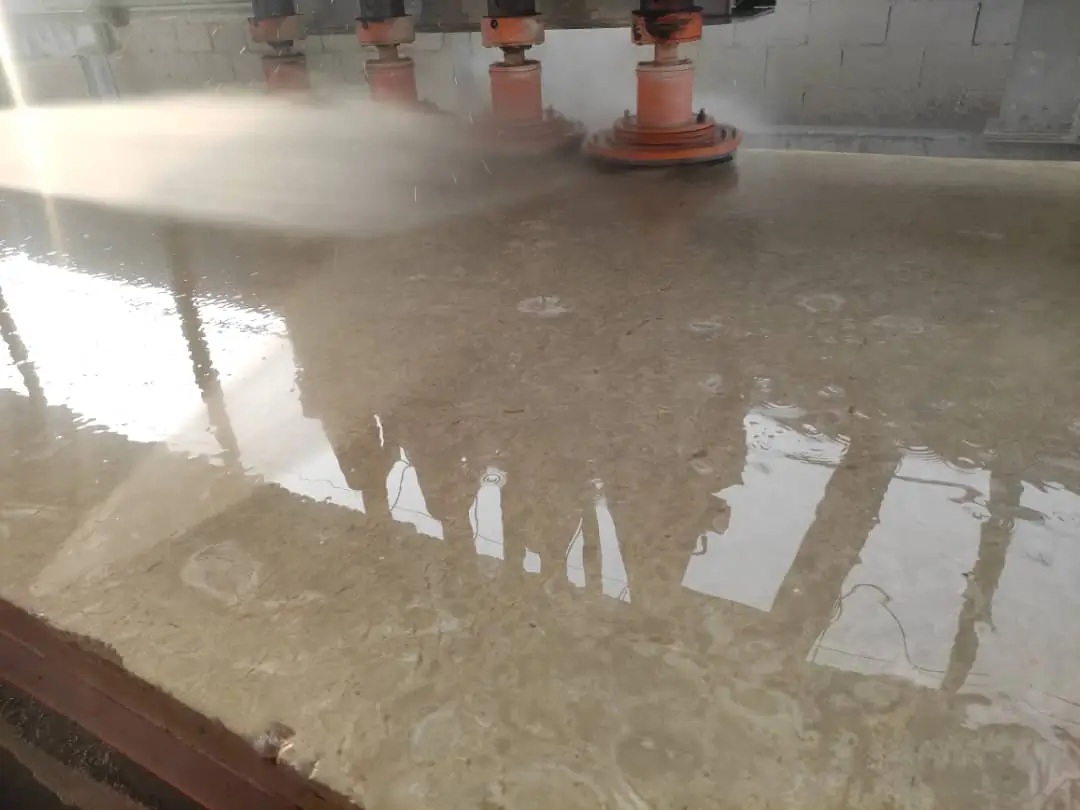
Penetrating impregnators — specifically fluorocarbon or silicone-based chemistries — work below the stone surface, filling the capillary network without altering vapor permeability. That matters because travertine expands and contracts with temperature shifts, and a rigid topcoat traps moisture beneath it. You’ll see that as surface spalling within a few freeze-thaw cycles in colder regions. Film-forming sealers belong on dense, low-absorption stone — not travertine.
Understanding Travertine Porosity Before You Seal
Your first step before any sealing work is assessing actual porosity, not assuming it from the finish type. Honed and unfilled travertine absorbs moisture fastest — the open voids are essentially unobstructed channels. Polished travertine has a compressed surface layer that slows absorption measurably, but the underlying stone is still porous. A simple water-drop test tells you a lot: place a few drops on the surface and time how quickly they absorb. Under 4 minutes signals high absorption; 4 to 12 minutes is moderate; over 15 minutes indicates a dense face that may already have residual sealer present.
According to ASTM C1527 travertine dimension stone specifications, travertine classification accounts for density and absorption characteristics that directly influence sealer selection and expected reapplication intervals. Referencing this standard during specification helps you match product chemistry to actual stone grade rather than guessing from visual appearance alone.
Sealer for Travertine: Product Categories That Actually Work
Three product categories cover almost every travertine application you’ll encounter:
- Fluorocarbon impregnators — highest oil-and-water resistance, recommended for kitchen countertops, outdoor dining areas, and pool surrounds where food oils and chlorine are regular exposures
- Silicone/silane-siloxane hybrids — excellent water resistance at a lower price point, reliable for interior flooring and covered outdoor applications where UV exposure is limited
- Water-based penetrating sealers — lower solvent load, suitable for interior residential floors in well-ventilated areas, easier cleanup, but typically require more frequent reapplication
Avoid any product labeled “enhancing sealer” unless you’ve specifically selected it to deepen the stone’s color. Enhancers darken the face permanently and alter the travertine’s natural tonal variation — a finish decision you can’t easily reverse. Test a small hidden area first and let it dry fully before committing to the full surface.
How to Clean Travertine Before Sealing
Surface prep is where most DIY sealing jobs fall short. Any sealer applied over residue, efflorescence, or existing product will bond inconsistently and fail earlier than the manufacturer’s stated interval. Start with a pH-neutral cleaner for travertine — never an acidic cleaner, because travertine is calcium carbonate and will etch visibly under anything below pH 7. Even diluted vinegar causes microscopic surface damage that accumulates over time.
The cleaning sequence matters. Use the cleaner for travertine diluted per product instructions, work in 4-foot sections with a soft-bristle brush, and rinse thoroughly. For heavily soiled floors or outdoor travertine with embedded organic matter, a two-pass cleaning — applying the solution, allowing 5 to 10 minutes of dwell time, agitating, rinsing, then repeating — removes contamination that a single pass misses. After rinsing, the stone needs to dry completely. In interior conditions at normal humidity, 24 to 48 hours of drying time is the minimum. In humid climates or during colder months, extend that to 72 hours — moisture trapped in the pores will prevent sealer penetration and create a hazy residue on the surface.
According to the Natural Stone Institute travertine properties and care guidance, proper surface preparation before sealing is as important as the sealer product itself — contaminated or wet surfaces are the leading cause of sealer failure in natural stone installations. That guidance aligns with what you’ll observe in the field across travertine flooring cleaning projects of any scale.
Step-by-Step Sealer Application Process
The application method changes depending on the product viscosity and the stone’s absorption rate, but the core sequence stays consistent:
- Apply sealer for travertine in a thin, even coat using a low-nap roller or a clean microfiber applicator pad — avoid foam rollers, which create bubbles in high-viscosity products
- Work in manageable sections of 20 to 30 square feet to prevent the sealer from flashing (drying on the surface before penetrating)
- Allow the first coat to penetrate for the time specified on the product label — typically 5 to 20 minutes depending on formulation
- Before the sealer dries fully, wipe the excess off the surface with a clean, dry microfiber cloth — any residue left to dry forms a sticky film that attracts dirt and is difficult to remove
- Apply a second coat following the same method after the first has cured — typically 30 to 60 minutes later for penetrating products
- Allow full cure before foot traffic — 24 hours minimum, 48 to 72 hours for polished travertine where surface chemistry is more sensitive
The most common field mistake is applying too much product in a single coat, assuming heavier application equals better protection. Penetrating sealers work by filling pores — once the pore network is saturated, excess product sits on the surface and hardens into a residue. Thin, multiple coats outperform single heavy applications every time.
Travertine Flooring Cleaning and Maintenance Between Seals
Sealer extends protection but doesn’t eliminate maintenance. Your routine cleaning protocol directly affects how long the sealer performs before the next application cycle. For travertine flooring cleaning, a pH-neutral stone soap diluted in warm water is the daily-use standard. Mop with a well-wrung microfiber head — excess water sitting in open travertine voids, especially in unfilled installations, will wick into the stone and carry dissolved minerals to the surface as it evaporates, causing efflorescence.
High-traffic commercial floors typically need resealing every 12 to 18 months. Residential interior floors in moderate-use areas can extend to 3 to 5 years with quality penetrating products. Outdoor travertine exposed to UV and weather sits in the middle — plan for resealing every 2 to 3 years. You can confirm it’s time to reseal by repeating the water-drop test: if water absorbs in under 4 minutes, the sealer’s protection has degraded below an effective threshold.
Building Code Considerations for Travertine Tile Installations
Here’s what often gets overlooked in travertine specification: building codes affect more than just structural elements — they touch directly on tile thickness, substrate requirements, and sometimes surface finish requirements for slip resistance in occupied spaces. The Tile Council of North America installation standards provide the baseline framework most jurisdictions reference for stone tile installations, covering mortar bed depth, movement joint placement, and substrate deflection limits that directly affect how your sealed travertine performs over time.
Movement joint spacing is particularly relevant for sealed travertine floors. TCNA recommends expansion joints at maximum 20-to-25-foot intervals in interior installations, and at every change of plane. In seismically active regions, local amendments often tighten that to 12-to-15-foot intervals for stone tile over concrete substrates. A sealed travertine floor that develops cracks at grout joints — a common issue we hear about from project teams — almost always traces to insufficient movement joint placement, not sealer failure. The sealer can’t compensate for substrate movement.
At Citadel Stone, we review project specifications with customers sourcing Citadel Stone travertine surfaces to confirm tile thickness, substrate compatibility, and movement joint requirements before material ships — it’s a step that prevents costly mid-project adjustments. Our warehouse stock includes travertine in standard thicknesses aligned with TCNA minimum requirements, reducing the lead time risk that comes with special-order sizes.
Outdoor Travertine Sealing in Freeze-Thaw and High-Heat Climates
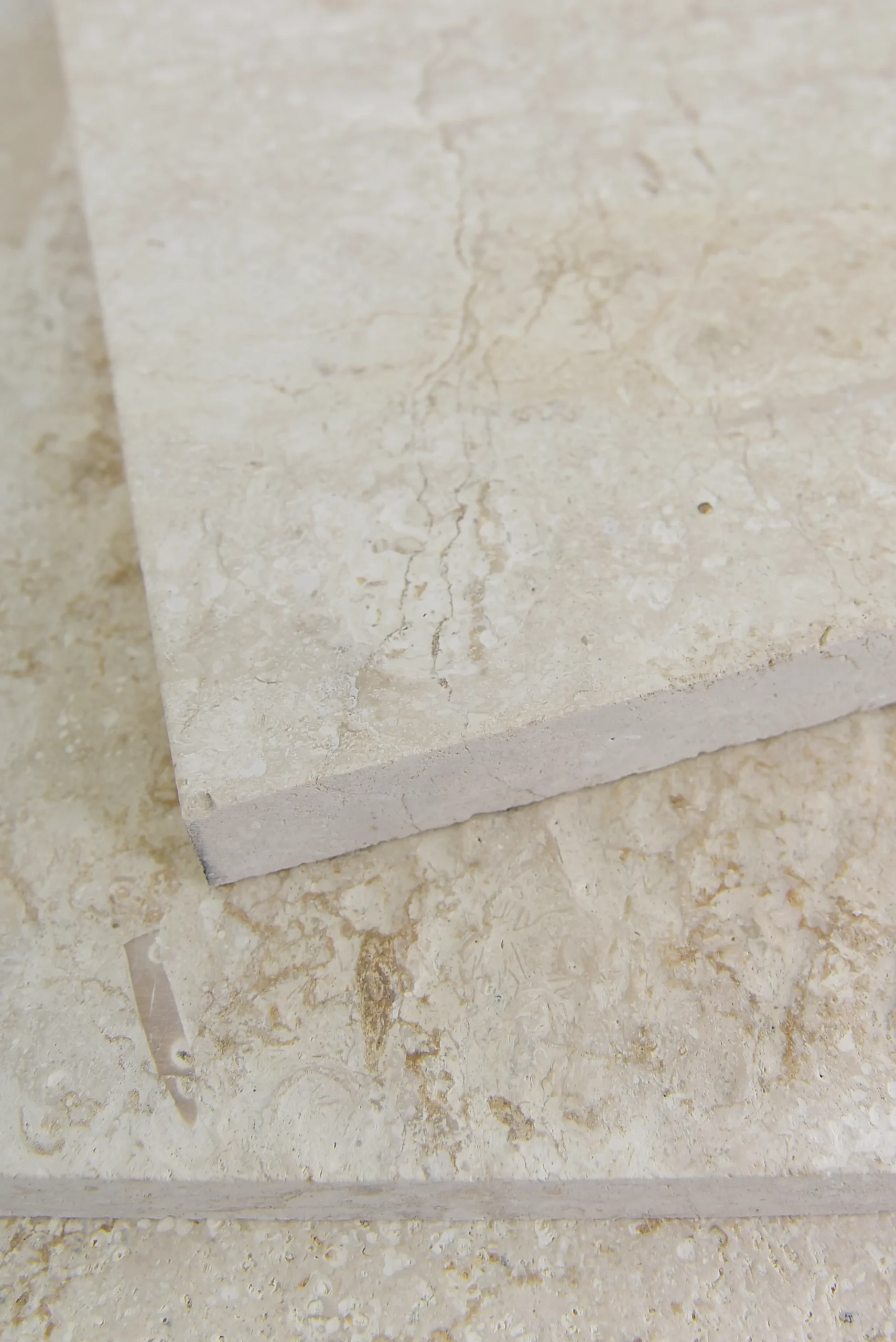
Outdoor applications place considerably more demand on your sealer choice. In freeze-thaw regions, water that penetrates unsealed or under-sealed travertine expands approximately 9% when it freezes — enough to fracture the stone’s internal structure over multiple cycles. A high-quality fluorocarbon impregnator rated for freeze-thaw conditions dramatically reduces water ingress, keeping the pore network substantially drier through winter. Look for products that specify hydrophobic and oleophobic protection — dual-chemistry formulations hold up better through seasonal temperature swings.
In hot, dry climates, the primary concern shifts from freeze damage to UV degradation and thermal cycling. High surface temperatures accelerate sealer breakdown — some silicone-based products lose measurable effectiveness after sustained exposure above 140°F surface temperature, which exposed outdoor travertine in full sun can reach in peak summer. Fluorocarbon products generally show better thermal stability. Reapplication intervals in high-UV environments run shorter than interior timelines, typically 18 to 24 months for full-sun outdoor applications.
Getting Travertine Sealing Right From Start to Finish
Getting sealer for travertine right comes down to three decisions made in sequence: matching product chemistry to your stone’s actual porosity, preparing the surface completely before any product touches the stone, and applying in thin coats with proper cure time between them. Every shortcut in that sequence shows up later as a maintenance problem. Travertine is highly resistant to wear and exceptionally durable when it’s correctly sealed and maintained — but it rewards precision in the process, not just the product choice. As you finalize your travertine project, you might also find it useful to explore how travertine compares to true marble — understanding those geological differences helps clarify why travertine requires a different sealing approach than its closer-grained relatives. Stone for nationwide projects ships from Citadel Stone with travertine surfaces primed to accept sealer evenly across the tile face.
Related reading: floor tile sizes compared · how to fill travertine holes · cleaner for travertine floors.