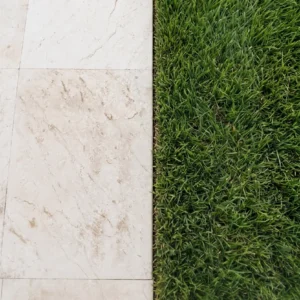
What Reclaimed Limestone Reveals About Your Specification
Reclaimed limestone paving carries a performance history that newly quarried stone simply can’t replicate — and that history cuts both ways. The weathering, biological patination, and prior load cycles embedded in reclaimed material tell you exactly how it will behave in your installation, provided you know how to read those signals. Most buyers focus on aesthetics, which is understandable, but the structural and chemical condition of reclaimed pieces varies dramatically depending on their previous application, exposure history, and how they were stored between removal and resale.
The porosity profile of reclaimed limestone paving is the first variable worth investigating. Stone pulled from a century-old courtyard in a dry region will have a very different absorption coefficient than stone removed from a coastal installation or a freeze-thaw climate. According to NSI limestone technical properties, absorption rates in limestone typically range from 0.5% to over 7% by weight — and reclaimed material can sit anywhere on that spectrum depending on its prior exposure and any historic sealants that may have partially blocked its pore structure. You need to test before you specify, not after.
Authenticity Versus Consistency: The Trade-Off Every Buyer Faces
Reclaimed limestone paving delivers a character that purpose-tumbled or artificially aged material genuinely cannot match. The variation in surface colour, the shallow pitting from decades of foot traffic, the subtle undulation across the face — these are qualities that take time to develop and can’t be manufactured convincingly. Designers and homeowners are right to pursue them.
The practical tension is consistency. Reclaimed material comes in batch sizes constrained by the source building or street project it was pulled from, and colour variation within a batch can be significant. Your installation may require pieces from two or three separate reclaim events, and matching patina across sources is notoriously difficult. Here’s what most specifiers miss at this stage: the colour will continue to evolve after installation, especially in high-UV environments, and pavers from different source ages will harmonise more quickly when exposed to the same conditions over time. That’s worth factoring into your tolerance for initial variation.
- Request batch origin documentation — knowing whether pieces came from one removal site or multiple sources affects long-term colour consistency
- Specify a minimum batch quantity upfront rather than ordering in stages to reduce source-mixing risks
- Anticipate a 10-15% variation in face dimensions on genuine reclaimed material — coursing grids need to account for this
- Confirm whether any historic surface treatments were applied — old linseed oil or lime-based sealants can resist modern penetrating sealers
Thickness, Structural Grading, and What the Numbers Mean
Reclaimed limestone paving is rarely dimensionally uniform. Original quarrying practices varied significantly from the 19th century through mid-20th century, and hand-cutting or early mechanical cutting produced thickness tolerances of ±10mm rather than the ±3mm achievable today. For a mortar-bedded installation, this tolerance is manageable — the bed compensates. For a rigid point-fixed installation or large format limestone tile layouts, inconsistent thickness creates real-world problems with lippage and structural bearing.
Compressive strength in reclaimed limestone generally holds up well — most dense limestones used in historic paving applications test above 4,000 PSI, with many varieties exceeding 8,000 PSI. The concern isn’t bulk compressive strength; it’s edge integrity. Corners and arrises on reclaimed pieces show stress fractures, micro-spalling, and impact damage from their previous installation and removal. These weak edges can propagate under vehicular load or heavy point load from furniture legs, so any piece showing visible cracking that extends more than 20-25mm from the edge should be downgraded or rejected outright.
- Minimum recommended thickness for pedestrian paving on a compacted aggregate base: 40mm nominal
- Minimum recommended thickness for light vehicular applications: 60mm nominal, with pieces inspected individually for edge cracking
- Measure thickness at five points per piece — centre and four quadrants — to establish true tolerance range
- Pieces with thickness variation exceeding 12mm within a single piece are better suited to dry-lay applications with mortar-free aggregate beds
Subgrade Conditions That Affect Reclaimed Stone Performance
The ground beneath your installation will determine how well reclaimed limestone paving performs over the long term — arguably more than the stone itself. Reclaimed material, because it’s often irregular in thickness and has pre-existing stress points, is less forgiving of subgrade movement than uniform newly quarried stone. Any differential settlement that a fresh 30mm slab might absorb without surface cracking can propagate a hairline fracture in a reclaimed piece that already carried historic stress.
Expansive clay subgrades are the most common source of long-term problems with natural stone paving nationwide. Clay soils shrink and swell with moisture change, and the cyclic vertical movement — sometimes 25-40mm over a season — transmits directly to the paving above. For reclaimed limestone pavers on clay-heavy sites, a geotextile separation layer between native soil and aggregate base is non-negotiable, and base depth should increase to a minimum of 250mm of well-compacted aggregate. Sandy or loamy subgrades are far more stable but require careful attention to drainage geometry to prevent base washing, which creates voids that allow reclaimed pieces to rock and eventually crack at their weakest points. Rocky or caliche subgrades present the opposite challenge — limited drainage and rigid bearing that can cause stress concentration under thermal expansion. According to USGS limestone geological data, limestone’s natural thermal expansion coefficient is approximately 4-6 × 10⁻⁶ per °C, meaning a 10-metre run of paving can move 2-3mm seasonally. On a rigid caliche subgrade with inadequate expansion provision, that movement goes somewhere — and it usually goes into the stone.
- Conduct a site-specific soil investigation before specifying base depth — visual assessment of surface soil type is insufficient
- On expansive clay, specify a minimum 300mm compacted aggregate base with geotextile on both faces
- On sandy subgrades, include perimeter drainage channels and specify angular aggregate (not rounded gravel) to resist washing
- On rocky or caliche subgrades, provision flexible expansion joints at 3-metre intervals minimum rather than the standard 4.5-metre spacing
- Confirm subgrade compaction to 95% Modified Proctor density before any base aggregate is placed
Sealing Limestone Paving With a Reclaim History
Sealing limestone paving that has a prior installation history requires a different approach than sealing fresh-cut material. The pore structure in reclaimed limestone may be partially blocked by historic efflorescence deposits, old sealants, or biological growth residue. Applying a penetrating impregnator over a partially blocked surface produces uneven coverage and can trap moisture in sub-surface voids — a particular concern in freeze-thaw regions where entrapped water expands and causes spalling.
The correct preparation sequence for reclaimed limestone before sealing limestone paving involves alkaline cleaning to remove carbonation residue, acid washing at low concentration (5-8% phosphoric acid solution) to open the surface pores, and a minimum 72-hour dry-out period before any sealer is applied. Verify the stone’s absorption readiness with a water drop test — if water sits on the surface for more than 30 seconds without absorbing, the stone is not ready. Most penetrating silane-siloxane sealers require surface absorption within 10-15 seconds to achieve proper bond depth. You’ll get 3-5 years of effective protection from a quality sealer applied correctly, and closer to 18 months from one applied over an improperly prepared surface.
At Citadel Stone, we recommend testing sealer compatibility on a representative offcut from your actual batch before committing to a full application — reclaimed material’s variability means what works on one piece may behave differently on another from the same pallet.
Ordering, Warehouse Supply, and Lead Time Reality
Sourcing reclaimed limestone paving through a national supplier with warehouse inventory gives you meaningful protection against the most common project risk with reclaimed material: mid-project shortfall. Reclaimed stone arrives in finite batches, and if your original quantity estimate is short by 15% — which happens frequently when you account for cuts, rejects, and breakage — you may not be able to match the material from a second source. Citadel Stone maintains warehouse stock of aged limestone paving across multiple format ranges, which reduces lead time to 1-2 weeks rather than the 6-8 week cycle typical of special-order import batches.
Your truck access conditions at the delivery site deserve advance planning. Reclaimed limestone paving is typically palletised at 600-800kg per pallet, and a standard truck delivery for a medium-sized project runs 4-6 pallets. If your site has restricted access — narrow driveways, overhead clearance limitations, or soft ground that won’t support a loaded truck — you’ll need to arrange offload logistics before delivery day, not on it. Confirm kerb weight limits and turning radius requirements with your driver before the truck is dispatched.
You can also explore our aged limestone paving pieces for format options and nominal thickness ranges across current warehouse stock.
Large Format Limestone Tile Applications and Their Practical Limits
Large format limestone tile applications — pieces above 600x600mm — push reclaimed material to its structural limits. The longer the unsupported span, the greater the bending stress under load, and reclaimed limestone with micro-fractures or historic stress lines is vulnerable to mid-span fracture under concentrated load. The industry benchmark for natural stone tile is a maximum unsupported span of 300mm on a mortar bed with minimum 80% contact coverage, but with reclaimed material, full bed contact becomes critical rather than advisory.
Achieving full bed contact on reclaimed large format limestone tile pieces requires a skilled trowelling technique and often a back-buttering step to compensate for face irregularity. For pieces above 800x800mm, a semi-dry mortar bed with a slurry bonding layer is more reliable than a standard notched-trowel application. The Britannica limestone characteristics reference notes that limestone’s relatively low modulus of rupture compared to granite makes it more susceptible to bending failure — a factor that becomes amplified in large format applications where point loads from furniture or equipment concentrate stress across a longer lever arm.
- Specify minimum 25mm nominal mortar bed depth for reclaimed large format pieces to allow bed adjustment
- Require back-buttering on all pieces above 600x600mm
- Avoid large format reclaimed limestone in areas subject to frequent heavy point loads — use smaller format pieces or a grout joint layout that distributes load across more bearing points
- Plan grout joint widths of 8-12mm minimum on reclaimed large format to accommodate dimensional tolerance without forcing lippage
Surface Finish and Slip Resistance on Aged Stone
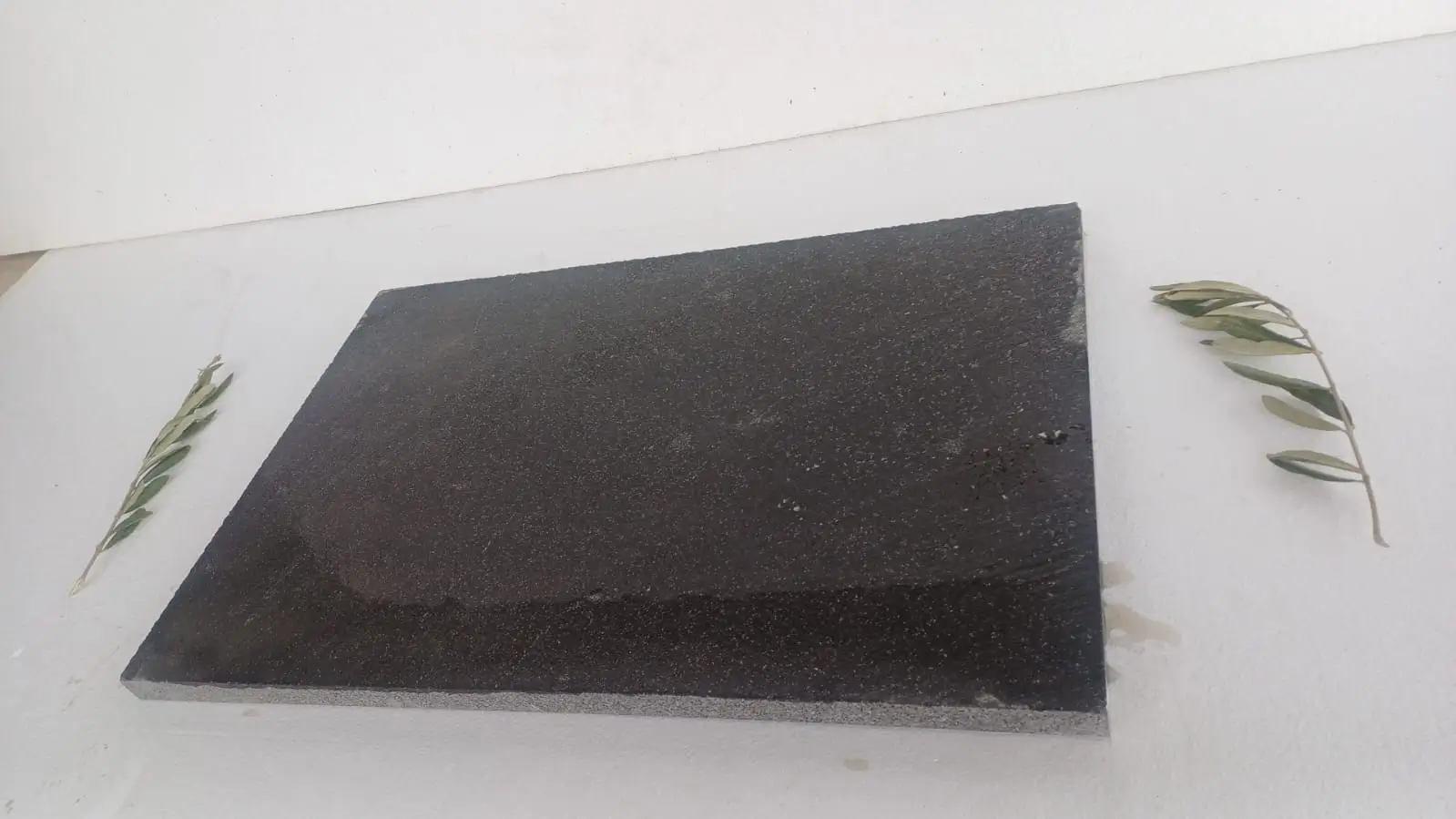
The surface of reclaimed limestone paving has been worn by years of foot traffic, and that wear pattern is a double-edged consideration. High-traffic zones develop a polish-like surface through abrasion — smooth, visually beautiful, but lower in slip resistance than the original tool finish. Riven, pitched, or rough-sawn reclaimed surfaces retain good grip, but worn-smooth areas can drop below a coefficient of friction of 0.42 under wet conditions, which is the ANSI A326.3 benchmark for pedestrian surfaces in wet environments.
Assess surface texture across your actual batch rather than relying on category descriptions. Run a pendulum slip resistance test or request a supplier-verified friction rating on representative samples if the installation is in a high-risk area — pool surrounds, entry thresholds, or any surface that will be frequently wet. For areas of concern, light tooling or bush-hammering can restore texture to reclaimed limestone pavers without significantly altering the reclaimed aesthetic.
Decision Points for Reclaimed Limestone Paving Projects
Reclaimed limestone paving asks you to make several sequential decisions correctly — and the consequences of getting them wrong compound quickly once installation begins. Your most important early decision is sourcing: verify batch origin, confirm test absorption data, and establish your quantity requirement with a 20% contingency rather than the 10% most buyers use with standard material. The irregular dimensions and higher reject rate on genuine reclaimed stone make that extra allowance necessary, not conservative.
Ground preparation is your second critical decision point. On clay-heavy or expansive subgrades, the base specification matters more than the stone above it. Investing in a proper geotextile-separated aggregate base and correctly spaced expansion joints is always less expensive than addressing differential settlement after the installation is complete. Your third decision — sealer selection and application timing — determines how well the surface performs through its first five years, when reclaimed material is most susceptible to staining from pollen, tannins, and construction traffic.
As you finalise your project material scope, it’s worth reviewing complementary Citadel Stone options for adjacent surfaces or contrasting features — tumbled grey limestone for textured paving offers a different surface character that pairs well with the smoother worn faces typical of reclaimed pieces, giving you tonal flexibility within the same material family.
Pavers from Citadel Stone carry naturally softened surfaces, giving reclaimed limestone paving projects a settled, established appearance from day one.
Related reading: limestone paving for pool areas · limestone crazy paving · French Limestone Paving: A Complete Buyer’s Guide.