How hot a deck really gets
Surface temperature is the complaint that tends to arrive after the job is finished, when someone crosses a terrace at midday without shoes. In a territory where the summer to winter swing is only about five degrees Fahrenheit, there is no cool season to hide behind: a deck that is uncomfortable in July is uncomfortable in January too. Three things drive what your feet feel. How much light the stone reflects, how the face is finished, and how long that area sits in direct sun before anyone uses it. Get all three right and a terrace stays usable through the afternoon. Get one badly wrong and the space quietly stops being used between noon and four, which is a slow and expensive way for a beautiful deck to disappoint the people who paid for it.
Tone does most of the work
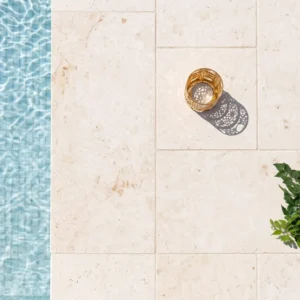
Pale stone reflects more of the sun’s energy than dark stone and stores less of it, which is why pale limestone is the material to reach for on open decks and pool surrounds. The effect is real, but it is not magic. A pale deck in full sun still warms; it simply peaks lower and sheds heat faster once shade arrives. Where a client wants a darker material for the look of it, put that material where feet do not linger:
- Driveway aprons, parking bays and the turning ground beside them
- Service yards, bin stores and plant enclosures behind the house
- Path edges and borders where planting breaks the run of dark stone
- Frontage detail and thresholds crossed in shoes rather than lingered on
Finish changes what you feel
Two pieces of the same stone in the same tone can feel different underfoot because the face is worked differently. A textured surface breaks contact into high points, which changes both grip and the sensation of heat, and it scatters reflected light rather than throwing it back in a sheet. A honed face reads calm and elegant but returns more glare, while a brushed or bush hammered face is busier to look at and kinder to walk on when wet. The finish decision therefore lands on two desks at once: the designer’s and that of the client who has to live on the deck. Specify paler limestone units for sun decks and settle the finish in the same conversation rather than leaving it to the last minute on site.
Glare is the other half of the problem
Heat gets discussed and glare gets forgotten, then somebody squints across a white deck at two in the afternoon. Finish and layout both help:
- Honed and lightly textured faces scatter light better than a high polish
- Breaking a large field into smaller formats reduces the unbroken bright plane
- Planting beds and low walls interrupt sightlines across the widest runs
- A slightly warmer pale tone reads softer than a stark bright white in full sun
Where shade beats material choice
No stone competes with a roof. If a terrace is used at midday, the plan should put something over part of it and let the material handle the rest of the day.
- Cover the route people walk barefoot most often, not simply the largest area
- Keep the coping and the first strides out of the water in shade where the layout allows
- Allow for how the sun tracks across a steep site through the afternoon
- Remember that stone cools quickly once shaded, so partial cover works harder than it looks
The three islands read differently
St. Thomas, St. John and St. Croix are three markets, three sets of ports and three sets of site conditions, and a heat strategy that suits one does not transfer whole.
- St. Croix is the largest and flattest island, with wide sites and long unshaded runs
- St. Thomas is steep, so terraces stack and the level above often shades the one below
- St. John holds much of its land as national park, and villa decks sit inside that landscape
- Exposure to open water and prevailing wind changes both drying time and salt loading
Keeping pale stone pale
Pale surfaces show what lands on them, and the wet season from May to October delivers plenty. Rinsing regularly matters more than any product on a shelf. Organic debris left on a warm damp deck marks it faster than foot traffic ever will, and a routine wash keeps salt from concentrating in the joints. The white limestone pavers we carry are supplied in gauged outdoor depths and are best kept with water and a soft brush far more often than with anything stronger. Test any cleaner on an offcut first, and treat harsh acids as a last resort rather than a routine.
Test a sample in real sun
Judging tone under showroom lighting or on a screen tells you very little about how a deck behaves on a bright Caribbean afternoon. The light here is harder and higher than the photography that sells stone, and a tone that looked warm on a sample board can read almost white at noon. Put a physical piece on the site, leave it out for a full day, and stand on it barefoot at the hour the space will actually be used. That one test resolves more arguments than any brochure. Send us the aspect, the shade plan and the island, and we will narrow the tone and finish with you.