The outdoor shower is Barbados’s smallest luxury and its most reliably loved: two square meters where beach sand leaves, sunset light enters, and the whole villa suddenly feels like a resort. Small enough to build in a weekend’s stonework, demanding enough to reward doing properly — the miniature masterclass in everything this cluster teaches.
Why the outdoor shower earns its guide
Guests mention it in reviews; owners use it daily; agents photograph it. Functionally it intercepts sand and salt before they tour the house — the front row’s first line of defense — and experientially it is the island distilled: warm water, open sky, stone underfoot. Per square meter, no stone project on the property returns more.
The floor: pool-surround rules, concentrated
An outdoor shower floor is a permanent wet zone, and it borrows the strictest rules on the property:
- Dense stone, because the surface never really dries out
- Coarse texture — soap joins water in the slip equation
- Generous fall, 2 percent minimum, to a proper drain
- Formats sized so cuts around the drain stay tidy
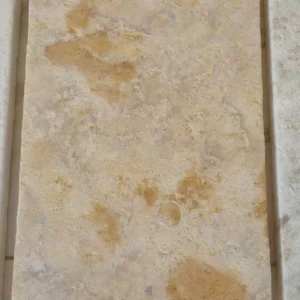
Shellstone is the sentimental favorite here for its barefoot texture and beach-house character; coarse-brushed white limestone is the crisp alternative.
Walls and the privacy screen
Shower enclosures are cladding’s miniature showcase: full-height stone on the wet wall (the cladding rules apply — full-bed adhesion, sealed joints, coping on any freestanding screen), and the privacy screen itself an architectural moment — a curved stone wall, a slatted timber-and-stone hybrid, or a planted trellis with a stone base course taking the splash. Height above eye line, opening away from prevailing wind, and one lush plant completes the room-without-a-roof.
Installation method matters as much as the stone itself. Industry guidance separates mortar-set work, sand-set exterior paving and pedestal systems, and stresses that drainage, movement and substrate condition drive long-term performance more than the material name does — the detailing guidance is worth reading before you specify.
Water, drainage and the two-meter plumbing job
Small space, real infrastructure:
- Hot and cold feeds, because the sunset shower is a warm one
- A drain connected to the property system rather than a soak-away guess
- Falls tested with a bucket before the stone commits
The classic retrofit location, against the pool-equipment wall or the bathroom exterior, keeps plumbing runs down to meters. Sleeve everything through the stonework.
Details that make the two square meters
A recessed stone shelf for bottles (cut from the wall stone, drained forward); a basalt threshold band where wet room meets path; a robe hook on the screen’s dry side; lighting low and warm for the night rinse. Each detail is an offcut’s worth of material — outdoor showers are where the main order’s spare pieces become jewelry.
One caution is worth repeating, because it is the most common way a good floor gets ruined. Limestone is calcium carbonate, so mild acids attack it; the Natural Stone Institute is blunt that these stones are vulnerable to alteration by mild acids. That single fact rules out most supermarket descalers, rust removers and generic patio cleaners.
Building yours
The project sequence miniaturizes the patio walkthrough:
- Measure the corner
- Sketch the screen line
- Confirm the drain route
- Choose floor and wall stone from samples
Then a crew-week including plumbing, or a phased owner-build over two. Quantities ride any main order invisibly, and the return arrives with the first post-beach rinse.
The cold-water counterargument
Purists argue the Bajan outdoor shower needs no hot feed — the cistern-warmed afternoon water and the climate do the job — and for the pool-rinse shower they are half right. The decision rule: showers that serve the beach return (sand off, quick) can run cold and simple; showers meant as an experience (the sunset ritual, the guest-suite’s open-air bathroom) justify the hot line every time. Plumb for the ambition, not the minimum — the sleeve sermon applies at shower scale.
Drainage details that keep neighbors friendly
Two square meters of daily water needs a legal destination: the property drainage, a soakaway sized for real use, or a garden bed that welcomes it — never the boundary wall footing or the neighbor’s side. The stone contribution is three details:
- Falls that collect to the drain point
- A threshold band that keeps shower water in its own room
- Splash-height cladding, so the screen wall stays a wall rather than a wick
Screens that partner the stone
The floor is settled long before the screen is, and the screen is what people actually see. Four approaches work on a Bajan property, and each asks something different of the stonework:
- A stone-clad masonry wall — the most permanent, and the one that wants splash-height cladding on both faces
- Hardwood slats on a frame — warm, ventilated, and needing a stone base course so the timber never sits in water
- Planting alone — beautiful and slow, and it still needs a hard edge where the shower floor ends
- A returned wall off the house — the cheapest, since one face already exists
Whichever you choose, decide it before the floor is laid. The screen line sets the drain position, and moving the drain afterward means lifting stone.
Heaters, timers and the small mechanical kit
An outdoor shower that gets used every day is a plumbing installation, not a garden ornament, and the fittings deserve the same thought as the stone. Solar or instantaneous heating handles the sunset shower without running a line from the house cylinder. A timer or push valve stops a guest leaving it running for an hour. Marine-grade or solid brass fittings survive a salt atmosphere that will strip cheaper chrome inside two seasons. Sleeve every penetration through the stonework so a fitting can be replaced in a decade without breaking a unit, and set the mixer at a height that suits the tallest person in the house rather than the drawing.
The outdoor shower in a rental property
On a rental villa the outdoor shower is the most photographed two square meters on the property and the most consistently abused. Specify for that:
- A coarser floor texture than a private house needs, because guests arrive with sandy, oiled feet
- A drain that can be lifted and cleared by housekeeping without tools
- No shelf detail that collects bottles left behind between bookings
- A hook and bench in stone or hardwood rather than plastic, which fails visibly and fast
Done properly it earns its place in the listing photographs and survives the season that follows them.
The details that make outdoor shower stone work
No stone project on the island packs more return into less area: sand intercepted, reviews earned, sunsets ritualized — all on a weekend’s stonework and an offcut budget. If the villa has a blank corner within reach of a drain, it has an outdoor shower waiting; the sample box can include the floor texture that starts it. Two square meters, done properly, gets used every single day.