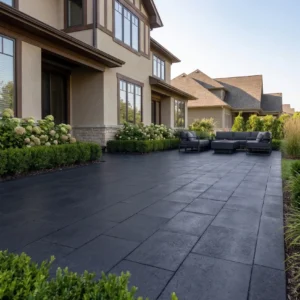
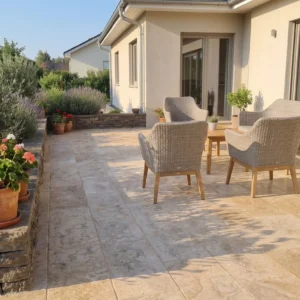
Every coastal guide in this cluster assumes the sea is nearby; this one assumes it is there — the villa whose terrace ends in dune vegetation, the deck that tastes spray on a windy high tide. Front-row Barbados is the island’s most punishing stone environment and its most valuable real estate, and the specification gap between “coastal” and “beachfront” is real.
The exposure ledger, maximized
Beachfront concentrates every mechanism this cluster has explained: salt loading at its heaviest (spray, not just film), abrasion from wind-carried sand, relentless UV, and — on the Atlantic-facing coasts — storm surge’s occasional direct argument. The response is the familiar physics pushed to its end of the scale: the densest, lowest-absorption stone in the range, textured finishes that sand cannot polish slick, and detailing that assumes water arrives horizontally sometimes.
Salt at spray strength
Meters from the break, salt is not a maintenance footnote but the design driver: crystallization pressure that destroys porous stone in seasons, which is why front-row coral stone floors are archaeology and dense limestone survives. The specification answer is absorption at the low end plus the rinse discipline upgraded — weekly freshwater rinses in spray season for the first-line surfaces, a habit as natural as rinsing the beach off feet.
Sand: the gentle abrasive
Wind-blown sand works stone like the world’s slowest polisher, and the counterintuitive result: textured surfaces outlast smooth ones. A honed front-line floor loses its refinement to micro-scratching within years; a coarse-brushed or fossil-textured face simply weathers character-forward — one more argument for shellstone on beach-adjacent floors, whose pattern was born of exactly this environment. Entry mats and a blower by the beach gate are the low-tech allies.
Anything close to the shoreline sits inside a regulated environment. The Coastal Zone Management Unit assesses physical development applications affecting the coastal zone and monitors the shoreline directly through beach profiling and wave data — the unit publishes its remit in full. Confirm your setback position before you order stone, not after the pallets land.
Detailing for the storm day
Front-row detailing assumes the exceptional:
- Falls generous enough to shed a deck-full of surge-splash fast
- Joints sealed or sand-locked so undermining cannot start
- Edge restraints and perimeter courses engineered against water that pulls as well as pushes
- Steps to the beach built on the landscape-flight logic, every pad drained and every tread textured
The stone survives storms easily; the detailing’s job is making sure what sits under it does too.
The front-row palette
Aesthetics and physics converge on the beach: pale stone against bright sand and turquoise water is the composition the setting demands, and the same pale density is what the exposure requires — a rare case of the pretty answer and the engineering answer being identical. White limestone fields, shellstone barefoot zones, and restrained basalt lines (which read superbly against sand) cover the front row’s whole vocabulary.
Absorption is the number that separates one limestone from another. The Natural Stone Institute records a range running from under one percent to over ten across the family, and notes that dolomitic stones generally carry higher density, lower absorption and better abrasion resistance — the industry variety data sets this out. That spread is why two stones sold under the same broad name can behave nothing alike underfoot.
Owning the front row
Beachfront stone ownership is a rhythm more than a burden:
- The upgraded rinse habit, run weekly rather than monthly
- Post-blow inspections from the calendar’s storm addendum storm addendum
- Attic stock held generously at around 5 percent, because the front row earns its spares
- Photographs each season, since paradise documentation doubles as insurance documentation
Specified and kept this way, the most exposed floors on the island are also its most breathtaking. The Barbados guide carries the ordering detail.
The front-row commissioning walk
New beachfront stonework earns a commissioning ritual: walk the first spray-season week daily and answer three questions.
- Where does salt film build fastest?
- Which corners hold wind-blown sand?
- Does the surge-splash fall reach the drains as drawn?
Adjust the rinse points and blower routes to what the ocean actually does. The environment writes the final maintenance plan; the specification’s job was making every answer easy.
Glass, rails and the salt-team neighbors
Front-row stone shares its exposure with glass balustrades, stainless rails and marine-grade fittings, and the maintenance rhythms merge: the freshwater rinse that keeps stone crystal-free is the same one glass and steel beg for. Detail the interfaces and the weekly routine serves the whole edge in one pass:
- Rail posts core-fixed with sleeves
- Glass shoes drained rather than sealed shut
- No dissimilar-metal streaking above pale stone
Sand, and the transition zone nobody draws
Every beachfront property has a strip where the beach stops being sand and starts being stone, and how that strip is detailed decides how much sand ends up on the terrace. Sand is an abrasive traveling on feet, and the counter is a transition that takes it off before it arrives:
- A textured band at the beach threshold, coarse enough to knock sand loose underfoot
- An open joint or grating line at the change of level, so what falls has somewhere to go
- A rinse point at the same threshold, positioned where people naturally pause
- Falls that carry rinse water away from the terrace rather than across it
Two square meters of thoughtful detail here saves the whole terrace from a decade of fine scratching, and it is the single cheapest intervention on a front-row property.
Setting out on ground that moves
Beachfront substrates are not the compacted marl the rest of the island builds on. Sand fill settles, water tables sit close to the surface, and a slab that was flat in March can telegraph a dip by the following wet season. The response is structural rather than decorative: a properly engineered base with adequate depth, restraint edges that hold the field against lateral movement, and movement joints placed where the designer wants them rather than where the stone decides. Where a terrace sits on made ground behind a sea wall, that conversation belongs with an engineer before the stone is ordered. The material will outlive the house; what fails on beachfront jobs is almost always what sits underneath it.
Glare, and the pale stone question
Light stone is the right answer for surface temperature and the wrong answer for glare, and on the front row both problems arrive at once, amplified by reflection off the water. The resolution is not a darker floor — that trades a squint for a burn — but a considered mix:
- A textured rather than honed finish, which scatters light instead of bouncing it
- Shade planned into the layout at the hours the terrace is actually used
- Mid-tone accents that give the eye somewhere to rest
- Planting at the seaward edge, which softens the reflected sheet more effectively than any surface choice
Judge it on site, in the afternoon, with the samples wet. Glare is one of the few specification questions a showroom cannot answer at all.
Beachfront stone in Barbados over the long run
The sea will test every choice this guide defends — that is what front row means. But specified dense, textured and detailed for the storm day, stone is the one surface that meets the Atlantic on equal terms: rinsed weekly, inspected seasonally, and photographed at golden hour for the rest of its very long life. The exposure-noted quote is where that life begins. The front row rewards stone that was chosen for it.