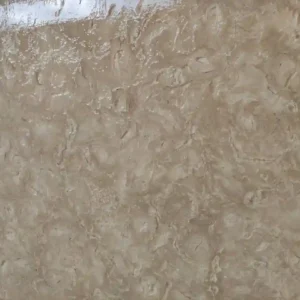
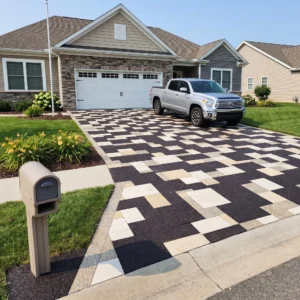
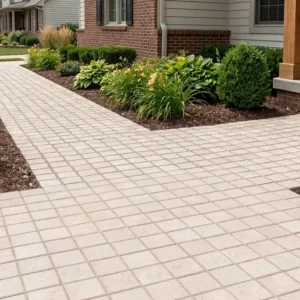
Natural stone hardscape ideas that actually work in the real world share a common thread: the stone is chosen for how it performs in context, not just how it looks in a showroom photo. The details that separate a forgettable hardscape from one that genuinely elevates an outdoor space aren’t about budget — they’re about material selection, proportion, and how stone interacts with the landscape around it. Material thickness, surface texture, and format scale all determine whether your finished project reads as intentional or incidental.
Why Material Choice Defines the Project
The most common specification mistake in hardscape work isn’t poor installation — it’s selecting a beautiful stone that wasn’t suited to the application. A polished limestone that photographs beautifully becomes a liability the moment it’s used as a pool surround or a high-traffic walkway. Surface finish, absorption rate, and compressive strength need to match the actual conditions your project faces. Natural stone hardscape design ideas that stand up over time start with an honest assessment of load, moisture, and foot-traffic intensity.
- For patios receiving moderate foot traffic, 1¼-inch nominal thickness in a honed or brushed finish handles daily use without premature wear
- High-load applications like driveways or heavy entertaining spaces require a minimum of 2 inches and compressive strength ratings above 8,000 PSI
- Absorption rates below 0.5% are preferable for pool surrounds and areas subject to consistent moisture exposure
- Textured or tumbled finishes carry the surface texture wet zones need — specify against the ANSI A326.3 wet DCOF threshold (0.42)
Stone Types and Their Hardscape Roles
Different stone families bring fundamentally different performance profiles, and understanding those distinctions is the foundation of sound specification work. The Natural Stone Institute variety guide outlines key material properties — but translating those properties into real project decisions takes field experience. Here’s how the major stone types actually perform in hardscape applications.
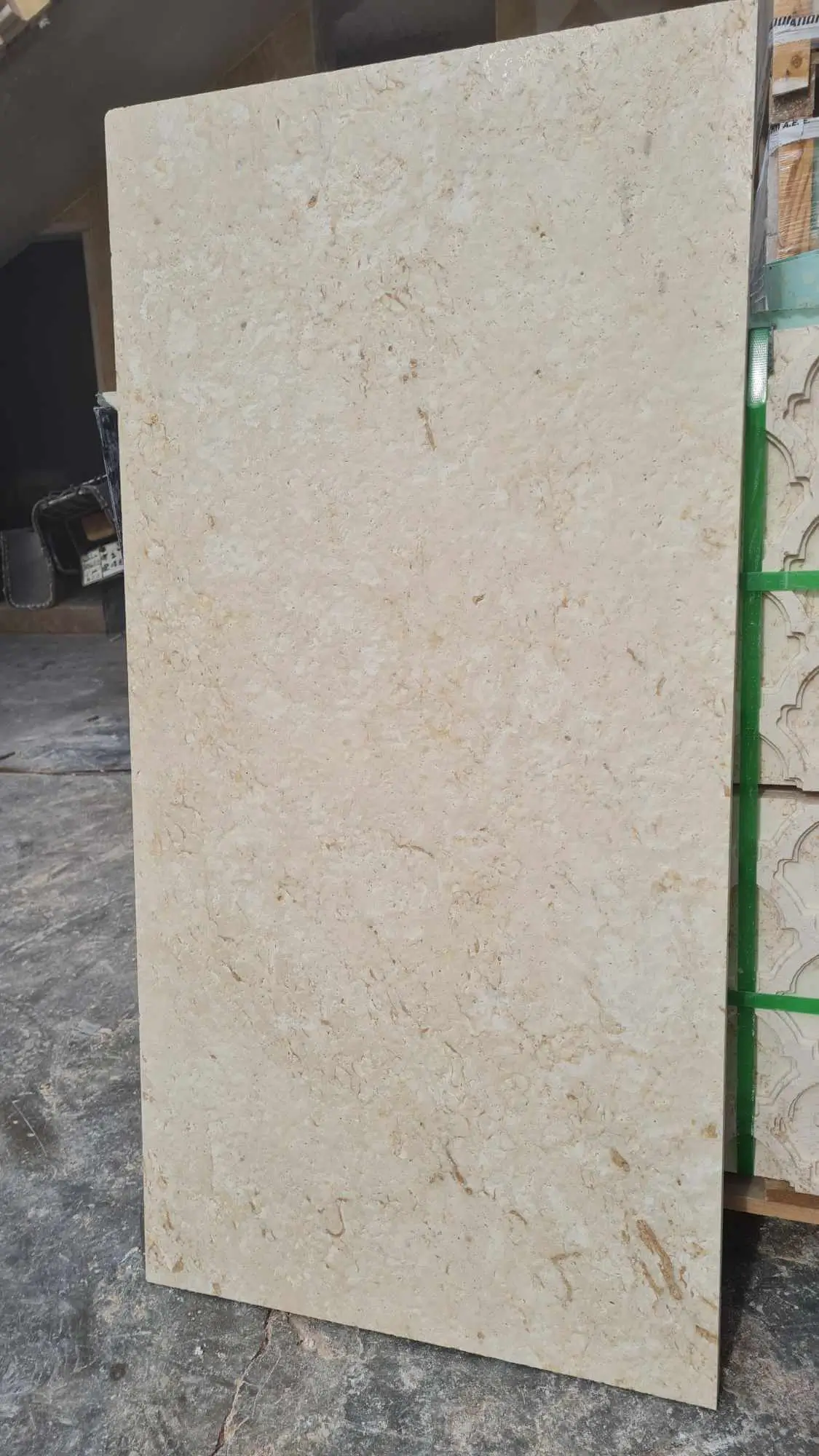
Travertine remains a dominant choice for outdoor entertaining spaces because its open-pore structure moderates surface temperature under direct sun — a meaningful advantage for barefoot use on patios and pool surrounds. Limestone brings a range of densities: softer oolitic varieties suit low-traffic garden paths, while harder crystalline limestone handles driveway-level loads without deformation. Basalt and granite deliver the highest compressive strength numbers in the natural stone category — granite typically exceeds 19,000 PSI — making them the correct specification for vehicular-rated surfaces and high-traffic commercial adjacencies.
- Travertine: ideal for patios, pool surrounds, and casual walkways — natural warmth underfoot, moderate density
- Limestone: versatile across finishes, performs well in garden borders and formal walkway applications
- Granite: highest abrasion resistance, best for driveways, entry courts, and edging elements subject to impact
- Basalt: dense, frost-resistant, excellent for stepping stones and feature paving in both modern and naturalistic schemes
- Flagstone: irregular formats suit relaxed, organic layouts; best in 1½-inch minimum thickness for structural reliability
Natural Hardscapes and Landscape Style Integration
Your stone selection reads differently depending on the planting palette, architectural style, and overall design language of the property. This is where natural stone hardscapes become a design tool rather than just a functional surface. The same limestone that feels completely at home in a formal colonial garden can appear disconnected in a desert xeriscape — not because the stone is wrong, but because the format, finish, and coursing pattern weren’t calibrated to the context.
Modern minimalist designs favor large-format stone in a honed finish — 24×24-inch or 24×48-inch slabs with tight 1/8-inch joints read as intentional and graphic. Traditional and colonial-influenced landscapes benefit from tumbled or pillowed edges, random coursing patterns, and warmer cream or buff tones that echo historic construction materials. Desert xeriscaping integrates best with rough-split or natural-cleft flagstone in earth tones, especially when combined with landscape ideas using boulders as anchor elements that bridge the hardscape to the surrounding terrain. Tropical planting schemes call for creamy or ivory travertine with flowing, curvilinear formats — the warm neutrality of the stone recedes into the planting rather than competing with it.
- Modern minimalist: large-format honed limestone or basalt, tight joints, monochromatic palette
- Desert xeriscape: natural-cleft flagstone, irregular formats, dry-stack border stones
- Colonial and traditional: tumbled limestone or cobblestone, warm buff tones, random coursing
- Tropical and lush: ivory travertine, flowing patio shapes, smooth finishes that complement foliage
- Naturalistic cottage: irregular flagstone stepping stones set in groundcover, fieldstone edging
Using Boulders in Landscape Hardscape Design
Boulders are one of the most underused elements in residential hardscape planning. Effective landscape ideas using boulders go beyond scattering rocks across a slope — they involve choosing stone that shares a geological relationship with your paved surfaces, then placing it to create visual mass and transition between hardscape and planting zones. A granite boulder cluster anchoring a planting bed adjacent to a granite cobblestone path creates coherence; the same boulder placed next to contrasting white limestone reads as an afterthought.
For structural boulder applications like retaining on slopes, account for the soil bearing capacity underneath and the freeze-thaw behavior of your region. Boulders used as purely aesthetic anchors — focal points in a planting bed or water feature surrounds — have more latitude in species selection, but weight logistics matter. A 2,000-pound specimen boulder requires crane access or at minimum a skid steer, and your delivery staging needs to account for that before the project begins. Always confirm access routes with your supplier ahead of scheduling.
Stone Landscaping Border Options That Hold Up
A stone landscaping border serves two purposes simultaneously: it defines the edge between lawn, planting, and hardscape zones, and it prevents lateral migration of base materials over time. Most failures in stone borders trace back to insufficient embedment depth — a stone set only 2 inches deep will migrate within two growing seasons in any soil that experiences moisture cycling. Set border stones a minimum of 4–6 inches into a compacted aggregate base, with at least 2 inches of the stone face above finished grade.
According to ASLA permeable surface and landscape edging guidance, natural stone borders outperform plastic and concrete alternatives in long-term settlement resistance when properly installed. Granite setts and cobblestone make the most durable stone landscaping border material — their density resists mower impact and foot traffic at the edge zone. Limestone edging blocks work well in protected garden settings but require a harder finish (honed or sawn) to resist chipping at exposed corners.
- Set border stones in a compacted ¾-inch crushed aggregate bed, minimum 4-inch depth
- Use granite setts for borders adjacent to lawn mowing paths — they resist blade impact without chipping
- Limestone edging suits interior garden bed borders where mower contact is minimal
- Irregular flagstone borders require wider embedment to prevent rocking — use a mortar bed on the base aggregate for stability
Base Preparation: The Detail Most Projects Get Wrong
The quality of a natural stone hardscape installation is determined almost entirely before the first stone is set. Your aggregate base depth should be 6 inches minimum for pedestrian applications and 10–12 inches for anything rated for vehicular use. The base material itself matters: angular crushed aggregate compacts to a stable interlock that rounded gravel never achieves. Use a vibratory plate compactor in multiple passes — the first at 50% depth, the second at full depth — and check grade tolerance to ¼ inch over 10 feet before any bedding sand or mortar is placed.
Natural stone hardscape design ideas that account for drainage geometry at the base stage will consistently outperform those that don’t. A 1–2% slope away from structures maintains drainage without creating a visually apparent pitch. In areas with expansive clay soils, add a geotextile layer between native soil and aggregate to prevent clay migration into your base over time — this single detail extends the useful life of an installation by 8–12 years based on field performance data across varying soil conditions.
Sealing, Jointing, and Long-Term Maintenance
Sealing protocols for natural stone hardscapes differ significantly by material family, and getting this wrong is a costly error. Travertine and limestone are calcium carbonate stones with open pore structures that benefit from a penetrating silane-siloxane sealer applied every 2–3 years. Granite’s dense crystalline structure requires sealing less frequently — every 4–5 years is typically sufficient. Never use a topical film sealer on outdoor stone; it traps moisture underneath, accelerates spalling, and creates a slipping hazard when wet.
Joint width and filler type affect long-term performance more than most installation guides acknowledge. For mortar-set applications, use a polymer-modified sanded grout at a minimum 3/16-inch joint width — narrower joints in calcium carbonate stone are prone to cracking as the stone undergoes minor thermal movement. For sand-set patio applications, polymeric jointing sand stabilizes better than standard mason sand and resists ant tunneling and weed germination more effectively. Reapply polymeric sand every 3–5 years depending on joint exposure and traffic levels.
- Penetrating silane-siloxane sealer: correct choice for limestone, travertine, and flagstone
- Topical film sealers: avoid on all exterior stone — they trap moisture and create slip hazards
- Grout joints below 3/16 inch in calcium carbonate stone: prone to cracking from thermal cycling
- Polymeric jointing sand: reapply every 3–5 years to maintain weed and insect resistance
- Annual inspection of mortar joints around step nosings and pool coping: highest-stress points in most installations
Planning, Supply, and Project Logistics
Finalize your stone selection and confirm warehouse availability before locking in your project schedule. Natural stone is a quarried product, and specific finishes or formats can have variable lead times depending on inventory levels. At Citadel Stone, we recommend confirming warehouse stock on your selected material at least 3–4 weeks before your planned installation start — this prevents the common scenario of a prepared base sitting exposed through weather delays while waiting on stone delivery.
Order quantity calculations should include a 10–12% overage above your net square footage. This accounts for cuts, pattern offsets, and the inevitable field breakage that comes with working natural stone around curves and obstacles. For projects using multiple stone types — a main field paver plus a contrasting border or coping element — confirm that both materials ship from the same warehouse location to consolidate your deliveries and reduce freight cost. Explore the full Citadel Stone outdoor stone range to identify compatible material pairings for your project before you lock in quantities.
The USGS dimension stone production data confirms that domestic dimension stone production adds supply-chain reliability advantages for projects with firm completion deadlines. Domestically sourced stone avoids the 6–8 week import cycle and reduces the risk of quality inconsistency between batches.
Final Considerations for Natural Stone Hardscape Ideas
The strongest natural stone hardscape ideas share a practical logic: material performance, base engineering, and design coherence are resolved together rather than sequentially. Your stone choice should inform your base specification, your base should inform your drainage geometry, and your drainage geometry should inform your layout. Projects that sequence these decisions correctly consistently outperform those that treat installation as separate from design.
For context on how these materials translate into completed project work, real stone project examples provide a useful reference point for specification decisions across different application types and design styles. At Citadel Stone, our technical team is available to help you work through material selection and quantity calculations before your project breaks ground — reach out before you finalize your specification rather than after. Stone from Citadel Stone stays comfortable underfoot in hot, dry climates, making it a practical pick for patios and pool surrounds.
Related reading: stone and masonry · natural stone hardscape uses compared · stone for house building.