Not every stone type performs the same way under load, moisture, or thermal stress — and understanding those differences before you specify is what separates a well-executed build from a costly remediation. The types of building stone materials available today span an enormous range of performance profiles, from dense igneous options with compressive strengths exceeding 25,000 PSI to sedimentary varieties that trade raw hardness for natural workability and thermal comfort. Your job as a specifier or buyer is to match material characteristics to project demands, not to default to whatever looks good in a catalog photo.
Why Material Selection Defines Project Outcomes
Stone selection is a performance decision first and an aesthetic one second. Every category of building stone materials carries a distinct combination of density, porosity, flexural strength, and thermal expansion behavior — and those properties interact with your installation environment in ways that become apparent only after the mortar cures. Specifying granite where limestone would perform better, or vice versa, doesn’t show up as a failure on day one. It shows up as spalling, joint failure, or surface delamination three to five years in, after you’ve long since moved on to the next project.
The material properties that matter most aren’t always the ones listed first in a supplier’s technical sheet. Absorption rate, for instance, is often buried in the footnotes — yet it directly governs how a stone responds to freeze-thaw cycling, cleaning chemistry, and staining from organic material. Pull that number to the front of your evaluation before anything else when working with stone and masonry systems of any scale.
Granite: The Dense Igneous Benchmark
Granite sits at the top of the compressive strength hierarchy for building stone materials, routinely testing between 19,000 and 28,000 PSI under ASTM C615 standards. That density makes it the go-to choice for driveway pavers, heavy-traffic cladding, and structural applications where load-bearing performance is non-negotiable. According to NSI granite durability data, granite’s crystalline interlocked structure gives it exceptional resistance to abrasion — a critical factor in pedestrian and vehicular surfaces that see daily wear.
Your granite specification should account for the finish type as much as the stone itself. Polished granite becomes slippery when wet, dropping its coefficient of friction to ranges that fail ADA surface requirements for ramps and pool surrounds. Flamed or bush-hammered finishes restore traction to safe operating levels and, usefully, also camouflage minor surface scratching over time. For exterior cladding in freeze-thaw regions, specify a granite with water absorption below 0.4% — most commercial-grade granites fall well within that threshold, but it’s worth confirming in the product data sheet.
- Compressive strength: 19,000–28,000 PSI typical range
- Water absorption: 0.1–0.4% — excellent resistance to moisture penetration
- Thermal expansion coefficient: approximately 4.4–8.5 × 10⁻⁶ per °F
- Best applications: driveways, heavy-traffic pavers, exterior cladding, steps
- Finish recommendation for wet areas: flamed, sandblasted, or bush-hammered
Limestone: Workable, Thermal, and Widely Specified
Limestone remains one of the most broadly specified types of building stone materials in residential and commercial construction precisely because it occupies the middle ground — workable enough to fabricate into complex profiles, dense enough to perform structurally in most above-grade applications, and thermally comfortable underfoot in ways that dense igneous stones simply aren’t. Compressive strength typically falls between 4,000 and 12,000 PSI depending on formation density, which positions most limestone grades comfortably above residential structural demands while staying in the range where hand-tooling and on-site cutting remain practical.
The detail most specifiers underestimate with limestone is its porosity gradient. A high-absorption limestone — anything above 7% — will stain, mottle, and deteriorate along joints in wet conditions if not sealed correctly at installation and maintained on a biennial cycle. Lower-absorption dense limestone (under 3%) behaves more like a sandstone and holds up in freeze-thaw regions with minimal maintenance. As USGS limestone composition data confirms, the calcium carbonate structure of limestone makes it inherently reactive to acidic cleaning agents — a practical reality that affects both your maintenance spec and your material storage protocol on site.
- Compressive strength: 4,000–12,000 PSI depending on density grade
- Porosity: 2–15% depending on formation — this single variable drives most maintenance decisions
- Thermal performance: surface temperatures measurably lower than granite or basalt in direct sun
- Avoid acidic cleaners — pH-neutral products only for long-term maintenance
- Sealing interval: every 18–24 months in exterior applications
Sandstone and Flagstone: Sedimentary Options for Flexible Applications
Sandstone-based flagstone occupies a distinct niche among building stone materials — its layered sedimentary structure allows it to split naturally into broad, thin sheets that suit irregular flagging, pathways, and garden paving where cut-stone precision isn’t the priority. The grain structure that makes sandstone splittable is also its performance variable: fine-grained sandstone grades exhibit lower porosity and better freeze-thaw performance, while coarser formations absorb water more readily and require more aggressive sealing schedules in regions with wet winters.
Field performance data on flagstone across varied climates shows that the most common failure mode isn’t cracking — it’s delamination along bedding planes when moisture infiltrates and then freezes in the laminar gaps. Your installation spec should orient flagstone with its natural bedding plane horizontal (as laid) rather than vertical, and your base preparation should prioritize drainage to eliminate standing water at the stone’s underside. Refer to USGS dimension stone data for production standards that govern flagstone thickness and quality classifications in commercial applications.
- Tensile strength: lower than granite or limestone — avoid cantilevered applications
- Natural splitting makes site fabrication practical but creates variable thickness
- Bedding plane orientation is critical — horizontal lay only for exterior paving
- Sealing priority: high — especially in regions with significant rainfall or freeze-thaw cycles
- Ideal applications: garden pathways, irregular flagging, decorative outdoor paving
Travertine: Open Pore Structure and Thermal Comfort
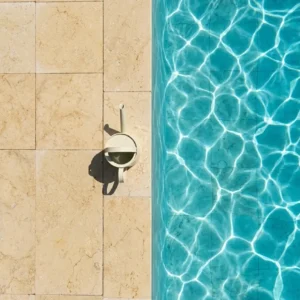
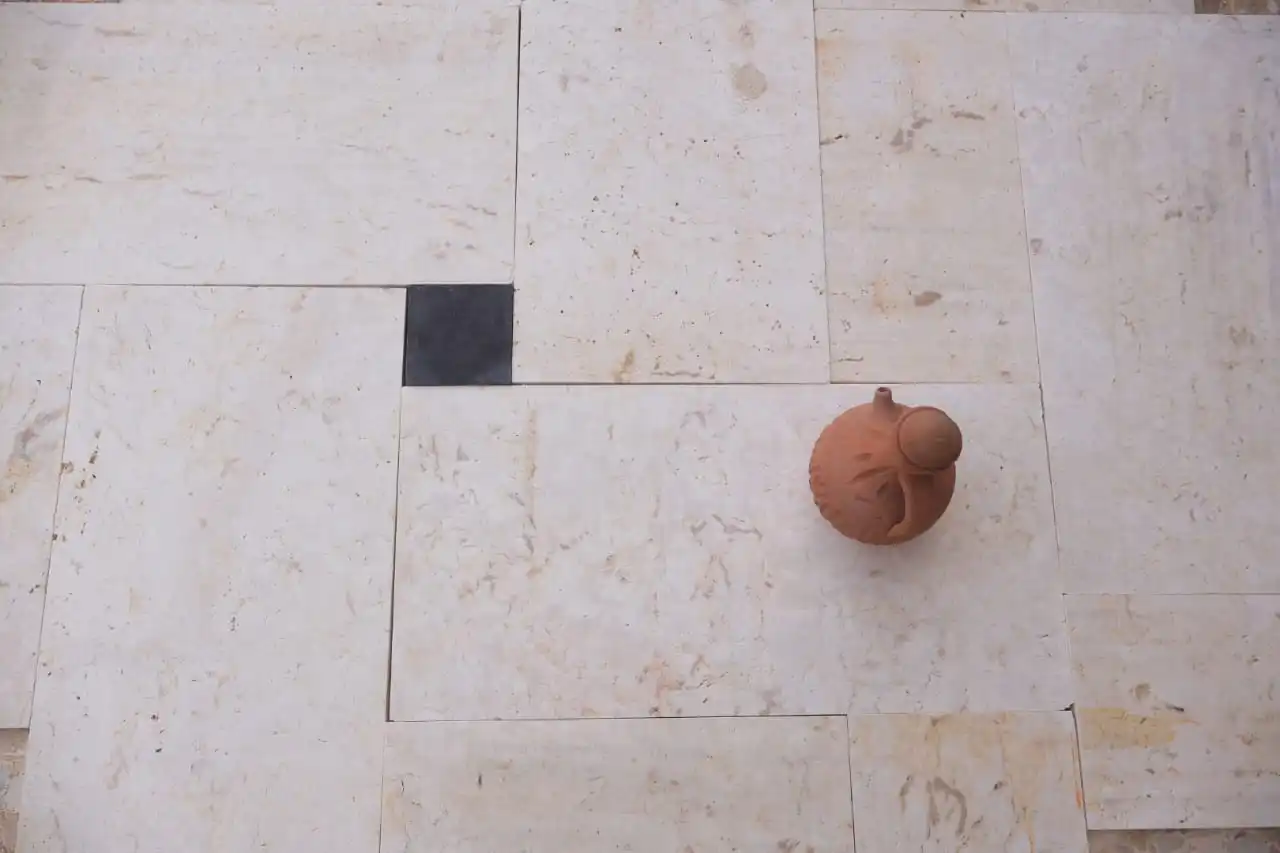
Travertine’s defining characteristic isn’t its appearance — it’s the open-pore void structure that forms during calcium carbonate deposition around natural gas vents. Those voids give travertine its distinctive cross-section and, functionally, its thermal moderation performance. Surface temperatures on honed travertine in direct summer sun run measurably cooler than equivalent granite or basalt surfaces, making it a frequently specified material for pool surrounds and outdoor entertaining areas where barefoot comfort matters. Your finish selection between filled and unfilled travertine changes the maintenance equation significantly — unfilled voids collect debris and organic material, while epoxy-filled surfaces behave closer to a solid stone but can telegraph fill shrinkage over time as temperature cycles stress the infill.
Travertine carries an absorption rate of 3–8% in most commercial grades, which places it in the moderate-sealing category. For pool deck applications in particular, specify a penetrating silane-siloxane sealer rated for calcium carbonate substrates — standard acrylic sealers will cloud on travertine and require stripping within two seasons. For broader specification guidance across stone and masonry varieties, explore the building stone selection at Citadel Stone to compare how travertine’s pore structure benchmarks against other options in the range.
Basalt: The Volcanic Dense Option
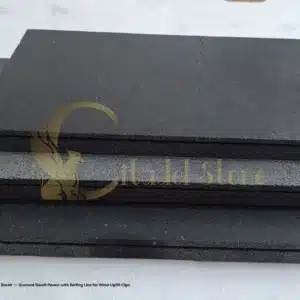
Basalt deserves more attention in building specifications than it typically receives outside of tile applications. As a fine-grained volcanic rock, basalt exhibits compressive strengths between 25,000 and 45,000 PSI — comparable to or exceeding granite in many quarry-specific grades — with an exceptionally low absorption rate (under 1% in most dense-base commercial grades) that makes it one of the most frost-resistant building stone materials in the category. Its dark coloration creates one practical limitation: surface temperatures under direct sun can run 15–20°F higher than lighter-toned limestone or travertine, which matters in pedestrian and pool deck applications.
Honed basalt provides a smooth, refined finish while maintaining a coefficient of friction above the 0.6 threshold recommended for pedestrian surfaces. Calibrated basalt tiles are increasingly used for wall cladding systems where dimensional precision is critical, and the material’s fine grain takes a sharp arrised edge cleanly — a detail that matters on column cladding and door surrounds where visual precision is part of the design intent. The basalt volcanic formation data from Britannica confirms the mineral composition — primarily plagioclase feldspar and pyroxene — that gives basalt its resistance to chemical weathering and surface staining compared to more porous sedimentary alternatives.
- Compressive strength: 25,000–45,000 PSI — one of the highest in the building stone category
- Water absorption: typically below 1% — excellent for wet or freeze-thaw environments
- Surface temperature: higher than light-toned stone — specify light finishes for pool surrounds
- Applications: wall cladding, tile systems, driveway pavers, commercial hardscape
- Finish options: honed, bush-hammered, or sawn — polished is uncommon due to visible grain variation
Slate and Metamorphic Stone: Cleft Faces and Layered Performance
Slate’s value in building stone materials comes from its metamorphic cleavage — the natural ability to split along parallel planes into thin, consistent sheets with a textured cleft face that provides inherent traction without surface finishing. Roof slating and floor tiling remain slate’s dominant applications, and in both contexts its low absorption (typically 0.3–0.5% in quality grades) and high compressive strength (7,000–15,000 PSI) deliver long-term performance without demanding the maintenance cycle that limestone or travertine require.
The variable to evaluate carefully with slate is its flexural strength rather than its compressive strength. Thin-format slate tiles loaded across their width — as in cantilevered stair treads or large-format floor tiles on an uneven substrate — can split along the natural cleavage under point loads that wouldn’t challenge granite or dense limestone. Your installation spec should include a full-coverage mortar bed (not dot-and-dab) to eliminate the unsupported spans that cause cleavage failure. Slate’s resistance to acids also makes it a viable choice in exterior environments where limestone would require more aggressive maintenance management.
Marble: High-Value Aesthetic With Maintenance Trade-offs
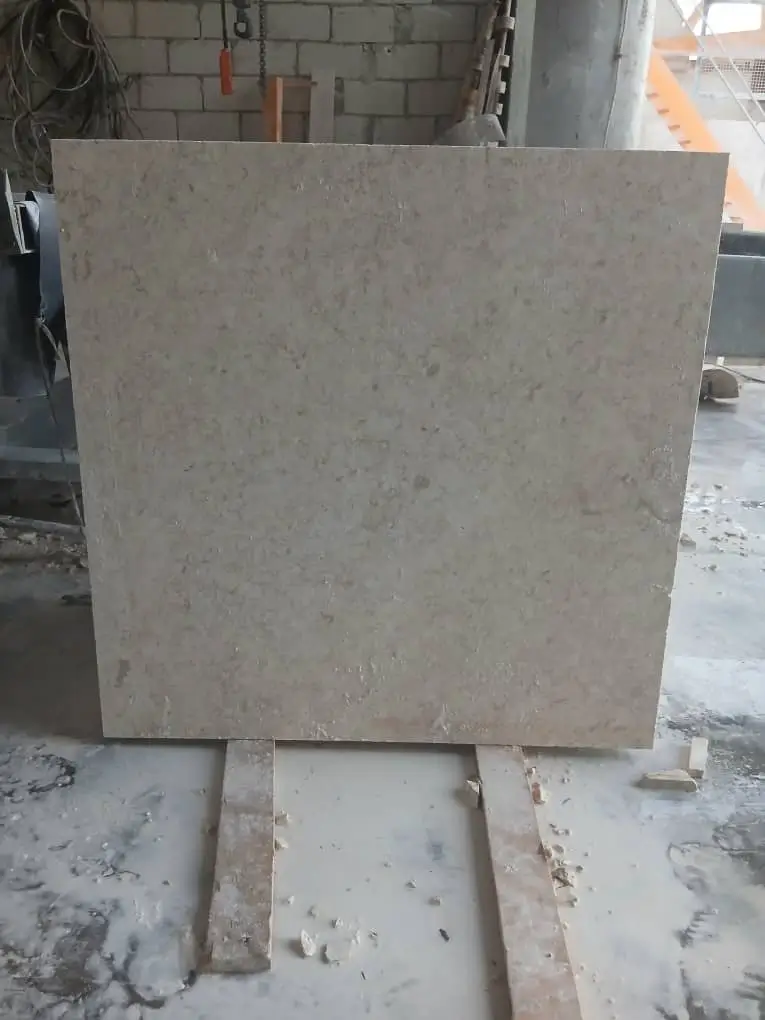
Marble occupies a specific position in building stone materials — high aesthetic value, moderate structural performance, and significant maintenance requirements in exterior applications. Its metamorphic calcium carbonate structure gives it the veining and translucency that make it visually distinctive, but that same calcite base means it reacts to rain acidity, cleaning chemicals, and freeze-thaw cycles in ways that granite and basalt simply don’t. Interior floor applications and wall cladding in covered spaces are where marble performs at its best; exterior paving and horizontal surfaces exposed to weather is where it underperforms relative to its price point.
Honed marble provides the most practical exterior finish — polished marble outdoors will lose its reflective surface within 18–36 months of UV and foot-traffic exposure. Your maintenance specification for exterior marble should include a pH-neutral cleaner, an annual penetrating sealer application, and a clear prohibition on any abrasive or acidic cleaning products from the maintenance team. Citadel Stone’s material specialists consistently note that marble specified without a formal maintenance protocol rarely meets the 20-year performance threshold that clients expect from a premium material investment.
Seasonal Timing and Installation Windows
Your choice of building stone materials is only as good as the installation conditions you put them into. Temperature at the point of installation affects mortar hydration rate, adhesive open time, and the dimensional stability of stone during the initial curing period — and these variables interact differently depending on which material you’re working with. Porous sedimentary stones like limestone and sandstone are particularly sensitive to installation temperature because they draw moisture from mortar beds faster than dense igneous stones, which can cause premature curing and weak bond strength if you’re working in conditions above 90°F without shade management.
The practical installation windows for most natural stone work fall in two ranges: spring (when ambient temperatures are consistently between 50°F and 75°F) and early fall (after summer heat breaks). Morning installation sessions are preferable in warmer periods — adhesive manufacturers’ open-time ratings are typically based on 70°F conditions, and afternoon heat on a dark stone substrate can cut that open time by 30–40%, leaving you with stones that won’t seat properly before the bond starts to set. In freeze-thaw regions, plan to complete all exterior stone installation with a minimum 28-day curing window before the first expected frost — thin-set mortars and setting beds don’t reach full strength until 28 days, and early freeze events compromise bond integrity before the material has fully cured. Confirming warehouse stock levels before scheduling installation is equally important — verifying material availability 4–6 weeks in advance gives you the flexibility to align delivery with your optimal installation window rather than forcing installation in suboptimal conditions.
- Optimal installation temperature range: 50°F to 85°F ambient for most setting mortars
- Morning sessions preferred in warm periods — avoid afternoon installation on dark stone substrates
- Allow 28-day curing before first freeze in exterior applications
- Porous stone (limestone, sandstone) requires slower mortar hydration — mist substrate before setting in dry conditions
- Adhesive open time drops significantly at high surface temperatures — adjust working batch sizes accordingly
Stone for Cladding vs. Paving: Different Performance Demands
Stone and masonry applications split broadly into two performance categories, and the specification criteria differ enough that treating them identically leads to chronic under-performance. Stone for building houses used in cladding applications prioritizes flexural strength, weight management, and anchor system compatibility — you’re working with thinner formats, often 3/4″ to 1-1/4″ panels, that need to span between fixing points without cracking under wind load or thermal cycling. Paving applications prioritize compressive strength, wear resistance, and edge stability under point loads from foot traffic, wheeled equipment, or vehicle access.
Your thickness specification for cladding stone should reference flexural strength data (modulus of rupture, tested per ASTM C880) rather than relying on compressive strength alone. A limestone with excellent compressive strength but moderate flexural strength will perform well as a paver but will underperform in a cladding application where it’s expected to resist wind-induced deflection. Conversely, a thin-format slate tile with high flexural strength and low self-weight is an excellent cladding candidate but is entirely wrong for a driveway application where it would fail under vehicle loads within months.
- Cladding key specs: flexural strength (MOR per ASTM C880), panel weight, anchor compatibility
- Paving key specs: compressive strength, abrasion resistance (ASTM C241), edge stability
- Minimum cladding thickness: 3/4″ for granite and dense limestone; 1″ for softer sedimentary varieties
- Paving thickness for pedestrian areas: 1-1/4″ to 1-1/2″ minimum for most natural stone types
- Paving thickness for vehicular areas: 2″ minimum for granite; 2-1/2″ for limestone in heavy-use applications
Before You Specify Building Stone Materials
The most common specification error across building stone materials projects isn’t choosing the wrong stone — it’s specifying the right stone without validating the supply chain. Confirm that the material you’ve specified is actually in warehouse stock in the quantity your project requires before you finalize your timeline. Many natural stone varieties are quarried in limited batch runs, and what shows as available in a catalog may carry a 10–14 week lead time if warehouse inventory has been depleted by a larger project. Confirming stock levels early also lets you assess whether truck delivery logistics to your site are straightforward or require special access coordination for flatbed or boom delivery.
At Citadel Stone, we recommend reviewing your stone type selection against both the structural specification criteria and the practical installation schedule before committing to a material. Our technical team works through density, grain structure, absorption rates, and finish options with specifiers across the country — the goal is matching the right material to the conditions it will actually face, not just the conditions it looks good in on paper. As you refine your stone selection for structural or cladding elements, it’s also worth reviewing maintenance requirements specific to your chosen material — limestone cleaning and maintenance guidance covers practical care protocols that directly affect long-term performance in exterior applications. When comparing stone types for a structural or cladding project, Citadel Stone’s material specialists can clarify how density and grain structure influence each option’s long-term suitability.