What the territory already produces
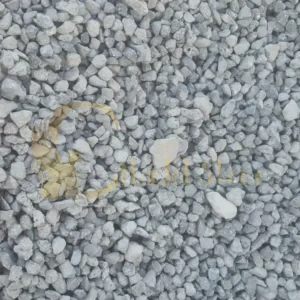
Anyone arriving with an imported paving proposal should know what is made here first. Aggregate Inc. operates the Ham’s Bluff Quarry on St. Croix, producing bluestone basalt construction aggregates that run from road base meeting DOT specifications through ASTM certified stone for asphalt and ready mixed concrete, and it moves that material by tug and barge to Leeward islands around the region. Crushed stone production on St. Croix goes back decades. This is not a market without stone of its own, and a supplier who talks as though it is has not done the reading.
Two products from one rock family
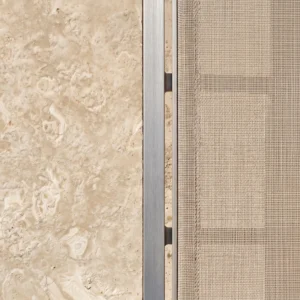
The distinction that matters is product category, not quality. Ham’s Bluff makes construction aggregate: road base, asphalt stone and concrete stone, sold by the ton and specified by grading. Citadel supplies dimension sawn, calibrated architectural paving: units cut to a set thickness and face size, sorted for consistency, and laid as a finished wearing surface. The two are bought and measured in completely different ways:
- Aggregate is ordered by weight and grading; paving is ordered by area, format and depth
- Aggregate is compacted into a layer; paving units are individually bedded and jointed
- Aggregate is specified for engineering performance below the surface, not for appearance
- Paving is specified for finish, tone, calibration and slip behavior at the surface
How a build up divides the work
Read a typical terrace or driveway section from the bottom and the split becomes obvious:
- Sub base and base course: local aggregate, bought by the ton and compacted in layers
- Concrete or bound layer where the design calls for one: local ready mixed supply
- Bedding layer: sand or mortar to the specification, sourced through the local trade
- Wearing surface: dimension sawn paving units, calibrated, imported and set to a pattern
- Edge restraint and curbs: whichever supply best matches the unit size chosen above
Specifying dimension-sawn limestone paving from our stock does not displace a single ton of the local material sitting underneath it.
The stone in the walls around you
St. Thomas has its own vernacular building stone: the bluish volcaniclastic rock of the Louisenhoj Formation, named for exposures in roadcuts north of Charlotte Amalie, notoriously hard to work and prized in facades. It sits in walls rather than in paving, which matters when a client points at a wall and asks for something that matches. The honest answer is that a new paved surface sits beside that masonry instead of imitating it. In practice the pairing reads better when the paving stays quieter than the wall, in a calm tone and a simple format, so the older fabric keeps the attention it has earned.
Working inside a historic district
Four historic districts carry formal design review: Charlotte Amalie, Christiansted, Frederiksted and Cruz Bay. The Virgin Islands Historic Preservation Commission approves construction inside them, and the updated Historic Districts Guide issued through the State Historic Preservation Office within DPNR sets out what is expected.
- New construction is expected to hold the Danish colonial character of the district
- The guide addresses architectural materials, masonry and wood repair, and landscaping
- Signage and paint colors are covered too, so exterior work is reviewed as a whole
- The approval process is written down, which means a schedule can allow for it properly
What these districts protect is architecture, the walls, roofs and street frontage rather than a paving tradition, so the safest brief for a new surface is one that defers to the buildings around it.
Sand and where it must not come from
Bedding sand and fill are local purchases, and there is one line no reputable job crosses. DPNR has publicly warned about illegal sand mining in the territory, and beach sand is protected. Buy bedding material through a documented commercial supplier with paperwork, keep the delivery tickets with the project file, and never let a saving on a bedding layer put a permit or a reputation at risk. On a small island a questionable load is not an anonymous transaction, and the paperwork is the cheapest insurance on the job.
Sequencing two supply chains
Local aggregate arrives on local lead times. Imported paving arrives on a vessel schedule and clears the Virgin Islands Bureau of Customs before it moves to site. Plan them as two separate chains that meet at the bedding layer, and give the imported chain the longer allowance, since it is the one carrying a clearance step you do not control.
- Book imported units early enough that base work is never left waiting on a vessel
- Allow for clearance and broker handling before delivery to a site address
- Confirm which port serves the island in question rather than assuming one entry point
- Remember that access planning here follows left hand driving, which changes site turning
Quoting the layers separately
A quote that blends base course and wearing surface hides which decision is really driving the cost. Ask for the imported units priced on their own, landed, with the duty and excise position noted separately by your broker. Split that way, the client can see exactly which line moves when a format, a depth or a finish changes. That is how we work across all three islands, and the routing is set out in our Virgin Islands supply overview island by island. Send us the section drawing and we will price only the layer we actually supply.