Start With Exposure, Not Preference
The limestone or basalt question gets asked as though one stone must win a property outright. On a hillside site in the Virgin Islands that framing wastes both materials. A single plot can hold a shaded entrance court, a west-facing deck that takes brutal afternoon sun, a pool surround crossed barefoot all day, a steep drive that carries vehicles, and a sea-facing terrace exposed to spray from the open water. Those are five different problems and they do not share an answer. The sensible method is to map the zones first, walking the plot at the hottest hour and again after rain, then choose the stone that suits each one on its own terms.
Where Limestone Is the Better Answer
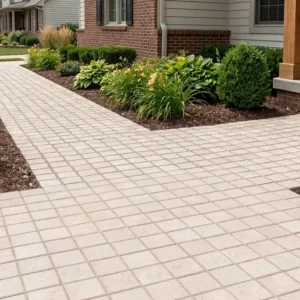
Pale limestone earns most of the living areas on a property like this.
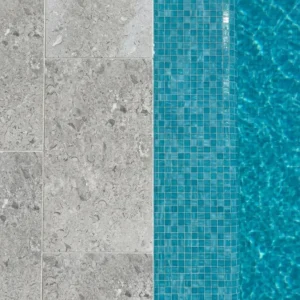
- Pool decks and coping, where a light surface stays kinder underfoot at midday.
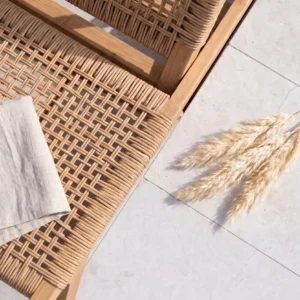
- Terraces and outdoor rooms that continue an interior floor without a change of tone.
- Settings near pale granite, where warm gray and cream sit naturally in the landscape.
- Any area where glare must be softened with a honed or bush-hammered face.
Where Basalt Earns the Job
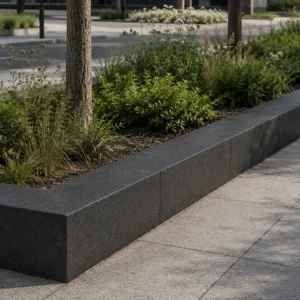
Dark, dense volcanic stone answers a different set of demands on the same property.
- Drives, turning areas and service yards that take vehicle loads day after day.
- Shaded courtyards and covered walkways where surface heat is not the deciding factor.
- Steps and thresholds where a strong tonal change helps people read a level shift.
- Edges, bands and borders that frame a pale field and hide traffic marks.
Heat Underfoot Is the Honest Trade
The plain truth is that a dark surface in full Caribbean sun will be hotter than a pale one beside it, and no finish fixes that entirely. That single fact settles most zoning decisions on its own: pale material where feet land, darker material where tires roll or where shade covers the ground. Everything else in the comparison can be argued about, adjusted with a finish or solved with better detailing, but surface temperature under an open sky is settled by tone and by how much shade the design provides. It is why so many properties end up mixing rather than choosing, and why the pale formats in our limestone formats for villa terraces range tend to occupy the areas people actually walk on barefoot.
Wind, Weight and What the 2017 Storm Taught
Hurricane Irma crossed the islands directly on 6 September 2017 as a Category 5 storm with sustained winds reaching 185 mph, damaging or destroying about 85% of the housing stock, and Maria passed to the south as a Category 5 storm two weeks later. Property built to current standards performed markedly better than older buildings never brought up to code. For hardscape the lesson is unit mass, bedded construction and positive restraint at every free edge, whichever stone you choose, because anything light and unrestrained in an exposed position is waiting to be lifted. Denser material helps, but detailing decides far more than the geology does, and that holds for a pale terrace and a dark drive alike.
Using Both on One Property
Mixing works when the logic is visible, and looks accidental when it is not.
- Let each material own a whole zone rather than scattering both through every area.
- Use a change of stone to mark a change of use, such as terrace to drive.
- Keep unit sizes and joint widths consistent across the boundary so the change reads intentional.
- Match finishes in spirit, keeping both matte rather than pairing polished with tooled.
Freight, Formats and the Last Mile
The commercial side is easier here than in most of the region, but the last mile is harder, and both belong in the plan from the first drawing rather than the week the container lands.
- Pricing is quoted in US dollars, and there is no VAT, sales tax or consumption tax to add.
- Import duty is assessed by HS code under the Customs Management and Duties Act, 2010.
- Declarations run through CAPS, and cargo clears at a designated station such as Port Purcell.
- Steep, narrow hillside access limits vehicle size, so pallet planning matters more than usual.
- Work on Virgin Gorda, Anegada or Jost Van Dyke needs onward delivery from Tortola.
Where a drive or yard needs the harder-wearing option, basalt where wear is heaviest keeps the pale terrace stone for the living areas.
Decide by Position
Walk the plot with the drawings and mark each area for sun, salt, traffic and shade before anyone opens a sample box. Then let those notes do the choosing. A workable split is pale where people gather and dark where machinery and vehicles work, with the boundary falling somewhere natural, such as the point where a terrace meets a drive. Order small samples of both and look at them on site rather than under a showroom light, ideally at the same hour of day you expect the space to be used. Ordering both materials together also keeps thicknesses, joint widths and delivery in step, which matters more than usual when every pallet arrives by sea and has to climb a hillside road afterward. The right stone is the one that suits the square yard it will be laid on.