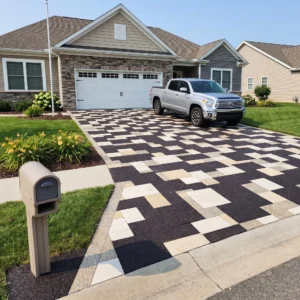
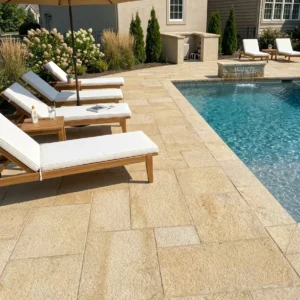
Most white granite selection mistakes happen before a single sample reaches the countertop — the decision gets made on color alone, while the variables that actually drive long-term performance get skipped entirely. Knowing how to choose white granite means reading background tone, veining scale, movement pattern, and mineral density as a system, not as separate aesthetic preferences. Get that system right and the slab you specify will read exactly as intended under every lighting condition your project encounters.
What White Granite Actually Is
The term “white granite” covers a wider mineralogical range than most buyers realize. True granite is an igneous rock composed primarily of quartz, feldspar, and mica — the relative proportions of those minerals determine whether your slab reads as crisp white, warm ivory, or cool grey-white. Slabs with higher quartz and white feldspar content produce the cleanest, brightest backgrounds. Higher mica concentrations introduce subtle shimmer and can push the tone toward warm silver or pale gold depending on incident light angle.
Beyond strict geological granite, the market includes gneiss, quartzite, and granodiorite sold commercially as white granite. These materials carry different porosity profiles, flexural strengths, and veining characteristics. Your specification should confirm the actual stone type — not just the commercial name — because installation and sealing protocols differ across these categories. NSI granite durability and application data clarifies the performance distinctions between true granite and commercially labeled alternatives, which is a useful reference when you’re writing project specifications.
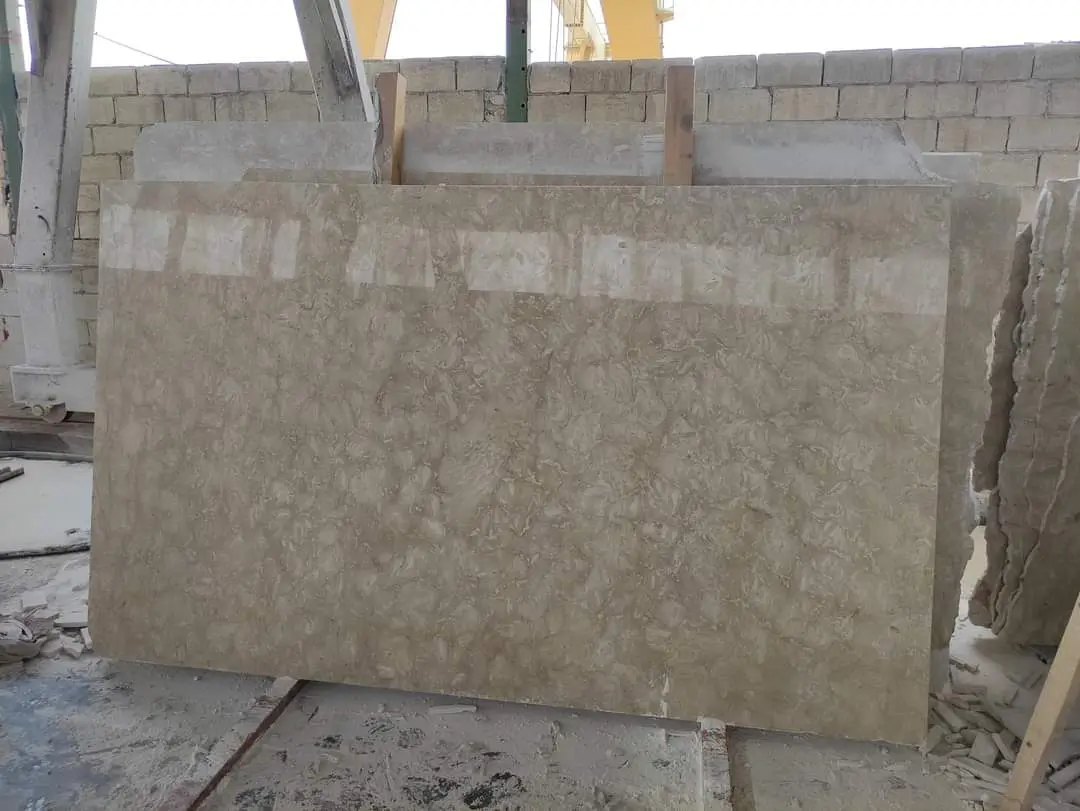
Reading Background Tone: The Variable Most Buyers Underestimate
Background tone is the foundation of your white granite selection decision — and it shifts more dramatically under different light sources than almost any other stone type. A slab that reads as pure white under the warehouse’s high-bay LED lighting can pull distinctly warm or cool once it’s installed under your client’s pendant fixtures. This isn’t a defect; it’s physics. The feldspar and mica crystals in white granite are highly reflective and respond to spectral changes in light that the human eye doesn’t consciously register until the stone is in place.
There are three primary background tones to evaluate when you’re learning how to choose white granite:
- Cool white: high quartz content, minimal mica, reads blue-white or grey-white under neutral and cool-spectrum lighting — pairs cleanly with chrome fixtures and cool-toned cabinetry
- Warm white: elevated cream feldspar, produces ivory or off-white background — softens under incandescent and warm-LED sources, suits traditional and transitional interiors
- Silver-white: visible mica fleck creates a shimmering background that shifts between cool and neutral depending on ambient light — demands careful sampling under the actual project lighting before committing
Your evaluation process should always include viewing samples under the project’s installed light sources — not showroom lighting, not outdoor daylight alone. Bring a slab sample to the site, hold it at counter height, and observe it under the specific fixtures that will illuminate it daily. That’s the only reading that counts.
Veining Patterns and What They Tell You About the Stone
Veining in white granite is fundamentally different from veining in marble. In marble, veining is metamorphic mineral recrystallization — it tends to be continuous, flowing, and pronounced. In white granite, veining is more accurately described as mineral banding or feldspar intrusion — the lines are typically shorter, less continuous, and more angular. Understanding that distinction changes how you spec the material for specific applications.
Veining density in white granite falls into three practical categories you’ll work with on most projects:
- Low movement: minimal visible banding, background dominates — suitable for seamless large-format applications where visual consistency across slabs matters
- Medium movement: moderate veining with visible mineral streaks, directional character — reads well on kitchen islands and feature walls where some visual interest is wanted without the drama of high-movement stone
- High movement: bold veining, strong directionality, sometimes with color contrast between background and vein minerals — requires careful slab matching on multi-slab installations and typically commands a premium
Veining scale also interacts with slab layout direction. High-movement slabs installed with veining running perpendicular to the longest counter edge create a very different visual result than the same material installed with veining running parallel. This is a specification detail that affects material quantities if bookmatching or flow-matching is required — factor it into your layout drawings before ordering.
Colonial White Granite: Performance Profile and Common Applications
Colonial white granite is one of the most consistently specified white granites in the North American market, and for practical reasons beyond aesthetics. Its background is a true white-to-light-grey base with black and burgundy mineral inclusions — that color complexity gives it visual depth without requiring high-movement veining, which makes slab matching considerably easier on large projects.
From a performance standpoint, colonial white granite delivers compressive strength typically in the 19,000–22,000 PSI range, which exceeds most project demands by a significant margin. Its absorption rate runs between 0.2% and 0.4%, which classifies it as low-porosity — important for kitchen countertop applications where acidic liquids are a daily reality. That said, it still requires sealing on initial installation and resealing every 2–3 years depending on use intensity.
The mineral speckle pattern of colonial white granite also makes it practical from a maintenance standpoint. Minor scratching and micro-chipping at edges is far less visible against the multi-tonal background than it would be against a uniform white or high-contrast stone. For high-traffic residential kitchens and commercial food-service countertops, that visual forgiveness is a legitimate performance consideration. ASTM C615 granite dimension stone standards provide the technical benchmarks for verifying that the colonial white granite you specify meets dimensional and quality requirements for your application.
White Granite Slabs: Sourcing, Quality Variation, and What to Check
White granite slabs from different quarry origins can look nearly identical in photographs and still perform very differently in the field. The quarry source affects mineral density, pore structure, background consistency across a slab lot, and the prevalence of natural fissures — those hairline structural separations that are characteristic of the stone and are not defects, but need to be accounted for during fabrication.
At Citadel Stone, we inspect slab lots at the point of receipt for fissure distribution, background consistency, and edge integrity before they reach warehouse inventory. This step matters because background tone can shift across a quarry run — two slabs from the same nominal lot can read differently if they come from different extraction depths. When specifying white granite slabs for a project requiring multiple slabs, confirming that your order ships from the same quarry run, not just the same commercial name, prevents the visual inconsistency that creates costly remediation on the finished installation.
For the Citadel Stone white granite slabs selection, sourcing details and slab lot information are available to help you make informed decisions before material ships. When planning project timelines, verify warehouse stock levels early — white granite with specific veining characteristics can be a limited-inventory item, and relying on in-stock availability without confirmation can push your schedule by 4–6 weeks if a new lot needs to be sourced.
Finish Selection and Surface Performance
The finish you specify on white granite affects far more than appearance — it changes porosity exposure, slip resistance, maintenance requirements, and how the stone responds to wear over time. Four finishes dominate white granite applications, and each has a specific performance context.
- Polished: closes the surface, maximizes reflectivity, enhances color depth and veining contrast — optimal for countertops and wall cladding where tactile contact is controlled
- Honed: matte surface, slightly more open pore structure than polished — requires more frequent sealing but eliminates the fingerprint and smear visibility that polished white granite shows immediately in kitchens
- Leathered: textured surface created by diamond brushing, adds dimensionality and tactile interest — slightly more forgiving in maintenance than honed, popular for kitchen islands and outdoor counters
- Flamed: high-heat thermal treatment that roughens the surface significantly — used almost exclusively for exterior flooring and steps where high coefficient of friction is the primary requirement
Honed and leathered finishes on white granite introduce a practical maintenance consideration worth communicating to clients upfront: the more open surface texture means oil-based stains penetrate faster. For kitchens producing olive oil, butter, and cooking fat contact with the stone surface daily, the initial sealing protocol should include two coats with a 24-hour cure between applications rather than the single coat typically specified for polished surfaces.
Durability Under Mechanical and Weather Stress
For exterior white granite applications — outdoor kitchen counters, patio surfaces, entry treads, or column cladding — the material’s response to mechanical stress from weather events is a specification factor that deserves direct attention. White granite’s compressive and flexural strength profile makes it one of the most resilient natural stone options for severe weather environments. Hail impact, wind-driven debris, and freeze-thaw cycling all test the material differently, and granite’s dense crystalline structure handles each of these stresses better than most sedimentary alternatives.
Freeze-thaw performance in particular separates granite from limestone and travertine on exterior applications. Granite’s absorption rate below 0.5% means water infiltration into the stone matrix is minimal — significantly reducing the risk of internal fracturing during freeze cycles. In freeze-thaw regions, this matters enormously for edge integrity on outdoor counters and coping where the stone’s exposed edge is in direct contact with standing water and temperature cycling simultaneously.
For exterior floor installations in storm-prone environments, the installation detailing around white granite slabs also affects long-term durability. Edge restraint strength matters — granite’s own mass and stiffness resist displacement under wind-driven rain if the substrate is properly prepared and joints are filled with a polymer-modified grout that maintains bond integrity through wet-dry cycling. Joint integrity under wind-driven rain is not a function of the stone itself but of the installation system around it. Spec your bedding mortar and grout system to the same standard as the stone, and you’ll get the full service life the material is capable of delivering. According to USGS granite production and construction use data, granite remains the dominant natural stone choice for high-durability exterior applications across all climate categories in the United States — a pattern driven directly by its mechanical performance under stress.
Thickness Specification and Structural Requirements
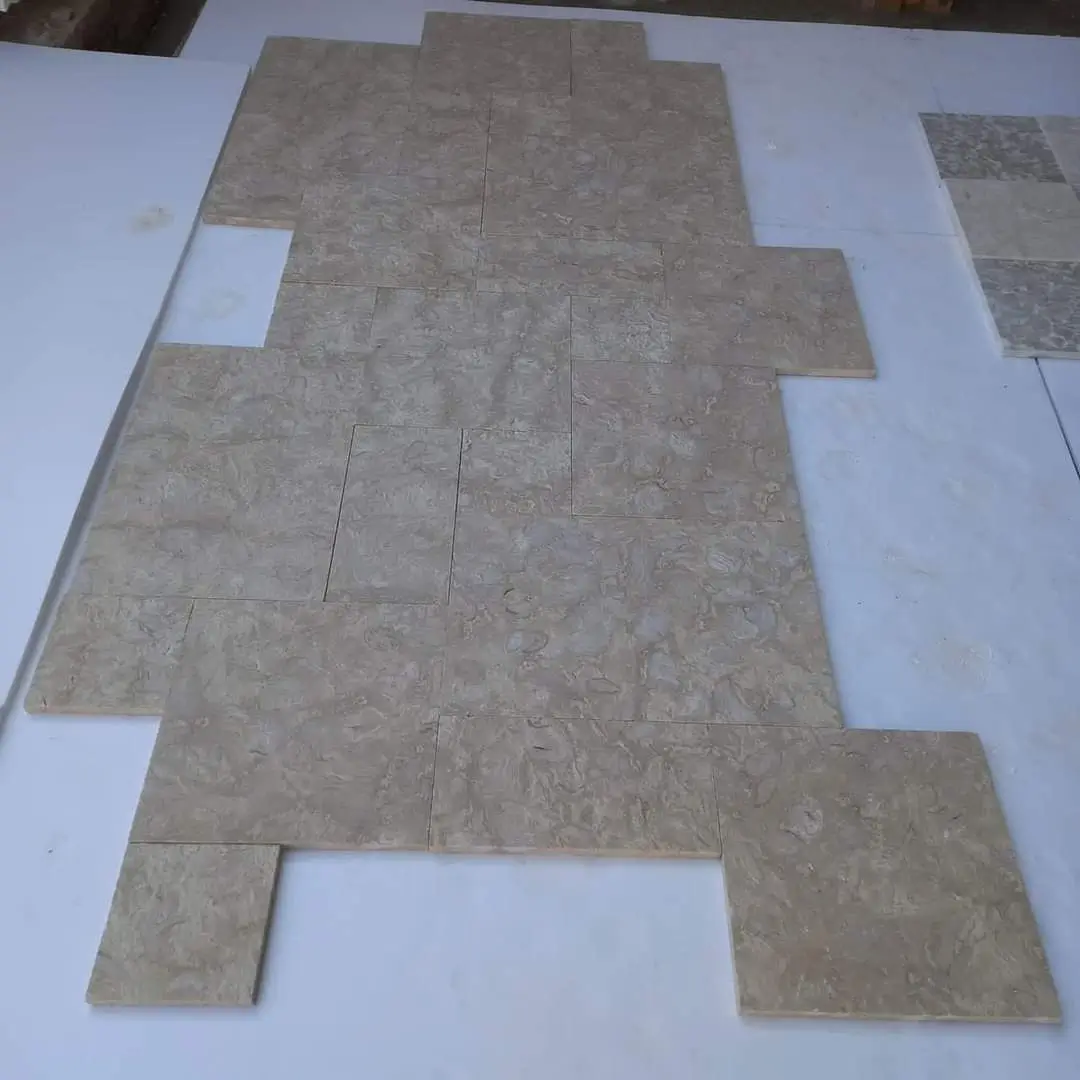
Thickness is the specification variable that most buyers decide by convention rather than engineering — 3 cm for countertops, 2 cm for wall cladding, and that’s where the thinking stops. The reality is more nuanced, particularly for white granite slabs with significant veining or visible fissures, which require thickness adjustments to maintain flexural strength at the spans your layout requires.
Standard white granite countertop slabs at 3 cm (approximately 1.25 inches) will handle typical unsupported spans up to 24 inches without additional substrate support. Beyond that span — common on large waterfall islands with cantilevered sections — you need either a 4 cm slab, a structural substrate beneath the overhang, or a steel angle support concealed within the cabinetry. The fabricator should confirm this, but the specification responsibility starts with you at the design stage.
For exterior floor applications, 3 cm thickness is the practical minimum for pedestrian-loaded paving. On vehicular or high-point-load applications, 4 cm is more appropriate. The NSI provides technical guidance on granite application specifications and durability standards that support thickness decisions across different load categories. White granite slab dimensions from reputable suppliers are typically available in both 2 cm and 3 cm from warehouse stock, with 4 cm available as a special order item — confirm availability before finalizing your specification if you’re working to a tight project timeline.
Matching Slabs Across a Multi-Slab Installation
The specification challenge that produces the most field callbacks on white granite projects isn’t the material itself — it’s slab-to-slab matching. White granite’s background tone variation and veining movement mean that two slabs nominally from the same material can read as noticeably different once installed side by side. This is especially visible on large kitchen configurations with multiple countertop runs, or on feature walls where two or more slabs need to read as a continuous surface.
There are three matching strategies that work in practice, depending on your project’s visual requirements:
- Book matching: two adjacent slabs are opened like a book to create a mirrored veining pattern — requires sequential slabs from the same extraction block and fabricator coordination
- Flow matching: slabs are selected to continue veining direction across seams without mirroring — less dramatic than book matching but easier to achieve without sequential slabs
- Tone matching: slabs selected for background tone consistency rather than veining alignment — the practical choice when veining movement is low and visual consistency is the primary goal
Citadel Stone’s technical team can assist with slab selection for multi-slab installations by identifying inventory lots with consistent background tone, which is the starting point for any matching strategy. This kind of material consultation before a delivery is scheduled prevents the alternative — discovering a tone mismatch on the job site when the slabs are placed side by side for the first time.
Sealing Protocols and Maintenance Expectations
White granite’s relatively low porosity compared to marble and limestone doesn’t eliminate the need for sealing — it changes the sealing interval and the product specification. For polished white granite countertops, a penetrating silicone-based sealer applied at initial installation and refreshed every 2–3 years under normal kitchen use is the baseline protocol. The visual water-bead test is your field confirmation: drop water on the surface — if it beads immediately, the sealer is performing; if it absorbs within 4 minutes, you’re overdue for resealing.
Honed and leathered finishes require more frequent attention — typically annual resealing in active kitchens. The increased surface texture creates more sealer contact points but also more exposure pathways for oils and acids. For projects where maintenance compliance is uncertain, a factory-applied impregnating sealer can extend initial protection intervals, though it’s not a substitute for the owner’s ongoing maintenance responsibility.
Communicating maintenance expectations to end-users before project completion is a professional obligation that protects both the client and your specification. White granite that has been left unsealed for 18 months in a working kitchen can develop oil-saturation staining that requires professional poultice treatment to address — a cost and disruption that a proper maintenance schedule would have prevented entirely.
Making the Right White Granite Specification
The most reliable path through how to choose white granite is to evaluate the material on performance criteria first and aesthetics second — not because appearance doesn’t matter, but because the slabs that satisfy both criteria simultaneously are the ones that deliver long-term client satisfaction. Background tone, veining density, finish type, thickness, and sourcing consistency each play a defined role in the final result. Miss one variable and you introduce a problem that no amount of maintenance can reverse. Get them all right and you’re specifying a material with the compressive strength, durability, and visual character to perform for 20 years or more without compromise. As you plan your stone project, related applications can inform broader material decisions — decomposed granite performance and common issues covers how a different granite-family material behaves in demanding conditions, offering useful context for anyone working across multiple stone types on the same property. Background tone and veining density vary significantly across white granite varieties, and Citadel Stone can provide slab samples to help buyers confirm how each option reads under their kitchen lighting.
Related reading: what type of stone is granite · Granite Countertop Cost Breakdown: What Drives Price? · Leathered vs Polished Granite: Which Finish Fits You?.