Granite’s position at the top of the igneous rock classification isn’t arbitrary — it’s a direct consequence of how the stone forms, and that formation process explains every performance characteristic you’ll encounter when specifying it. What type of rock is granite? It’s a coarse-grained intrusive igneous rock, meaning it crystallized slowly from magma deep beneath the earth’s surface under enormous pressure. That slow cooling process — sometimes taking millions of years — is precisely why granite develops the interlocking crystalline structure that delivers compressive strengths typically ranging from 19,000 to 30,000 PSI, making it one of the hardest natural building materials available to specifiers today.
Igneous Origin: What It Means for Performance
Granite forms when silica-rich magma cools slowly within the earth’s crust — a process geologists classify as plutonic or intrusive igneous formation. The slow cooling timeline, measured in millions of years at depths of several kilometers, allows mineral crystals to grow large enough to see with the naked eye. That’s why you can visually identify granite rock by its distinct grain structure: interlocking crystals of feldspar, quartz, and mica, typically 1–5 mm in size, distributed throughout the stone without layering or banding.
This crystalline architecture is what separates granite from sedimentary stones like limestone or metamorphic materials like marble. There are no planes of weakness created by sediment deposition, no foliation from directional pressure, and no calcium carbonate matrix that dissolves under acid exposure. Your specification benefits from a material that resists deformation under load, weathers without structural compromise, and doesn’t require the same pH-sensitive maintenance protocols as carbonate stones.
- Intrusive igneous formation produces uniform crystal distribution — no weak sedimentary layers or metamorphic foliation planes
- Compressive strength of 19,000–30,000 PSI outperforms most natural stone alternatives in load-bearing applications
- Silica content above 70% by weight gives granite its hardness rating of 6–7 on the Mohs scale
- Negligible porosity compared to limestone or travertine — water absorption rates typically below 0.4% by ASTM C97 testing
- Acid resistance superior to carbonate stones — quartz and feldspar crystals remain stable in low-pH environments
Mineral Composition: The Three Crystal Types That Define Granite Rock
The question of what type of stone is granite gets answered most precisely at the mineralogical level. Granite is defined by three primary mineral groups: feldspar (typically 50–65% by volume), quartz (20–35%), and mica (5–15%). The ratio between these three minerals determines color, texture, workability, and long-term performance — and it’s the variable that experienced specifiers scrutinize when reviewing slab samples from a granite quarry.
Feldspar dominates the visual appearance of most granite slabs. Orthoclase feldspar produces the warm pinks and creams in classic granite colorways, while plagioclase feldspar generates the white and grey tones. Quartz appears as glassy, translucent grains that contribute hardness and chemical stability. Mica — either biotite (dark brown/black) or muscovite (silver/gold) — creates the characteristic sparkle and influences how the stone responds to polishing and honing processes.
- High feldspar content (above 60%) correlates with warmer color ranges and slightly higher absorption rates at the crystal boundaries
- Elevated quartz content (above 30%) increases hardness but can make cutting and fabrication more demanding
- Biotite mica concentrations above 12% can create micro-scale cleavage planes that affect edge durability on thin-cut pavers
- Consistent mineral ratios throughout a slab indicate uniform quarry extraction — critical for large-format applications where color matching matters
- The presence of accessory minerals like hornblende or pyroxene in smaller percentages affects the dark-colored varieties commonly specified for commercial hardscape
According to NSI granite application specifications, the mineral composition of granite directly governs absorption, hardness, and surface finish retention across a range of installation environments. That technical foundation is what makes mineral-ratio verification a non-negotiable step before committing to a granite specification for any demanding project.
How Granite Differs from Other Igneous Rock Types
Not all igneous rocks perform the same way in construction applications, and understanding where granite sits within the igneous classification helps you make informed comparisons when evaluating alternatives. Igneous rocks divide into two major groups: intrusive (plutonic) rocks that cool slowly underground, and extrusive (volcanic) rocks that cool rapidly at the surface. What type of rock is granite within this framework? It belongs firmly in the intrusive category — alongside gabbro and diorite — while basalt, rhyolite, and obsidian represent the extrusive family.
The cooling rate difference is significant for specifiers. Basalt, a common extrusive alternative, cools quickly on the surface and develops very fine crystals or an amorphous glassy matrix. That results in higher density and excellent compressive strength, but lower visual texture variety and different thermal behavior. Granite rock’s slow-cooled crystal matrix gives it superior workability, allowing a wider range of surface finishes — from mirror polish to flamed and brushed textures — without compromising structural integrity.
- Granite (intrusive): coarse crystals, 19,000–30,000 PSI compressive strength, Mohs hardness 6–7, excellent finish versatility
- Basalt (extrusive): fine crystals, 25,000–35,000 PSI compressive strength, Mohs hardness 6–7, more limited finish range
- Gabbro (intrusive): similar formation to granite but darker mineralogy — often misidentified as black granite in the trade
- Rhyolite (extrusive): same composition as granite but rapid-cooled — unsuitable for structural applications due to glassy matrix brittleness
- Obsidian (extrusive): volcanic glass with the same silica content as granite but no crystalline structure — no commercial construction application
From Granite Quarry to Slab: How Extraction Affects Material Quality
Understanding the granite quarry extraction process matters more than most specifiers realize, because the method of extraction directly affects the structural integrity of the slab you receive on site. Modern quarries use diamond wire saws and controlled blasting to free large granite blocks — typically 3–6 meters in each dimension — from the quarry face. The key quality indicator is how cleanly the block separates from the parent rock mass.
Blocks extracted with excessive explosive force develop micro-fracture networks that aren’t visible to the naked eye but propagate under thermal cycling and load. The consequence shows up in fabricated slabs as irregular hairline cracks that appear 12–18 months after installation, particularly in freeze-thaw regions where temperature swings between day and night create repeated expansion and contraction cycles. For granite rock pavers used in exterior hardscape, this matters enormously — granite has a linear thermal expansion coefficient of approximately 4.4–8.5 × 10⁻⁶ per °C, and slabs with pre-existing micro-fractures fail faster under that cycling stress than intact material.
You can find granite slabs at Citadel Stone sourced from quarries with documented extraction protocols — a supply chain detail that separates structurally consistent slabs from material with hidden stress fractures that only reveal themselves years into the installation.
- Diamond wire extraction produces cleaner block faces and fewer micro-fractures than drill-and-blast methods
- Block dimensions affect yield — larger blocks allow wider slab formats and reduce the seam count in large-format installations
- Quarry depth influences mineral uniformity — deeper extraction typically yields more consistent feldspar and quartz distribution
- Primary versus secondary quarrying affects color consistency — secondary quarries working fractured outcrops produce more color variation between batches
At Citadel Stone, we perform visual and physical checks on incoming slab shipments specifically for micro-fracture patterns before material moves from warehouse storage to order fulfillment — a quality step that catches extraction damage before it reaches your project site.
Granite Rock Under Thermal Cycling and Freeze-Thaw Conditions
The igneous crystalline structure that makes granite so durable under load becomes a nuanced variable when you factor in temperature cycling. Granite’s low porosity — typically 0.2–0.5% absorption by weight — means freeze-thaw degradation is far less of a concern than with limestone or travertine, where water infiltrates pore networks and expands during freezing. But that doesn’t mean granite is immune to thermal stress. The relevant mechanism here isn’t water absorption — it’s the differential thermal expansion between granite’s three mineral components.
Quartz, feldspar, and mica each expand at slightly different rates when temperature changes. In granite rock slabs subjected to wide day-to-night temperature swings — a 40°F daily range is common in many continental climates — those differential micro-expansions create internal stress at crystal boundaries over time. The practical specification consequence is joint spacing: for exterior granite paving installations subject to significant thermal cycling, size expansion joints at a maximum of 12–15 linear feet rather than the 20-foot intervals sometimes suggested in generic paving guidance. The tighter spacing absorbs the cumulative thermal movement that builds up during seasonal extremes.
According to ASTM C615 granite dimension stone standards, the physical requirements for granite used in exterior applications include minimum modulus of rupture and absorption benchmarks specifically relevant to installations where temperature fluctuation is a design variable. Specifying to ASTM C615 gives your project a defensible performance baseline regardless of the thermal environment.
- Freeze-thaw resistance: granite’s sub-0.5% absorption rate limits ice crystal formation within the stone matrix — pass rates under ASTM C880 flexural testing remain high even after 50+ freeze-thaw cycles
- Thermal expansion management: calculate total panel expansion at 4.4–8.5 × 10⁻⁶ per °C × temperature range × panel length to size joints correctly
- Joint material selection matters as much as spacing — use polyurethane or silicone-based sealants that accommodate ±25% movement rather than rigid cement-based grouts
- Flamed or bush-hammered finishes perform better in severe freeze-thaw environments than polished surfaces, which can develop micro-spalling at crystal boundaries over extended cycling
- For installations spanning significant temperature ranges, verify that the setting bed mortar has a similar thermal expansion coefficient to granite — mismatches accelerate debonding at the bond line
Surface Finishes for Granite Rock: How Processing Changes Performance
The same granite rock slab can deliver five or six completely different performance profiles depending on the surface finish applied at the fabrication stage. This isn’t a cosmetic decision — it directly affects slip resistance, maintenance frequency, UV reflectance, and how thermal cycling affects the surface over time. Most specifiers understand the visual difference between polished and honed finishes, but the technical performance gaps between them are wider than the appearance difference suggests.
Polished granite achieves its mirror surface by closing the crystal boundaries at the surface through successive diamond abrasive stages, typically ending at 1800- or 3000-grit. The result is a surface with extremely low moisture absorption and excellent stain resistance — but a Dynamic Coefficient of Friction (DCOF) that drops below 0.42 when wet, which falls below the ANSI A326.3 minimum for wet-area specification. That’s a critical detail if you’re specifying granite rock pavers for pool surrounds, entry plazas with overhead coverage, or any surface where wet-foot traffic is predictable.
- Polished: DCOF typically 0.35–0.42 wet — not recommended for exterior wet zones; ideal for interior countertop and feature wall applications
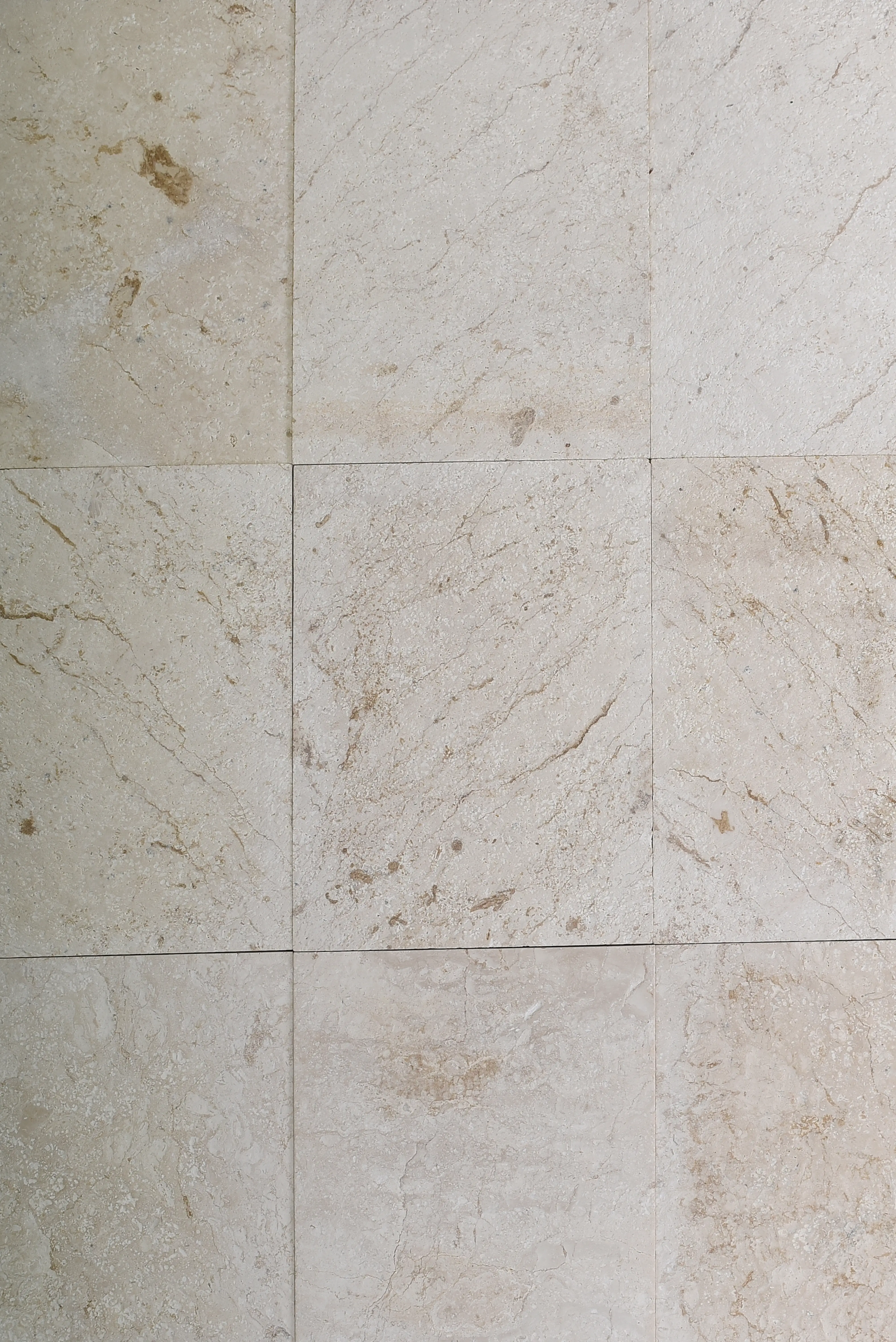
- Honed (400–800 grit): smooth, matte face — the standard specification for most exterior hardscape where appearance leads
- Flamed: coarse, open face — micro-texture from thermal shock creates the highest slip resistance; ideal for pool decks, ramps, and high-traffic public hardscape
- Brushed/Leathered: DCOF 0.50–0.65 wet — a textured surface that accentuates the crystal structure visually while maintaining exterior-grade slip resistance
- Bush-hammered: DCOF above 0.70 — industrial-grade texture, primarily specified for commercial plazas, loading areas, and heavy-traffic applications
Applying Granite Rock Geology to Hardscape Specification
Translating geological knowledge into a specification document requires bridging two languages — the petrographic and the practical. The granite quarry location, the mineral ratios in the specific batch, the extraction method, and the surface finish all combine to determine whether your granite rock installation delivers 20-year performance or begins showing stress at year eight. Here’s how the geological characteristics map to specification decisions.
Mineral ratio verification is your first checkpoint. Consistent feldspar, quartz, and mica ratios throughout a batch indicate uniform quarry depth and consistent slow-cooling conditions during formation. Inconsistent ratios — visible as color variation, uneven crystal distribution, or irregular veining — signal mixed-depth extraction. For large-format granite rock paving projects where slab-to-slab consistency matters aesthetically and structurally, request petrographic test data or at minimum a representative sample batch before approving a full order. Warehouse stock levels should be confirmed simultaneously to avoid batch changes mid-project.
Thickness is the second critical specification variable. The geological integrity of granite rock allows thinner profiles than sedimentary alternatives for equivalent load performance. For pedestrian hardscape, 20mm (¾ inch) nominal thickness handles standard foot traffic loads with appropriate base support. For vehicular applications, step up to 40mm (1½ inches) minimum — the increased thickness addresses both point load distribution and the edge-loading that occurs at vehicle tire contact zones. Your truck delivery logistics should account for the weight difference, as a full pallet of 40mm granite typically runs 2,500–3,500 lbs depending on format.
- Specify ASTM C615 compliance for exterior granite dimension stone to establish minimum absorption, flexural strength, and compressive performance requirements
- Request batch mineral ratio data — or at minimum a photographic batch sample — before approving orders for large-format or color-critical installations
- Confirm warehouse inventory for your full project quantity before submitting design drawings; mid-project batch changes create the color variation that clients notice and dispute
- Size expansion joints at 12–15 feet for exterior applications subject to daily temperature cycling greater than 30°F — do not default to the 20-foot generic guideline
- Specify joint sealant by movement capacity, not color match — a sealant that can accommodate ±25% movement protects the installation across seasonal thermal extremes
According to USGS dimension stone production data, granite consistently ranks as one of the most widely used natural dimension stones in construction applications across the country — a reflection of its performance consistency rather than simply its availability.
Color, Variety, and What Granite Rock Geology Tells You About Each
Color in granite isn’t a cosmetic trait applied to the surface — it’s a geological record of the original magma’s mineral chemistry and the conditions under which it crystallized. Understanding this connection helps you predict how different granite varieties will perform in service, not just how they’ll look in the showroom.
Pink and red granites derive their color from potassium feldspar (orthoclase), which typically correlates with higher silica content and slightly coarser grain structure. These varieties — often sourced from granite quarries in continental shield regions — tend to exhibit the highest compressive strengths and the broadest temperature resistance ranges. Grey and white granites are dominated by plagioclase feldspar and quartz, producing a denser, slightly finer grain that responds well to polishing and honing processes. Black granites — technically gabbros or diabases in most cases — contain pyroxene and olivine in place of the quartz-feldspar-mica triad, which gives them higher density but different thermal expansion characteristics than true granite rock.
- Pink/red granite: high orthoclase feldspar, coarse grain, 19,000–28,000 PSI — strong performer in high-load exterior applications
- Grey/white granite: plagioclase and quartz dominant, fine-to-medium grain, excellent finish retention — standard specification for countertop and interior applications
- Blue pearl / black granite (commercial term): typically gabbro or norite — denser than true granite, different thermal expansion coefficient — verify petrographic classification before specifying alongside true granite
- Multi-color or exotic granites: accessory mineral content produces dramatic patterns but can introduce inconsistency — request batch photos from warehouse stock before committing
- Bianco/white granites with visible dark biotite: mica content above 10% can affect edge durability in thin-format pavers — specify 30mm minimum thickness for exterior use
Decision Points
The geological classification of granite rock as a coarse-grained intrusive igneous material isn’t abstract knowledge — it’s the direct explanation for every specification decision you make when working with this stone. The slow cooling that built its crystalline structure is the reason for its compressive strength. The mineral composition determines its color, hardness, and finish options. The quarry extraction method predicts structural integrity in service. And the thermal expansion characteristics of its three mineral types set your expansion joint spacing in exterior applications. Every specification variable traces back to formation geology.
Your strongest granite specifications combine geological awareness with practical field verification: confirm mineral ratio consistency within your order batch, size joints for actual temperature cycling conditions rather than generic guidelines, match surface finish to wet-area safety requirements, and verify warehouse stock availability before locking in design dimensions. The installations that underperform almost always skipped one of those steps — typically the batch verification or the thermal joint calculation. Citadel Stone’s technical team is available to review specifications and confirm material consistency across full project quantities before your order ships. As you broaden your natural stone knowledge base, global granite and marble sourcing covers the import supply chain context that affects lead times and material traceability for large-scale projects. Understanding granite’s igneous origin helps explain why Citadel Stone selects quarried slabs with consistent feldspar, quartz, and mica ratios for hardscape and countertop applications.
Related reading: decomposed vs crushed granite · how to choose decomposed granite.