Global marble and granite importers operate in a procurement environment where the margin between a profitable project and a cost overrun often comes down to decisions made before a single stone ships. The import cycle for dimensional stone — from quarry reservation through container loading, ocean freight, customs clearance, and final delivery — routinely runs 10 to 16 weeks, and that timeline compresses your scheduling flexibility in ways most project budgets don’t adequately account for. Understanding how international sourcing actually works, from grading standards at origin to the warehouse receiving process on arrival, gives you a decisive advantage over buyers who treat stone as a commodity order.
How the Global Stone Trade Is Structured
The international stone market isn’t a single pipeline — it’s a layered network of quarry operators, processing facilities, regional consolidators, and forwarding agents, each adding margin and handling at their stage. Marble predominantly originates from quarrying regions in Turkey, Italy, Greece, Portugal, and India, while granite production is heavily concentrated in Brazil, China, India, and Spain. Your sourcing decisions start with understanding which origin point matches the specific material characteristics your project demands, not which origin is cheapest on paper.
Global marble and granite importers typically work through one of three procurement channels: direct quarry relationships, in-country consolidators who aggregate multiple quarry lots into container loads, or domestic distributors who’ve already cleared customs and hold warehouse inventory. Each channel has a different lead time, minimum order profile, and quality control exposure. Direct quarry sourcing offers the most control over block selection and slab grading but requires you to manage logistics coordination yourself or retain a freight forwarder with stone-specific experience.
Grading Standards and What They Actually Mean
One of the most consistent sources of dispute between global marble and granite importers and their overseas suppliers comes down to grading terminology that isn’t standardized the way buyers assume it is. Terms like “First Choice,” “Commercial Grade,” and “Standard” vary in meaning between Italian, Turkish, and Indian suppliers — sometimes dramatically. What an Italian processor grades as “Second Choice” may be functionally equivalent to what a Turkish processor labels “First Choice,” depending on the quarry’s internal standards and market expectations.
- Request photographic documentation of the specific lot before container loading — not catalog images of the material type
- Specify acceptable shade variation tolerance in writing using a reference slab or approved sample
- Clarify whether the grade standard applies to individual slabs or to the lot as a whole
- Confirm whether edge chipping, fissures, and fill repairs are acceptable under the quoted grade
- Establish a claims threshold — typically 3–5% of delivered pieces — above which the supplier absorbs replacement cost
According to Natural Stone Institute marble grades and technical specifications, classification systems for marble distinguish between soundness categories that directly affect slab stability during fabrication and installation. Understanding how your supplier’s grading maps to NSI categories saves you from receiving material that looks correct in photos but fractures at the wet saw.
Quality Inspection Before the Container Seals
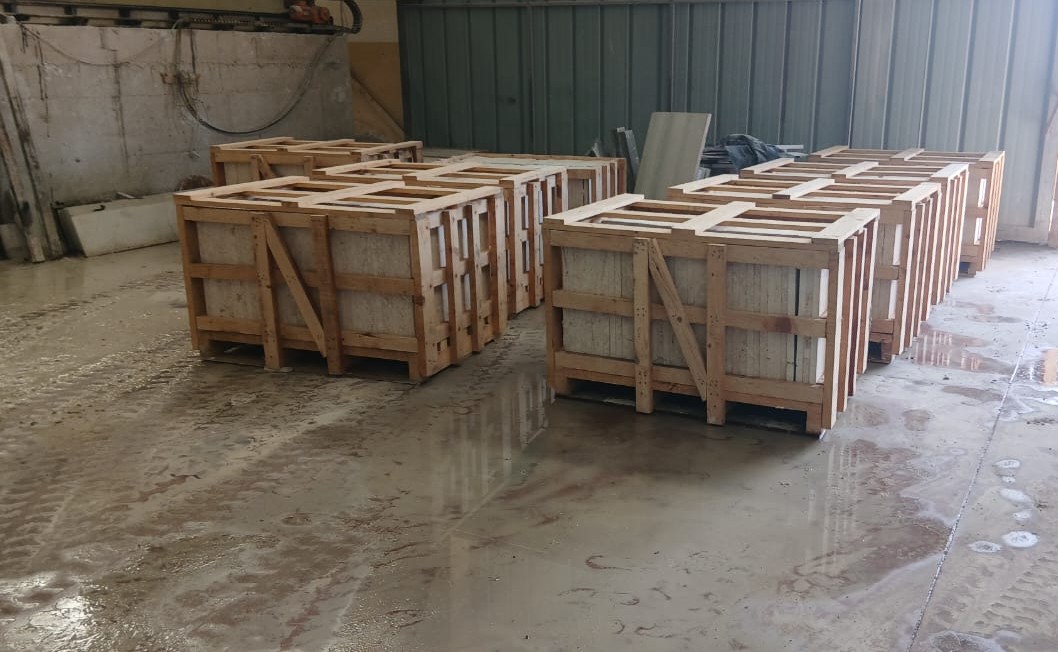
The single most effective risk mitigation tool available to global marble and granite importers is third-party inspection at the origin processing facility before the container is sealed. This step gets skipped more often than it should — typically because buyers underestimate the cost of receiving non-conforming material versus the modest cost of a pre-shipment inspection. A qualified stone inspector at origin can verify bundle counts, check slab dimensions against your purchase order tolerances, assess surface finish consistency, and identify packing deficiencies that will cause breakage in transit.
Packing quality is directly correlated with breakage rates. Slabs packed in A-frame timber bundles with foam interleaving and proper strapping arrive in materially better condition than slabs packed in crates that allow lateral movement. When your freight forwarder confirms the container is loaded, ask specifically whether the crates are braced against the container walls — unsecured crates in a 40-foot high-cube container can shift enough during ocean transit to cause edge damage on 30–40% of exposed pieces.
Freight Cost Structures and Regional Pricing Dynamics
Freight distance from the origin country directly determines the landed cost differential between material types, and this dynamic shapes budget decisions for global marble and granite importers in ways that aren’t immediately obvious from FOB pricing alone. A Brazilian black granite quoted at $18 per square foot FOB Santos carries very different landed economics than the same price point on Turkish marble FOB Izmir — ocean freight rates, port handling charges, and transit times all shift the effective cost by $3–7 per square foot depending on destination port and current shipping market conditions.
- Calculate total landed cost including ocean freight, marine insurance (0.35–0.55% of cargo value is typical), customs bond, import duty (currently 0–3.5% for most natural stone under HTS Chapter 68), and drayage to warehouse
- Compare freight cost per square foot against local material availability — domestically held inventory eliminates the import cycle cost entirely but may limit material selection
- Factor currency fluctuation into contracts denominated in euros or lira — a 5–8% currency move can eliminate your projected margin on a fixed-price project
- Regional trucking costs from the arrival port to your project site add $0.40–$1.20 per square foot depending on distance — longer inland hauls materially affect total budget
The material-to-labor cost ratio shifts significantly when you’re working with imported stone. Labor costs for fabrication and installation remain relatively fixed by your regional market, but material costs float with international dynamics. On high-complexity projects with extensive custom fabrication, labor can represent 55–65% of total installed cost — which means that a 15% reduction in material cost through direct importing has less impact on total project economics than most clients expect.
Container Logistics and Delivery Planning
Truck access constraints at the project site matter more than most buyers realize when planning stone deliveries from imported lots. A standard 40-foot container requires a minimum of 60 feet of clear approach for direct tailgate unloading, and residential or urban project sites frequently can’t accommodate this. Planning for a transloading step — where the container is unloaded at a warehouse facility and material is redistributed onto smaller trucks for final delivery — adds 3–5 days and $0.15–0.30 per square foot to your logistics cost.
Verify warehouse receiving hours and unloading equipment before scheduling container delivery. Stone shipments arriving at facilities without forklifts rated for bundle weights — marble slab bundles commonly run 4,500–6,000 lbs — create dangerous unloading scenarios and can result in container detention charges if the delivery appointment can’t be completed within the carrier’s free time window (typically 2 hours at commercial facilities). At Citadel Stone, we recommend confirming site logistics at least 30 days before expected arrival so truck routing, unloading equipment, and staging areas are confirmed well ahead of the delivery window.
Import Duties, Customs Documentation, and Compliance
The customs clearance process for dimensional stone imports requires accurate HTS code classification, and misclassification is more common than it should be. Marble tiles and slabs, granite pavers, and engineered stone all carry different HTS classifications with different duty rates, and the distinction between “tile” and “slab” under US Customs definitions doesn’t always align with how suppliers describe their products. Misclassification creates delays, potential penalties, and in some cases retroactive duty assessments that weren’t in your project budget.
- HTS 6802.91 covers marble, travertine, and alabaster in worked form — slabs, tiles, and cut-to-size pieces
- HTS 6802.93 covers granite in worked form — the classification that applies to most cut granite pavers and tiles
- Country-of-origin documentation must reflect the country where the stone was quarried and processed, not where it was consolidated or re-exported
- Antidumping duty orders periodically affect specific stone products from specific countries — verify current ADD/CVD orders for your material before finalizing sourcing decisions
For accurate product classification support, ASTM C503 marble building stone specifications provide the technical property definitions that align with US Customs dimensional stone product categories. Having this documentation on hand supports your customs broker’s classification decisions and demonstrates product compliance if questioned at entry.
Evaluating Overseas Suppliers Beyond the Catalog
Global marble and granite importers who limit supplier evaluation to catalog images and price sheets consistently encounter the same problem: material that photographs identically can perform very differently in fabrication and installation. Evaluating a supplier properly requires physical samples from the actual production lot, not reference samples from a previous production run. Natural stone varies between quarry blocks, and a supplier who can’t provide lot-specific samples before committing to a container order is a supplier who can’t guarantee consistency.
Production capacity verification matters on large-volume orders. A processing facility running 40 container loads per month for multiple buyers will prioritize customers with established payment relationships and consistent order history. New buyers ordering a single container are frequently placed lower in the production queue, which translates to delays that don’t appear in the quoted lead time. Ask specifically where your order falls in the production schedule relative to existing orders, and build a 2–3 week buffer into your project timeline regardless of the quoted date.
Reviewing a supplier’s quality management documentation — specifically whether they operate under ISO 9001 or an equivalent third-party quality certification — provides meaningful differentiation. Certified facilities maintain documented production and inspection records that can be audited if disputes arise, which is materially different from uncertified operations where quality control depends entirely on individual floor supervisors. ASTM C615 granite dimension stone quality standards provide the technical benchmarks you can reference in your purchase specifications to establish binding performance requirements.
Natural Stone Pavers in Imported Material Programs
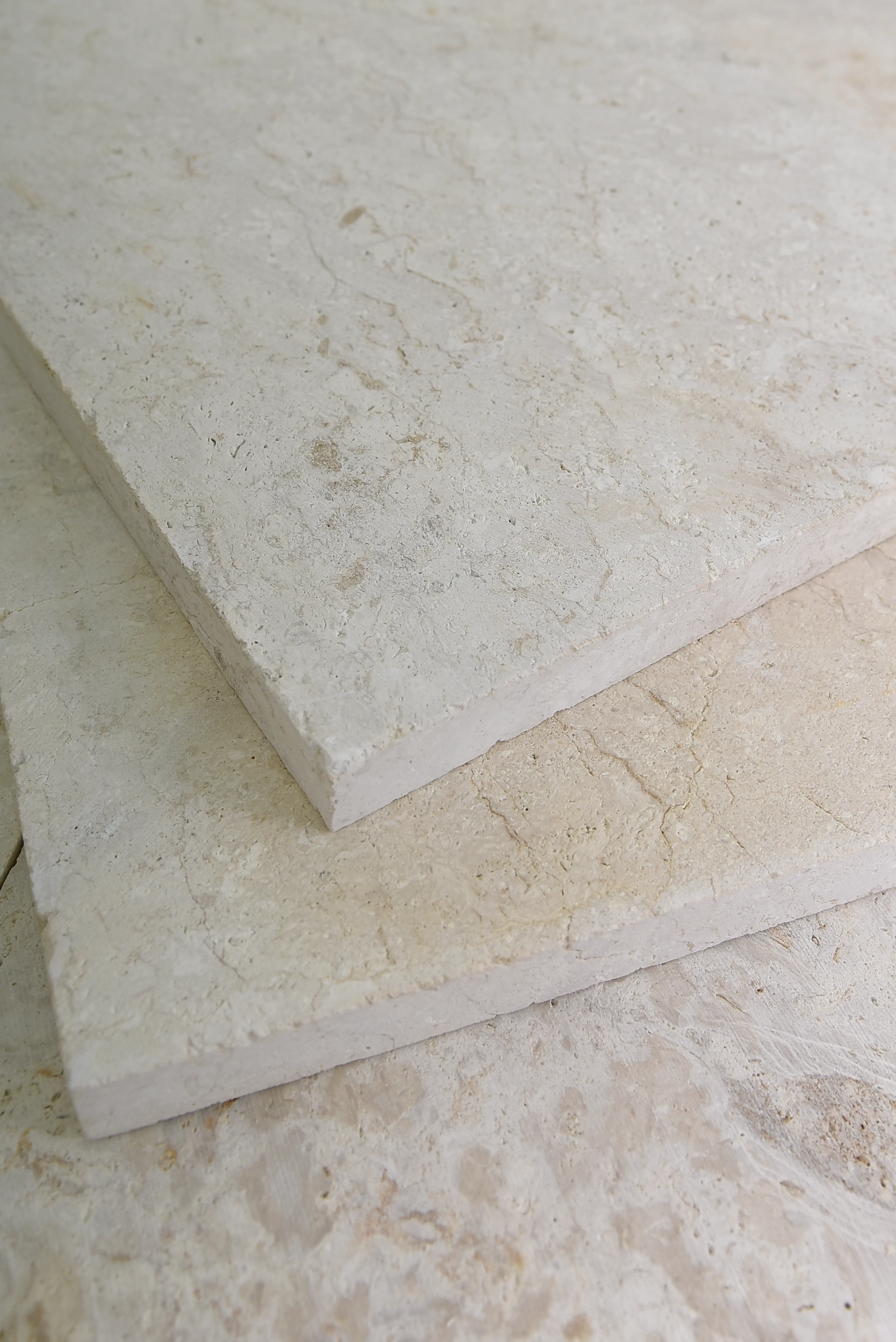
Natural stone pavers represent a significant share of the dimensional stone import market, and procurement decisions for pavers carry slightly different considerations than slab materials. Thickness consistency is the critical manufacturing variable — pavers specified at 1.25 inches nominal need to arrive within ±1/8 inch tolerance across the lot for dry-lay installations to work without excessive base adjustment. Wider thickness variation forces installers to hand-select and sort material on site, which adds substantial labor cost to your installation budget.
Confirm calibration method with your supplier — gang-sawn and calibrated pavers hold tighter dimensional tolerances than hand-split or tumbled finishes, but calibration adds processing cost and lead time. For natural stone pavers destined for high-traffic applications, verify that your specification includes compressive strength minimums consistent with the use case. Granite pavers typically exceed 19,000 PSI compressive strength, while softer marbles may fall in the 8,000–12,000 PSI range — a meaningful performance difference for driveway or heavy pedestrian applications.
Reviewing Natural Stone Institute granite durability and application specifications before finalizing your paver specification gives you the technical basis for writing enforceable quality requirements into your purchase order — rather than relying on vague grading terminology that leaves room for dispute after the container arrives.
Working With Domestic Distributors vs. Direct Import
The decision between importing directly and sourcing through a domestic distributor with existing warehouse inventory isn’t purely a cost calculation — it’s a risk management decision that depends on your project timeline, order volume, and tolerance for supply chain variability. Direct import typically reduces material cost by 20–35% compared to domestic distributor pricing on the same material, but it requires you to manage quality control, logistics, and customs clearance either directly or through retained specialists.
- Direct import makes economic sense for orders exceeding 500–600 square feet, where the cost reduction justifies the logistics overhead
- Domestic distributor sourcing reduces lead time from 12–16 weeks to 1–3 weeks for in-stock material — a critical advantage when project schedules are compressed
- Hybrid sourcing — bulk import for primary field material, domestic stock for cut pieces and replacements — balances cost efficiency with scheduling flexibility
- Verify that domestic distributors can provide lot matching documentation if you need to reorder — receiving material from a different quarry block that doesn’t color-match the original shipment creates expensive field problems
For projects where material availability and lead time certainty matter as much as unit cost, Citadel Stone material sourcing provides an alternative to the full import cycle, with warehouse inventory and national delivery logistics that reduce the typical procurement gap. Confirming available stock levels before committing to a project timeline is a straightforward step that eliminates one of the most common schedule disruptions in stone-intensive projects.
Final Considerations for Marble and Granite Importers
Global marble and granite importers who perform consistently well across multiple projects share one common practice: they build quality control checkpoints into the procurement process rather than concentrating all inspection at the receiving dock. By the time a container arrives at your warehouse, the leverage to address non-conforming material has already diminished substantially — re-export is impractical, supplier credit negotiations are slow, and project schedules don’t wait. The buyers who avoid costly receiving disputes are the ones who verified grading at origin, confirmed packing standards before the container sealed, and built realistic transit buffers into their project schedules from the start.
Budget planning for imported stone also benefits from a more granular total-cost model than most project estimators apply. Material cost per square foot is the number everyone quotes, but landed cost — inclusive of freight, duty, insurance, customs clearance, and final truck delivery — is the number that determines whether the project is actually profitable. Building that full cost model before committing to an import program, rather than discovering freight surprises midway through procurement, is the discipline that separates experienced importers from buyers who learn these lessons the hard way. As you extend your stone sourcing strategy to include border materials and complementary hardscape elements, black stone supplier selection criteria covers another dimension of sourcing decisions worth reviewing alongside your marble and granite program. Sourced from select natural stone quarries worldwide, Citadel Stone edging is graded on site before crating to reduce delivery breakage.
Related reading: How to Maintain Marble Edging Over Time · sintered stone suppliers · how to install edging stones.