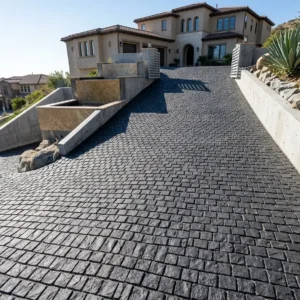
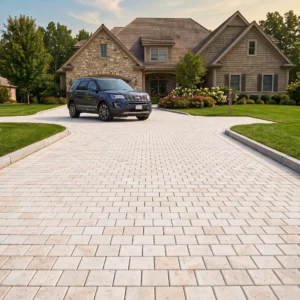
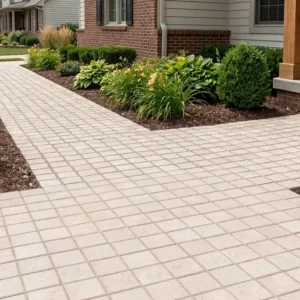
Knowing how to choose decorative stone comes down to one variable most buyers underestimate: the relationship between surface finish and long-term performance under real project conditions. Color and texture get all the attention at the selection stage, but the decisions that determine whether your installation looks sharp in year fifteen — or looks tired in year four — are made in the specification phase, before a single piece leaves the warehouse. The material category, finish type, stone density, and sealing schedule form a system, and each element affects the others in ways that only become obvious after you’ve watched enough installations age in the field.
What Decorative Stone Actually Means in Practice
The term “decorative stone” covers a wide spectrum — from loose crushed aggregate used as ground cover to dimensioned natural stone pavers set in mortar beds for walkways, garden borders, and feature areas. Your first task is narrowing down which category your project actually needs, because the selection criteria differ significantly across them. Loose stone is evaluated on gradation, angularity, and color retention. Dimensioned stone gets evaluated on density, absorption rate, freeze-thaw durability, and finish — a completely different matrix.
Decorative and crushed stone landscaping applications increasingly blend these two worlds. You might be running a compacted crushed granite pathway alongside a dimensioned flagstone border, and the performance requirements of each need to be matched to their specific role. Treating them as interchangeable is where a lot of project specifications go sideways. According to Natural Stone Institute stone variety specifications, each stone type carries distinct absorption, hardness, and weathering characteristics that directly determine application suitability.
Stone Type and Material Category: Starting the Right Way
The material category sets every other decision in motion. Limestone, granite, basalt, slate, and travertine each bring a distinct density range, pore structure, and surface chemistry. These aren’t aesthetic differences — they’re structural ones that affect how the stone responds to load, moisture, and surface wear over a decade of service.
- Limestone and travertine are calcium carbonate-based — reactive to acidic cleaners and fertilizers, but naturally cooler underfoot in sun-exposed areas due to lower thermal mass compared to igneous alternatives
- Granite delivers compressive strength in the 19,000–25,000 PSI range, making it appropriate for high-traffic zones and driveway borders where point load matters
- Basalt provides excellent hardness and a naturally tight pore structure, which reduces absorption and improves stain resistance in planting bed borders and edging applications
- Slate cleaves along natural planes, which gives it a textured surface that helps with traction — but also means edge chipping is a real field concern during installation and over time
- Sandstone flagstone carries higher absorption rates, typically 5–9%, which demands more aggressive sealing schedules in installations exposed to moisture and organic staining
Knowing where your material sits on the hardness and absorption spectrum gives you a defensible specification — one you can maintain and troubleshoot instead of guessing when problems appear. Understanding how to choose decorative stone at this level means treating material science as your primary filter before aesthetics enter the conversation.
How to Match Finish to Application
The finish choice is where decorative intent and functional performance intersect — and where projects most often get the balance wrong. Polished stone looks exceptional in interior settings, but in an outdoor landscaping context it can become a maintenance and safety liability within two seasons. Here’s the decision framework that holds up across material types:
- Honed finishes — matte, smooth, with a slight sheen — offer better traction than polished while still presenting a refined surface; suitable for pathways, patios, and feature areas with moderate foot traffic
- Tumbled finishes replicate natural weathering, with softened edges and a textured surface that provides excellent grip and hides minor wear; the right call for garden borders, stepping stone paths, and naturalistic designs
- Sawn or cut finishes give a clean, contemporary face with moderate texture; they work well in formal garden layouts and poolside borders where a precise joint line matters
- Brushed finishes add linear texture to a honed base, improving traction on wet surfaces without sacrificing the refined look — practical for areas that see occasional rain exposure
- Natural split or cleft finishes provide maximum texture variation; excellent for dry-laid paths and rustic designs, but the surface irregularity requires more careful base preparation to prevent rocking
The practical rule: the more exposed to foot traffic and moisture, the more texture your finish needs. Polished or highly refined finishes belong in sheltered, low-traffic decorative applications — not general-purpose landscaping installations.
Size, Thickness, and Structural Fit
Decorative stone sizing isn’t purely aesthetic — thickness determines load capacity, and that capacity needs to match what the installation will actually face. For dimensioned paving stone used in landscaping, the standard range runs from 3/4-inch nominal slabs for light decorative use up to 2-inch and 2.5-inch thick stock for walkways, stepping stones, and garden feature areas carrying regular foot traffic.
Your base preparation requirements scale with thickness. A 1-inch natural stone paver on a well-compacted 4-inch aggregate base handles residential pedestrian loads without issue. Push into vehicular or heavy equipment zones and your specification needs to step up to a minimum 2-inch paver thickness on a compacted 6-inch crushed aggregate sub-base. The ASLA permeable paving and landscape material guidance reinforces this load-to-base relationship as a core specification discipline, particularly where drainage and surface stability interact.
Decorative and crushed stone landscaping guide selections also need to account for panel size in relation to base stability. Large-format slabs — anything over 24 inches in either dimension — require a screeded mortar bed, not a loose sand setting layer, because the surface area amplifies any sub-base movement into visible joint cracking.
UV Exposure, Color Stability, and Sealing
Sun-exposed installations put colour retention and surface chemistry under real stress in ways that aren’t always apparent at the selection stage. UV radiation doesn’t uniformly bleach all stone types — it interacts differently with iron-rich minerals, calcium carbonate surfaces, and organic inclusions. Knowing what your specific stone does under sustained UV exposure helps you set realistic expectations and build the right maintenance schedule.
Sandstones and iron-rich granites will show surface oxidation over time — the iron compounds in the mineral matrix react to UV and oxygen, shifting warm buff tones toward a more washed appearance. Limestone and travertine typically hold colour better under UV, but their calcium carbonate surface can develop a subtle chalking in very high-UV environments if left unsealed. Dark basalt and slate tend to be the most stable under UV, but their surface colour will still appear richer and more saturated when sealed versus unprotected.
- Apply a penetrating impregnator sealer — not a topical coating — as your first protection layer; impregnators don’t alter the finish or create a film that peels, they sit within the pore structure and resist moisture and UV-driven oxidation from inside the stone
- For high-sun, fully exposed installations, plan a biennial resealing schedule at minimum; once every 18 months is better for lighter-coloured stones in full southern or western exposure
- Colour-enhancing sealers are a legitimate option for stones that look flat after UV exposure — they restore depth without creating an artificial sheen, but they do lock in a slightly enhanced tone, so test a small area before committing to the full installation
- Avoid topical acrylic sealers on outdoor decorative stone; they trap moisture below the film layer, which accelerates spalling in freeze-thaw regions and creates a peeling maintenance problem within 3–5 years
The finish you select at specification time also affects UV performance. Honed and tumbled finishes retain their original character better under UV exposure than polished surfaces, which show micro-scratching and dulling more prominently as the gloss layer weathers. If long-term appearance retention in a fully sun-exposed installation is a priority, a honed or brushed finish will age more gracefully than a mirror polish.
Drainage, Base Preparation, and Setting Method
The base is where the installation either holds together or eventually fails — and this is the part of the specification that gets compressed when project budgets come under pressure. Resist that compression. A premium stone surface on a marginal base is a short-term investment at best.
For mortar-set applications, a 3/4-inch to 1-inch full mortar bed on a concrete substrate provides the rigid plane that large-format decorative stone requires. For dry-lay or semi-dry applications — more common in informal garden contexts — a 1-inch compacted coarse sand setting layer over compacted aggregate gives you enough flexibility to handle minor freeze-thaw movement without cracking joints. The aggregate sub-base depth depends on your soil type: sandy, well-draining soils can support a 4-inch compacted base; clay-heavy soils need 6 inches minimum, with a geotextile fabric separator to prevent sub-base contamination over time.
Drainage geometry matters as much as depth. Your stone surface needs a 1/8-inch-per-foot minimum slope away from structures — 1/4-inch per foot in areas that collect rainfall from roof drainage. Getting this slope wrong is the leading cause of premature joint failure and efflorescence, because standing water behind or under decorative stone drives calcium carbonate migration to the surface. It’s preventable with correct initial grading.
Sourcing, Quality Checks, and Supply Lead Times
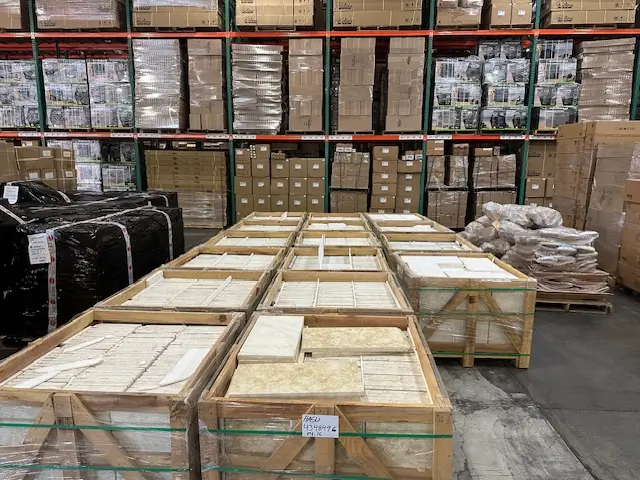
The sourcing side of how to choose decorative stone matters more than most buyers realise until a project is mid-stream. Stone is a natural material — colour, texture, and thickness can vary between quarry batches, even within the same product designation. The practical protection against mid-project variation is requesting samples from the specific warehouse lot that will supply your order, not generic product samples.
At Citadel Stone, we inspect incoming stone against thickness tolerances and surface quality standards before it moves into warehouse inventory — because field complaints about variation almost always trace back to inconsistent thickness or finish, not the stone type itself. Knowing the stock is pre-checked reduces the risk of a mixed-batch delivery creating visible inconsistency across your installation. For time-sensitive projects, confirming warehouse availability before finalising your project schedule prevents the 4–6 week delays that come with sourcing from import inventory that hasn’t cleared.
Explore the full range of options at Citadel Stone landscaping stone selection to match your project specification to available stock before committing to a timeline.
Lead times vary by product category. Common limestone and granite formats in standard dimensions are typically available from warehouse stock within 1–2 weeks. Custom cuts, large-format slabs, or specialty finishes may require 3–5 weeks depending on current demand. Build that window into your project schedule — starting the stone order after concrete work is poured is the single easiest way to compress the delivery window without compromising material quality.
Colour Selection and Long-Term Cohesion
Colour is where decorative stone decisions feel most personal — and where the most common regret shows up. The challenge is that stone looks different in a warehouse sample display than it does laid at scale, and it changes again after several months of UV exposure and weathering. Building a colour selection process that accounts for those variables reduces the risk of a result that looked great in samples but reads differently in the finished installation.
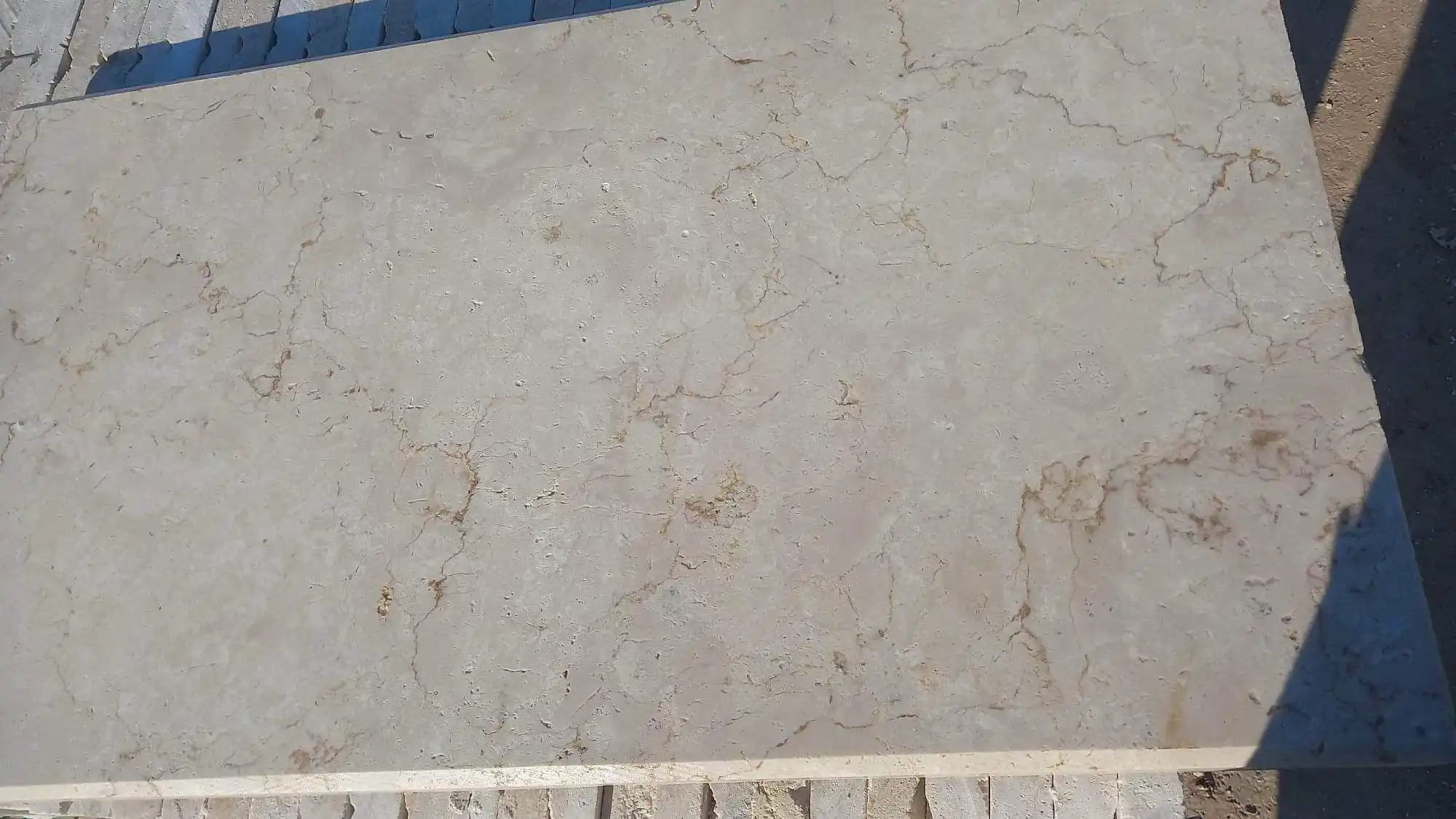
Field-test your colour selection by laying out a 4-square-foot dry arrangement from the actual lot you’re ordering, in the actual light conditions of your installation site, at the time of day the space is most used. The difference between morning and afternoon light on warm-toned limestone can be significant enough to shift a selection. Natural stone also appears different when wet — worth testing if your installation is in a location that sees regular rainfall or irrigation contact.
- Warm-toned materials — buff limestone, honey travertine, rustic sandstone — read warmer in morning light and cooler under midday sun; they work well against dark timber, aged brick, and green planting
- Cool-toned materials — grey granite, bluestone, dark basalt — maintain consistent appearance across light conditions, which makes them reliable in high-contrast design schemes
- Mixed or variegated stone adds natural movement to a design, but requires careful installation sequencing to distribute the variation evenly rather than clustering dark or light pieces
- Consistent grout or joint colour matters as much as stone colour — a light stone with a dark grey joint reads very differently from the same stone with a sand-coloured joint
Maintenance Expectations and Lifecycle Planning
Every decorative stone specification should include a realistic maintenance plan — not as an afterthought, but as part of the material selection decision itself. A stone that requires quarterly sealing and careful chemical management is the right choice for some projects and the wrong choice for others, depending on who will be responsible for ongoing upkeep.
Limestone and travertine are the highest-maintenance options in the natural stone family when it comes to chemical sensitivity — they need pH-neutral cleaners exclusively, and any contact with acidic fertiliser runoff, citrus-based cleaners, or even prolonged leaf decomposition will etch the surface over time. They’re beautiful materials and worth the care, but you need to know going in. According to USGS dimension stone production and construction use data, calcium carbonate stones remain among the most widely used natural stone categories in landscaping precisely because their appearance rewards proper maintenance so visibly.
- Granite and basalt are the lowest-maintenance options — dense pore structure means less sealer penetration required and more resistance to staining without regular resealing
- Sandstone and slate require vigilance around joint maintenance — their higher absorption rates mean organic material can establish in deteriorating joints and accelerate surface staining
- All natural stone benefits from annual inspection: check joint integrity, look for early efflorescence, and reseal any sections showing water absorption spots before they become staining pathways
- Pressure washing is appropriate for most natural stone at low to medium pressure — but avoid high-pressure direct-contact washing on softer stones like sandstone, which can erode the surface texture
Planning the maintenance schedule upfront — and communicating it clearly to the end user — is part of delivering a specification that performs as promised over a 20-plus year service life.
Decorative Stone Specification: Getting It Right
Getting how to choose decorative stone right comes down to treating the selection process as a system rather than a series of independent choices. Material category, finish type, base preparation, UV sealing schedule, and sourcing timeline all interact — and a gap in any one of them will eventually show up in the installed result. The strongest specifications are the ones that make those interactions explicit from the start, so the installation team, the project manager, and the end user all understand what the stone needs to perform at its best. Your project’s stone selection decisions also have implications beyond the primary surface — as you develop the broader hardscape specification, it’s worth reviewing how faux and real stone compare to confirm that natural stone is the right call across every element of the design. Matching aggregate gradation to the drainage requirements of a driveway or planting bed is a key selection step that Citadel Stone product specialists routinely help buyers navigate.
Related reading: manufactured vs natural stone veneer · engineered vs natural stone · sintered stone vs quartz.