A granite outdoor bench doesn’t just hold weight — it holds its form across decades, which is why specifiers keep coming back to it when the brief demands permanence over convenience. Granite’s compressive strength typically ranges from 19,000 to 25,000 PSI depending on variety, and that structural density is what separates a bench that looks the same in year twenty as it did in year one from a cast concrete alternative that’s spalling by year seven. The ideas below aren’t about picking a color — they’re about understanding how different design configurations, profiles, and placements interact with the material’s actual physical properties so your finished installation performs as well as it looks.
Why Granite Suits Outdoor Bench Design
Granite’s igneous origin means it cooled slowly under enormous pressure, producing an interlocked crystalline matrix with virtually no internal voids. That structure translates directly into outdoor bench longevity — moisture absorption rates typically fall between 0.1% and 0.4%, which means freeze-thaw cycling that cracks porous sedimentary materials barely registers on granite. According to NSI granite durability specifications, granite’s low absorption and high modulus of rupture make it one of the most reliable dimension stones for exposed exterior applications.
You’ll also appreciate how granite handles thermal load. Surface temperatures on a granite outdoor bench rise and fall with sun exposure, but the material’s thermal expansion coefficient of roughly 4.4 × 10⁻⁶ per °F means dimensional changes across a typical bench length are negligible — usually under 1/16 inch over an 8-foot span. That predictability is why you can design tight, refined joints without worrying about cracking pressure building up over time.
- Compressive strength 19,000–25,000 PSI across most commercial granite varieties
- Absorption rates 0.1–0.4%, resisting moisture intrusion in all seasons
- Thermal expansion coefficient approximately 4.4 × 10⁻⁶ per °F — minimal dimensional shift
- Mohs hardness 6–7, highly resistant to surface abrasion and weathering
- No organic content — immune to rot, insect damage, and biological degradation
Design Configurations Worth Considering
The slab bench is the most straightforward expression of the material — a single thick granite piece (typically 3 to 4 inches nominal) supported at each end by granite legs, stacked block supports, or embedded steel brackets. Your seat surface benefits enormously from a thermal or flamed finish here rather than polished, because polished granite becomes slippery when wet and the thermal texture gives you a COF above 0.6 even under rain. The slab configuration also makes the material’s natural veining and crystal patterns the visual centerpiece, which works particularly well in garden settings where the granite outdoor bench is a focal element rather than background furniture.
Cantilevered wall-mount designs offer a cleaner architectural profile. Here, granite bench slabs — typically 2 to 2.5 inches thick — project from a masonry or concrete wall with structural supports anchored into the substrate. You’re relying on the granite’s flexural strength (usually 1,500–2,500 PSI for granite dimension stone) rather than just compressive resistance, so thickness matters more than you might initially spec. The ASTM C615 standard for granite dimension stone defines the flexural and absorption benchmarks that cantilevered applications should meet — it’s a useful reference when you’re specifying granite outdoor bench slabs for wall-mounted configurations.
- Slab bench: single piece, 3–4 inches thick, supported at ends — maximum visual impact
- Cantilevered wall bench: 2–2.5 inch slabs with anchored brackets — clean, modern profile
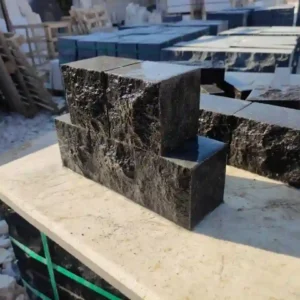
- Stacked block bench: granite block pedestals with slab seat — traditional garden aesthetic
- Integrated planter bench: granite seat combined with stone planter wall — dual-function design
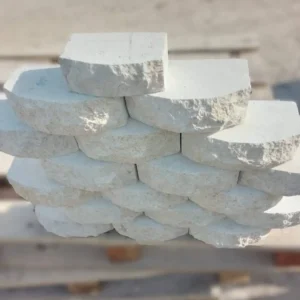
- Curved bench segments: radiused granite slabs for circular garden features or amphitheatre layouts
Granite Color and Finish Selection for Outdoor Benches
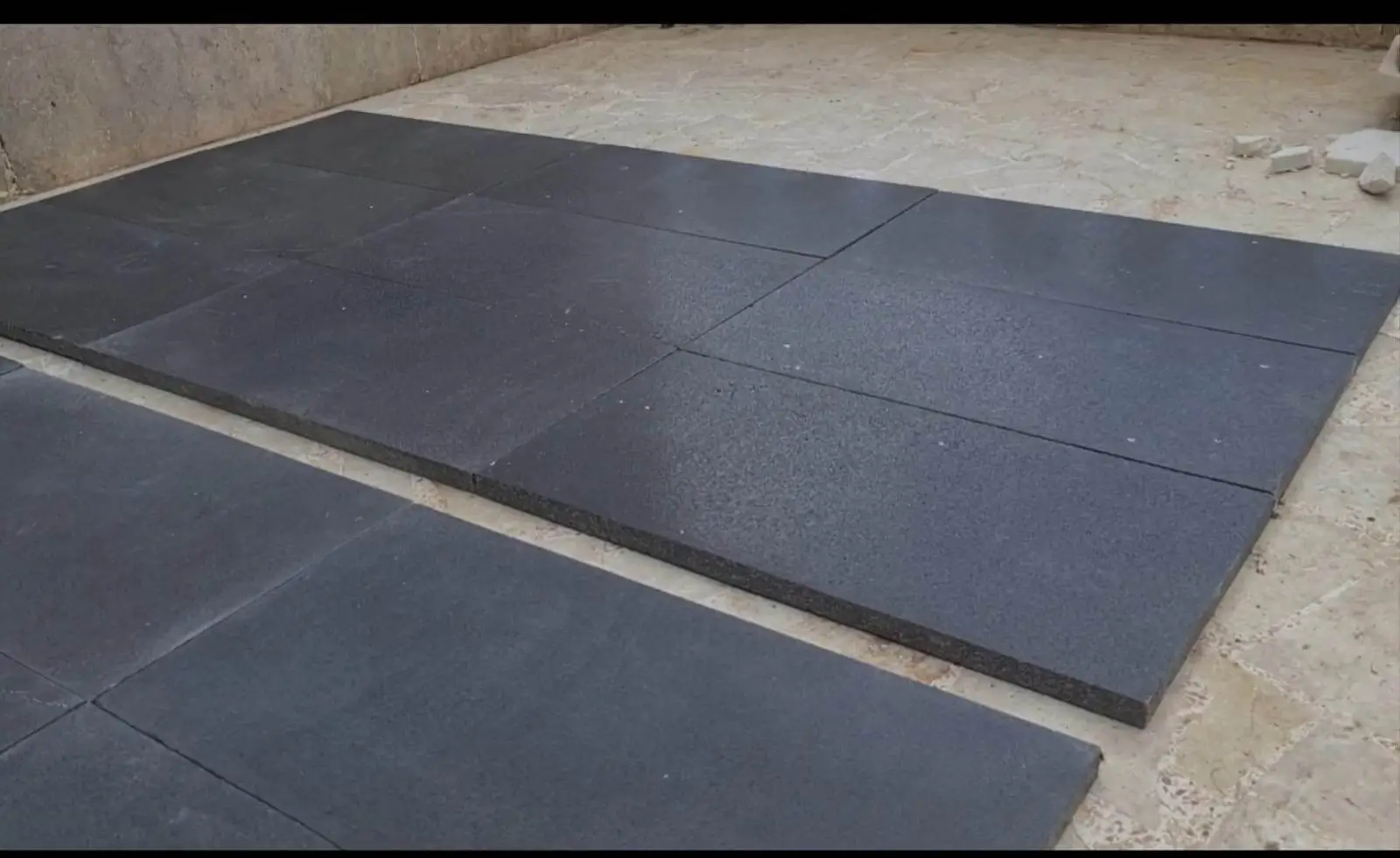
Color selection for a granite outdoor bench is less about aesthetics in isolation and more about how the material reads against your surrounding hardscape. Dark granites — black, charcoal, and deep grey — absorb more solar radiation and can become uncomfortable to sit on during peak afternoon sun exposure in warm seasons. Lighter varieties such as silver grey, salt-and-pepper, or white granite reflect significantly more radiation and stay cooler to the touch. That’s not a minor detail when the bench sits in full sun — surface temperature differentials between dark and light granite can exceed 30°F on a clear summer afternoon.
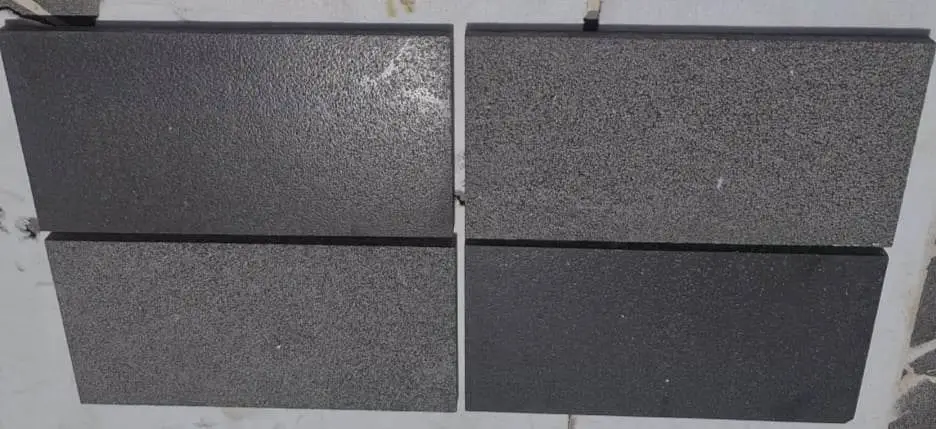
Finish selection is equally functional. Thermal (flamed) finishes open the crystal structure slightly, creating a textured surface with excellent slip resistance and a matte aesthetic that weathers gracefully. Bush-hammered finishes go a step further in texture depth. Honed finishes offer a smooth, satin surface with moderate slip resistance — acceptable for seat surfaces, better for bench legs and bases where wet exposure is lower. Polished finishes belong on indoor applications; outdoors, they require regular maintenance to preserve their appearance and become a slip liability in wet conditions.
- Thermal/flamed: best slip resistance, matte texture, weathers naturally — recommended for seat surfaces
- Bush-hammered: pronounced texture, COF typically above 0.7, traditional character
- Honed: smooth, matte sheen — acceptable for vertical faces and bench legs
- Polished: not recommended for exposed horizontal bench seats outdoors
- Light colors (silver, white): cooler surface temperatures, reads well against darker hardscape
- Dark colors (black, charcoal): dramatic visual impact but higher heat absorption in sunny locations
Subgrade and Ground Preparation for Granite Bench Footings
Your bench’s foundation matters far more than most designers acknowledge during concept phase. Freestanding granite outdoor benches — particularly slab designs with leg supports — concentrate significant point loads on a small footing area. A 300-pound granite slab bench with two leg supports concentrates that load over perhaps 16 square inches of contact per leg. Sandy or well-draining soils generally handle this without issue, but expansive clay soils present a real problem: seasonal moisture changes cause volume shifts of 10–15% in heavily clay-laden subgrades, and that movement translates directly into tilting, cracking, or bench leg separation over time.
Caliche subgrades — common in arid regions — create a different challenge. The hardpan layer can be nearly impossible to penetrate with standard footings, and if you don’t break through to stable soil below, you’re essentially placing your bench on a brittle, shallow shell. Rocky subgrades on the other hand are often excellent for granite bench installations because the footing loads transfer to natural bedrock. The key across all soil types is ensuring your concrete pad footings extend to undisturbed subgrade, typically 12–18 inches below finished grade, and that you use a 4-inch compacted gravel base layer beneath any poured footing to facilitate drainage and prevent frost heave in freeze-thaw regions.
- Expansive clay: use isolated concrete footings 12–18 inches deep, treat with gravel drainage layer
- Sandy soil: compact thoroughly before pouring — loose sand consolidates under repeated load
- Caliche hardpan: break through to stable subgrade, do not rely on hardpan surface alone
- Rocky subgrade: ideal load-bearing condition — footings can be shallower where bedrock is confirmed
- All footing types: 4-inch compacted crushed stone base beneath concrete for drainage and freeze protection
Sizing and Proportion Guidelines
Standard seat height for outdoor benches runs 17–19 inches from finished grade to the top of the seat surface. Granite slab seats below 3 inches nominal thickness in a freestanding configuration risk flexural failure under point loading — particularly in longer spans. The safe rule of thumb for unsupported granite seat spans is no more than 4 feet between support points at 3-inch nominal thickness. Push that span to 6 feet without an intermediate support and you’re relying on a flexural strength calculation that the USGS dimension stone production data would classify as design-critical — a structural engineer should confirm that spec before it leaves the drawing set.
Seat depth of 16–18 inches works for most adult proportions and allows comfortable use without the overhang creating a cantilever problem. Consider back support if the granite outdoor bench design incorporates an upright stone element — granite backs require robust anchoring into the seat slab or a separate footing system, as the lateral force from a leaning adult is not trivial at the connection point.
Granite Outdoor Bench Ideas for Garden and Patio Settings
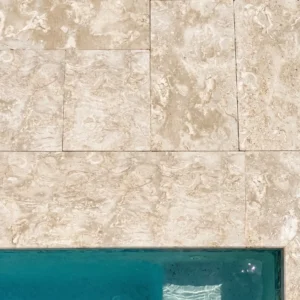
The most compelling garden bench installations use the granite outdoor bench as a visual anchor — a point where the eye settles before moving to surrounding planting. Positioning works best when the bench faces a focal feature: a water element, a specimen planting, or a framed view. For patios, integrating the bench into a low retaining wall or raised planter creates a unified hardscape composition. Connecting the granite bench to the broader material palette reads as intentional design rather than furniture placed after the fact.
At Citadel Stone, we source our granite bench material directly from quarries with strict dimensional tolerancing, and our technical team can advise on matching bench stone to adjacent paving material so your project reads as a cohesive installation rather than mismatched stone tones. For projects where bench and paving come from the same granite variety, you’ll want to confirm that our granite bench material is available in the thickness profiles your design requires before finalizing your specification.
- Garden focal point: position bench facing a specimen tree, water feature, or framed landscape view
- Integrated patio bench: build into low planter wall for a unified hardscape composition
- Pathway punctuation: place benches at path intersections or destination nodes in larger gardens
- Courtyard perimeter: continuous or segmented granite benches define and contain outdoor room space
- Amphitheatre seating: curved radiused granite slabs create tiered landscape seating for entertaining areas
Maintenance and Long-Term Care
Granite outdoor benches are among the lowest-maintenance stone applications in the landscape — but that doesn’t mean zero maintenance. Thermal and flamed surfaces are generally too textured to seal effectively, and the open grain actually benefits from annual cleaning with a pH-neutral stone cleaner to prevent organic matter — algae, lichen, debris — from colonizing the surface texture. Honed surfaces benefit from a penetrating silane or siloxane sealer applied at initial installation and reapplied every 3–5 years, which reduces moisture absorption and keeps the surface easier to clean.
The detail that causes most long-term problems in granite bench installations isn’t the stone itself — it’s the connection hardware. Stainless steel anchors and brackets are mandatory in exposed exterior conditions. Standard galvanized hardware corrodes within 5–8 years in most climates, and the expanding rust deposits in the stone’s drill holes create internal stress fractures that are extremely difficult to repair without replacing the affected section. Specify 316-grade stainless steel for any embedded fasteners, brackets, or wall anchors in your granite bench assembly.
Ordering, Logistics, and Lead Times
Granite bench slabs ship as dimension stone, and your project timeline needs to account for fabrication as well as transit. Custom-cut bench slabs — particularly those requiring radiused profiles, drilled holes, or edge profiling — typically add 2–3 weeks to lead time beyond a standard cut-to-size order. Citadel Stone carries warehouse stock in the most common granite bench profiles, which can reduce your lead time significantly compared to sourcing a full fabrication order from scratch. Confirm warehouse availability early in your project timeline, as stock on thicker bench slabs (3 inches and above) turns over quickly on larger landscape projects.
Truck delivery for granite bench slabs requires site access assessment — a standard flat-bed or boom truck typically needs a 12-foot clear access width and a firm surface capable of supporting a loaded vehicle. Soft ground conditions near your installation site may require crane-off delivery to a staging point, with manual or equipment-assisted placement from there. Build that logistics detail into your site planning early, particularly on garden projects where access routes are constrained by existing planting or structures.
Before You Specify a Granite Outdoor Bench
Your granite outdoor bench specification should resolve four variables before materials are ordered: seat surface finish (thermal for maximum slip resistance, honed for refined aesthetics in covered or shaded placements), slab thickness relative to unsupported span (3 inches minimum for spans up to 4 feet freestanding), connection hardware specification (316 stainless steel throughout), and subgrade preparation protocol based on your soil conditions. Miss any one of these and you’re either ordering a revision or managing a warranty call in year three.
The visual ideas — the configurations, the color palettes, the integration strategies — are the creative starting point, but the specification decisions made quietly in the background are what determine whether your granite outdoor bench looks as good in year fifteen as it did on installation day. Beyond the bench itself, your property’s full hardscape picture matters too: white granite driveway options explore how the same material family performs across a completely different application and scale. Stone for nationwide projects like a granite outdoor bench ships from internationally sourced quarries with natural finishes ready to install.
Related reading: black granite stone outdoor use · how to choose landscaping granite · decomposed granite driveway problems.