What Granite Actually Is — and Why It Matters for Specification
Granite construction basics begin with a fact most buyers gloss over: granite is an intrusive igneous rock, meaning it cooled slowly beneath the earth’s surface under enormous pressure. That slow crystallization is precisely why you get the interlocked mineral matrix — quartz, feldspar, mica, and hornblende — that makes the material so dimensionally stable once quarried. You’re not buying a sedimentary layer that can delaminate or a metamorphic stone with directional cleavage planes. You’re buying a rock that already survived millions of years of geological stress before it reached your project.
The practical consequence for buyers is that granite’s compressive strength typically exceeds 19,000 PSI, and its modulus of rupture runs between 1,500 and 2,000 PSI depending on mineral composition. These aren’t marketing numbers — they’re the reason granite pavers and slabs handle vehicular loads, heavy foot traffic, and repeated freeze-thaw cycles without the flexural cracking that plagues softer alternatives. According to Natural Stone Institute granite durability and application specifications, the material’s low absorption rate — typically below 0.4% — is equally important, because it limits the water ingress that drives frost damage in cold climates. Understanding these baseline properties is where every informed purchasing decision starts.
Mineral Composition and How It Drives Color Variation
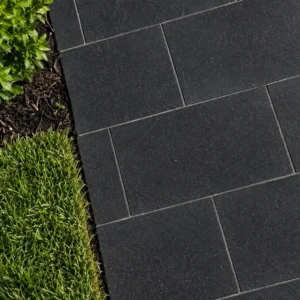
Your granite’s color isn’t decorative chance — it’s mineralogy. High feldspar content pushes slabs toward pinks and warm grays. Elevated quartz concentrations produce cooler, silver-toned surfaces. Biotite mica introduces the black flecks that give many popular granite varieties their depth, while hornblende drives darker green and charcoal tones. Understanding this linkage helps you predict how a slab will behave over time, not just how it looks in a showroom.
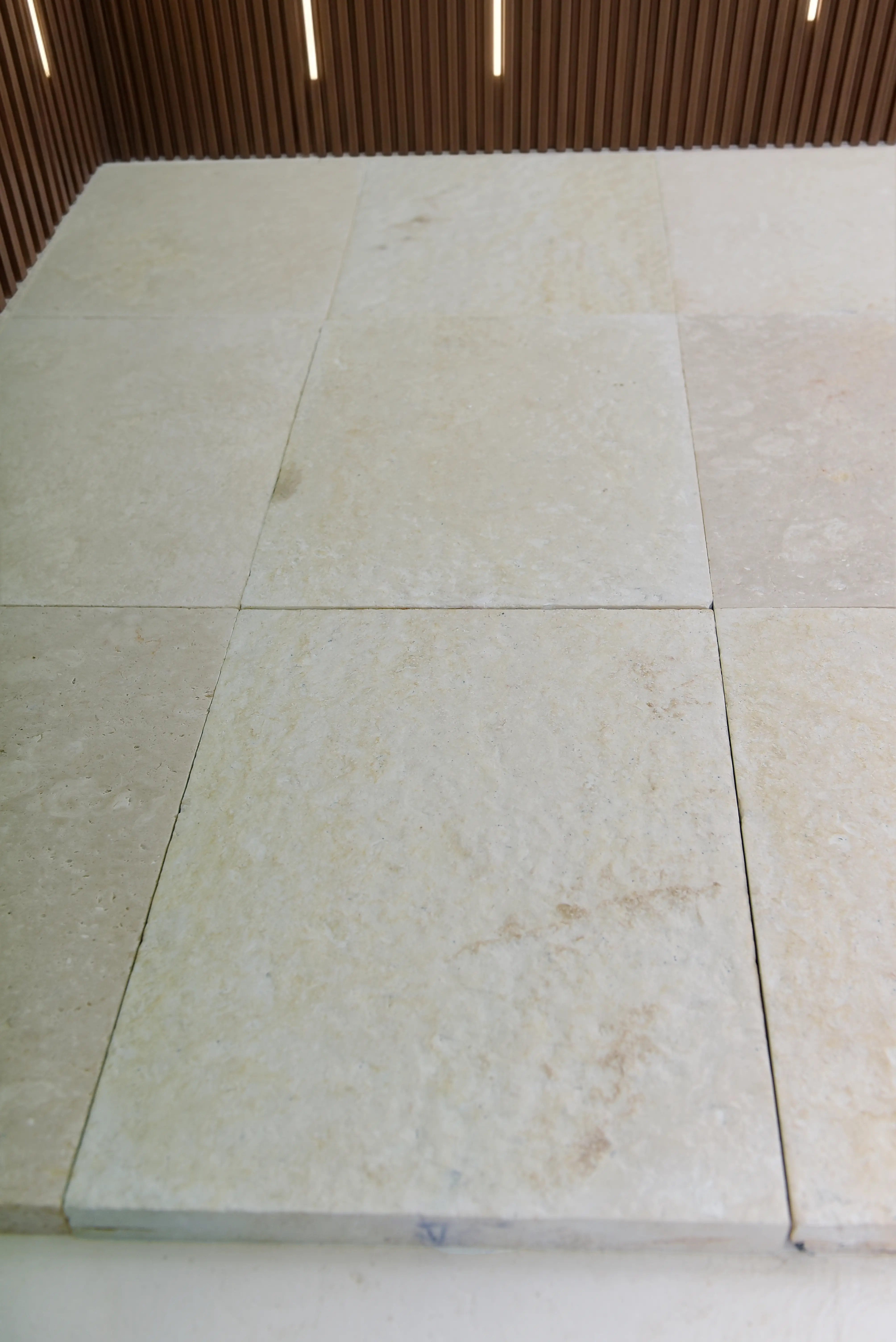
Color consistency is one of the trickier variables in granite construction basics. Even within a single quarry, mineral ratios shift across extraction zones, producing what the industry calls “movement” — the swirling, directional patterns that make each slab unique. For architectural projects requiring tight visual uniformity, you’ll want to batch-select from the same quarry run, and ideally from the same block lot. At Citadel Stone, we recommend viewing full slab images or physical samples before committing to large quantities, because color variation between production batches can be significant enough to disrupt a design intent.
Thickness Selection and Structural Loading: Getting the Numbers Right
Granite slab thickness is the most frequently under-specified variable in exterior projects. The instinct is to go thinner to reduce material cost, but inadequate thickness in a loaded application is the single fastest path to cracked stone and a failed installation.
Field performance data on granite construction basics across varied loading conditions points to these practical minimums:
- Foot-traffic paving (pedestrian plazas, walkways, pool decks): 1.25-inch nominal thickness on a properly compacted aggregate base
- Driveway and light vehicular applications: 2-inch minimum, with 3-inch preferred for frequent use or heavier vehicles
- Heavy vehicular loading (commercial driveways, loading areas): 3 to 4 inches, depending on subbase conditions — thinner slabs will crack under point loads regardless of granite quality
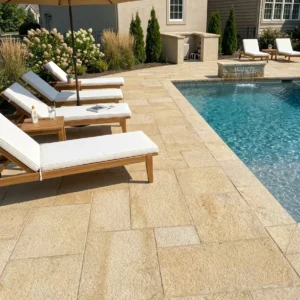
- Coping and feature elements (pool edges, wall caps): 1.25 to 1.5 inches with full mortar bed support — cantilevered sections require 2 inches minimum
According to ASTM C615 granite dimension stone quality standards, minimum thickness tolerance for dimension stone is typically ±1/8 inch from nominal — so a “2-inch” slab can legally arrive at 1.875 inches. Spec to the upper side of your thickness requirements and verify actual dimensions when your order arrives at the warehouse.
Base Preparation: The Layer That Determines Installation Longevity
Here’s what most buyers focused on granite construction basics overlook: the granite itself rarely fails. What fails is almost always the base. You can select the finest quarry-sourced slab and watch it crack within two years if the subbase moves, settles unevenly, or allows water to pond beneath the stone.
The foundational sequence for exterior granite paving requires:
- Subgrade compaction to at least 95% proctor density — verify with a plate compactor, not assumptions about native soil
- Compacted aggregate base depth scaled to application: 4 inches for pedestrian, 6 to 8 inches for vehicular — in freeze-thaw regions, err toward the deeper dimension to buffer frost heave
- Bedding layer of coarse sand or fine aggregate, no more than 1 inch, screeded to true plane — avoid thick sand beds that allow long-term settlement
- Drainage slope of 1/8 to 1/4 inch per foot away from structures — granite’s low absorption doesn’t help if water pools on top and works into joints
The interaction between subbase moisture and seasonal thermal cycling creates the conditions most responsible for joint failure and lippage over time. Getting the base right costs a fraction of what slab replacement costs — and it’s the one phase you can’t correct after the stone goes down.
Joint Spacing and Thermal Expansion in Granite Installations
Granite’s thermal expansion coefficient sits at approximately 4.4 to 8 × 10⁻⁶ per °F depending on mineral composition — lower than most concrete alternatives, which is one reason granite performs reliably in hot, dry climates and freeze-thaw regions alike. But “lower than concrete” doesn’t mean zero, and field installations that ignore thermal movement end up with joint blowout, especially in large-format installations.
Your joint spacing should scale with slab size. For 24×24-inch or smaller pavers, 3/16-inch joints handle seasonal movement adequately in most conditions. For large-format slabs — 24×48 inches and larger — widen joints to 1/4 inch minimum, and introduce control joints every 10 to 12 linear feet in runs that exceed 30 feet. Mortar-set applications need more attention to this than dry-lay systems, because the mortar bed restricts stone movement more than a sand bed does. Skipping control joints in a large mortar-set granite terrace is a predictable path to cracking — not a question of if, but when.
Cost Factors and Sourcing Decisions That Shape Your Budget
Material unit cost is only one line in a granite project budget, and often not the dominant one. For our natural stone supply, freight distance from warehouse to project site consistently emerges as a significant variable — a pallet of 2-inch granite pavers can weigh 3,000 to 4,500 lbs, and truck delivery costs across long hauls add meaningfully to landed cost per square foot. If your project is in a region distant from major stone distribution centers, budget freight at 15 to 25% of material cost as a planning estimate, then get actual quotes before finalizing the bid.
Labor-to-material cost ratios in granite installation vary considerably depending on application complexity. A straightforward dry-lay paver project in a competitive labor market might run 1:1 or slightly below — material cost roughly equals installation labor. Complex mortar-set work with custom cutting, pattern layouts, or large-format slabs can push that ratio to 2:1 or higher in favor of labor. This has a direct implication for value engineering: when labor costs dominate, the return on upgrading to a better material grade is high. Spending an extra $2 per square foot on premium granite when your installation labor is $18 per square foot is a small percentage premium for a significantly better outcome. The math only breaks down when material cost itself is the constraint.
Sourcing decisions also affect lead times in ways that can disrupt project schedules. Citadel Stone maintains warehouse inventory that supports 1 to 2 week lead times on standard items, compared to the 8 to 12 week import cycle for custom quarry orders. For projects with fixed completion deadlines, the carrying cost of ordering early and warehousing on-site is almost always less than the cost of schedule delays.
Sealing and Maintenance Protocols for Long-Term Performance
Granite’s low porosity — typically 0.2 to 0.4% absorption — means it needs less sealing than limestone or travertine, but it doesn’t mean sealing is optional. Polished and honed surfaces in interior applications benefit from a penetrating impregnator applied at installation and refreshed every 3 to 5 years. Exterior flamed and bush-hammered surfaces are more forgiving, but a penetrating sealer still limits oil and organic staining in high-use areas like outdoor dining terraces or pool surrounds.
The maintenance routine that actually protects long-term performance is simpler than most buyers expect:
- Annual inspection of joint integrity — repoint any joints showing shrinkage or cracking before water infiltration starts undercutting the base
- Cleaning with pH-neutral stone cleaner only — acidic cleaners etch the feldspar in granite over time, dulling polished surfaces and roughening honed ones
- Pressure washing at 1,200 PSI or below for exterior surfaces — higher pressures dislodge joint sand and can begin to abrade softer mineral inclusions in certain granite varieties
- Sealer reapplication on a schedule tied to traffic intensity, not just elapsed time — perform the water bead test annually and reseal when water absorbs rather than beads
According to USGS granite production and construction use statistics, granite remains one of the most widely used dimension stones in construction precisely because its long-term maintenance demands are low relative to its performance lifespan. A well-installed granite surface maintained to the protocol above routinely reaches 30 to 50 years of service without structural replacement.
Common Specification Mistakes That Undermine Granite Projects
Years of watching installations succeed and fail makes certain patterns very clear. These are the errors that consistently show up in troubled granite projects:
- Specifying finish type based on aesthetics alone without confirming slip resistance ratings for the application environment
- Under-specifying thickness on driveway applications to reduce material cost, then dealing with cracked slabs within 18 months
- Ordering without batch-matching slabs for color consistency across a large installation — mid-project reorders from a different quarry run produce visible color breaks
- Skipping the base compaction verification step and assuming contractor-reported compaction values are accurate
- Using acidic cleaners during or after installation — common concrete slab cleaning chemicals damage granite surfaces and void any sealer warranty
- Failing to account for truck access constraints at the delivery site — granite pallets require flat, stable ground and adequate clearance for forklifts or boom trucks
The base preparation error is by far the most costly of these. Stone replacement in a failed installation typically runs 3 to 4 times the original material cost once labor, demolition, subbase correction, and new material are factored in. Getting the subbase specification right the first time is not optional — it’s the entire foundation of the investment.
Getting Granite Construction Basics Right from the Start
Every granite construction basics decision — finish type, thickness, joint spacing, sealing schedule — connects back to the same underlying principle: the material is almost always more capable than the specification or installation that surrounds it. Your role as the buyer or specifier is to match the surrounding decisions to the granite’s inherent performance potential, not to assume that simply selecting a quality stone guarantees a quality outcome. The stone sets the ceiling; your specification decisions determine whether you reach it.
As you finalize your project details, consider that complementary stone applications on the same property often benefit from coordinated material selection. If marble surfaces are part of your broader project scope, marble stone care and maintenance covers the specific protocols that keep those surfaces performing alongside your granite work. The two materials share a hardscape context but require meaningfully different maintenance approaches — understanding both keeps the full project performing at the level the materials deserve. Granite from Citadel Stone arrives ready for fabrication, drawn from select natural stone quarries worldwide for uniform color depth.
Related reading: how to choose granite installers · professional granite polishing · marble remnants buyers guide.