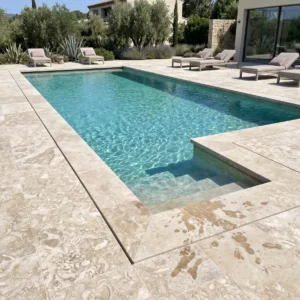
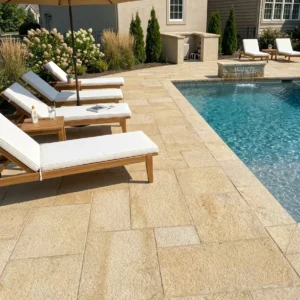
Dolomitic limestone sits in a performance category that standard calcite limestone simply can’t match on several key metrics — and the difference isn’t cosmetic. The substitution of magnesium carbonate for a portion of calcium carbonate in the crystal matrix produces measurably harder, denser stone that behaves differently under load, exposure, and time. You’ll notice this distinction most sharply when reviewing compressive strength figures: dolomitic limestone commonly tests between 10,000 and 20,000 PSI, while typical calcite limestone often ranges from 4,000 to 12,000 PSI depending on formation density. That gap has real consequences for specification decisions, and understanding where it matters — and where it doesn’t — is what separates a well-matched material selection from an expensive mismatch.
What Is Dolomitic Limestone?
The term covers a spectrum of stone rather than a single fixed composition. Geologically, the rock qualifies as dolomitic when magnesium carbonate (MgCO₃) content exceeds roughly 10% of the total carbonate fraction, with true dolostone sitting at 50% or higher magnesium carbonate. For construction purposes, most suppliers and specifiers use “dolomitic limestone” to describe stone in the middle of that range — enough magnesium substitution to elevate hardness and reduce absorption, but still recognizable as a sedimentary carbonate rock with the visual character of limestone. According to limestone formation and characteristics, this magnesium substitution typically occurs through diagenetic replacement of original calcium carbonate during burial and compaction, which also accounts for the tighter grain structure you observe in cross-section.
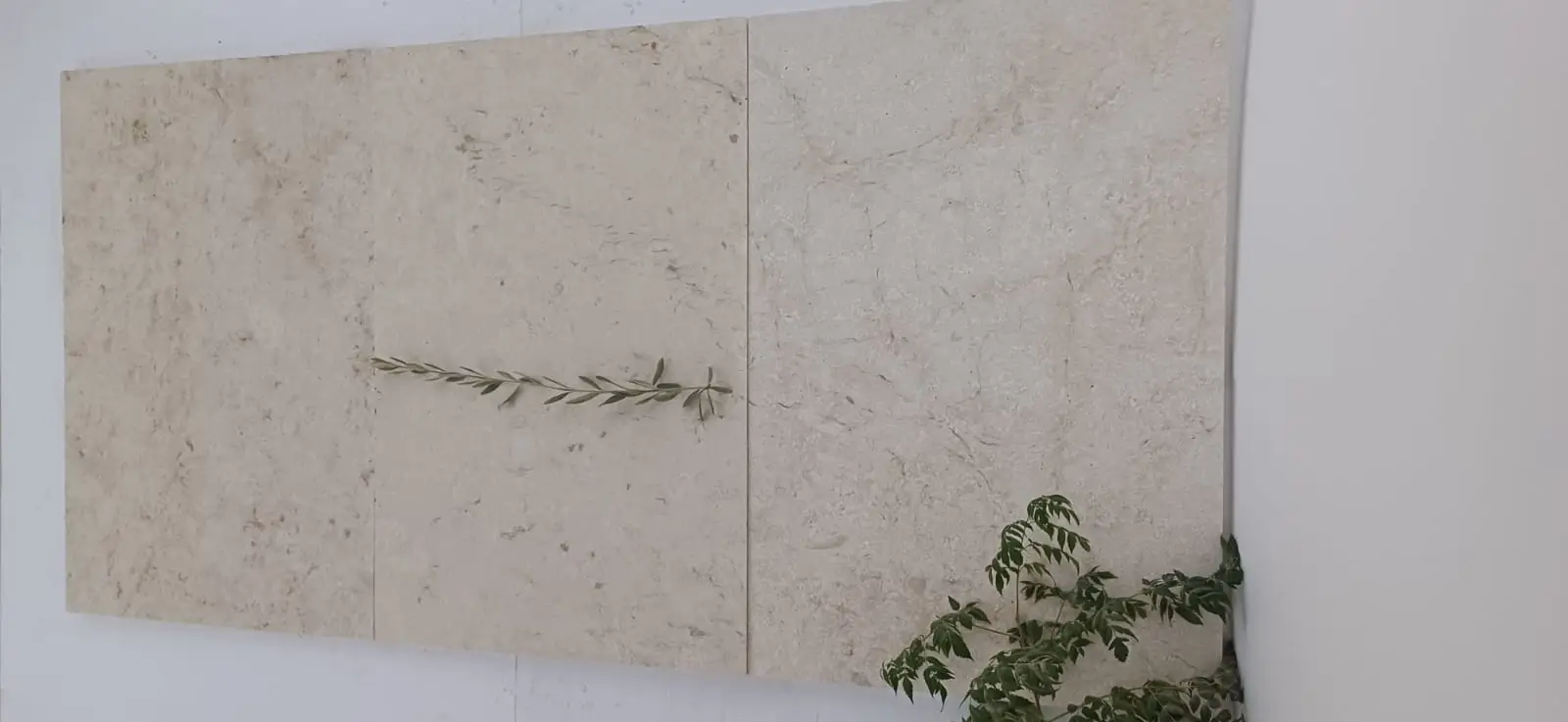
You’ll find dolomitic limestone white rock in honed, brushed, and thermal finishes across paving, cladding, and flooring applications. The mineral variation affects finish behavior too — the harder surface takes a honed finish with a finer sheen than most standard limestone grades, and thermal treatment produces a sharper texture profile that improves grip in wet conditions.
Composition and Structural Differences
Standard calcite limestone is predominantly calcium carbonate (CaCO₃), formed from compacted marine sediments — shells, coral fragments, and microbial deposits. Its pore structure tends to be more open and interconnected, which explains both its relatively high water absorption rates (often 3–8% by weight depending on formation) and its susceptibility to surface etching from acidic contact. Dolomitic limestone, by contrast, exhibits a recrystallized interlocking grain structure where the magnesium substitution drives a tighter, more cemented matrix.
- Water absorption in dolomitic limestone typically ranges from 0.5–2.5% by weight — roughly half that of comparable calcite grades
- Modulus of rupture (flexural strength) is proportionally higher, reducing breakage risk during cutting and installation
- Surface hardness on the Mohs scale typically falls between 3.5 and 4.5 versus 3.0–3.5 for most standard limestone
- The denser matrix resists biological staining more effectively — algae and moss find fewer pore channels to colonize
- Thermal conductivity is slightly lower in dolomitic grades, making surface temperatures marginally more moderate underfoot in sun-exposed conditions
These structural differences aren’t abstract. You’ll feel the distinction when cutting the material — dolomite limestone requires slightly harder tooling and produces a cleaner edge with less micro-chipping than softer calcite grades.
Compressive Strength and Load Performance
For any paving or structural application, compressive strength defines the floor of acceptable specification. Standard limestone at 4,000–8,000 PSI handles pedestrian traffic and light residential loads reliably, but it starts to approach its limits under repeated heavy-vehicle loading or point-load concentrations from furniture legs, equipment pads, and similar fixtures. Dolomitic limestone at 12,000–20,000 PSI operates with a much wider safety margin across those same conditions.
Specifying dolomitic limestone pavers for driveway or commercial-pedestrian applications means you’re working with stone that carries a compressive strength comparable to mid-range concrete — but with the visual character, thermal behavior, and long-term patina development that concrete doesn’t offer. The Natural Stone Institute limestone specifications confirm that dolomitic grades consistently outperform calcite equivalents in abrasion and freeze-thaw cycling tests, which matters across any installation exposed to seasonal moisture variation.
- Standard limestone: suitable for residential pedestrian, light outdoor furniture, low-traffic garden paths
- Dolomitic limestone: suitable for driveways, commercial pedestrian zones, pool surrounds, high-traffic terraces
- Neither grade is appropriate for heavy-vehicle industrial loading without engineered sub-base design and thickness verification
Absorption, Sealing, and Maintenance
Absorption rate is the specification detail that catches the most installers off-guard when switching between limestone types. Standard limestone at 5–8% absorption demands aggressive sealing protocols — typically an initial penetrating impregnator followed by annual reapplication in high-exposure outdoor settings. You can extend that to 18 months between treatments in covered or low-traffic areas, but outdoor unsealed standard limestone will show staining and surface degradation within a single wet season in most conditions.
Dolomitic limestone’s lower absorption (0.5–2.5%) changes the sealing calculus meaningfully. An initial penetrating silicone or fluorocarbon impregnator applied within 30 days of installation typically holds for 24–36 months under normal outdoor exposure, dropping maintenance frequency and cost compared to standard grades. You should still seal — the tighter pore structure doesn’t eliminate absorption, it reduces it — but the urgency and frequency requirements are significantly lower. For outdoor installations in sun-heavy environments, UV-stable impregnating sealers rated for exterior stone are the appropriate product category; surface topcoat sealers tend to degrade under prolonged UV exposure regardless of stone type and should generally be avoided outdoors.
Our technical team at Citadel Stone consistently recommends two coats of penetrating impregnator applied wet-on-wet during the initial treatment for dolomitic grades — the denser matrix absorbs the first coat quickly, and the second coat within 5–10 minutes fills the remaining pore capacity before the first coat cures.
UV Exposure and Surface Weathering
Color stability under prolonged sun exposure is one of the more underappreciated performance differentiators between limestone types, and it’s worth addressing directly because it affects long-term appearance in ways that compressive strength specs don’t capture. Natural limestone contains trace iron compounds, organic inclusions, and surface minerals that respond to UV radiation differently depending on formation density. Standard calcite limestone with higher porosity tends to bleach and develop surface oxidation patterns more rapidly — the open pore structure allows moisture-carried minerals to migrate and concentrate at the surface, producing uneven tonal variation within 2–5 years in high-UV outdoor installations.
Dolomitic limestone’s tighter matrix significantly slows this migration process. You’ll see more consistent tonal aging across the surface rather than the patchy iron staining or bleaching that sometimes develops in looser calcite grades. That said, the stone still responds to UV over time — lighter grades tend to retain more even coloration, while cream and buff tones may develop a slight warm shift over a decade of full sun exposure. Selecting a UV-stable penetrating sealer rather than a surface film product is critical here; film-forming sealers trap moisture and degrade under UV, producing a cloudy or peeling surface finish that’s costly to remediate. A breathable impregnating sealer allows vapor transmission while maintaining stain resistance, which is the combination outdoor dolomitic limestone installations actually need. Resealing every 24–36 months maintains that protection without allowing UV-driven mineral migration to establish surface patterns that are difficult to reverse.
Fossil Content and Visual Character
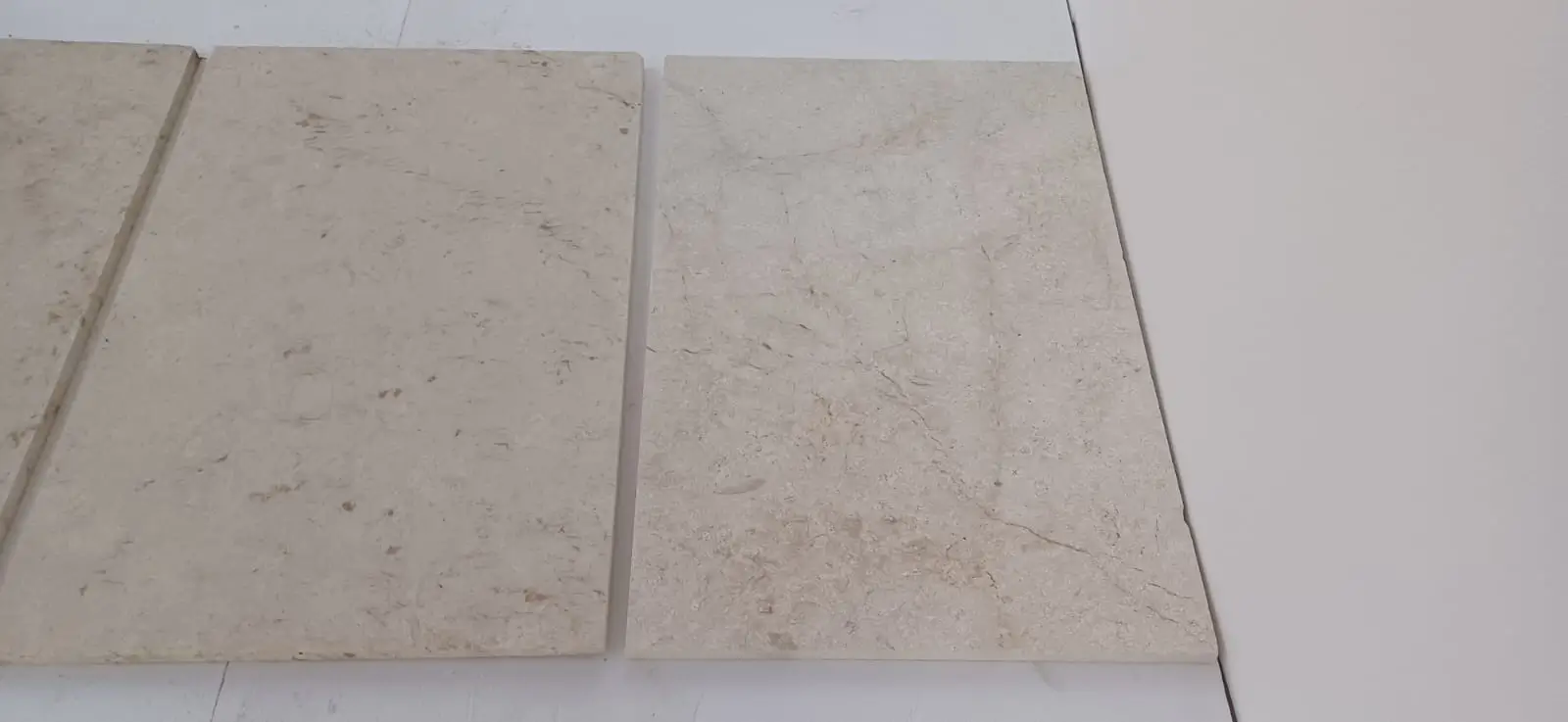
One characteristic that’s genuinely unique to limestone — dolomitic grades included — is the presence of fossilized marine organisms within the stone matrix. A fossil in limestone isn’t a defect; it’s a geological signature that adds depth and individuality to finished surfaces. In dolomitic grades, fossil preservation often appears sharper because the recrystallization process that introduces magnesium tends to solidify the matrix around organic inclusions rather than dissolve them. You’ll see crinoid stems, bivalve shell fragments, and coral cross-sections in relief, particularly on honed and brushed finishes where the surface is opened enough to reveal the internal structure.
For designers, this matters when specifying for premium residential or hospitality applications where material character justifies premium pricing. For structural specifiers, it’s a non-factor — fossil inclusions in dense dolomitic stone don’t create structural weakness. The concern about fossil voids arises in softer, more porous calcite limestone where the organic material has fully dissolved and left open cavities. In properly graded dolomitic limestone, that void formation is rare because the tighter matrix maintains integrity around inclusion sites.
Where Each Material Performs Best
Standard calcite limestone earns its place in interior flooring, feature wall cladding, and low-traffic garden applications where its softer tonal warmth and workability are advantages rather than liabilities. The stone cuts and shapes more easily than dolomitic grades, making it cost-effective for intricate profiles, mouldings, and inlaid patterns where fabrication complexity drives cost. Interior environments also remove most of the absorption-related risk factors — sealed interior limestone doesn’t face freeze-thaw cycling, UV degradation, or biological growth pressure.
Dolomitic limestone earns its specification in every context where outdoor exposure, load, or durability requirements create performance pressure:
- Driveways and vehicle-access areas where sustained load and surface abrasion are factors
- Pool surrounds where repeated wet-dry cycling and chemical contact demand low-absorption stone
- Commercial pedestrian zones requiring long maintenance intervals and consistent surface performance
- Sun-exposed terraces and patios where UV stability and tonal consistency matter over decades
- Freeze-thaw regions where absorbed water expansion cycles are the primary degradation mechanism
For projects sitting between those two use cases — a residential patio with moderate traffic, for example — dolomitic limestone is almost always the better long-term investment. The premium over standard grades at the point of purchase is typically 15–25% depending on finish and format, but the reduced maintenance cost over a 15-year cycle often closes that gap or exceeds it.
Sourcing, Thickness, and Project Planning
Thickness specification is where a lot of dolomitic limestone projects go wrong before the first piece is set. The material’s higher strength means you can specify thinner sections than comparable calcite grades for equivalent load performance — but that calculation depends on sub-base quality, joint spacing, and expected load distribution, not just stone strength alone. For pedestrian paving, 1.25-inch nominal thickness in dolomitic limestone performs comparably to 1.5-inch standard limestone in pedestrian conditions. For vehicle-access paving, minimum 2-inch nominal thickness with an engineered compacted aggregate base is the practical starting point regardless of stone strength.
Verify warehouse stock levels before committing to project timelines — dolomitic limestone in premium formats and finishes moves through inventory faster than standard grades in many markets, and lead times from the warehouse on custom-thickness orders can extend 3–4 weeks beyond standard stock availability. Citadel Stone maintains national warehouse inventory of dolomitic limestone in the most specified formats, which typically keeps lead times to 1–2 weeks for stocked sizes. For large-volume projects requiring truck delivery of oversized slabs, confirm your site’s truck access and unloading capacity early — dolomitic grades in 24×24-inch format at 2-inch thickness weigh approximately 28–30 lbs per piece, and pallet weights run 1,800–2,200 lbs depending on configuration. For additional detail on dense limestone products suited to patio and outdoor applications, explore our dense limestone selection, which covers format and thickness options for high-performance outdoor installations.
Matching Dolomitic Limestone to Your Project Requirements
Choosing between dolomitic limestone and standard limestone isn’t a matter of one being universally better — it’s a matter of matching material performance to application demands with precision. Standard limestone delivers warmth, workability, and cost efficiency in interior and low-stress outdoor contexts. Dolomitic limestone delivers the compressive strength, low absorption, UV-tonal stability, and long maintenance intervals that demanding outdoor installations require. Mis-specifying standard limestone in a high-exposure outdoor application doesn’t just risk appearance — it risks structural degradation at the joint and surface level within 5–8 years in high-cycle conditions. Specifying dolomitic limestone where standard limestone would have been adequate doesn’t ruin a project, but it does carry a cost premium that isn’t recovered in performance under low-stress conditions.
The specification decision gets clearer when you map it against real project conditions: absorption requirements, expected load, UV exposure intensity, maintenance budget, and design life expectations. Natural stone projects often incorporate more than one material type — your dolomitic limestone paving may sit alongside other hardscape elements that deserve equal specification attention. As you refine your overall stone plan, fossilized limestone varieties and their properties offer a related angle worth reviewing if your project calls for distinctive surface character alongside performance density. Sourced from select natural stone quarries worldwide, Citadel Stone dolomitic limestone offers denser grades for demanding outdoor use.
Related reading: how limestone weathers outdoors · choosing limestone for gardens · crushed limestone landscaping problems.