Cayman’s water is the island’s treasure — visibility measured in cathedral distances, reefs beginning meters from shore — and between land and water stands the island’s guardian: ironshore, the razor-edged coastal rock that armors the coast and lacerates the unprepared. The engineered shore entry is Cayman’s particular coastal craft: platforms, steps and aprons that carry swimmers, snorkellers and divers safely over hostile rock into world-class water, daily, for decades. Here is how it is done properly.
Respecting the guardian
The design begins with what ironshore is: the island’s natural sea defense, absorbing wave energy in its pitted mass, hosting its own intertidal ecology, and — crucially — protected in spirit and often in law as the coast’s armor. Shore-entry construction therefore treads minimally: entries sited at the rock’s natural low points and protected pockets, footprints kept to the necessary, and the surrounding ironshore left exactly as the sea shaped it. The entry is a doorway through the guardian, never a replacement of it — and the properties that grasp this build once, gracefully, with the coast’s cooperation.
The platform: land’s last comfortable meter
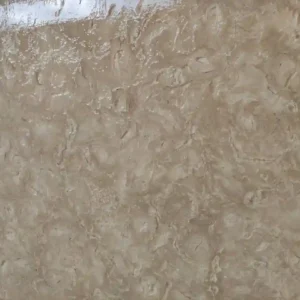
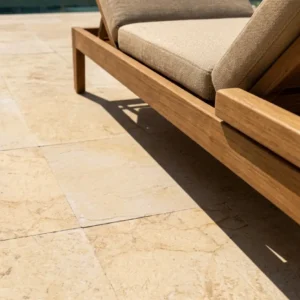
The entry’s heart is a level stone platform above the wash zone: the staging ground where fins go on, tanks are shouldered, children are briefed and towels wait. Specification runs marine-grade absolute — dense low-absorption stone, textured for wet bare feet, edges eased everywhere skin might meet them — sized honestly for the household or guest load, with the working-waterfront rules governing gear routes to it: dive kit is the heaviest luggage in recreation, and the barrow-friendly path from storage to platform is half the entry’s daily value.
Steps into living water
From platform to water, steps take the sea-stair discipline at ironshore pitch: treads founded on or pinned to sound rock, geometry consistent to the last step a swell might cover, the coarsest textures in the catalog for surfaces that live wet, and marine-grade fixings without exception — plus the honest sacrificial mindset below the wash line, where the sea edits everything eventually and massive simple construction repairs cheaply. Handrails, where flights warrant them, anchor into structure and shrug both surge and salt; ladder-assisted entries for deeper walls mount to engineered stone bases the hardware can be renewed from forever.
The rinse-and-return circuit
The entry works in both directions, and the return trip carries the sea: salt, sand and the day’s equipment arriving back at the platform dripping. The circuit completes with freshwater at the top — rinse stations for bodies, tanks and cameras on draining stone aprons, sized for real gear loads — storage within barrow distance, and the path home surfaced for wet feet the whole way. Properties running guest or dive-operation traffic scale the same circuit up: multiple rinse points, gear benches in stone that shrugs tank knocks, and the hose-down serviceability the daily load demands.
- Freshwater rinse stations at the top for bodies, tanks and cameras.
- Draining stone aprons under the rinse points, sized for real gear loads.
- Equipment storage within barrow distance of the platform.
- A hard route from storage to platform that a loaded cart can cross.
- Somewhere shaded to sit and de-kit, which is what keeps the entry in use.
Safety as geometry
The sea makes the rules and the entry publishes them: steps that end visibly, depth transitions readable from above, no dive-in geometry where rock lurks at depth, and the day’s conditions assessable from the platform before commitment — because Cayman’s gentle days are gentle indeed, and its rough days close the door. Lighting extends safe hours on the low-warm rules without inviting night entries the household has not planned for; signage stays minimal where design already speaks. The entry’s deepest safety feature is honesty: built to say clearly what it is for and when.
- Steps that end visibly, so nobody guesses where the last tread is.
- Depth transitions readable from above the waterline.
- No dive-in geometry anywhere rock sits close beneath the surface.
- Conditions assessable from the platform before anyone commits to the water.
- Handrail continuous to the lowest usable step, not stopping at the platform edge.
Storm cycles and the long game
Every shore entry lives on the sea’s terms, and Cayman’s storm seasons audit the construction periodically: the post-event walk checks treads for movement and fixings for integrity, the sacrificial lower elements repair from attic stock, and the platform — set above the honest wash line — carries on. Built to the discipline, entries age into island institutions: the morning-swim platform two generations have used, the dive doorstep that sold the house. The Cayman supply page packages entries as the cut-specials projects they are — surveyed, drawn, and delivered with spares — because on this island, the walk into the water is the whole point of the address.
From truck to water: the operations yard behind the entry
Every graceful shore entry has an ungraceful hinterland, and the properties that serve divers well design it deliberately. Tanks arrive by van in dozens, not pairs; compressors and rental gear need dry, ventilated storage; and the fill-station run — heavy cylinders moving between vehicle, store and waterline — is the hardest regular load the site’s ground will carry. The working answer is a small operations yard on honest stone: a level apron at vehicle height for the tank exchange, surfaces dense enough to shrug a dropped cylinder and textured enough to grip under wet boots, curbs and edges eased so trolleys roll rather than jolt, and a route to the entry that never climbs a step it could avoid.
Layout does most of the work. The yard sits off the guest’s sightline but on the shortest practical line to the water, with the rinse circuit’s drainage doing double duty for wash-down. Gear benches at loading height save a hundred lifts a week; a shaded rack keeps regulators and suits out of the ultraviolet that ages them; and the compressor’s pad earns isolation — mass under the machine, distance from bedrooms, service access on its own small apron. None of this is exotic stonework, which is exactly the point: working-grade material, drawn once, ends the era of cracked patio slabs and rutted lawn that most dive operations accept as normal.
For operators, the yard is throughput — faster turnarounds, fewer injuries, gear that lasts. For villa owners hosting their own diving, it is the difference between a hobby the house absorbs and one it fights. Either way the specification is the same: the entry gets the photographs, the yard gets the loads, and both get stone graded for their actual job.
The permission the seabed requires
Anything built seaward of the high water mark in Cayman is not a landscaping decision; it is a Crown property and conservation matter. The Department of Environment sets out the process for coastal works, and it is worth reading before a designer draws a step.
- Coastal works means development seaward of the Mean High Water Mark over Crown-owned seabed.
- Docks, launching ramps, groynes, underwater installations, dredging and filling all fall within it.
- A Coastal Works Permit is granted by Cabinet, covering both Crown property use and the National Conservation Act.
- Applications go to the Ministry and are reviewed by the Department of Environment, Planning, and Lands and Survey.
- Damaging coral, extracting seabed material by mechanical means and discharging pollutants are all restricted.
- Royalties and mitigation fees are paid before work starts, and a Coastal Works Notice is displayed on site.
Grip on surfaces that are never dry
A shore entry is the only structure on a property that is permanently wet, walked barefoot, and used by people carrying heavy equipment. Finish selection deserves test data rather than adjectives. This account of friction testing on stone walking surfaces explains what the standard covers.
- ANSI A326.3 measures dynamic coefficient of friction and supports in-place testing.
- The 0.42 benchmark applies to level interior surfaces walked on wet, so a sea step sits outside it.
- No threshold is specified for stepped or ramped exterior surfaces.
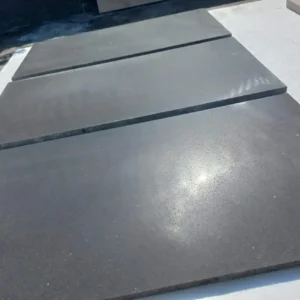
- Polished finishes fail comprehensively and have no place on an entry.
- The coarsest textures in the range belong here, tested on the delivered specimen.
Fixings, corrosion and the annual check
On a shore entry the stone almost always outlives the metal, which is why the hardware carries the maintenance burden.
- Marine-grade stainless throughout, isolated from every dissimilar metal.
- Handrail posts pinned into sound rock or structure rather than into a single unit.
- Bedding solid and continuous at every fixing point, with no voids to hold seawater.
- An inspection after each serious swell event and annually regardless.
- Spare treads held from the original batch, since replacements travel slowly.
Shore dive entry stone, built in the right sequence
The order matters more here than anywhere else on a Cayman property: permission first, then a design that treads lightly on the ironshore, then a level platform above the wash zone, then steps with identical geometry and the coarsest available texture, then rinse and storage at the top. Marine fixings throughout and an honest annual inspection keep it safe for decades. Where the same shoreline carries a dock, our boat dock landing stone guide continues the thought. Get the permit before the drawing and the sea does the rest of the teaching.