Choosing marble pavers separates itself from most stone decisions the moment you realize you’re managing two variables at once — visual character and mineralogical sensitivity — and the field experience required to balance them doesn’t come from a product sheet. The decisions you make around finish, thickness, and substrate preparation determine whether your marble installation ages with distinction or starts showing stress fractures within a few seasons. This guide cuts through the surface-level advice and gets into the specification logic that actually governs long-term performance.
Why Marble Behaves Differently from Other Natural Stone
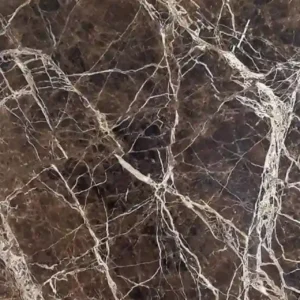
Marble is a metamorphic rock — limestone recrystallized under heat and pressure into interlocking calcite or dolomite crystals. That crystalline structure gives marble its characteristic translucency and veining, but it also creates performance characteristics that distinguish it sharply from igneous alternatives like granite or basalt. The calcite matrix is reactive to acids, meaning anything from rain runoff with dissolved atmospheric carbon dioxide to pool water can etch a polished surface over time. Your specification should account for this from day one.
The material’s thermal expansion coefficient also sits in a range that demands careful joint planning. Marble slabs on open outdoor decks experience dimensional cycling with every temperature swing, and under-jointed installations transfer those stresses directly into the stone or the bond layer beneath. Field performance confirms what the physics predicts — under-jointed marble pavers on large exposed decks are among the most common call-back scenarios in the natural stone trade.
- Calcite base makes marble chemically sensitive to acidic contact — pool surrounds, wine terraces, and areas near barbecues require careful sealing protocols
- Thermal expansion demands properly calculated joint widths — not rule-of-thumb guesses, but layout-specific calculations based on slab dimensions and climate exposure
- Interlocking crystal structure can develop micro-fissuring under repeated point loading if the substrate isn’t uniform — flat, solid, compacted bases are non-negotiable
- Veining patterns reflect mineral variation across the slab, which means absorption rates can differ slightly within a single piece — relevant when selecting your sealer type
Finish Selection: The Decision That Drives Everything Else
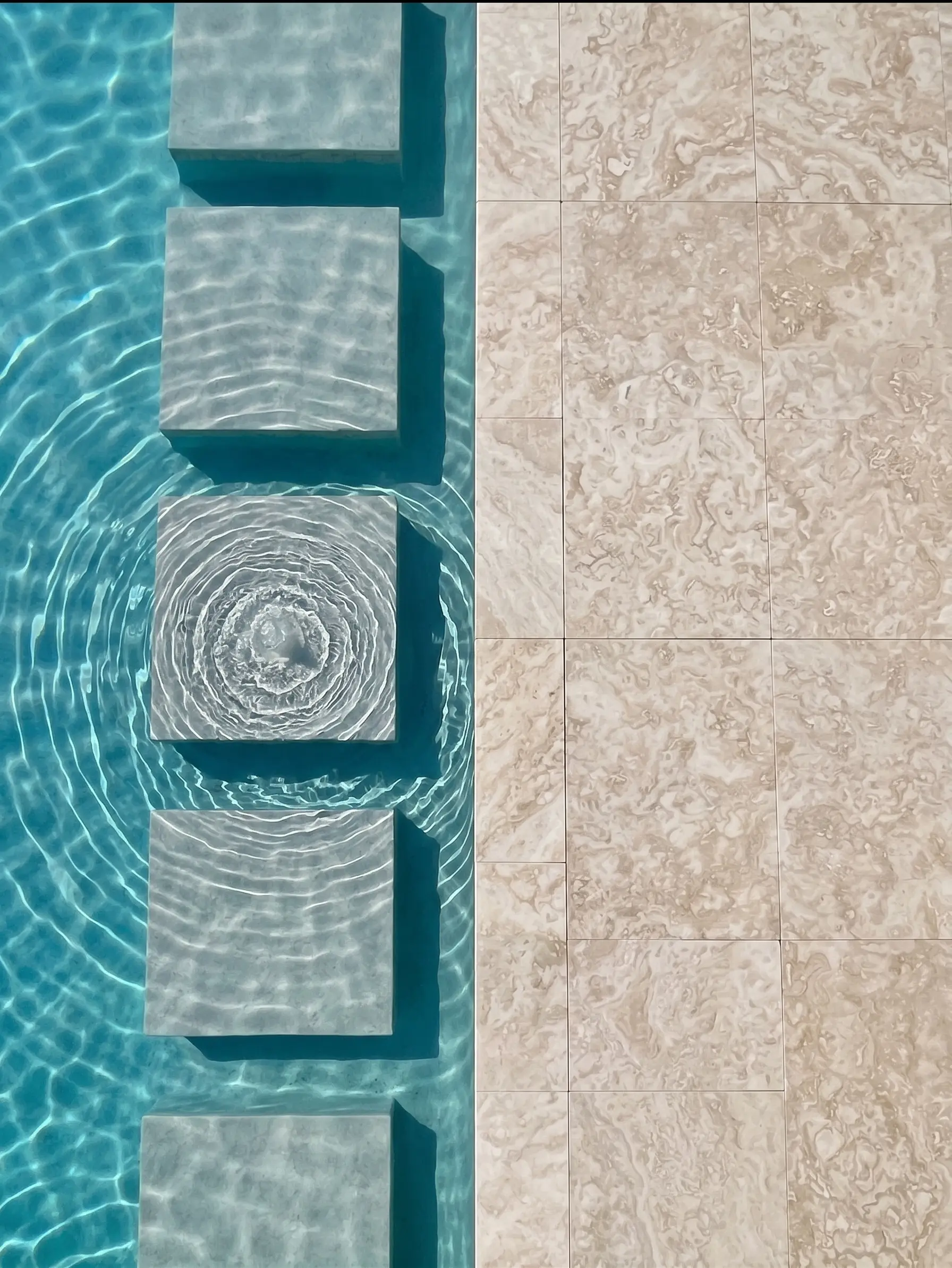
The finish you specify on outdoor marble pavers is not primarily an aesthetic choice — it’s a performance specification. Polished marble reads elegantly in covered or sheltered applications, but expose that mirror surface to full sun, freeze-thaw cycling, and foot traffic and you’ll be managing surface degradation within a few years. Honed finishes — matte, with the surface cut flat but not buffed to reflectivity — hold up significantly better in exposed outdoor conditions and are the standard specification for most residential and commercial exterior marble installations.
Brushed and tumbled finishes go further, opening the surface texture and softening edges. A tumbled finish leaves an open, matte texture that responds differently to moisture and UV exposure than a honed surface does. For high-traffic pathways or pool surrounds, these textures give the installer more working margin in terms of surface longevity. The trade-off is that more open textures absorb sealer faster and require more frequent resealing — the maintenance schedule shifts, which your client needs to understand before selection is locked in.
- Polished: highest reflectivity, most prone to visible etching outdoors, best reserved for covered or interior applications
- Honed: matte surface, more forgiving of outdoor acid exposure, the preferred choice for most exterior marble paver specifications
- Brushed: light texture introduced mechanically, sits between honed and tumbled in terms of surface openness
- Tumbled: aged, rounded aesthetic with an open pore surface — requires more frequent sealing but handles heavy outdoor use well
According to Natural Stone Institute marble grades and technical specifications, finish selection interacts directly with marble’s absorption characteristics and outdoor durability ratings — a factor that should inform every exterior project specification from the start.
Thickness and Structural Specification for Marble Pavers
Your marble paver selection guide lives or dies on getting thickness right. The standard pavers you’ll encounter in a typical catalogue run from 20mm to 30mm for residential applications, with 30mm and heavier cuts specified for commercial foot traffic or where vehicle overhang loading is a factor. The critical variable isn’t the nominal thickness alone — it’s the combination of thickness, span across the substrate, and the uniformity of the compacted base beneath.
Marble pavers selection guide criteria for thickness should always reference the intended application load. A 20mm honed marble paver on a fully supported mortar bed over a concrete substrate performs differently from the same paver on a sand-set base with point-supported contact. The latter introduces flex stress at the paver’s unsupported mid-section — and marble, unlike some denser stones, has a modulus of rupture that gives less warning before a crack propagates through the full thickness. Specify the ASTM test method for flexural strength and request the test report from your supplier before finalizing thickness for any load-bearing application.
- 20mm: light residential use on fully supported mortar or adhesive beds — not recommended for sand-set on compacted aggregate alone
- 30mm: standard outdoor residential specification, tolerates minor base irregularities better and handles foot traffic volumes typical of patios and pathways
- 40mm and above: commercial applications, high-traffic plazas, or where ground movement risk is elevated — cuts to order are standard at this specification
Choosing Marble Pavers and Snow White Marble for Sun-Exposed Installations
UV exposure is one of the most under-discussed variables when choosing marble pavers for exterior use. The mechanism isn’t UV degradation of the stone mineral itself — calcite is stable — but rather the interaction between UV, heat cycling, and any organic material present in the stone or on its surface. Veined marbles with iron oxide or manganese content can experience surface oxidation over time, particularly in climates with high UV index and limited rainfall to wash the surface. The effect shows as a yellowing or bronzing of lighter stone, most visible in white and cream varieties.
Snow white marble is particularly susceptible to this phenomenon because any surface discoloration reads clearly against its bright base tone. Specifiers working with snow white marble in full-sun installations should build a UV-stable penetrating sealer into the maintenance specification from day one, applied at the interval the sealer manufacturer states — typically annually in high-UV conditions. The sealer won’t stop all interaction between UV and iron traces in the stone, but it significantly slows the process and makes periodic cleaning more effective.
Finish choice intersects with UV performance in a practical way. Polished surfaces reflect UV rather than absorbing it, but the etching vulnerability of a polished finish outdoors offsets that benefit. Honed finishes absorb slightly more at the surface level but hold their appearance more consistently because minor UV-related surface changes don’t create the contrast with surrounding reflective areas that polished stone shows. For south-facing terraces or pool surrounds receiving six or more hours of direct sun daily, a honed or brushed finish with an annual UV-stable sealer application is the specification that holds up best over multiple decades of service.
- Iron and manganese traces in veining can oxidize under prolonged UV and heat — most visible in white and light cream marbles
- UV-stable penetrating sealers applied on the sealer manufacturer’s stated schedule offer the most practical surface protection available
- Darker marble varieties with consistent mineral composition show less visible UV-related discoloration over time
- Covered pergolas and shade structures extend the appearance retention interval between re-sealing cycles considerably
Base Preparation: Where Most Marble Installations Succeed or Fail
The specification failure pattern that shows up most often in marble paver installations isn’t the stone selection — it’s the substrate. Marble’s stiffness means it does not flex and recover the way some softer stones tolerate minor base movement. A differential settlement of even a few millimeters between adjacent pavers can lever a joint open, crack a corner, or — in worst cases — snap a paver across its mid-section if the void beneath is large enough.
For mortar-set applications, the concrete slab beneath needs to be fully cured, flat to within the tolerance your setting material specifies, and properly detailed for drainage. Water beneath a marble paver installation is the enemy — not because marble can’t handle moisture, but because the freeze-thaw pressures that develop in saturated substrate beneath a fully bedded installation are significant enough to displace the entire installation in a single hard winter. Slope everything away from structures at the minimum fall your local drainage standards require, and detail weep points at low edges so water has a path out.
Sand-set marble paver installations require a compacted aggregate base depth calculated from your subgrade soil conditions — not from a generic rule of thumb. Clay-heavy subgrades in particular need more base depth because they expand and contract seasonally with moisture variation. The interaction between that movement and the rigid marble above it is where field failures cluster.
Sealing Marble Pavers: Protocol, Product Type, and Timing
Sealing marble pavers correctly requires understanding what a sealer actually does — and what it doesn’t. A penetrating impregnating sealer fills the pore network below the surface, slowing liquid ingress without forming a film on top. It won’t make marble chemically inert, and it won’t prevent all staining under extended contact, but it buys you the response time to clean spills before they penetrate. Topical coatings that form a surface film change the appearance of the stone and tend to peel or wear unevenly under foot traffic — avoid them on exterior marble pavers.
Timing the first seal application matters. Apply before the installation is exposed to any traffic, weather, or pooling water — ideally within the first few days of grouting completion, once the grout has fully cured. The stone surface needs to be fully dry for the sealer to penetrate effectively; applying to damp stone traps moisture beneath the sealer layer, which can cause clouding or adhesion failure. In humid climates or where installation timing coincides with wet seasons, allow additional drying time before sealing.
For clients managing marble pavers in high-UV outdoor conditions, the sealer reapplication schedule is a genuine maintenance commitment. High-UV climates burn through sealer protection faster than shaded or temperate installations. Confirm the reapplication interval with the sealer manufacturer’s technical guidance for your specific climate exposure, and communicate that schedule to the property owner in writing at handover.
Sourcing and Ordering: What to Confirm Before You Commit
The questions that matter most when sourcing marble pavers selection for a specific project are the ones most buyers skip in the excitement of finalizing the visual. Confirm the nominal thickness and whether the product is calibrated — meaning machine-gauged to a consistent thickness — or split-face, which carries more thickness variation and requires a different setting bed depth calculation. Confirm the finish as a named category, not just a description, because “smooth” means different things to different producers.
Citadel Stone cuts marble to order at our selected quarries, which means the dimensions and finish you specify are produced to your project requirements rather than drawn from pre-cut inventory sized for a different application. For large-format pavers or non-standard thicknesses, this distinction matters significantly to both lead time and material consistency across your order. Lead times are quoted with the order — plan accordingly when your installation schedule has a fixed start date.
Your delivery logistics planning should account for truck access at the site. Palletized stone is delivered on flatbed transport, and tight residential sites with limited turning radius or overhead obstacles need to be flagged when you confirm delivery logistics. Offloading arrangements are confirmed before the delivery date so the right equipment and labor are in place when the material arrives.
For white and light marble varieties specifically, request a sample run of the material and review it in the actual site lighting conditions — both direct sun and shade — before approving the full order. The way veining reads changes dramatically between the slab yard under artificial light and an outdoor terrace under midday sun. This is one of those field realities that saves expensive conversations after the stone is down. For additional guidance on marble varieties and outdoor material selection, Citadel Stone marble buyer resources covers related specification considerations worth reviewing alongside this guide.
Marble Paver Maintenance Over Time: Managing Expectations Accurately
The long service life you can expect from a well-specified marble paver installation — decades, in most properly detailed applications — comes with an honest maintenance commitment that needs to be part of the conversation with your client from the start. Marble is not a set-and-forget material the way some dense granites or basalts approximate in low-acid environments. Its calcite base responds to the environment, and the appearance of the surface reflects that interaction over time.
Joint maintenance is the most frequently neglected element in marble paver upkeep. Whether you’ve specified a polymeric sand joint or a mortar joint, the joint material degrades faster than the stone. Polymeric sand joints in particular need inspection after the first wet season and refilling where settlement has created gaps — gaps that channel water directly to the substrate and, in freeze-thaw climates, accelerate the base movement cycle that stresses the pavers above. Build joint inspection into any annual maintenance protocol you hand to the property owner.
Surface cleaning protocol matters as much as frequency. Acidic cleaners — even mild ones — will etch a honed or polished marble surface over time. Specify pH-neutral stone cleaners in your maintenance documentation, and flag that pressure washing directly into joints can dislodge polymeric sand and undercut mortar over repeated applications. A soft-bristle surface wash at appropriate pressure is the right tool for most routine marble paver cleaning. According to ASTM C503 marble building stone specification, marble’s physical performance in outdoor applications depends significantly on correct maintenance and finish selection — factors that should carry the same weight as material sourcing in a complete project specification.
- Annual sealer inspection and reapplication on the manufacturer’s stated schedule — more frequently in high-UV or high-traffic conditions
- Joint inspection after the first wet season and annually thereafter — refill settled or eroded joints before water infiltration becomes a substrate issue
- pH-neutral cleaners only — never acid-based or bleach-based products on marble
- Soft-bristle cleaning rather than high-pressure direct washing at joint lines
- Stain response within the sealer’s protection window — blot, don’t scrub, and address spills quickly
Comparing Marble to Alternative Natural Stones for Exterior Paving
Choosing marble pavers over alternatives like limestone, travertine, granite, or basalt is a decision with real trade-offs that your specification should acknowledge honestly. Granite, for example, offers greater resistance to acid etching and generally requires less frequent sealing for most outdoor applications — but it lacks the veining character and translucency that make marble the specified choice for premium residential and hospitality projects. The material selection is a performance trade-off, not a ranking.
Limestone shares marble’s calcite base and similar acid sensitivity, but typically presents with a more consistent surface texture and slightly higher absorption rates depending on variety. Travertine — also a calcium carbonate material — has its own open-pore structure that behaves differently under UV and freeze-thaw than dense marble. The marble geological formation and characteristics documented in geological reference literature confirm why marble’s metamorphic history gives it distinct crystalline density compared to its sedimentary limestone relatives — a distinction that carries directly into outdoor durability behavior under loading and weathering.
For clients prioritizing minimum maintenance over aesthetic premium, basalt or granite pavers will serve that priority more directly. For clients where the visual impact of marble is the project brief — luxury pool surrounds, formal entry courts, rooftop terraces — marble pavers remain the specification that delivers that character, provided the maintenance commitment is in the project documentation from day one.
- Marble versus granite: marble offers more visual character; granite offers greater acid resistance and lower maintenance frequency
- Marble versus travertine: both are calcium carbonate, but marble’s crystalline density gives it better surface hardness; travertine’s natural texture differs from marble’s finished surface
- Marble versus limestone: closely related mineralogy with similar acid sensitivity — choice often comes down to specific varieties, finishes, and project aesthetic requirements
- Marble versus basalt: entirely different mineralogy — basalt is igneous, chemically inert to most outdoor exposures, and requires minimal sealing; marble offers warmth and veining that basalt cannot replicate
Decision Points
Getting the marble paver specification right comes down to a sequence of decisions that build on each other — and the order matters. Finish selection drives sealing protocol, which drives maintenance expectations, which drives client communication. Thickness selection drives base specification, which drives drainage detailing, which drives installation method. Every variable connects, and the installations that hold up for decades of service life are the ones where those connections were mapped before the first paver was cut.
The most practical advice for anyone finalizing a marble paver specification: request test reports rather than accepting verbal performance assurances. Absorption classification, flexural strength, and finish durability are all testable — specify the relevant ASTM methods and ask your supplier to provide the documentation. Citadel Stone’s technical team works through these specification questions as a standard part of order consultation, because the right marble for your project depends on the complete picture of how it will be used, maintained, and exposed over time.
Your project’s complete natural stone planning may extend beyond the marble paver specification itself. As you finalize material selections, the cost side of the equation deserves equal attention alongside the technical criteria — marble paver installation costs covers the budgeting dimension in practical detail. Marble pavers from Citadel Stone are suitable for outdoor use and cut to your project specification at our selected quarries.
Related reading: marble pavers · snow stone pavers · choosing white travertine pavers.