Surface temperature differentials between snow stone pavers and marble catch most specifiers off guard — not because the materials look different in a showroom, but because that pale, bright tonality behaves differently once you factor in pore structure, surface finish, and the thermal mass of whatever substrate sits beneath. Your choice between the two isn’t simply aesthetic. The finish you specify, the thickness you order, and the base you prepare will all determine how that bright surface holds up over years of traffic, weather cycling, and UV exposure. This guide works through those variables so you can make the call with real technical grounding.
What Snow Stone Actually Is
The term “snow stone” describes pale-toned natural stone — typically travertine or limestone — quarried to a consistently light, near-white coloration. At our selected quarries in the Middle East, this coloration comes from low iron content in the parent rock combined with tight control over the specific seams being cut. It’s not a finish applied after cutting; it’s a geological characteristic selected at the quarry face. That distinction matters in specification because the consistency of the pale tone depends on quarry discipline, not post-processing.
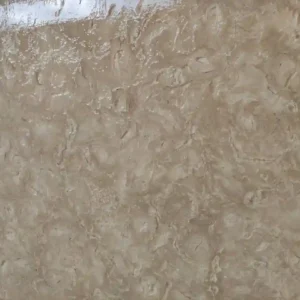
Snow stone pavers sourced from travertine formations carry the characteristic open-pore structure of that material — a network of voids formed during the stone’s deposition in mineral-rich springs. That porosity isn’t a defect; it’s an intrinsic structural feature that governs how the material absorbs moisture, responds to sealer, and moderates surface temperature. You’ll read more below about how that compares directly to marble’s denser matrix.
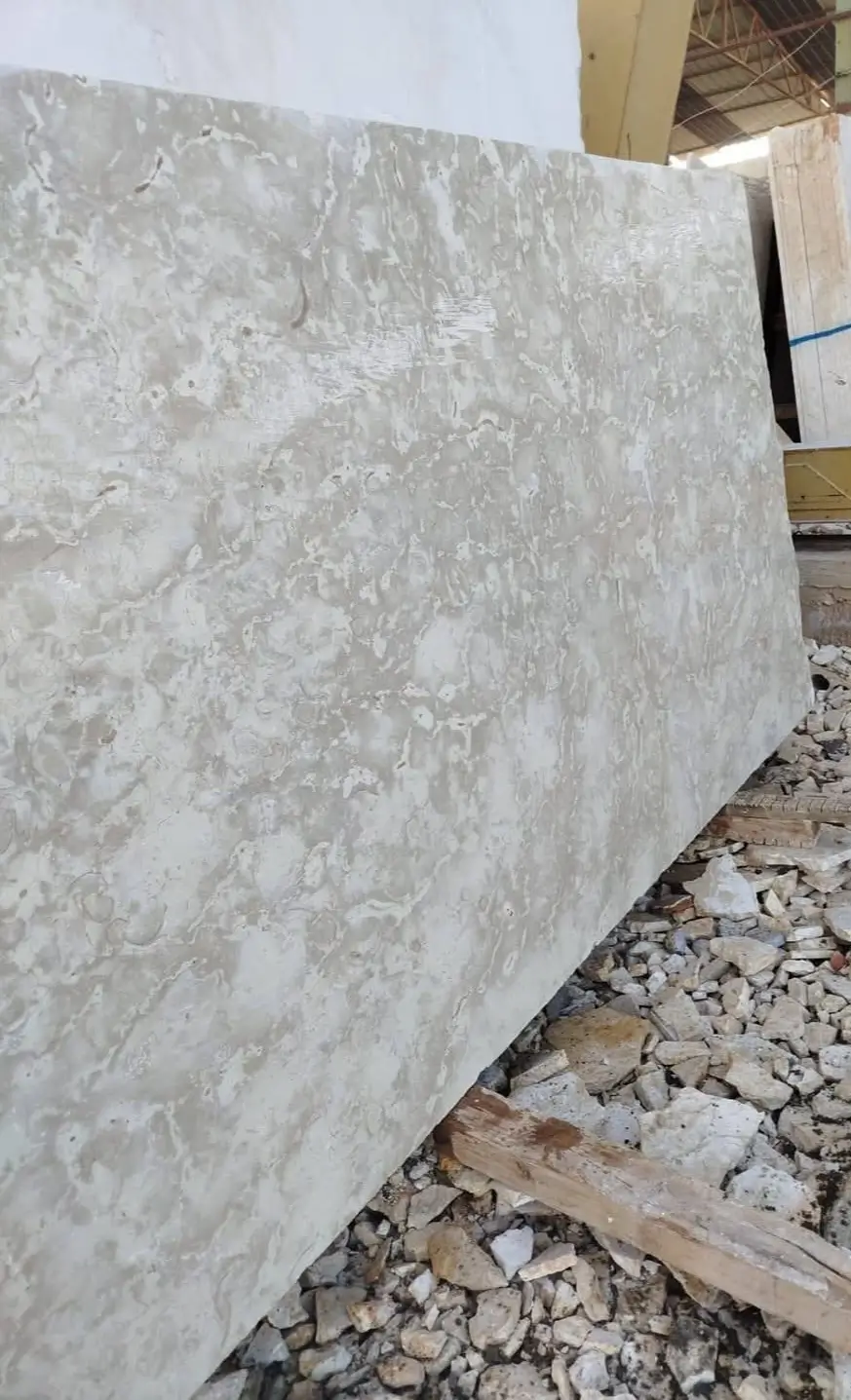
Marble vs Snow Stone: Core Material Differences
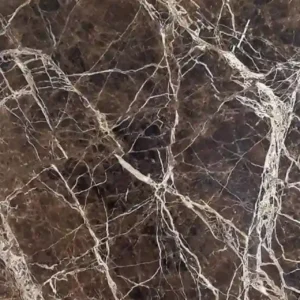
Marble is metamorphic — limestone or dolomite recrystallised under heat and pressure, producing a dense, interlocking crystalline matrix. That density gives polished marble its characteristic depth of reflectivity, but it also means the material absorbs and retains thermal energy more aggressively than a porous travertine. On a south-facing terrace in full afternoon sun, that difference becomes tangible underfoot. Snow stone travertine, with its open pore network, sheds heat at a measurably different rate — a factor that pool deck and terrace specifiers weigh heavily when bright surface aesthetics are the brief.
According to NSI limestone and travertine properties, the absorption characteristics and pore structure of travertine distinguish it markedly from dense metamorphic alternatives when outdoor durability is the specification criterion. For your project, that translates to a practical question: do you need the surface to shed absorbed heat quickly, or do you need the structural density of a crystalline material? Both are legitimate answers — they just push you toward different stone families.
- Snow stone travertine: open pore structure, moderate absorption rate, sheds thermal load faster
- Marble: dense crystalline matrix, low absorption rate, higher thermal retention in direct sun
- Both require sealing for outdoor applications, but sealer type and reapplication interval differ
- Marble’s crystalline face polishes to a higher reflectivity, which increases glare on horizontal surfaces
- Travertine’s matte and filled-honed finishes produce less specular glare in bright conditions
Finish Selection for Bright Surfaces
The finish you specify changes everything about how a bright surface reads in daylight. Polished marble amplifies the stone’s natural brightness to the point where glare becomes a design variable — something that works beautifully on vertical cladding or interior flooring but demands careful thought on a sun-exposed horizontal paving plane. Honed marble brings that down, producing a flatter, more even brightness that handles direct sun better without the mirror effect.
Snow stone travertine gives you more finish options that genuinely suit outdoor bright surfaces. A filled-and-honed travertine presents a smooth, pale face with the voids grouted to match, giving you visual consistency and a surface that cleans easily. A brushed or tumbled finish leaves an open, matte texture — appropriate where you want the warmth of the pale colour without any sheen. The texture of each finish is the real specification variable here, and you should request physical samples in the finish you intend to use, viewed under direct sunlight, before committing to a full order.
- Polished: maximum brightness, high reflectivity, glare consideration on outdoor horizontals
- Honed: flat brightness, even daylight performance, preferred for most outdoor terrace applications
- Filled and honed travertine: smooth face, consistent tone, easy maintenance, voids stable after sealing
- Brushed: open texture, matte appearance, suitable for walkways and pool surrounds
- Tumbled: rounded, aged appearance, matte surface with a tactile, irregular quality
Porosity, Sealing, and Maintenance Compared
Porosity is where snow stone pavers and marble diverge most sharply in ongoing maintenance requirements. Travertine’s natural voids — even when filled at the factory — mean the material’s sealer needs to penetrate a more complex surface architecture than the dense crystalline face of marble. A penetrating impregnator is the correct choice for both, but your reapplication interval should be confirmed against the sealer manufacturer’s stated guidance for the specific stone type, not a generic schedule you borrow from a concrete paver spec.
Marble in an outdoor setting is vulnerable to acid etching in a way that travertine — also calcium carbonate — shares but expresses differently. On polished marble, an acid contact event (organic debris, pooled rainwater in some acidic environments) leaves a visible dull patch against the polished face. On a honed or brushed snow stone travertine surface, the same event is less dramatically visible because there’s no high sheen to disrupt. That doesn’t make travertine acid-proof — it makes the damage less visually catastrophic, which matters for public-facing installations. Both materials benefit from prompt cleaning of organic debris and standing water.
Thickness and Structural Specification
Your snow stone paver comparison needs to include thickness, because marble and travertine carry different structural behaviours under point load at equivalent nominal thicknesses. Travertine’s voided structure means its structural performance is influenced by fill quality, density variation across the slab, and the proportion of void to solid material in the specific seam quarried. Marble’s crystalline uniformity gives it more predictable structural behaviour at the same nominal thickness, which some structural engineers prefer when specifying paving over hollow-core substrates or suspended decks.
The practical guidance here: request the test report from your supplier for the specific ASTM test method covering compressive strength and flexural strength — the Natural Stone Institute publishes the relevant ASTM testing standards for dimension stone as reference for specifiers. Never accept a verbal claim about structural performance as a specification. For a residential patio over a well-compacted aggregate base, either material performs reliably at standard paving thicknesses — the structural question becomes critical only where the substrate is unusual.
- Request ASTM test reports for compressive and flexural strength before specifying either material for unusual substrates
- Standard aggregate base installations: both materials perform reliably at typical paving thicknesses
- Suspended or hollow-core substrates: verify structural performance data in writing before specifying
- Confirm nominal thickness against the supplier’s quarry-cut tolerance — variation from nominal affects both performance and visual consistency at joints
Snow Stone Pavers vs Marble: Colour Consistency Across Orders
Colour consistency is the practical production challenge with any pale natural stone. For snow stone pavers, the pale cream-to-white palette sits within a naturally narrow band, but veining, shading shifts, and tonal variation across quarry batches are inherent to the material. Your specification should state an approved sample and acceptable variation range, not just a material name — and your supplier should be prepared to match against that sample from their current quarry stock.
Marble introduces a wider variable set in the pale-tone category. Carrara, the Tuscan marble whose name is inseparable from the white-stone aesthetic in architecture, exhibits characteristic grey veining that you either embrace as a design feature or manage through grading and sorting. Snow white travertine from Middle East quarries typically delivers a more uniformly pale face with less dramatic veining — a relevant distinction if your brief requires a surface that reads as consistently bright across a large installation. For projects where uniformity matters, explore the Citadel Stone bright paver range and request a panel of quarry samples to assess tone consistency before ordering.
Seasonal Installation Timing for Bright Stone Pavers
Setting material behaviour changes significantly with ambient temperature, and pale travertine and marble installations are unforgiving of rushed scheduling. Most polymer-modified mortars and adhesive systems carry stated installation temperature windows — typically between 40°F and 90°F — and the setting time, open time, and final bond strength all vary within that range. Scheduling your snow stone paver installation outside those windows introduces risk that no amount of skill compensates for.
The practical approach for warm-season projects: schedule mortar work for morning hours when ambient temperatures are rising but haven’t peaked. Stone surfaces left in full afternoon sun can reach temperatures well above air temperature, which accelerates skinning of the mortar bed and reduces the window you have to adjust each paver. In cooler seasons, the reverse problem appears — cold substrate temperatures slow hydration of cement-based mortars and can cause weak bond lines if work proceeds below the adhesive manufacturer’s minimum. A site thermometer and the adhesive’s technical data sheet are non-negotiable tools; the printed installation schedule is a starting point, not a field guide.
- Check ambient and substrate temperature before beginning each day’s work — not just at the start of the project
- Morning installation windows generally give better open time in warm conditions than afternoon sessions
- In freeze-thaw regions, verify the base is fully unfrozen to depth before setting — partial freeze beneath the aggregate base is a common cause of early joint failure
- Confirm your adhesive system’s stated temperature window and follow the sealer manufacturer’s minimum cure temperature before applying any surface treatment
- Delivery scheduling should account for seasonal delays — lead times are confirmed with the order, and installation windows in shoulder seasons can close quickly
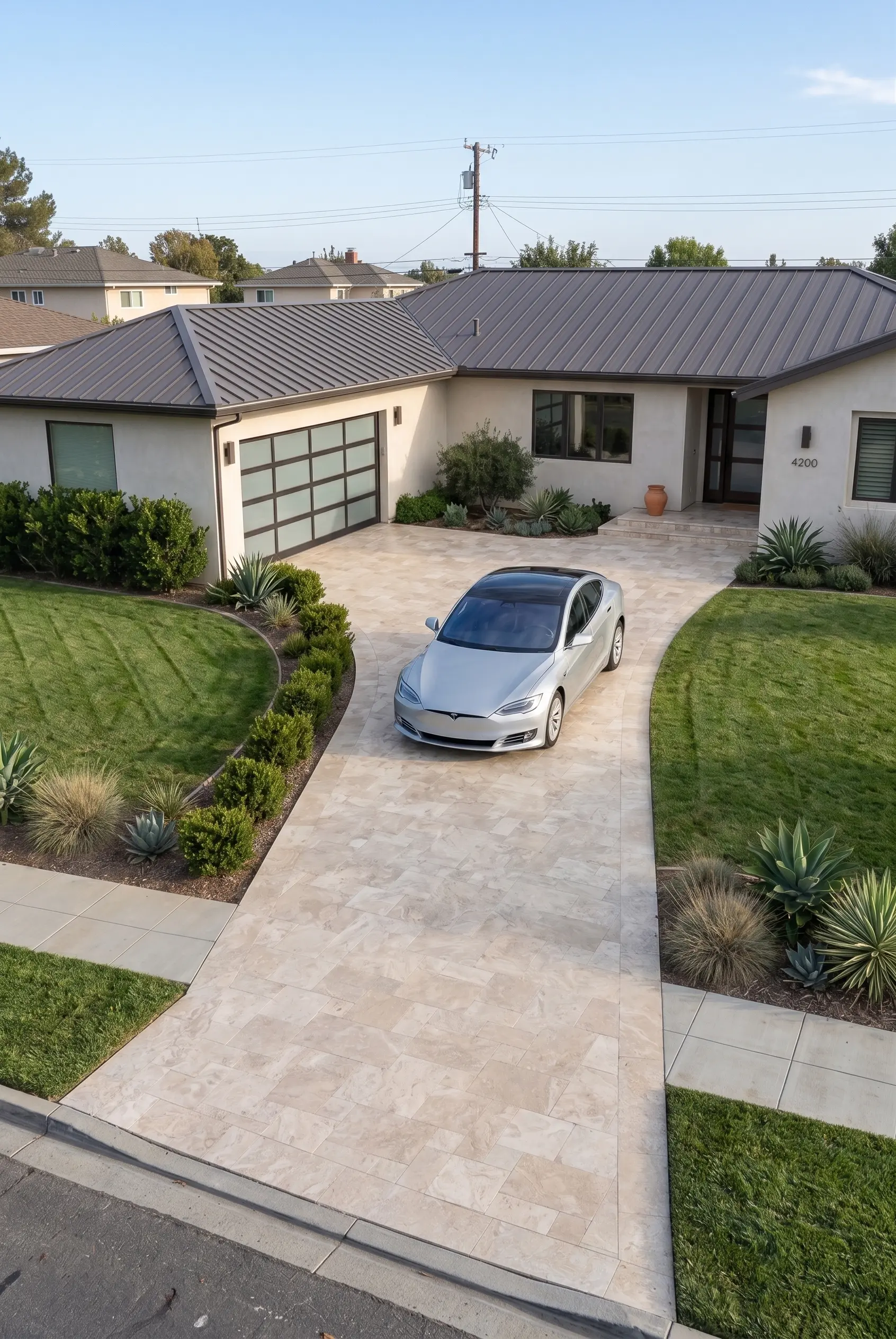
Slip Resistance and Finish Considerations for Outdoor Use
Slip resistance is a subject that belongs in every bright-paver specification conversation — not as a guarantee, but as a surface variable you actively manage through finish selection and maintenance. The relevant test standard for wet-condition assessment is ANSI A326.3, measured wet; the current standard replaced the ASTM C1028 static test withdrawn in 2014. Finish is the primary variable — a polished marble surface behaves differently when wet than a brushed travertine surface, and that difference is governed by surface texture, not by the stone species alone.
For outdoor applications, finishes that present more texture — brushed, tumbled, or sandblasted — produce surfaces where wet-condition behaviour is generally more moderate than polished equivalents. The CDC provides outdoor surface guidance addressing wet-condition slip prevention that is useful context for commercial project briefs. For any project where a specific performance level is required by the client brief or building authority, request the ANSI A326.3 test report from your stone supplier — never accept a verbal assurance in place of a documented test result.
Project Logistics and Ordering Considerations
Your snow stone paver comparison should include a practical look at project logistics before you finalise a material decision. Natural stone ships as dimensional material, and your site access conditions — crane clearance, offloading space, storage area — need to be confirmed against the delivery arrangement before the order is placed. Citadel Stone arranges delivery and confirms offloading details before dispatch; lead times are quoted with the order, not assumed from a catalogue.
For large-format bright pavers, the pallet weight and individual slab weight determine your handling equipment requirements on site. Marble and travertine at standard paving thicknesses are both manageable with standard stone-handling suction equipment, but wider-format pieces — anything above 24 inches on the long dimension — benefit from two-person handling or mechanical assistance to avoid edge chipping during placement. Plan your staging area accordingly, and confirm with the delivery coordinator that site access to your offloading point is viable before the delivery date.
- Citadel Stone cuts snow stone pavers to order at our selected quarries — confirm your dimensions and quantities before the cut order is placed
- Confirm site access route and unloading area before delivery is scheduled
- Large-format slabs require mechanical handling or two-person teams to avoid edge damage
- Stage material under cover if installation is delayed — pale stone left on open pallets is vulnerable to staining from iron-bearing debris and organic matter
- Order a calculated overage — a standard buffer accounts for cutting waste, breakage, and pattern adjustments at perimeter cuts
Expert Summary
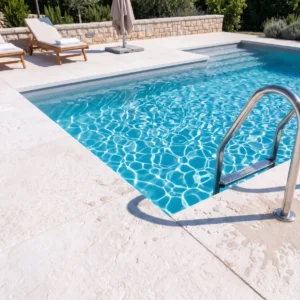
The decision between snow stone pavers and marble comes down to how you weight surface uniformity, thermal behaviour, maintenance interval, and finish compatibility with your application. Marble’s crystalline density suits interiors and shaded exterior applications where polished reflectivity is a design goal. Snow stone travertine’s open structure, moderate thermal profile, and wider range of suitable outdoor finishes make it the practical lead choice for bright, sun-exposed horizontal surfaces — pool surrounds, terraces, and open patio fields where the pale tone needs to perform across years of UV exposure, seasonal temperature cycling, and regular pedestrian traffic.
Specify your finish carefully, request test reports for structural performance and absorption from your supplier, confirm sealer compatibility with the stone type before purchase, and schedule installation within your adhesive system’s stated temperature window. Natural stone selection isn’t a single decision — it’s a sequence of coordinated specification choices that compound into a long-term outcome. For a deeper look at how pricing variables shift between stone families in this category, marble paver cost factors covers the commercial side of that comparison in useful detail. Sourced from our selected quarries in the Middle East, Citadel Stone snow stone pavers reach a consistent pale finish.
Related reading: choosing white travertine pavers · white paver design ideas.