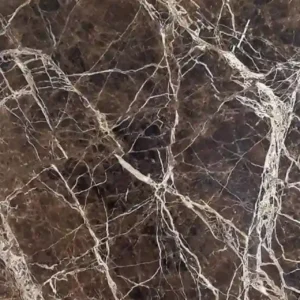
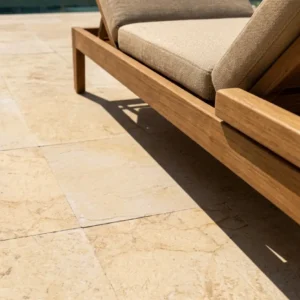
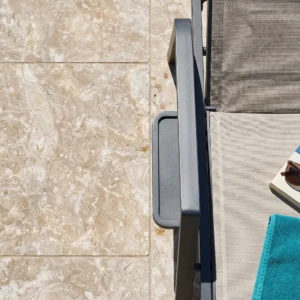
Marble paver cost comparison breaks down along variables that most buyers never see in a per-square-foot quote — quarry origin, slab thickness, surface finish, and the block yield that determines how much saleable stone a cutter actually gets from a single quarried block. Understanding those variables before you approve a budget is the difference between a realistic specification and a costly revision mid-project. The price gap between a modest honed marble and a premium book-matched polished variety can be substantial, and each step up the quality ladder is driven by something concrete, not by brand marketing.
What Drives Marble Paver Pricing at the Source
The quarry block grade is where pricing diverges first. High-whiteness, low-vein blocks command a premium because they are statistically rare — most marble deposits yield a range of colour intensities and veining densities across each extraction face, and the cleanest material is pulled in smaller volumes. When you request a consistent, low-variation marble for a large patio installation, your supplier has to source selectively, and that selectivity is priced into the order.
Extraction method matters alongside block grade. Wire-saw quarrying produces cleaner, larger blocks with less wastage than older drill-and-blast techniques, and the resulting slabs carry fewer internal micro-fractures. Those micro-fractures are invisible at the yard but become visible after a freeze cycle, when water that has migrated into hairline voids expands and opens a crack the stone never showed you at purchase. Specifying a clean extraction method is a technical requirement, not an aesthetic preference.
- Block grade sets the colour consistency ceiling — lower grades introduce colour shifts across a paved area
- Wire-saw extraction reduces internal fracture risk compared to older methods
- Yield rate from block to finished paver affects unit cost — low-yield stone costs more per square foot even at the same raw material price
- Quarry altitude and water table affect natural moisture content, which influences processing complexity
Thickness and Its Real Cost Implications
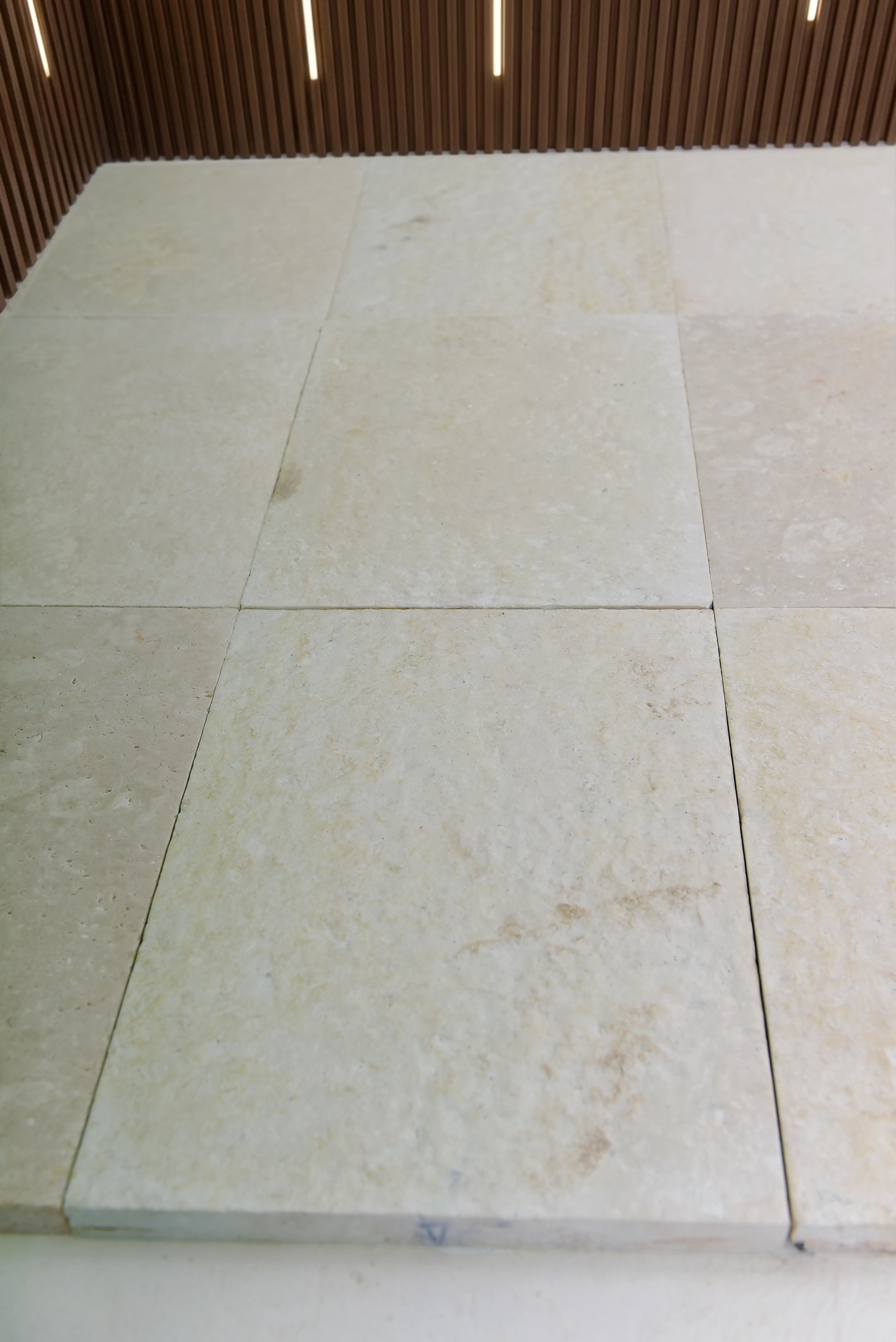
Your marble paver pricing comparison should always isolate thickness as a line item. A 2 cm paver and a 3 cm paver in the same material can differ by a meaningful margin per square foot, and that gap is not just raw material volume — it also reflects processing time, waste yield, and the structural suitability range the thicker stone unlocks.
Structurally, 3 cm marble pavers open the specification to pedestrian hardscape, pool surrounds, and light vehicular-adjacent areas where 2 cm falls short. The thicker format also distributes point loads more effectively across the setting bed, which matters in climates where thermal cycling puts cyclic stress on mortar bonds. In regions with significant day-night temperature swings — where the stone surface can shift by tens of degrees Fahrenheit between midnight and mid-afternoon — a thicker paver provides the cross-sectional mass that resists flex at the joint line.
According to Natural Stone Institute marble grades and technical specifications, thickness tolerances and squareness directly affect installation flatness and the labour time required to level each course. Tighter tolerances cost more at the mill but save measurably on installation labour, particularly on large-format projects where cumulative variance compounds across runs.
- 2 cm: suited to residential pedestrian applications with engineered bases
- 3 cm: preferred for pool surrounds, high-traffic terraces, and areas with significant thermal movement
- Thickness tolerance tightness affects setting-bed labour — ask your supplier for the nominal tolerance before pricing the installation phase
- Thicker slabs carry more mass, which moderates surface temperature swings by retaining heat longer into the evening cycle
Surface Finish and Its Price Impact on Marble Pavers
Finish selection is the most underestimated cost variable in a marble paver cost comparison. Polishing requires multiple progressive abrasive passes — the difference between a honed and a high-polish finish can represent a meaningful addition in processing time alone. Beyond cost, finish determines how the stone performs over its service life outdoors.
A honed finish leaves the surface with a matte, slightly open texture that ages more forgivingly than a polished face. Polished marble shows every scratch, efflorescence ring, and weather mark with high contrast — outdoors, that means more maintenance labour over time, which is a lifecycle cost the upfront square-foot price does not capture. A brushed or tumbled finish goes one step further, leaving an irregular matte surface with a more open pore structure.
From inspections at our selected quarries, we have found that finish consistency across a large batch is harder to maintain on highly veined material — the abrasive response varies across soft and hard mineralogical zones within the same slab, so a uniformly polished result requires additional quality inspection passes. That inspection overhead is factored into the price for premium-finish orders.
- Polished finish: highest processing cost, highest maintenance outdoors, most reflective aesthetic
- Honed finish: mid-range processing cost, forgiving maintenance profile, reduced glare outdoors
- Brushed finish: open matte texture, lower reflectivity, compatible with a wider range of outdoor conditions
- Tumbled finish: leaves an irregular, aged-looking matte surface — lower finishing cost but higher sorting labour for consistent sizing
Comparing Marble Pavers to Travertine on Cost and Performance
The marble paver cost comparison most buyers actually face is marble versus travertine — two calcium carbonate stones that look similar in some formats but behave differently outdoors. Travertine’s cellular pore structure gives it natural thermal buffering that solid marble does not replicate; the voids in travertine act as a cushion against rapid surface temperature change, while dense marble conducts and releases heat more directly.
For a pool surround or a terrace that receives full-day sun exposure, that thermal behavior is a practical specification consideration, not just a comfort preference. The open-pore structure and absorption characteristics of travertine inform this thermal behavior — worth requesting a test report on absorption rate from your supplier when evaluating both materials side by side.
On the cost side, travertine at equivalent thickness and finish often comes in at a lower per-square-foot figure than comparable marble because the quarry yield is higher and processing is less abrasive-intensive. But travertine’s open pores require filling — either factory-filled or on-site — and that filling step is a cost that belongs in the comparison. If you are weighing both materials, consider Snow White Travertine Pavers as a reference point for finish, thickness, and pricing alongside marble options.
- Marble: denser, higher per-unit cost in premium grades, lower quarry yield on clean material
- Travertine: cellular structure, higher quarry yield, requires pore-filling — add that step to cost comparisons
- Both are calcium carbonate and share vulnerability to acid etching — factor sealer cost into both budgets
- Thermal behavior differs: travertine’s pore structure moderates surface temperature more than dense marble
Freeze-Thaw Performance and Long-Term Cost
Thermal cycling is a cost variable that appears in year three or four of an installation, not at purchase. Marble pavers installed in climates with significant seasonal swings — or even in regions where day-night temperature differentials are wide — are subject to cyclic stress at the joint and at any internal micro-fracture the stone carries from quarrying. Water migrates into those spaces, freezes, expands, and opens the void further with each cycle.
The practical implication for your specification is joint design and sealer interval. Tighter joints filled with a frost-rated grout resist water ingress more effectively than wide, partially filled joints. Your joint width should be determined by your thermal movement calculation — ask your supplier for the stone’s measured coefficient of thermal expansion (ASTM C503, the marble dimension stone specification, covers absorption, density, strength and abrasion, not thermal movement); that coefficient, multiplied by the run length and the site’s temperature range, gives you the movement the joint must accommodate across a season.
You should also plan your sealer interval around freeze-thaw exposure. A penetrating sealer that reduces water absorption protects the internal pore and micro-fracture network from the freeze cycle. The interval your sealer manufacturer specifies is the one to follow — shortening it in high-cycle climates is a maintenance investment that extends service life and keeps long-term cost lower than reactive crack repair.
- Specify a frost-rated joint fill product in freeze-thaw-exposed installations
- Use the supplier’s test report coefficient of thermal expansion to calculate joint width — never use a generic rule of thumb
- Penetrating sealers reduce water ingress into micro-fractures that thermal cycling can widen
- Wide day-night temperature swings in dry climates still generate cyclic stress — freeze is not the only thermal risk
- Re-sealing on the manufacturer’s stated interval reduces long-term repair cost significantly
Grading and Variation: What You Are Actually Buying
Marble paver pricing reflects grade, and grade is not a universal standard — it is a commercial descriptor that different suppliers apply differently. Your specification should define grade in measurable terms: colour range tolerance, maximum vein width, minimum face clarity, and acceptable surface marking. Without those parameters, a label like “premium grade” on a quote sheet is unverifiable.
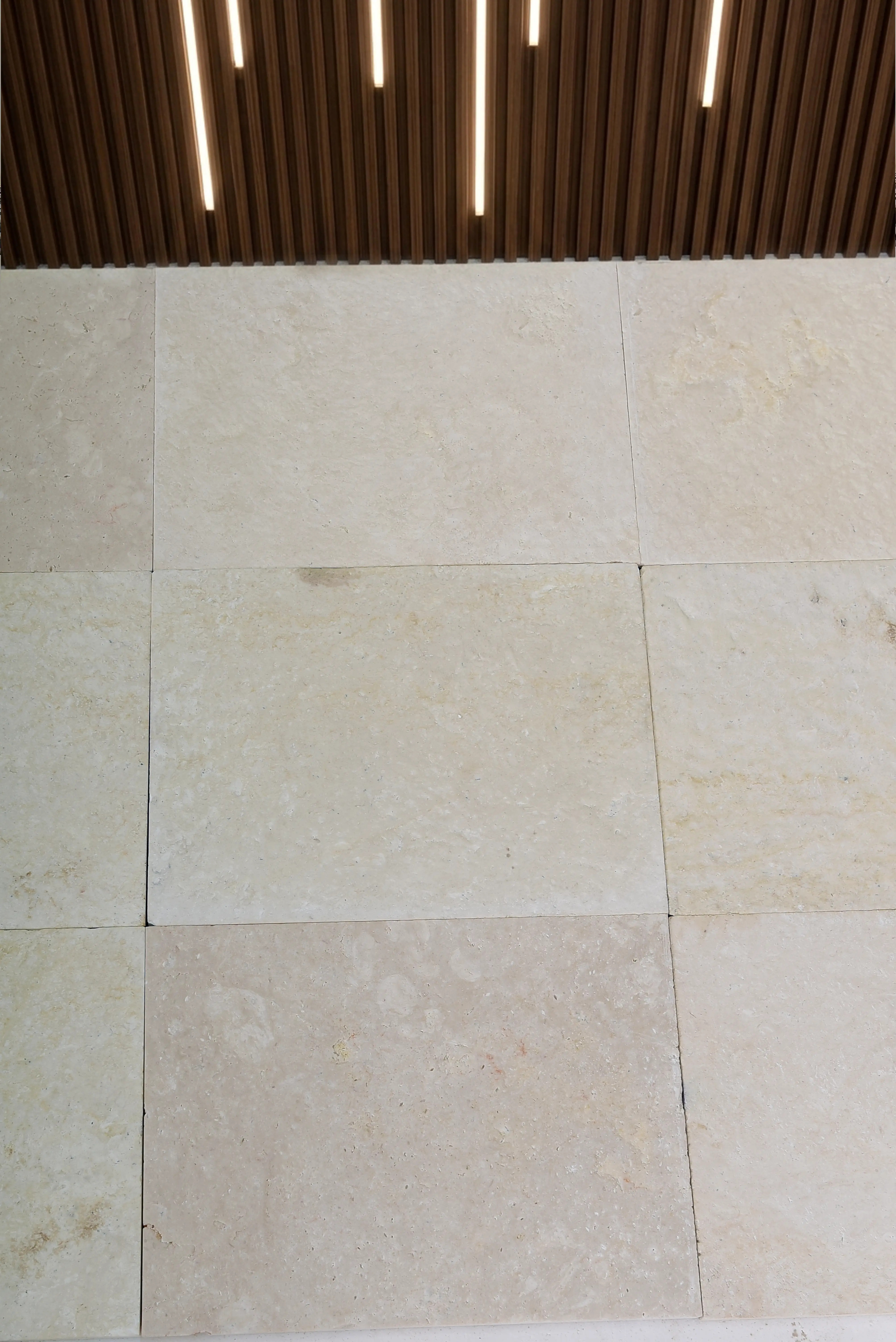
Colour variation within a batch is the most common source of post-delivery disputes. Marble is a geological material — the veining, mineral inclusion pattern, and background tone shift across a quarry face. A supplier cutting to order from a single quarry source can hold tighter consistency than one pulling from mixed stock. Citadel Stone cuts marble paver orders to specification at our selected quarries, which means the batch you order is drawn from a controlled block selection rather than blended warehouse pulls.
According to Britannica’s overview of marble geological formation and characteristics, the mineralogical variation within a single deposit is the natural basis for the colour and veining range you see across batches — understanding that context helps you write a specification that is realistic about achievable consistency rather than one that creates supplier disputes.
- Define grade in your spec by measurable parameters, not commercial labels
- Request a sample board that represents the range of the batch, not the best piece
- Single-source quarry cutting reduces colour-shift risk across large orders
- Sealing uniformity also affects visual consistency — a variable absorption rate across a batch creates uneven sheen after sealing
Logistics and Delivery in the Total Cost Picture
Your marble paver cost comparison is incomplete without a logistics line. Natural stone is heavy, and the cost to move it from quarry to project site is not trivial — particularly on orders requiring careful handling to avoid surface damage in transit. Delivery lead times are confirmed and quoted with each order, not guaranteed in advance, so your project schedule should carry contingency for material arrival.
Site access for offloading affects delivery planning. Your project’s access constraints — turning radius, overhead clearance, pavement load rating on the access road — all affect how delivery is arranged and whether a standard drop-off is feasible or requires a transfer to a smaller vehicle. Offloading arrangements should be confirmed before the scheduled delivery date to avoid costly delays at the site.
- Request delivery lead times in writing with your order confirmation — never assume a standard window
- Confirm site access requirements early: turning radius, road load rating, and offloading equipment availability
- Order a calculated overage — typically discussed with your supplier based on the project layout — to avoid a costly small re-order on a slow shipping schedule
- Crating and packing specification affects surface damage risk in transit — ask what protection standard applies to your order
Marble Paver Cost Comparison: Decision Points Before You Specify
The variables that move marble paver pricing are concrete and documentable: quarry block grade, extraction quality, slab thickness, surface finish, and batch consistency. Each one belongs as a line item in your evaluation, not as a general impression from a brochure. When you compare quotes, you are comparing different combinations of those variables — the lowest per-square-foot figure is not automatically the best value once yield, finish, and consistency tolerances are accounted for.
Thermal cycling considerations sharpen the specification further. Your joint design, sealer protocol, and thickness selection should all reference site-specific temperature range data rather than generic defaults. The coefficient of thermal expansion from the supplier’s test report is the starting point — ask for it, and ask for the absorption test result too, because both inform how the stone will age in your climate.
As you extend your planning across the full project, other natural stone elements often come into view alongside the primary paved surface. A related specification question worth understanding is how 3cm pavers behave after setting, particularly where base preparation or delivery sequencing has introduced variability into the finished plane. When budgeting a bright stone patio, buyers working with Citadel Stone can compare travertine and marble side by side to weigh finish, thickness, and overall cost per square foot.
Related reading: White Paver Design Ideas for Bright Outdoor Spaces · Choosing White Travertine Pavers: Tone, Finish & Care.