Color Sets the Tone Before Any Stone Is Laid
Landscape stone color selection is one of those decisions that shapes how every other design choice reads — and most homeowners underestimate its reach until the palette is already set in mortar. The undertone of your stone interacts with your home’s cladding, roof line, and surrounding plant material in ways that a single sample swatch rarely reveals. Pull colors from at least three lighting conditions — overcast morning, midday sun, and late afternoon shade — before you commit to anything at scale.
Understanding Undertones in Natural Stone
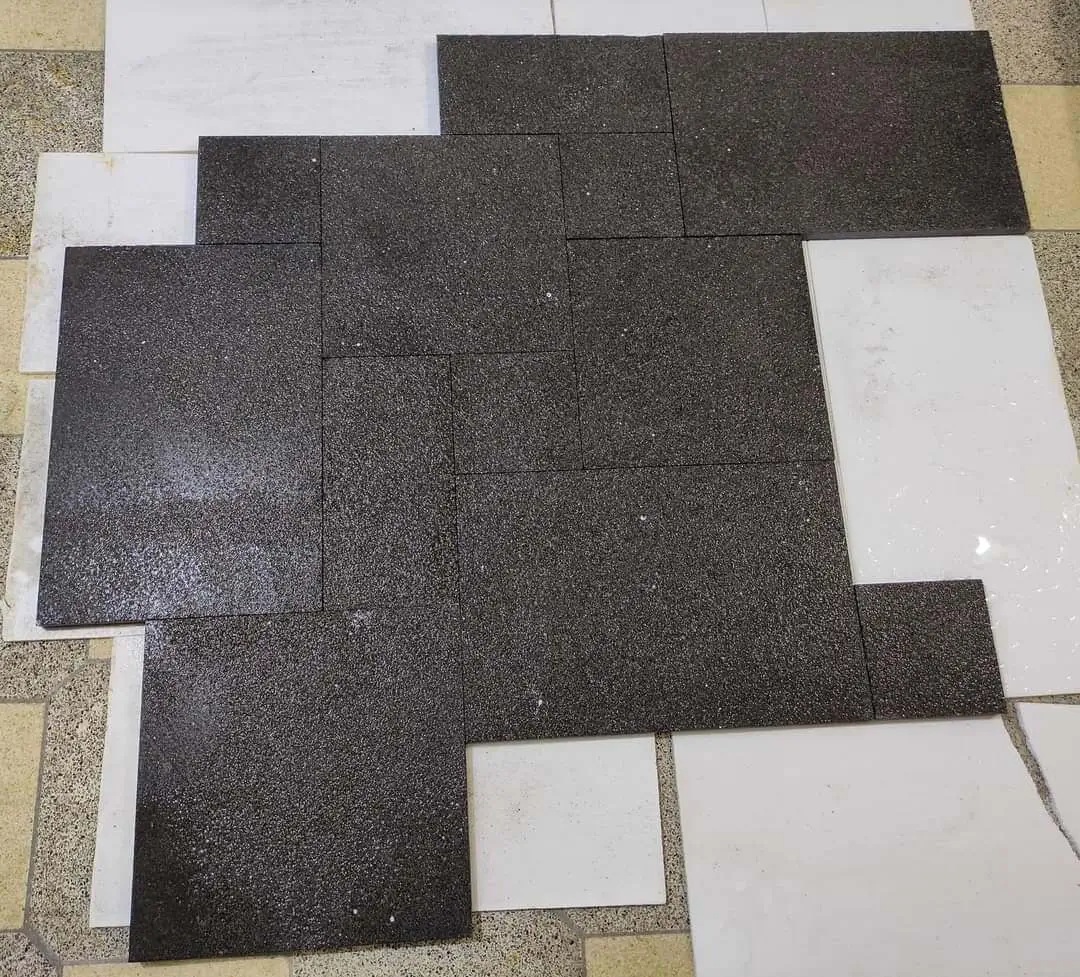
Natural stone is not a single flat color — it carries undertones that shift dramatically depending on the stone’s mineral composition. Limestone sourced from Middle East quarries tends toward warm cream and gold undertones, while basalt reads as cool charcoal with subtle blue or green casts. Granite ranges from warm pink-feldspar tones to cold grey depending on its mica and quartz content. Matching undertones — not just surface hue — is what separates a cohesive exterior from one that looks assembled from leftover material.
Your safest method is to place a large sample slab (minimum 12″ × 12″) directly against your home’s existing cladding in full daylight. Digital photos rarely capture undertone shifts accurately. According to Natural Stone Institute variety specifications, mineral composition and formation conditions vary significantly even within the same stone family, which explains why two “grey” limestones from different quarries can read almost as different colors once installed.
Warm vs. Cool Stone Palettes: What Works Where
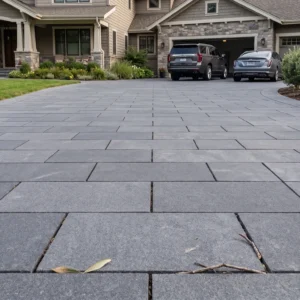
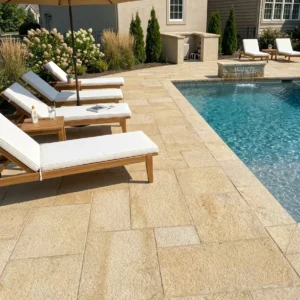
The warm-versus-cool divide in landscape stone colors is where most exterior projects find their footing. Warm stones — honey limestone, buff sandstone, terracotta-veined travertine — pair naturally with brick homes, cedar cladding, and terracotta roof tiles. Cool stones — blue-grey slate, charcoal basalt, silver granite — complement rendered white or grey facades, dark timber, and zinc roofing.
- Warm palette stones (cream, gold, buff, tan) advance visually, making smaller garden beds feel more contained and intimate
- Cool palette stones (grey, charcoal, blue-black) recede visually, expanding the perceived depth of narrow side passages and entries
- Neutral mid-tones (taupe, greige, weathered stone) bridge both palettes but require careful attention to grout and mortar color to avoid muddying the overall look
- Veined or multi-tonal stones carry both warm and cool notes — extract one dominant tone to anchor your selection
Red landscape stone occupies a distinct category — it introduces energy and contrast that works well as an accent border or feature pathway but can overwhelm a large patio area if used as the primary surface. Keep red-toned stone as a deliberate accent rather than the foundational palette choice unless the architecture explicitly demands it.
Matching Stone Colors to Your Home Exterior
Your home’s dominant exterior color is the fixed point everything else orbits. Work outward from that anchor rather than starting with the stone you like and trying to reverse-engineer a match. A cream-rendered facade with dark window frames calls for either a complementary warm-buff paving or a clean contrasting cool grey — anything in between risks reading as a mismatch rather than a deliberate design decision.
Roof color is the element specifiers most often forget. A charcoal roof with terracotta pavers creates a jarring vertical jump in the color story. The vertical surfaces (walls and roof) frame the horizontal stone plane like a picture frame — your landscape stone color selection needs to sit comfortably within that frame. As ASLA hardscape design guidance notes, the integration of horizontal paving materials with the broader architectural palette is foundational to successful residential landscape design.
- White or off-white facades: almost any palette works — let accent colors in planting or fixtures guide the stone choice
- Brick exteriors: avoid stones with competing red or orange undertones — opt for neutral grey or cream to let the brick lead
- Dark charcoal or black cladding: lighter stones (ivory limestone, cream travertine, light grey granite) create the contrast that makes the entry read clearly
- Natural timber cladding: warm buff or honey tones mirror the timber’s natural warmth without competing
How Natural Stone Pavers Perform by Color Family
Color choice in landscape stone pavers isn’t purely aesthetic — it has measurable performance implications you need to account for before specifying. Lighter stones reflect significantly more solar radiation than dark stones, which matters for surface temperature on barefoot-traffic areas. Dark basalt and black granite can reach surface temperatures 30–40°F higher than an equivalent ivory limestone in direct sun exposure, which affects comfort and can influence joint sealant longevity.
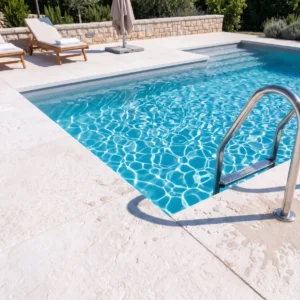
For landscape stone color selection on pool surrounds and entertainment terraces, surface temperature is a primary specification criterion, not a secondary one. Pale limestone or light travertine consistently outperforms dark stone in high-radiation-exposure zones where foot comfort matters. USGS basalt composition data confirms that basalt’s dense igneous structure and dark mineral content contribute directly to its high solar heat absorption — a physical property, not just a visual one.
- Light cream and ivory tones: lowest surface temperature, highest solar reflectance, most forgiving in hot, dry climates
- Mid-grey and taupe tones: moderate surface temperatures, versatile palette, reduced glare compared to white finishes
- Dark charcoal and black: highest surface temperatures, dramatic aesthetic impact, best reserved for shaded or partially shaded applications
- Red and rust tones: moderate heat absorption, strong visual impact, fade resistance varies significantly by stone type
Soil Conditions and How They Shape Your Color Planning
Soil composition affects landscape stone color decisions more than most homeowners anticipate. In regions with expansive clay subgrades, differential settlement over time causes paving joints to widen unevenly — and with light-colored stones, that joint widening becomes highly visible as the mortar or sand shows through in inconsistent lines. Specifying a stone color with slightly more tonal variation (rather than a flat, consistent cream) makes minor joint movement far less noticeable over the life of the installation.
Sandy or decomposed granite subgrades are more forgiving of slight color inconsistencies between individual stone units because the setting bed doesn’t induce the same stress patterns as clay. On caliche-heavy soils, where the hardpan layer creates drainage challenges, a more robust base preparation is required — and in those situations, a stone with visible natural texture variation helps mask the minor surface variation that drainage-related efflorescence can introduce over time. The soil beneath your landscape stone pavers is directly shaping how that color reads for the next two decades.
Blue Landscape Stone: Where It Works Best
Blue landscape stone — primarily bluestone, blue slate, and certain blue-grey basalt — is one of the most versatile palette choices for modern and transitional exteriors. Its cool, muted tone sits comfortably against a wide range of facade colors without dominating the composition. The blue-grey cast reads as sophisticated in formal entry applications and equally at home in relaxed garden walkway settings.
The practical consideration with blue landscape stone is finish selection. A sawn smooth finish on bluestone reads as contemporary and formal; a thermal or flamed finish on the same material introduces texture that softens the color and makes it read warmer. The finish effectively changes the apparent color temperature of the stone by altering how light scatters across the surface. Test your finish selection in situ rather than assuming the warehouse sample represents the installed result accurately. Explore the full range of Citadel Stone color selections to compare finish effects across the blue-grey palette before finalising your specification.
Managing Color Consistency Across Deliveries
Natural stone is a geological product, and color variation between quarry batches is inherent — not a quality defect. The challenge for larger projects is ensuring that the stone installed in month one reads consistently with the stone that arrives in month three. This is where sourcing discipline and warehouse stock management matter enormously.
At Citadel Stone, we source material from selected quarries and conduct batch-level color review at our warehouse before shipping, which allows us to flag significant batch variation before it reaches your project site. For projects requiring more than one truck delivery, request that your supplier pulls from the same quarry batch and, where possible, confirms batch numbers in writing before you commit to phased ordering. Blending units from two adjacent batches across each truck load — rather than installing one batch entirely before opening the next — is the field technique that prevents visible color banding across large paved areas.
- Request batch color photographs alongside standard compliance documentation for all large orders
- Blend units from multiple pallets on-site rather than working through one pallet at a time
- Order 10–12% excess from the same batch to cover cuts, breakage, and future repairs
- Store excess material from the original batch — future replacement stock from a different batch rarely matches precisely
How Surface Finish Changes Perceived Color
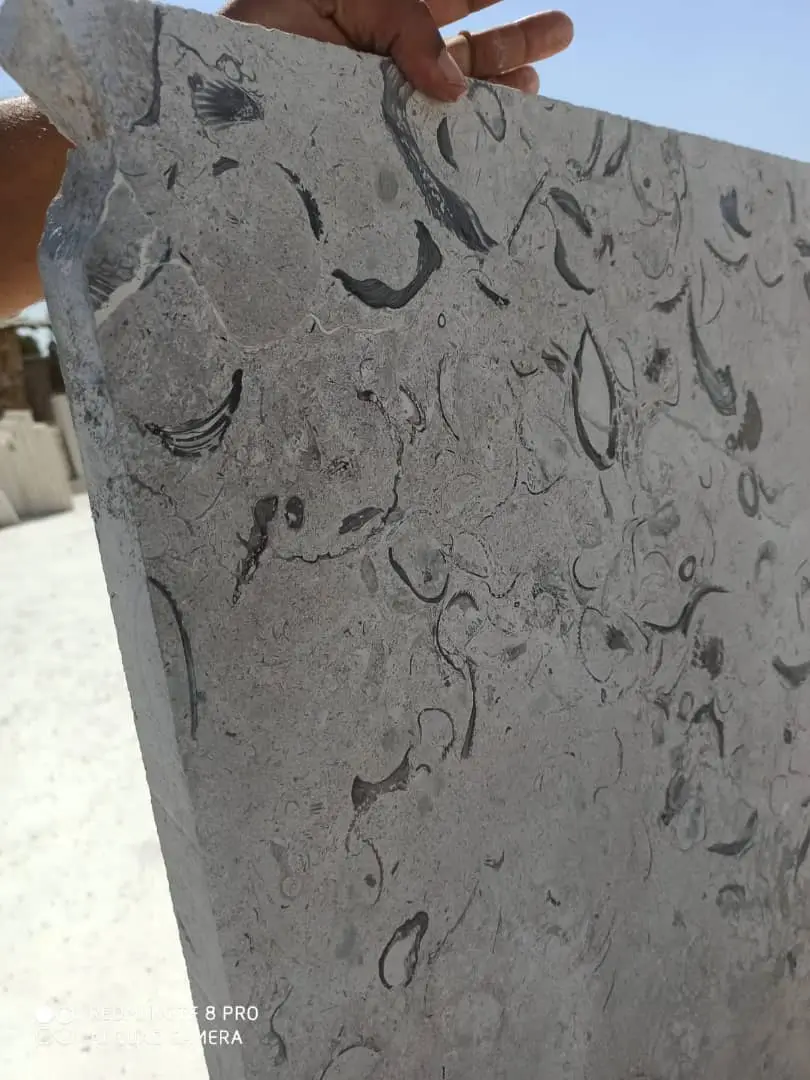
The finish you specify on your landscape stone pavers changes the perceived color more than most homeowners expect. A honed finish on a mid-grey limestone produces a matte, slightly muted tone. The same limestone with a polished finish deepens the grey by 20–30% in perceived saturation and introduces reflective highlights that read almost blue in overcast light. A bush-hammered or tumbled finish on the same material scatters light across the textured peaks and shadows, producing a lighter, more variegated appearance.
The practical implication: always request your landscape stone color sample in the specified finish, not just the stone type. A swatch labeled “Silver Grey Limestone” means almost nothing without the finish designation attached. Your specification document should always read as “[Stone Name] + [Finish] + [Nominal Thickness]” as a minimum — the finish is not a secondary detail, it is part of the color specification. According to USGS dimension stone production data, natural stone’s optical properties vary measurably by surface treatment, making finish an inseparable component of any complete material specification.
Putting Your Landscape Stone Color Selection Into Practice
Effective landscape stone color selection comes down to three disciplined steps executed before any material is ordered. First, establish your fixed reference points — existing facade color, roof tone, and the undertone family (warm or cool) those elements belong to. Second, evaluate stone samples in full daylight at your actual site, not in a showroom. Third, confirm batch availability and warehouse stock depth before committing to a project timeline, because a color you love that’s only available in a single partial pallet creates real specification problems on larger installations.
Stone color selection is not the place to make a last-minute decision driven by price or availability alone. The visual result is permanent for 20–30 years under normal maintenance conditions, and the cost difference between a color that works and one that doesn’t is measured in decades of regret rather than dollars per square foot. As you plan complementary elements for your property, exploring related hardscape applications is worthwhile — granite fabrication and stone projects covers how natural stone materials are selected and processed across different hardscape contexts. Cool grey and blue-toned stones from Citadel Stone tend to recede visually, making smaller yards feel more open and airy.
Related reading: types of landscape stone · landscape stone cost breakdown.