

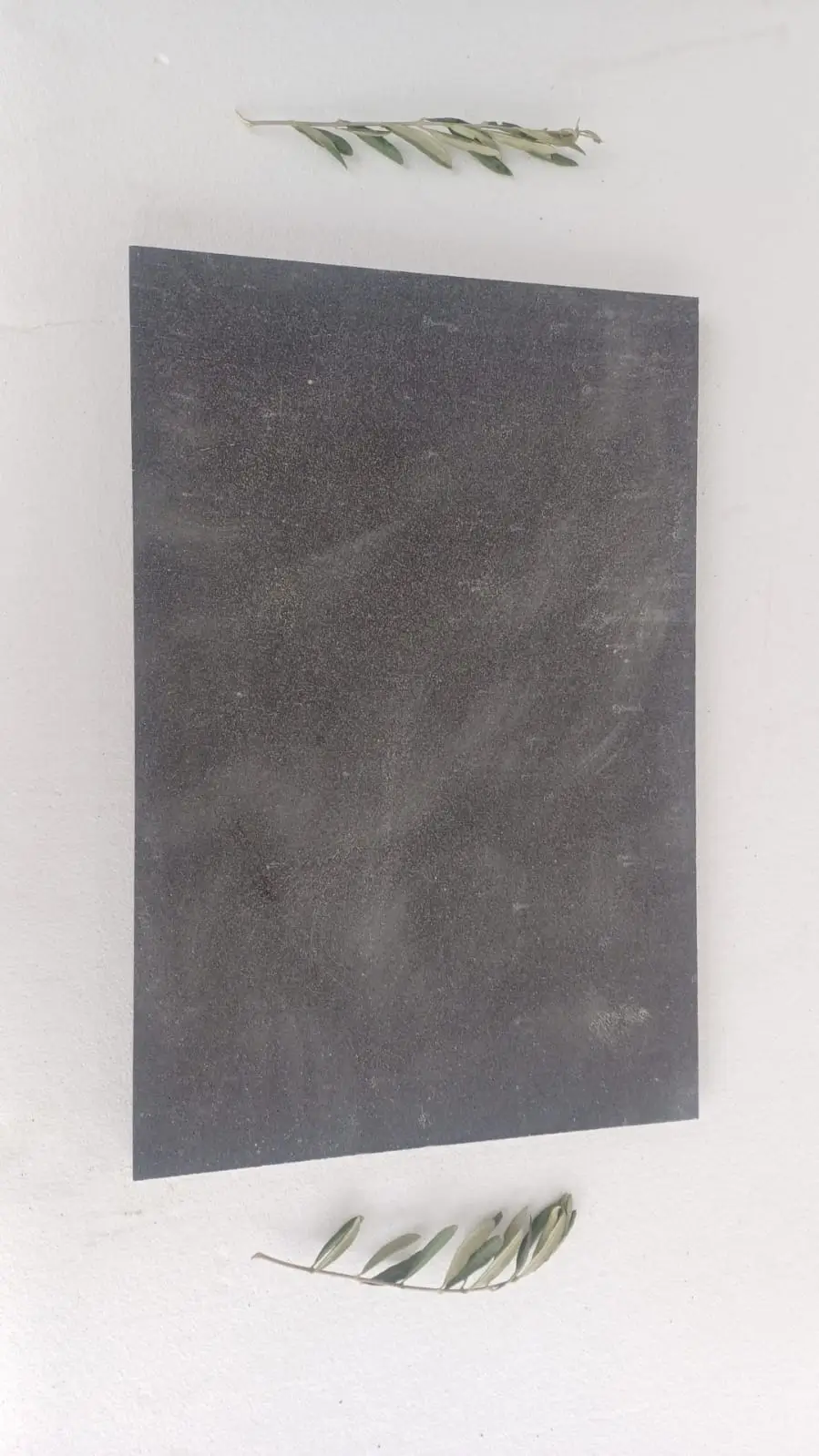
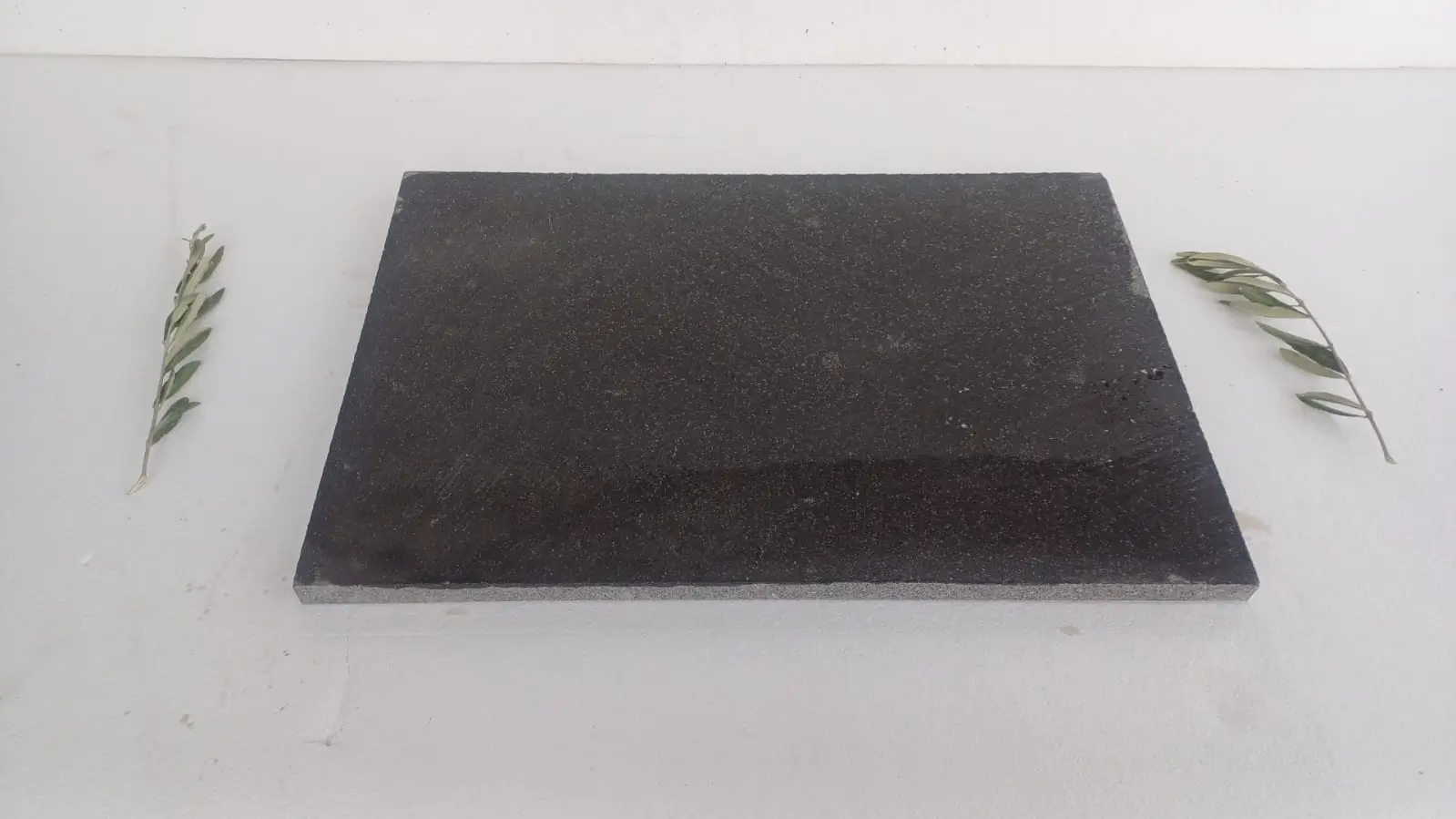
Basalt pavers are a standout choice for homeowners and landscapers looking to combine durability, elegance, and versatility in their outdoor spaces. Formed from volcanic rock, basalt is renowned for its strength and natural beauty, making it a top pick for driveways, patios, pathways, and garden features. With their rich, dark tones and ability to withstand the elements, basalt pavers offer a sophisticated look that enhances both modern and traditional landscapes.
What sets basalt pavers apart is the array of stunning patterns they can create. Among the most popular are the herringbone, basketweave, and circular designs. For the complete layout family beyond basalt, the paver laying patterns library maps every option with diagrams. These patterns not only elevate the aesthetic appeal of your outdoor area but also provide practical benefits like improved stability and load distribution. In this comprehensive guide, we’ll dive into these three basalt paver patterns, exploring their unique features, advantages, and installation techniques. Tailored for Citadel Stone, this article is designed to inspire and inform, whether you’re a DIY enthusiast or a professional landscaper.
Reasons to Opt for Basalt Pavers
Before we explore the patterns, let’s highlight why basalt pavers are an exceptional option for your next project:
- Unmatched Durability: As an igneous rock born from cooled lava, basalt boasts incredible hardness and resilience. It’s built to handle heavy traffic and harsh weather, making it perfect for driveways and walkways.
- Low Maintenance: Basalt’s dense structure resists stains and requires little upkeep—just a quick sweep or rinse keeps it looking pristine.
- Timeless Beauty: Available in deep shades like charcoal and black, basalt pavers bring a sleek, elegant vibe to any space. They pair beautifully with greenery, wood, or other materials.
- Design Flexibility: With various sizes and shapes, basalt pavers lend themselves to creative layouts, from simple grids to intricate patterns.
- Sustainability: Sourced naturally from quarries, basalt is an eco-friendly choice that avoids the energy-heavy production of synthetic alternatives.
With these benefits in mind, let’s delve into the herringbone, basketweave, and circular patterns that make basalt pavers so versatile.
Herringbone Pattern: Timeless Strength and Style
What is the Herringbone Pattern?
The herringbone pattern is a classic design inspired by the skeletal structure of a herring fish. Pavers are laid at 45-degree angles to one another, forming a distinctive V-shaped, zigzag pattern. This layout has been a favorite in architecture and landscaping for centuries, prized for its blend of strength and sophistication.
Benefits of the Herringbone Pattern
- Superior Stability: The interlocking V-shape distributes weight evenly, reducing the chance of pavers shifting under pressure. This makes it ideal for driveways and high-traffic zones.
- Visual Dynamism: The herringbone’s zigzag effect adds movement and depth, making spaces feel larger and more engaging. It suits both traditional and modern designs.
- Adaptability: Perfect for rectangular basalt pavers, this pattern can be tailored to fit narrow pathways or sprawling patios.
How to Install the Herringbone Pattern with Basalt Pavers
Creating a herringbone pattern with basalt pavers requires precision, but the process is straightforward with the right approach. Here’s how to do it:
- Prepare the Base: Excavate the area to a depth of 6-8 inches (deeper for driveways). Lay a geotextile fabric to block weeds, then add and compact a layer of gravel for drainage.
- Install Edge Restraints: Secure the perimeter with plastic or metal edging to hold the pavers in place.
- Add Sand Layer: Spread a 1-inch layer of coarse sand over the gravel and level it with a screed.
- Lay the Pavers: Start in one corner, placing the first paver at a 45-degree angle to the edge. Position the next paver perpendicular to it, forming a V. Repeat this pattern across the area, keeping pavers tightly fitted.
- Cut Pavers: Use a masonry saw to trim pavers at the edges, maintaining the 45-degree angles for a seamless finish.
- Compact the Surface: Run a plate compactor over the pavers to set them into the sand, ensuring stability.
- Finish with Sand: Sweep fine sand into the joints to lock everything in place, then lightly water the area to settle the sand.
Installation Tips
- Practice First: Test the pattern in a small area to get comfortable with the angles.
- Use a Guide: A chalk line or string can help keep the first row aligned.
- Plan Edge Cuts: Measure and mark pavers ahead of time for clean, professional edges.
The herringbone pattern delivers a winning combination of durability and style, making it a go-to for anyone seeking a long-lasting, visually appealing surface.
Basketweave Pattern: Classic Elegance with a Modern Twist
What is the Basketweave Pattern?
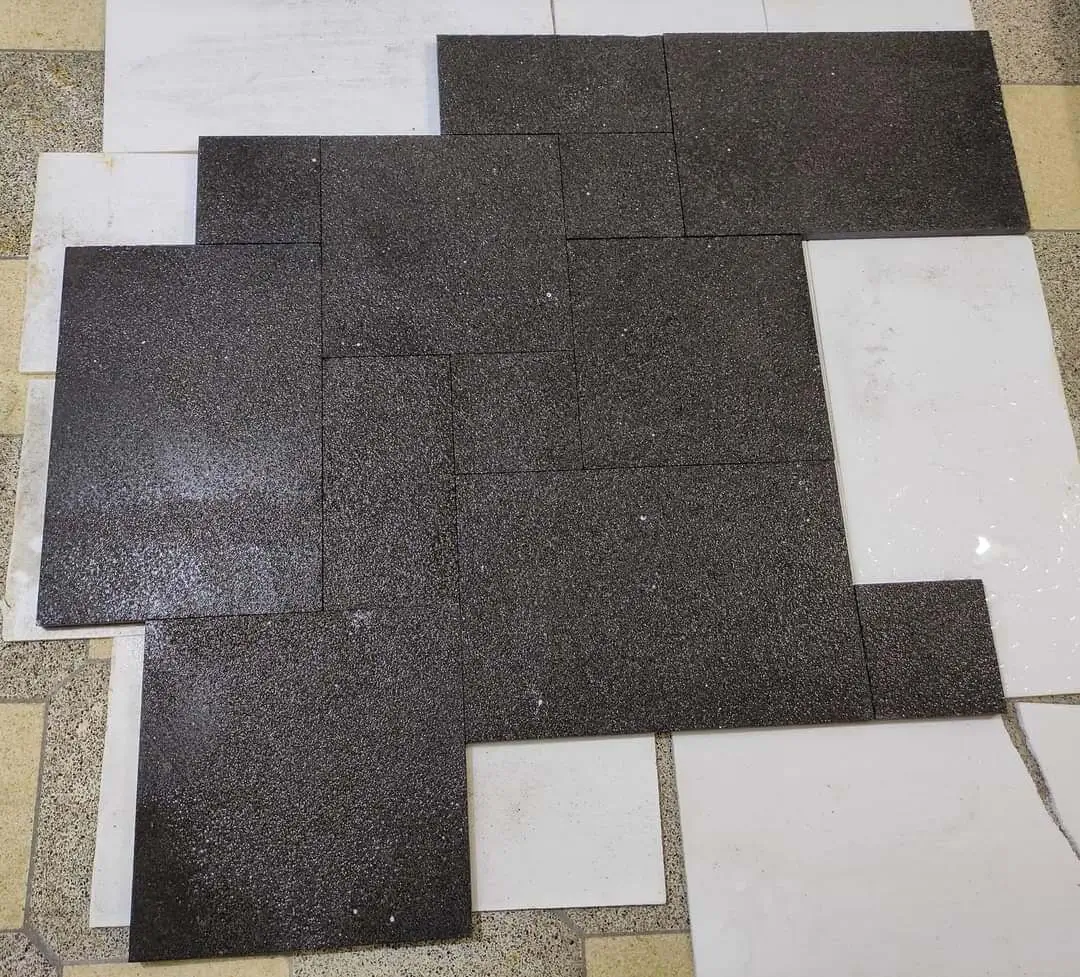
The basketweave pattern evokes the look of a woven basket, with pairs of pavers laid horizontally and vertically in an alternating sequence. This grid-like design brings a touch of rustic charm, making it a favorite for patios, garden paths, and courtyards.
Benefits of the Basketweave Pattern
- Rich Texture: The alternating layout creates depth and warmth, perfect for cozy, inviting spaces.
- Simple Installation: With its repetitive pairing, basketweave is easier to lay than more intricate patterns, ideal for beginners.
- Versatile Fit: It works well with square or rectangular basalt pavers and adapts to various space sizes.
How to Install the Basketweave Pattern with Basalt Pavers
The basketweave pattern is approachable yet polished. Follow these steps to install it with basalt pavers:
- Prepare the Base: Excavate and lay a compacted gravel base, just like with herringbone. Add edge restraints to secure the perimeter.
- Sand Layer: Spread and screed a 1-inch layer of sand over the gravel.
- Lay the Pavers: Start in a corner. Place two pavers vertically side by side, then two horizontally next to them. Alternate this pairing across the space.
- Keep it Straight: Use a straightedge or string line to ensure rows stay aligned.
- Trim Edges: Cut pavers as needed to fit the perimeter—basketweave typically requires minimal cutting.
- Compact and Finish: Use a plate compactor to set the pavers, then sweep fine sand into the joints and water lightly.
Tips for Installation
- Paver Proportions: Rectangular pavers (e.g., 4×8 inches) create a balanced basketweave look.
- Mix Colors: Add subtle contrast with varying basalt shades or accent pavers.
- Frame It: A contrasting border can enhance the pattern’s definition.
The basketweave pattern offers a timeless, textured appeal with an installation process that’s accessible yet yields professional results.
Circular Designs: Creating Focal Points with Basalt Pavers
What are Circular Paver Designs?
Circular designs use concentric rings of pavers to form eye-catching focal points, such as patio centers, fire pit surrounds, or garden features. These layouts range from simple single circles to elaborate multi-ring patterns, radiating outward from a central point.
Benefits of Circular Paver Designs
- Bold Impact: Circular patterns naturally draw attention, adding flow and elegance to your landscape.
- Scalable Design: They can be sized for small accents or large statement pieces and paired with other patterns.
- Creative Freedom: Cutting basalt pavers to fit curves allows for highly customized designs.
How to Install Circular Designs with Basalt Pavers
Circular patterns demand more planning and precision but reward you with a stunning result. Here’s the process:
- Plan the Layout: Mark the center with a stake and outline the circle’s edge with a string or hose.
- Prepare the Base: Excavate, add a gravel layer, and compact it. Install edge restraints to maintain the shape.
- Sand Layer: Spread and level a 1-inch sand base.
- Lay the Pavers:
- Center First: Start with a small ring or single paver at the center.
- Build Outward: Add concentric rings, cutting pavers as needed to fit the curve. Stagger joints between rings for a cohesive look.
- Cut Pavers: Use a masonry saw (or wet saw for larger jobs) to shape pavers for smooth arcs.
- Compact and Finish: Compact the pavers into the sand, fill joints with fine sand, and water to settle.
Installation Guidelines
- Estimate Pavers: Divide each ring’s circumference by the paver length to calculate needs and cuts.
- Use a Template: A compass or pre-cut guide ensures consistent curves.
- Add Flair: Incorporate contrasting stones or colors at the center or edges.
Circular designs are perfect for making a statement, offering a sophisticated focal point that elevates your outdoor space.
Comparing the Patterns: Which One Suits Your Project?
Each pattern brings something unique to the table. Here’s a breakdown to help you choose:
- Herringbone:
- Ideal For: Driveways, busy walkways.
- Look: Bold, dynamic.
- Skill Level: Moderate.
- Basketweave:
- Ideal For: Patios, garden paths.
- Look: Warm, traditional.
- Skill Level: Easy to moderate.
- Circular Designs:
- Ideal For: Focal points, decorative areas.
- Look: Elegant, artistic.
- Skill Level: Advanced.
Your choice depends on the space’s purpose, your design vision, and your comfort with installation. Herringbone excels in durability, basketweave shines in simplicity, and circular designs dazzle with creativity.
Maintenance and Care for Basalt Paver Patterns
Basalt pavers are low-maintenance, but a little care goes a long way:
- Clean Regularly: Sweep away debris or rinse with water and mild soap to preserve their look.
- Weed Prevention: Pull weeds from joints or use a natural herbicide.
- Refresh Sand: Reapply joint sand if it erodes over time.
- Seal (Optional): A breathable stone sealer can boost color and protect against wear.
With minimal effort, your basalt paver patterns will stay beautiful and functional for decades.
Real Orders, Real Deliveries
We only publish projects we have actually supplied. See our Las Vegas white limestone delivery — two containers, 6,884 sq ft, 32 crates, shipped door to door — and how we supplied Creative Environments in Arizona with 21 containers across a 70,000+ sq ft installation: white limestone pavers and tiles, shellstone and Ocean Reef pavers.
Had Citadel Stone material installed on your project? Send us your photos and we will feature the work here, with your permission.
Conclusion: Transform Your Space with Basalt Pavers
Basalt pavers offer the perfect blend of strength, style, and sustainability for any outdoor project. Whether you opt for the sturdy herringbone, the charming basketweave, or the captivating circular design, these patterns can turn your vision into reality. At Citadel Stone—your trusted nationwide basalt supplier, we’re proud to supply top-quality basalt pavers and expert advice to bring your ideas to life. Contact us today to explore our range and request a quote—let’s build something extraordinary together.