

Black basalt landscape rock that fades to a chalky gray isn’t suffering from age — it’s suffering from a surface condition that’s entirely reversible if you address the right variable. The stone itself hasn’t changed; what you’re seeing is a combination of mineral leaching, efflorescence, calcium carbonate migration, and in many cases, a sealer that’s broken down and left a residue film that scatters light instead of transmitting it. Understanding which of these four causes is driving the discoloration in your installation determines the correct remedy — and getting that diagnosis wrong means you’ll spend time and money treating the wrong problem.
Why Black Basalt Fades: The Four Root Causes
The dense, fine-grained character of basalt means it doesn’t absorb contaminants the way a porous limestone would — but that same density creates a specific failure mode. Surface whitening in black basalt landscape rock almost always originates at the interface between the stone and what’s beneath it, rather than within the stone body itself.
- Efflorescence occurs when water moves through the base or bedding layer, dissolves soluble salts, and carries them to the surface where they crystallize as a white powder on evaporation
- Calcium carbonate haze forms when alkaline cement or grout residue reacts with carbon dioxide in the atmosphere, depositing a hard white film that resists simple washing
- Failed or oxidized sealer leaves a milky or cloudy layer that breaks the depth of color basalt is chosen for — UV degradation and standing water are the main accelerants
- Natural mineral bloom can occur during the first wet season as trace minerals in the stone’s surface matrix react with moisture for the first time
Each of these has a distinct visual signature and a different treatment. Efflorescence brushes off as a dry powder or dissolves with dilute acid. Calcium carbonate haze is harder and requires a controlled acid application or a purpose-made alkaline cleaner depending on its stage. Failed sealer strips cleanly with a solvent-based stripper. Mineral bloom typically resolves with repeated wetting and weathering if drainage underneath is adequate.
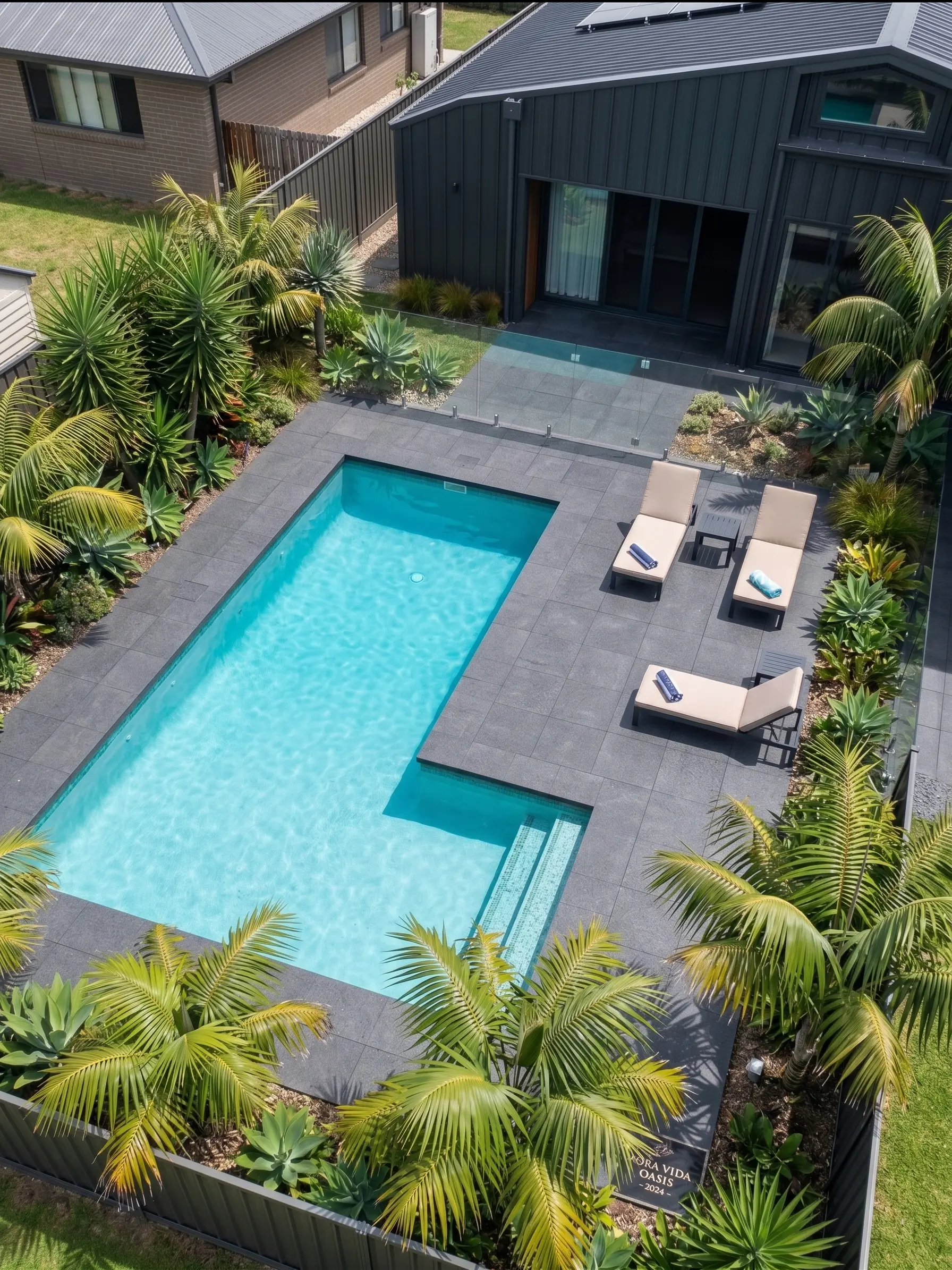
Diagnosing the Problem Before You Treat It
Your diagnosis should take about ten minutes and will save you from making the situation worse. Start by wetting the affected area thoroughly and observing what happens to the white or gray discoloration.
- If the discoloration disappears when wet and returns as the stone dries, you’re almost certainly dealing with efflorescence — the salts become transparent when saturated but reappear as they dry out
- If wetting restores the deep black color and the stone looks exactly as it should when wet, a quality impregnating sealer will typically lock in that appearance once the surface is properly prepared
- If the stone still looks hazy or cloudy when wet, the problem is either a sealer breakdown or a calcium carbonate deposit that isn’t dissolving in water alone
- If the surface feels slightly tacky or shows a yellowed tinge rather than white, the existing sealer has oxidized and needs stripping before any other treatment proceeds
According to USGS basalt volcanic rock properties and composition, basalt’s crystalline silicate structure gives it very low intrinsic porosity compared to sedimentary stone types — which means surface problems in black basalt landscape rock originate almost entirely from external sources rather than from within the stone matrix itself. That distinction matters because it tells you the fix is surface-applied, not structural.
Treating Efflorescence Without Damaging the Stone
Efflorescence on black basalt landscape rock responds well to treatment, but the method you choose depends on how far along the deposit is. Fresh efflorescence — powder that formed in the last few weeks — often comes off with a stiff natural-bristle brush and clean water alone. Letting it sit through multiple wet-dry cycles bakes it into the surface pores and makes mechanical removal necessary before chemical treatment is effective.
For established efflorescence, a dilute phosphoric acid cleaner applied at the manufacturer’s stated concentration and dwell time is the standard approach. You’re not etching the basalt — you’re dissolving the calcium and magnesium salts that are sitting on or just inside its surface. Rinse thoroughly and neutralize with a pH-neutral wash before the surface dries, then allow a full 48-to-72-hour dry-out before assessing whether a second pass is needed. Never apply a sealer over efflorescence — you’ll trap the salts beneath it and the blooming will continue from below.
- Test any acid cleaner on a small inconspicuous area first — some honed basalt finishes can show micro-etching if the product is too concentrated or left too long
- Work in sections no larger than one square meter at a time to maintain control of dwell time
- Avoid cleaning in direct sun on hot days — the cleaner evaporates too quickly and can leave residue streaks that are harder to remove than the original problem
- If efflorescence returns within a month of treatment, the source is an ongoing drainage or moisture issue in the base, not a surface problem — and treating the surface repeatedly without fixing the base is a losing strategy
How Drainage Problems Drive Fading — and What to Do About It
Here’s the detail that gets missed in most maintenance guides: the fading you see on the surface is frequently a symptom of what’s happening two or three inches below it. In regions with heavy seasonal rainfall — monsoon cycles, hurricane-season downpours, or protracted wet winters — moisture that has nowhere to drain moves upward through the bedding layer and carries dissolved minerals with it. Black basalt landscape rock installed over a clay-heavy or poorly graded base becomes a wick, and no surface treatment will stop the fading cycle if the base is continuously saturated.
The diagnostic sign is a fading pattern that follows the low points of your installation — pooling areas, zones near downspouts, or sections where the grade runs toward the stone rather than away from it. Drought cycles make this worse, not better: extended dry periods concentrate salts at the surface as residual subsurface moisture evaporates upward. The next heavy rain then reactivates those salts and the blooming repeats. Natural Stone Institute igneous stone paving technical standards recommend that all natural stone hardscape installations include a base layer designed for the site’s drainage load — and for basalt specifically, a compacted aggregate base with adequate depth and a positive fall away from the installation perimeter is the baseline requirement.
- Check that every section of your basalt installation has at least a 1-to-2 percent fall away from buildings and toward a drainage outlet or permeable zone
- Inspect downspout discharge points — water dumping at high volume onto or near the installation edge is one of the most common causes of persistent efflorescence in otherwise well-installed stone
- In drought-prone climates, consider whether irrigation runoff or air-conditioning condensate is contributing to a localized wet zone under the stone
- Where regrading isn’t practical, channel drains or French drains installed at the stone perimeter can intercept surface water before it migrates under the installation
For projects where you’re specifying or restoring black basalt landscape rock and want guidance on the specific product range, our basalt landscape rock pages include details on the finishes available and how each one interacts with maintenance and sealing protocols.
Stripping Failed Sealer from Black Basalt
A failed impregnating sealer is one of the trickier problems to address on black basalt landscape rock because the breakdown products are chemically similar to the stone’s own surface. You can’t always see a distinct sealer layer — what you see is a haze or a milky bloom that seems to be part of the stone. The test is solvent response: apply a small amount of acetone or a purpose-made sealer stripper to a cloth and rub firmly in a 10-centimeter circle. If the cloth picks up a residue and the stone darkens visibly underneath, there’s a sealer layer present.
Stripping requires a solvent-based or chemical stripper applied at the manufacturer’s stated dwell time, followed by mechanical agitation with a scrubbing brush or low-speed rotary pad on larger areas. Avoid high-pressure washing at this stage — pressure forces the stripper residue into the surface rather than lifting it out. Rinse with clean water in sections, allow a full cure period of at least three days in dry conditions, then assess whether the color has fully recovered before considering resealing.
- Some sealers require two stripping passes if they’ve been applied in multiple coats over several seasons — single-pass stripping may leave a residue layer that causes the new sealer to bond poorly
- Never apply a topical coating sealer over black basalt in outdoor landscape applications — it peels, it traps moisture, and the color shift when it breaks down is far more dramatic than what an impregnating sealer does when it ages
- Impregnating or penetrating sealers are the correct product type for this stone in exterior use — they fill the micro-pore network below the surface rather than forming a film on top of it
- Reapplication intervals depend entirely on the specific sealer product, traffic levels, and climate exposure — follow the sealer manufacturer’s stated schedule rather than a generic annual rule
Resealing for Maximum Color Depth
The goal when resealing black basalt landscape rock isn’t just protection — it’s restoring and maintaining the stone’s full color depth. The difference between basalt that looks flat and gray and basalt that shows its true rich black comes down almost entirely to whether the surface has an effective impregnating sealer saturating the micro-pore layer at the correct depth.
Apply the sealer to a surface that is completely dry — moisture trapped below an impregnating sealer is the most common reason a freshly sealed installation looks milky within weeks of application. Surface temperature matters too: most impregnating sealers have a working temperature window, and applying below that window slows penetration, leaving the sealer pooled at the surface where it cures as a film rather than penetrating into the stone. Check the product’s stated temperature range and plan your application accordingly. According to basalt volcanic rock formation and construction properties, the fine crystalline matrix of basalt creates a relatively tight surface structure — which means sealer penetration depth and dwell time are variables worth paying close attention to on this stone compared to more porous types.
- Apply in thin, even coats — flood-coating creates pooling at the surface that cures as a haze rather than penetrating effectively
- Wipe off any sealer that hasn’t absorbed within the manufacturer’s stated dwell time — residue left to cure on the surface is the single most common cause of a milky finish after sealing
- Allow the first coat to cure fully before assessing whether a second coat is needed — for honed basalt with very tight pores, one coat is often sufficient
- Test the sealed surface with a water drop after curing — a bead that holds its shape indicates the sealer is performing correctly; a drop that absorbs quickly means the protection has been compromised or the first coat wasn’t sufficient
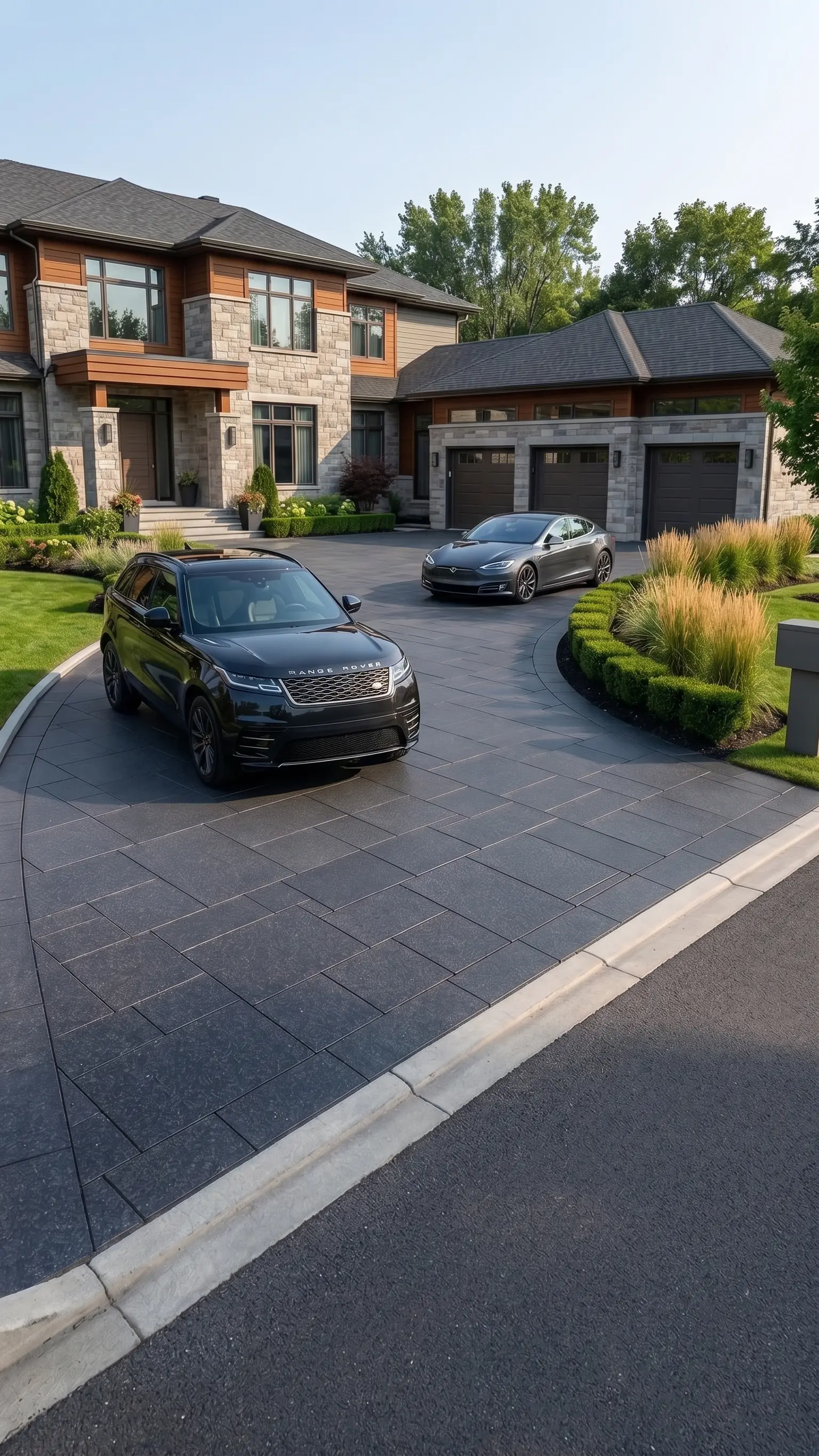
Finish Selection and Long-Term Color Stability
The finish you chose — or that was already in place — has a significant bearing on how well black basalt landscape rock holds its color over time and how visible fading becomes when it occurs. This is worth understanding clearly if you’re specifying new stone or deciding whether to replace sections that have been particularly problematic.
A honed finish on basalt produces a flat, matte surface that shows fading very clearly — any whitening stands out against the uniform dark background. A flamed or bush-hammered finish creates texture and tonal variation across the surface that makes efflorescence and minor discoloration far less visually intrusive while still being present. A tumbled finish leaves an open, matte texture with a slightly irregular surface that hides minor mineral bloom between maintenance cycles better than a flat honed surface does. None of these finish differences change the underlying maintenance requirement — the efflorescence, failed sealer, or drainage problem still needs to be addressed — but they do affect how quickly discoloration becomes an aesthetic problem in between maintenance intervals.
- Honed basalt in outdoor landscape use requires more frequent maintenance attention to color because any surface change is immediately visible
- Textured finishes are more forgiving between sealing cycles in exposed, high-rainfall climates
- Polished basalt is rarely specified for outdoor landscape applications — UV exposure dulls the polish quickly and the highly reflective surface makes discoloration highly visible
- If you’re replacing sections that have failed to hold color, match the finish carefully — mixing honed and flamed panels in the same installation creates a visible tonal inconsistency even when both are freshly sealed
Keeping Black Basalt Landscape Rock Looking Its Best
Restoring and maintaining the color depth of black basalt landscape rock comes down to identifying the correct cause first, treating it with the right product at the right application conditions, and then addressing the base and drainage factors that will determine whether the problem recurs. Surface treatments applied to an ongoing moisture problem are temporary fixes at best. Get the drainage geometry right — the fall, the base depth, the outlet routing — and your surface treatments will hold their effect for years rather than months. Citadel Stone cuts this stone to order at our selected quarries, which means you can specify the exact finish and dimension your installation requires rather than working around stock dimensions. For projects where crushed material is part of the landscape design, crushed black basalt options cover how this material performs in a complementary landscape context. Sourced from our selected quarries in the Middle East, basalt from Citadel Stone resists the gray dusting seen in weaker stone.
Related reading: what is black basalt rock · how to place black basalt boulders · honed black basalt finish explained.