

Crushed black basalt rewards you with a material consistency that most decorative aggregates simply cannot match — the color runs through the full depth of each chip, so no amount of weathering exposes a pale interior. That mineralogical density is the result of rapid volcanic cooling, and it translates directly into a low absorption rate that keeps the surface from cycling through wet-dark and dry-light color shifts with every rain. Understanding these intrinsic properties is what separates a landscape specification that still looks intentional ten years later from one that fades into the background of a project portfolio.
Why Crushed Black Basalt Works in Landscape Design
The visual argument for crushed black basalt is obvious — the deep charcoal tone creates contrast against pale gravel borders, light concrete edging, and green plantings. The functional argument is equally strong. Basalt’s volcanic origin produces an angular fracture pattern when crushed, meaning individual chips lock together rather than rolling underfoot like a rounded river pebble. That angular interlock is the physical mechanism behind stable mulch beds and paths: you’re not relying on depth alone to keep the material in place.
The density of basalt also contributes to thermal mass. In full sun, a layer of black basalt chips will absorb and retain heat longer than lighter-colored aggregates — a trade-off worth knowing before you place it directly around heat-sensitive plant root zones. Used as a decorative border or between pavers rather than as a planting mulch, that thermal characteristic becomes a feature rather than a concern.
- Color integrity through the full chip depth — no pale cores exposed over time
- Angular fracture geometry that promotes aggregate interlock and surface stability
- Dense mineralogy that resists breakdown from foot traffic and irrigation cycles
- High contrast against light hardscape materials and green ground cover
- Low water absorption that limits efflorescence and surface staining in most conditions
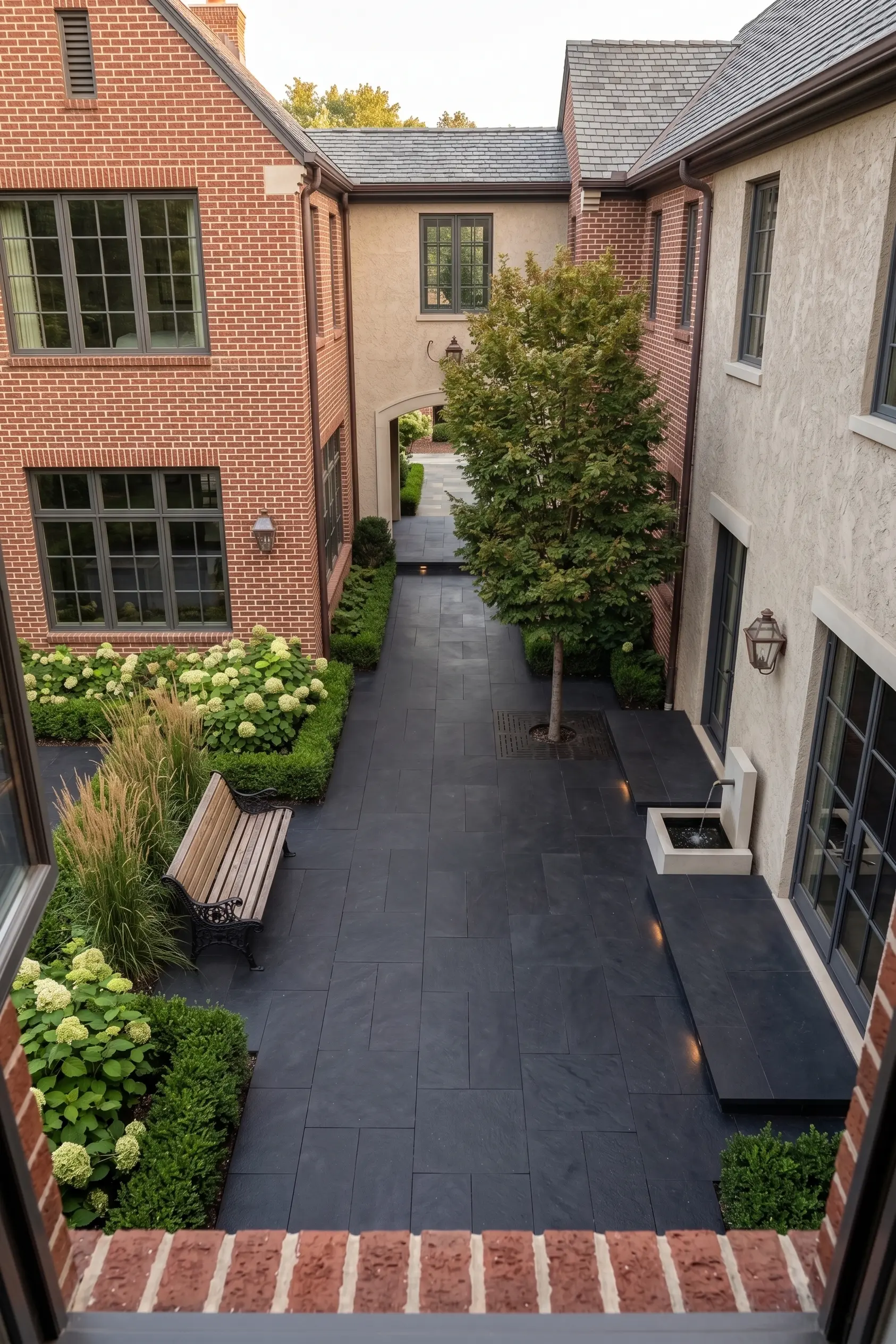
Black Basalt Chips in Planting Beds and Mulch Applications
Decorative aggregate as a mulch replacement is one of the most common applications for black basalt chips, and it performs well where organic mulch struggles. Organic mulch breaks down, compacts, and requires annual replacement. Basalt does not decompose — a properly installed layer maintains its depth and color profile without seasonal replenishment. The trade-off is thermal: organic mulch insulates root zones, while dense dark stone radiates stored heat. In hot, dry climates this distinction matters when selecting planting companions.
Your installation should include a high-quality weed barrier fabric beneath the aggregate layer. Basalt chips alone will suppress germination from seeds above, but they won’t block established root systems pushing up from below. The fabric does that job — the stone holds the fabric in place and prevents UV degradation. Skimp on the fabric and you’ll spend the first two seasons pulling weeds from inside the aggregate layer, which is a maintenance headache that undermines the low-maintenance case for stone mulch entirely.
- Install a non-woven polypropylene landscape fabric rated for the application weight before placing chips
- Minimum depth of two to three inches for effective weed suppression from above
- Keep basalt chips away from direct contact with plant stems prone to crown rot in retained heat
- Edging containment — steel, aluminum, or stone — prevents migration at bed perimeters
- Avoid placing black basalt chips as primary mulch for heat-sensitive shallow-rooted species in full-sun exposures
Black Basalt Landscaping for Pathways and Dry Creek Beds
Pathways surfaced with crushed basalt need a different specification approach than decorative mulch beds. Traffic loads require a compacted sub-base — typically a compacted aggregate base layer beneath the decorative stone — and an edging system robust enough to resist lateral movement from foot traffic. Without a proper sub-base, the surface chips will migrate into the soil with each footfall, leading to an uneven surface that needs annual regrading. According to USGS basalt volcanic rock properties and composition, basalt’s density and hardness make it well suited to high-wear surface applications, but the sub-base preparation is what determines long-term performance regardless of the aggregate’s inherent hardness.
Dry creek beds are one of the most architecturally effective uses of black basalt landscaping because they serve a drainage function while contributing a strong visual line across the landscape. The angular chip geometry allows water to move freely through the aggregate without the channel clogging that round gravel can create at inlets. Size selection matters here: for functional creek bed drainage, a mix of chip sizes — smaller fines at the base, larger chips at the surface — creates a filtration effect while maintaining visual depth and texture.
- Compact a crushed aggregate sub-base before placing the decorative basalt surface layer on pathways
- Use steel or concrete edge restraints on pathways — plastic edging flexes under traffic and fails early
- For dry creek beds, grade the channel before installing the liner and aggregate layers
- A permeable landscape liner in the creek bed channel prevents aggregate from sinking into soft soils
- Consider a stepped size gradient — coarser at surface, finer beneath — for drainage channels that carry periodic water volume
Pairing Crushed Basalt with Hardscape Materials
The strongest landscape compositions using black basalt chips treat the aggregate as the connective tissue between structural hardscape elements. Crushed black basalt as infill between stepping stones, for example, creates a visual rhythm that reads as a unified installation rather than disconnected elements. The color of the basalt pulls the eye across the surface, giving the stone stepping elements a deliberate, curated relationship. This is a detail that separates landscapes designed by people who think about material relationships from those assembled element by element. For the larger formats those stepping stones come in, see black basalt rock for landscaping.
For projects that incorporate basalt pavers or basalt tile elements alongside the aggregate, material consistency becomes a specification advantage. Using the same volcanic stone family across multiple elements — aggregate infill, paver field, and coping or border — creates a coherent palette. According to basalt volcanic rock formation and construction properties, basalt’s mineralogical composition is consistent across its range of product forms, which means color and texture remain recognizably related whether the material is crushed, sawn, or honed. That consistency is harder to achieve when you mix material families across a single project.
You can access our crushed basalt supply directly to compare sizes and gradations against your project drawings before committing to a quantity. Having the material specification confirmed early avoids the common error of ordering a chip size that reads differently at installation scale than it did in the sample.
Sizing and Gradation Selection for Landscape Applications
Chip size is the variable most specifiers underestimate when ordering crushed black basalt. A quarter-inch chip reads very differently from a three-quarter-inch chip at landscape scale, and the application determines which end of the size range performs best. Fine gradations pack tightly, minimize void space, and create a smoother visual surface — appropriate for contemporary designs where a uniform, near-solid color plane is the intent. Coarser gradations create shadow and texture variation, emphasizing the material’s volcanic character and working better in naturalistic or informal compositions.
The Natural Stone Institute’s guidance on igneous stone — referenced at NSI igneous stone technical standards — addresses how material density and composition affect performance across different product forms. For landscape aggregate specifically, the considerations shift toward gradation consistency: a well-graded material will compact predictably and drain efficiently, while a poorly graded one creates air pockets that allow surface migration under traffic.
- Fine gradations (under half an inch): best for flat mulch beds and contemporary minimalist designs
- Medium gradations (half to one inch): versatile for pathways, borders, and infill between pavers
- Coarse gradations (one inch and above): suited for dry creek beds, drainage swales, and naturalistic feature areas
- Mixed gradations: provide self-compacting behavior, useful for pathways where you want the surface to settle and stabilize quickly
- Confirm gradation specifications with your supplier before ordering — chip sizes vary between producers and regions
Budgeting and Cost Factors for Crushed Black Basalt Projects
Material cost for crushed black basalt is only one component of your project budget, and in many cases it’s not the dominant one. Freight is the variable that most significantly affects final delivered cost, particularly for heavy aggregate materials. Basalt is denser than limestone or sandstone aggregates, which means a given cubic yard weighs more and costs proportionally more to ship. For projects at significant distance from quarry sources, freight can add a meaningful percentage to the per-ton cost you see quoted on a material basis alone. Factor this into your value engineering early rather than discovering it after the material is committed.
Labor-to-material cost ratios shift depending on the application. For decorative mulch bed applications, the labor component is relatively low — place the fabric, pour and rake the aggregate, install the edging. For pathway and dry creek bed applications, sub-base preparation and grading represent the majority of labor hours, and the aggregate itself becomes a smaller share of total project cost. This ratio matters when you’re evaluating whether to specify a premium aggregate or a standard one: on a complex pathway project, the incremental cost difference between mid-range and high-quality basalt chip is a small fraction of the total job budget, making the upgrade straightforward to justify.
- Get freight costs quoted before finalizing your material budget — weight-sensitive shipping affects per-yard delivered cost significantly
- Request tonnage rather than volume quotes for dense materials like basalt — weight-based pricing avoids miscalculation from bulk density assumptions
- Sub-base preparation labor typically exceeds aggregate cost on pathway and drainage applications — budget accordingly
- Delivery access constraints — narrow gates, soft ground, distance from the drop point to the installation area — affect offloading time and may affect delivery scheduling
- Ordering in one delivery where site conditions allow reduces per-ton freight cost and avoids multiple scheduling windows
Your project’s site access constraints are worth documenting before the delivery date is confirmed. Offloading arrangements, including drop location and site access dimensions, are confirmed during order coordination so that delivery proceeds without delay. Lead times are quoted with the order and depend on volume and destination.
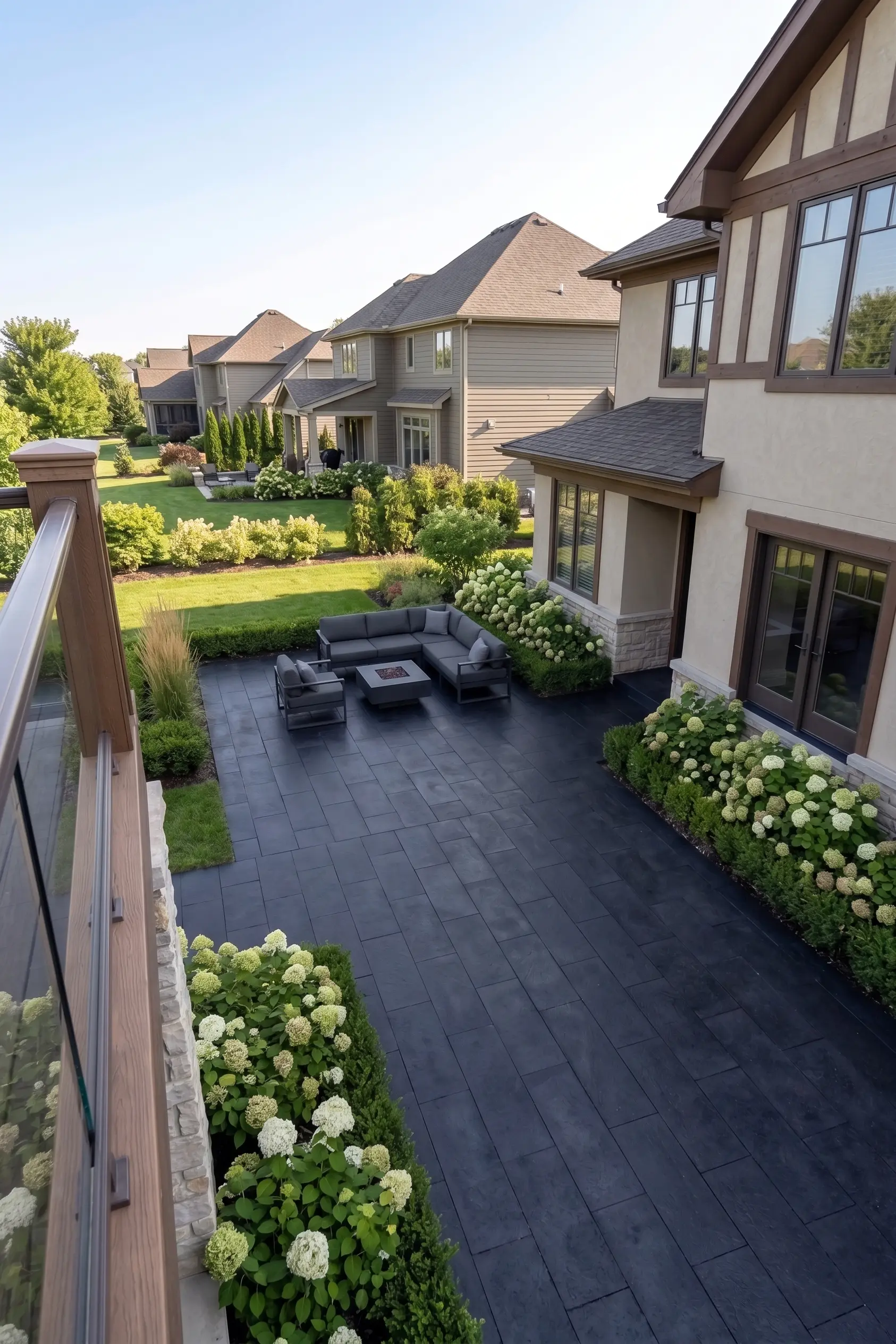
Sealing and Maintenance for Black Basalt Aggregate
Crushed black basalt used as landscape aggregate is typically left unsealed, and for most applications that’s the correct approach. The material’s low absorption rate means it doesn’t require the same sealer protection that a porous limestone or sandstone aggregate would. Sealing a chip aggregate also introduces a practical complication — individual chips are difficult to coat uniformly, and a partial seal can create uneven sheen that reads as inconsistent surface quality over time.
Where crushed basalt is used in a more finished context — as infill between closely set pavers, for example — a penetrating consolidant applied to the full surface (pavers and aggregate together) can help stabilize fine migration while maintaining the matte appearance of the stone. This is a different product category from a decorative sealer; you’re looking for a penetrating impregnator rather than a surface coating. Follow your sealer manufacturer’s stated reapplication interval, which varies by product chemistry and site exposure.
- Standard landscape aggregate applications: no sealing required in most conditions
- Between-paver infill: consider a penetrating impregnator applied to the whole surface, not the aggregate alone
- Annual inspection for surface migration or settling, particularly after the first wet season, identifies areas for top-dressing
- Top-dressing depleted sections with matching gradation material maintains surface depth and appearance
- Avoid pressure washing at high velocity — it displaces fine gradation chips and disturbs the landscape fabric beneath
Ordering and Quantity Calculation
Calculating your quantity accurately before ordering saves you from the two common errors: under-ordering and needing a second delivery, or over-ordering and managing surplus material on-site. For aggregate depth calculations, convert your square footage and target depth to cubic yards, then apply a density factor for basalt specifically — it runs denser than limestone aggregate, so volume-to-weight conversion is important if you’re ordering by the ton.
Citadel Stone cuts basalt to order at our selected quarries in the Middle East, which means your specification is matched to the order rather than selected from pre-cut stock at a stateside location. At Citadel Stone, we recommend confirming your gradation specification and quantity calculation with our technical team before the order is placed — particularly for larger landscape projects where gradation consistency across the full quantity matters to the finished result.
- Calculate area in square feet, multiply by desired depth in feet, divide by 27 to convert to cubic yards
- Add a waste factor for irregular bed shapes, edging cuts, and initial settling — ten percent is a reasonable starting allowance
- Confirm whether your order will be quoted by volume or by weight — dense basalt aggregate means these are not interchangeable without a density factor
- For phased projects, order the full quantity in one consignment where site storage allows — color consistency across bags or bulk lots is easier to guarantee within a single production run
Final Recommendations for Crushed Black Basalt Projects
Crushed black basalt earns its place in landscape specifications because it delivers visual consistency and structural stability simultaneously — properties that cheaper decorative aggregates compromise on. Your specification decisions should start with chip size and gradation, because that single variable shapes the visual outcome more than any other. From there, sub-base and edging details determine whether the installation holds its form under real conditions or migrates and settles into an unintended shape over the first few seasons. The material itself is forgiving; the installation details are where most projects succeed or fall short.
Budget planning should include freight from the outset, especially for dense volcanic aggregate that costs more to move per cubic yard than lighter alternatives. Get delivered-cost quotes early, confirm your gradation specification in writing, and document site access conditions so your delivery coordination goes smoothly. As you plan your natural stone project more broadly, it’s worth exploring how Citadel Stone’s other basalt products complement the aggregate — basalt column and pillar options can add a vertical dimension to landscape compositions that feature crushed basalt as a ground-level element. Basalt chips from Citadel Stone hold a deep charcoal color well in hot, dry climates without fading.
Related reading: honed black basalt finish explained · black basalt driveway · Black Basalt Cobblestone Installation for Walkways.