

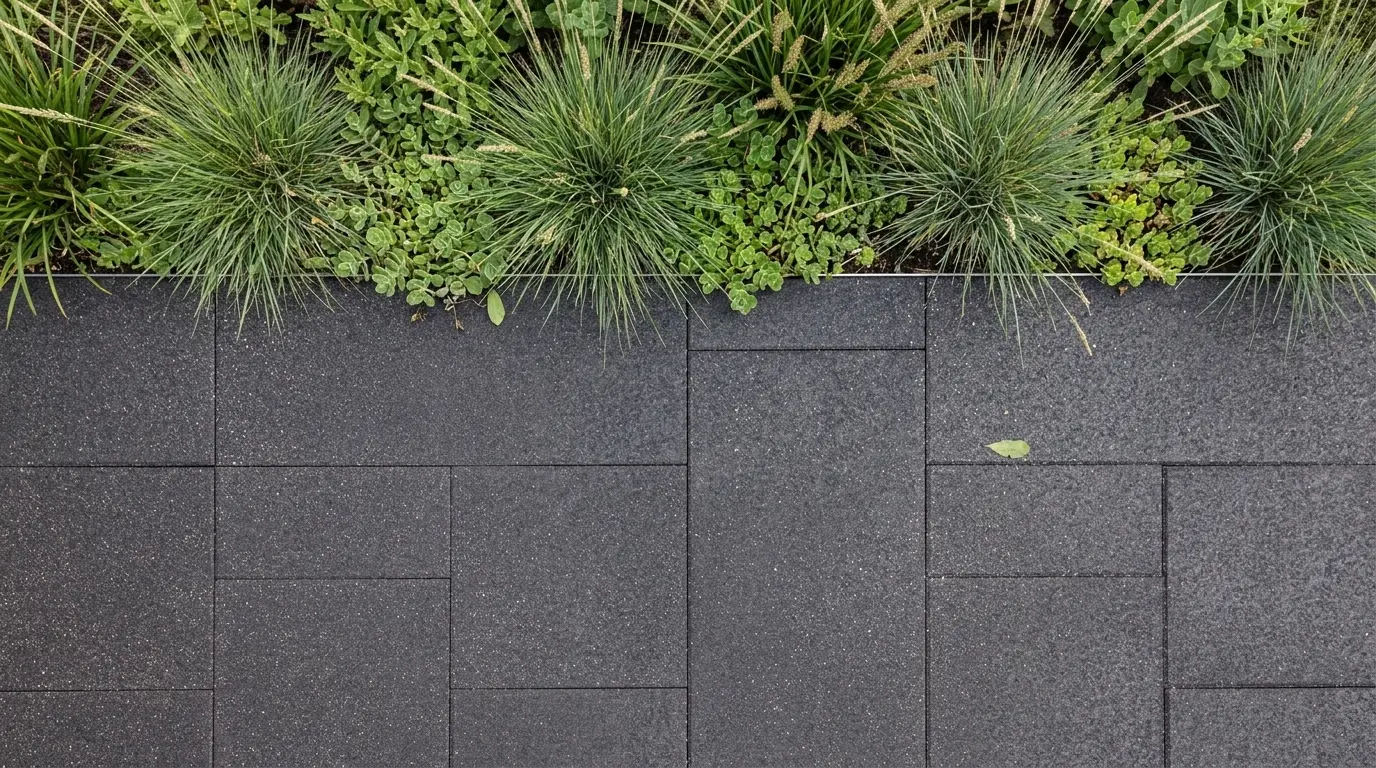
The honed black basalt finish explained in specification documents often reads as a simple surface descriptor — but the real performance story lives in what that matte surface does to absorption behavior, color stability, and long-term maintenance intervals. Honing removes the mirror sheen without opening the pore structure the way a bush-hammered or tumbled finish does, which puts honed black basalt in a middle category that most specifiers either under-estimate or over-specify for.
What Honing Actually Does to the Stone Surface
Honing is a controlled abrasive process that levels the surface plane to a consistent matte or satin appearance. On basalt — a dense volcanic rock with a naturally fine grain — the result is a surface that feels smooth to the touch but carries micro-texture you can measure under magnification. That micro-texture matters for how the stone interacts with water, cleaning agents, and sealers.
The finish is fundamentally different from polished basalt. Polishing closes the surface further and amplifies the stone’s deep black color by increasing light reflection. Honing reduces that reflectivity deliberately — the color reads as a charcoal-black rather than a jet-black, and the surface takes on a visual warmth that polished surfaces don’t carry. For interior floor applications where overhead lighting creates glare, that distinction is often the deciding factor.
- Honing removes micro-ridges left by saw cutting without filling the stone’s natural pore channels
- The matte finish diffuses light rather than reflecting it, reducing glare in both interior and exterior settings
- Color uniformity is higher on honed black basalt than on polished, because reflectivity variations from mineral inclusions are dampened
- Sealer penetration is typically more predictable on a honed surface than on a polished one, because the surface remains slightly more open
Color Behavior — Dry, Wet, and Everything Between
Your most predictable concern with any dark stone is color shift when wet. Honed black basalt darkens noticeably when moisture contacts the surface, and it returns to its dry tone as it dries out — this is expected behavior, not a defect. The degree of shift depends on two things: the stone’s absorption rate and whether a penetrating sealer has been applied.
Unsealed honed basalt will show water marks, pooled moisture, and foot traffic patterns as wet contrast against dry areas. A quality penetrating sealer slows absorption enough that the color shift happens more gradually and evenly across the surface, which reads as far less dramatic to the eye. Understanding this mechanism helps you advise clients on realistic expectations before installation rather than fielding complaints afterward.
- Dry color: charcoal-black with low reflectivity and a consistent matte tone
- Wet color: deep black, noticeably darker, with some sheen from the water film itself
- Polished alternatives show water marks as sharp reflective contrasts — honed surfaces show them as tone-shift areas, which most clients find less objectionable
- Sealer type matters: impregnating sealers slow absorption without altering dry color; topical sealers can add a sheen that competes with the honed finish specification
For shaded installations and interior floors, the wet-dry color shift is less frequent because the surface dries more slowly. That slower drying cycle doesn’t worsen the appearance — it just means the transition takes longer. Where direct sun is constant, the stone dries quickly and the color cycle is barely perceptible in daily use.
Slip Resistance: What the Finish Controls
Slipperiness on wet stone is governed by finish texture, and honing sits at a specific point on that spectrum. The current standard for wet surface evaluation is ANSI A326.3, which measures dynamic coefficient of friction under wet conditions — the finish is the primary variable, and test results are available on request from your supplier. A honed finish leaves a surface that is smoother than tumbled or bush-hammered alternatives, which is a specification trade-off you need to flag to your client explicitly for wet outdoor applications.
The texture of honed basalt makes it a considered choice for covered exterior areas, interior floors, and applications where the surface will be managed with drainage design rather than relying on finish texture alone. According to USGS basalt volcanic rock properties, basalt’s density and fine crystalline structure produce a surface that responds predictably to finish processing — meaning the honed result is consistent across a correctly specified batch. For wet zones where finish texture is the primary mitigation strategy, a flamed or bush-hammered finish may be more appropriate than honed. If a tested value exists for a specific batch or finish, the test report is available on request.
Maintenance Intervals and Sealing Protocols
The honed black basalt finish explained correctly in a maintenance schedule accounts for two realities: basalt is denser than most sedimentary stones, and the honed surface is more open than polished. The combination means sealer penetration is achievable but the stone is not absorbing sealers as aggressively as limestone or travertine would. Your first sealer application should be generous — allow the first coat to begin penetrating before applying a second, and wipe residual sealer from the surface before it skins.
Resealing intervals depend on traffic, cleaning chemical exposure, and UV load. For interior residential floors, an annual inspection and a reapplication every two to four years is a reasonable planning interval — but always follow the specific sealer manufacturer’s stated maintenance schedule rather than a generic figure. Outdoor honed basalt surfaces in high-traffic commercial applications may need resealing more frequently, particularly where acidic cleaning products are used.
- Use a penetrating impregnating sealer — never a topical sealer on a honed finish specified for its matte appearance
- Clean with pH-neutral stone cleaners; acidic or alkaline cleaners degrade sealer chemistry and can etch the surface over time
- Test sealer performance with a water bead test — if water absorbs within a few seconds, resealing is due
- Honed basalt shows efflorescence less readily than lighter stones, but it can occur if substrate moisture is uncontrolled — address drainage at the base, not the surface
Thermal Cycling and Freeze-Thaw Considerations
Dense volcanic stone handles thermal cycling well relative to more porous alternatives, but the engineering still demands attention in climates with significant temperature range — not just cold climates, but anywhere that sees wide swings between day and night or between seasons. The concern isn’t the stone itself failing; it’s the differential movement between the stone, the setting bed, and the joint material as temperatures cycle.
Basalt has a lower absorption rate than limestone or travertine, which means less water enters the stone’s pore structure and less freeze-thaw expansion occurs within the stone body. The volcanic rock formation and structural properties of basalt confirm that its crystalline matrix resists moisture infiltration at the stone scale. However, movement joints still need to be calculated from the stone’s thermal expansion coefficient — request the value from your supplier’s test report, then space joints to accommodate the temperature range your project site experiences across its full annual cycle, not just the coldest month.
In regions where daytime highs and overnight lows differ by more than 40°F across seasons, joint compound selection becomes critical. A rigid grout in a joint that needs to move will crack before the stone does. Specify a flexible joint sealant for perimeter and field movement joints, and confirm the sealant’s stated temperature range covers your climate’s extremes. This is the detail that separates installations that stay tight for decades from those that begin cracking at the joints within a few winters.
- Calculate joint spacing from the thermal expansion coefficient — available on the test report, not from a general rule of thumb
- Use flexible joint sealants at perimeter locations and at any transition between materials with different expansion rates
- Freeze-thaw cycling stresses the setting bed and substrate more than the dense basalt itself — your base design carries more freeze-thaw risk than the stone does
- In climates with significant temperature swings, allow the setting bed to fully cure before grouting — residual moisture in an uncured bed is the mechanism that drives frost heave
Specifying the Honed Black Basalt Surface Finish Correctly
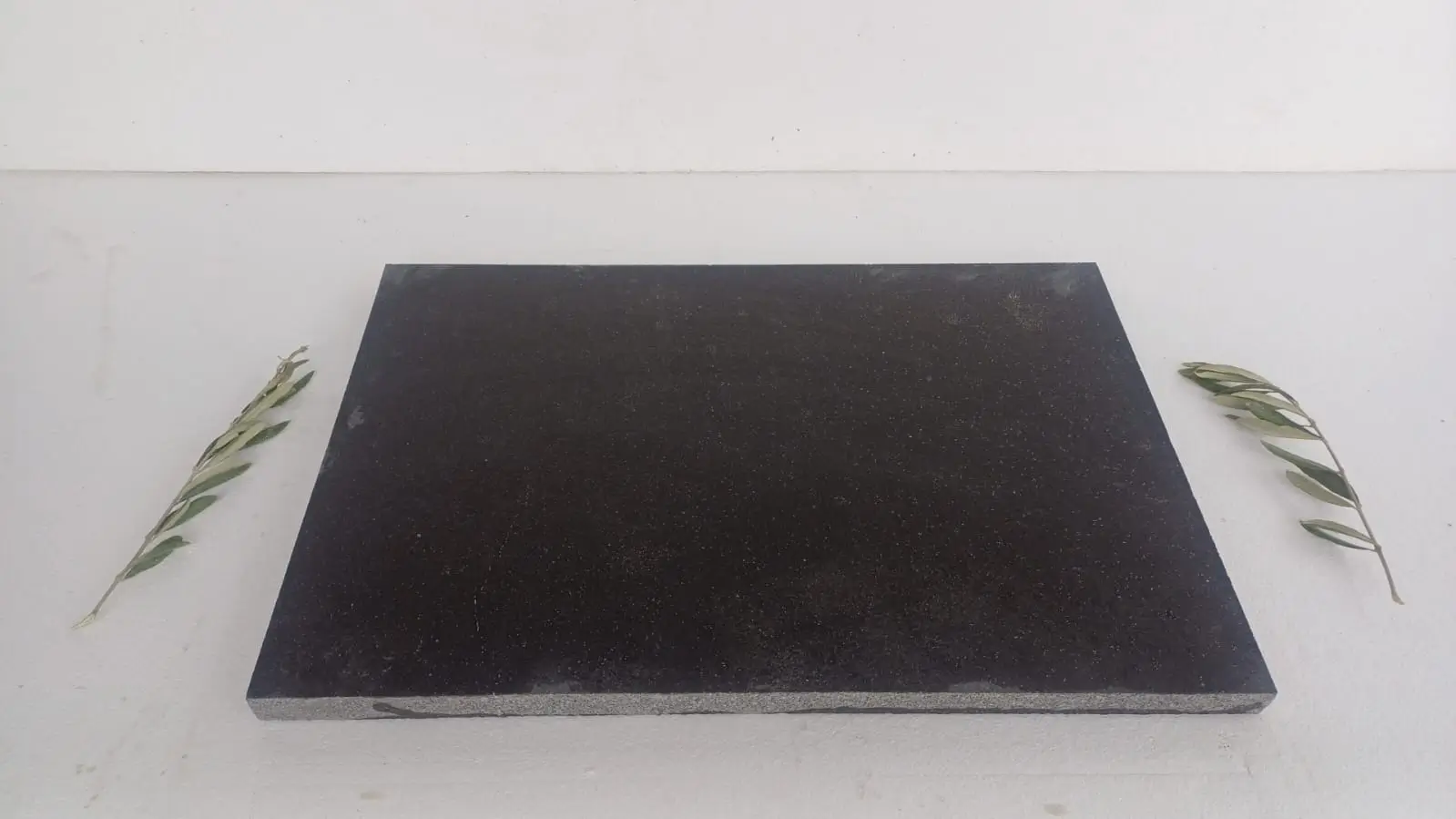
Your specification needs to define the finish with enough precision that the supplier can match it and the installer can verify it on site. “Honed” alone is insufficient — the degree of hone varies between suppliers and between production runs. Request a physical sample, confirm it against the specification, and retain the sample as the approved standard for the project.
At Citadel Stone, we quarry, template, and cut honed black basalt to order at our selected quarries, which gives us direct control over the finish grade before material ships. That’s worth understanding when you’re coordinating lead times — the production sequence starts at the quarry, not at a distribution point, so delivery lead times are quoted with the order and confirmed based on the current production schedule.
- Specify finish grade: “honed to a consistent matte surface, free from polishing scratches visible at 500mm viewing distance”
- Specify thickness tolerance — black basalt honed to pavement thickness needs consistent bed depth for proper setting
- Request absorption, flexural strength, and thermal expansion test reports from your supplier — do not specify from generic published ranges
- Define rectification: rectified (cut to precise dimensional tolerance) vs. natural variation, which affects joint width specification
- Confirm the finish is consistent across the full batch — honed basalt from the same quarry block can vary if production runs are mixed
Interior vs. Exterior Applications: Where the Finish Decision Shifts
The honed black basalt finish performs differently across application contexts, and the specification decisions that work for an interior floor don’t automatically transfer to an exterior patio. For interior applications — flooring, feature walls, bathroom floors — the matte surface reads as sophisticated and handles lighting well without glare. Maintenance is manageable, and the surface is not subjected to UV degradation, freeze-thaw cycling, or outdoor contamination.
Exterior applications introduce variables that alter the specification approach. UV exposure is generally not a concern for basalt’s color stability the way it is for some resin-treated stones, but surface contamination from organic matter, mineral deposits, and atmospheric pollutants accumulates differently on a matte surface than on a polished one. A honed black basalt surface used as outdoor paving will show calcite deposits and organic staining more visibly against the dark background — your maintenance protocol needs to address this explicitly. The Natural Stone Institute’s technical guidance on igneous stone supports selecting finish based on both aesthetic intent and the specific environmental exposure the surface will face.
Expert Summary
The specification decisions that define honed black basalt performance all trace back to a clear-eyed understanding of what honing does and doesn’t do to the stone surface. It delivers a controlled matte finish with excellent color consistency, predictable sealer behavior, and a visual character that polished alternatives can’t replicate. It’s not a finish that eliminates maintenance — it’s a finish that makes maintenance predictable and the aesthetic durable over long service life. For projects in climates with significant thermal cycling, joint design and flexible sealant selection are as important as the stone specification itself. Request test reports for absorption, flexural strength, and thermal expansion from your supplier, verify the finish grade against an approved sample, and build your maintenance interval around the sealer manufacturer’s guidance rather than a generic schedule. For basalt outdoor applications more broadly, laying basalt tiles outdoors correctly covers the installation sequence in detail. Your Black Basalt product selection should be confirmed against a physical sample retained as the approved standard before production begins. For shaded patios and interior floors, Citadel Stone honed black basalt is frequently specified because its matte surface tends to show less watermarking than polished alternatives.
Related reading: What Is Black Basalt Rock? Geology & Properties · How to Place Black Basalt Boulders for Slope Stability.