

Travertine paver pricing follows a logic that most buyers only discover after they’ve already committed to a quantity — and by then, the variables that drive the final number are locked in. Understanding how much are travertine pavers means working through grade, finish, thickness, and sourcing origin before the cost-per-square-foot figure becomes meaningful. The range is genuinely wide, and the difference between the bottom and the top of that range isn’t random — it maps directly to measurable quality decisions you make at the specification stage.
What Drives Travertine Paver Pricing
The price of travertine pavers isn’t a single number — it’s the output of five or six stacked decisions, each of which shifts the per-square-foot cost independently. Grade is the biggest lever. Commercial-grade material with tighter colour consistency, fewer voids, and more uniform calibration commands a meaningful premium over standard fill-grade stone. You’re not just paying for aesthetics — tighter grade tolerances translate directly to faster installation and fewer offcuts.
Finish is the second major cost driver. A tumbled travertine paver requires additional processing time compared with a sawn piece, and that processing cost is reflected in the price. Honed and brushed finishes sit in the middle range. Understanding these finish categories is important not just for budget, but for performance — a tumbled finish leaves an open, matte texture that behaves differently in wet conditions than a polished or honed face.
- Grade classification — commercial, standard, or economy — sets the baseline cost per square foot
- Finish type (tumbled, honed, brushed, unfilled) adds processing cost on top of raw material
- Thickness specification drives both material weight and price — thicker cuts cost more per unit
- Order volume affects unit pricing — larger palletized orders typically carry lower per-square-foot figures
- Sourcing origin influences base pricing before freight is added
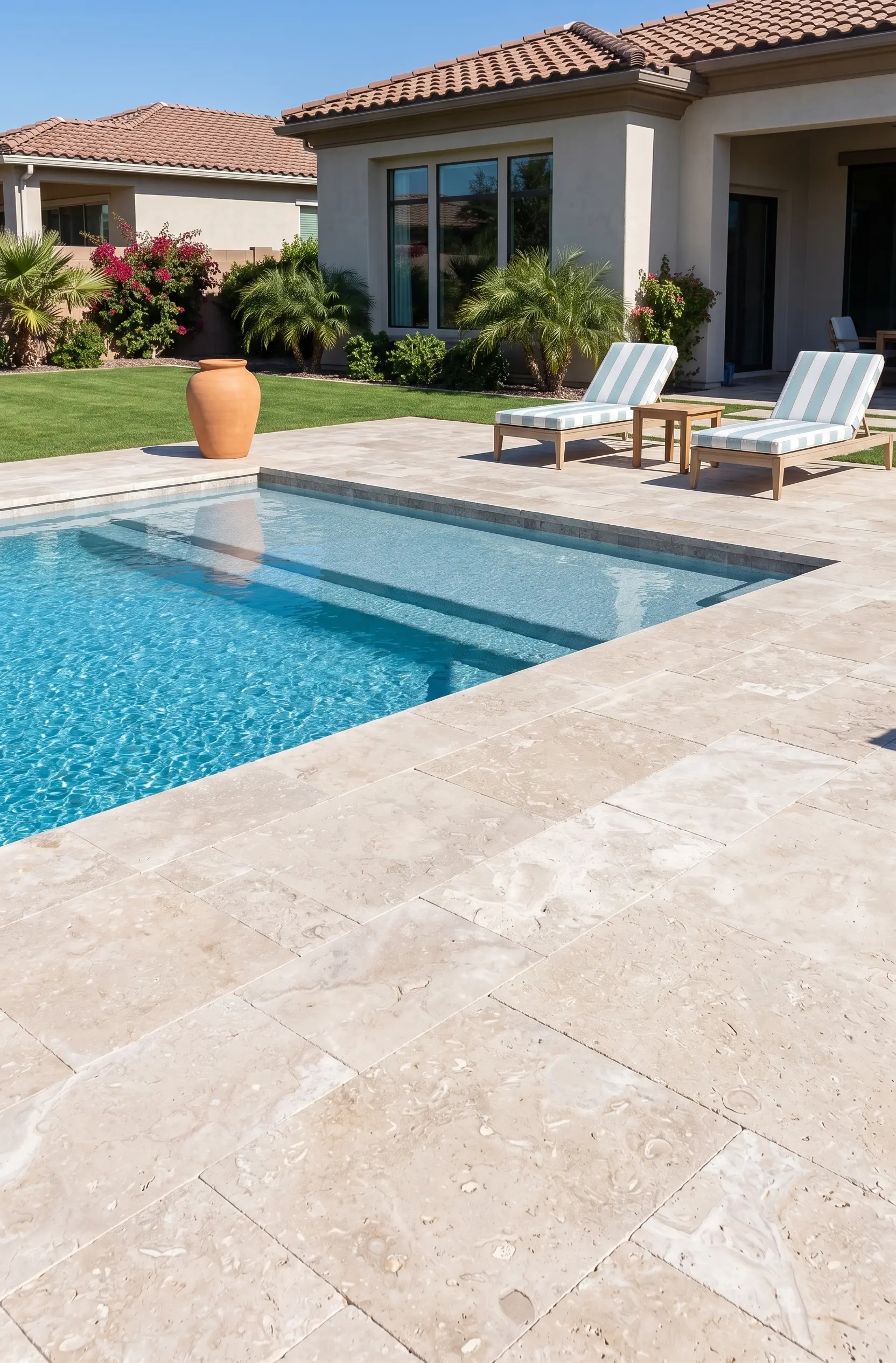
Travertine Pavers Price Per Square Foot — What the Numbers Actually Mean
The travertine pavers price per square foot you see quoted is almost always a material-only figure — it excludes freight, setting materials, base preparation, and installation labour. Treating the quoted material price as the total project cost is where budgets go wrong. A realistic project cost builds up from the material price as its first layer, then adds each subsequent cost category explicitly.
Material pricing also varies by where you buy. Stone operations buying direct from selected quarries and selling in palletized quantities generally offer more competitive square-foot pricing than retail stone showrooms, which carry overhead that feeds into margin. For larger projects, this sourcing difference compounds across a substantial quantity, making the channel decision as financially significant as the grade decision. According to Natural Stone Institute travertine properties and outdoor suitability, travertine’s physical characteristics vary considerably by quarry origin, which explains why two quotes for “travertine pavers” at different price points are often describing genuinely different material.
- Always confirm whether a quoted price is material-only or delivered — the gap can be substantial
- Palletized order pricing allows per-square-foot calculation before committing to full volume
- Stone sold through direct-import channels typically undercuts retail showroom pricing for equivalent grade
- Verify that comparison quotes reference the same thickness, finish, and grade — otherwise you’re comparing unlike material
Cost of Travertine Pavers by Grade and Finish
Breaking down the cost of travertine pavers by grade and finish gives you the clearest picture of where your budget is actually going. Economy or fill-grade material carries the lowest per-square-foot cost, but it also demands more time in the field — sorting pieces, managing void fill, and working around colour inconsistency. For large commercial installations, that labour overhead can erode the apparent material savings.
Commercial-grade travertine carries tighter tolerances at every level: calibration, colour banding, void density, and face consistency. Projects where the finished surface needs to read as a coherent plane — pool surrounds, entry courts, covered terraces — benefit from the premium grade because the installation proceeds faster and the finished result requires less remediation. The delta in material cost between economy and commercial grade is real, but so is the difference in how travertine pavers behave on site.
- Economy grade: widest colour variation, higher void frequency, lowest per-square-foot cost
- Standard grade: moderate consistency, suitable for most residential patio and walkway applications
- Commercial grade: tight calibration and colour banding, best suited for feature installations and large contiguous areas
- Tumbled finish: additional processing cost relative to raw sawn material, open surface texture
- Honed finish: smooth face, moderate processing cost, shows the stone’s natural colour range cleanly
- Brushed finish: textured surface achieved by wire brushing, sits between tumbled and honed on the cost scale
Thickness Specifications and Their Effect on Cost
Thickness is a cost multiplier that’s easy to underestimate. The difference between a standard nominal thickness and a heavy-duty specification represents a significant increase in raw material volume — and travertine pavers are sold by square foot of face area, so the additional thickness is a pure cost addition. Matching thickness to application is essential: a residential patio carrying foot traffic has different structural demands than a driveway or a vehicle-rated area.
The ASTM C1527 specification covers dimensional stone standards for travertine, and it’s worth understanding what it requires before you finalise your thickness call. For applications where point loads are a consideration — furniture legs, vehicle tyres, heavy planters — the thickness specification should come from a structural calculation, not a default assumption. Requesting the test report from your supplier lets you confirm the material’s flexural properties match what your application demands.
You can review ASTM C1527 travertine dimension stone standard specifications to understand the classification framework that governs dimension travertine quality requirements. Knowing this standard’s scope helps you ask the right questions when comparing supplier documentation.
Travertine Pavers and Freeze-Thaw Performance — A Real Cost Factor
Here’s what most specifiers miss when they price a travertine paver installation: the upfront material cost is only part of the lifecycle equation. In climates where temperatures cycle significantly between day and night — or where seasonal swings push below freezing — travertine’s open-pore structure becomes a performance variable that directly affects long-term cost.
Thermal cycling creates a specific mechanical stress. As travertine expands in heat and contracts at night, the joints between pavers are the point where that movement is absorbed — or where it isn’t, if joint spacing was specified too tight. A paver installation specified for a region with a wide daily temperature range needs joint spacing calculated from the thermal expansion coefficient of the specific travertine batch, not from a generic rule of thumb. The quarry origin of the stone affects its coefficient, which is why requesting the test data is essential rather than working from assumed values.
Freeze-thaw cycling adds a second dimension. Water that penetrates travertine’s pore structure and then freezes expands volumetrically. Over multiple cycles, this exerts internal pressure that can cause spalling or face delamination. Filling voids with a compatible grout or resin before installation reduces the volume available for water ingress. Sealing the filled surface on the interval your sealer manufacturer specifies is the other half of that mitigation — and failing to reseal on schedule is the single most common reason freeze-thaw damage shows up in year three or four of an otherwise well-installed travertine project.
- Specify joint width from the thermal expansion coefficient in the supplier’s test report — never from a generic table
- Void-fill travertine before installation in any climate with meaningful freeze-thaw cycling
- Reseal on the interval the sealer manufacturer states — not annually by default
- Confirm the stone’s water absorption figure from the test report before specifying for a freeze-thaw-exposed application
Sizing Formats and How They Affect Your Budget
Travertine pavers come in a range of sizing formats, and the format you choose affects both material cost and installation labour. Random ashlar patterns — blends of multiple nominal sizes laid in a repeating unit — require more cutting time to fit around curves and obstacles, which adds to the labour line without adding to the material cost. Large-format single-size pavers are faster to lay on open rectangular areas but generate more waste on irregular sites.
The format decision should follow the site geometry, not the other way around. For an open rectangular pool surround, a consistent single-size format is both easier to install and easier to price. For a curved garden path or an irregularly shaped terrace, a random-pattern format is more forgiving of non-rectangular geometry. You can review our travertine grade and size options to confirm which nominal sizes and format blends are currently available for your project scope.
- Single-size formats: lower labour cost on rectangular sites, higher waste percentage on irregular sites
- Random ashlar blends: more flexible layout geometry, additional cut time on complex shapes
- Larger nominal sizes require a flatter, more precisely prepared base — substrate tolerance becomes a cost factor
- Match the sizing format to the site geometry before finalising a square-footage budget
Freight and Delivery Planning — The Cost Layer Most Budgets Miss
Freight is the line item that surprises buyers who’ve only compared material prices. Travertine pavers are dense — even standard-thickness palletized stone represents substantial weight per delivery. Your project’s access constraints affect both the delivery logistics and the cost, particularly on sites with restricted access, low overhead clearance, or unpaved approach roads. These aren’t edge cases — they’re variables worth establishing before you confirm pricing.
Delivery scheduling also interacts with installation sequencing. Stone that arrives before the base is ready sits exposed to weather, and in regions with wide day-night temperature swings, palletized stone sitting on site cycles through thermal stress before it’s even laid. Confirming the delivery date against your base preparation schedule is a coordination step that protects both the material and your budget. Lead times are quoted with the order — plan against that quoted lead time, not an assumed one.
At Citadel Stone, we quarry, cut to order, and manage the supply chain from our selected quarries through to arranged delivery, which means the lead time quote we give reflects the actual production and logistics sequence — not a generic estimate.
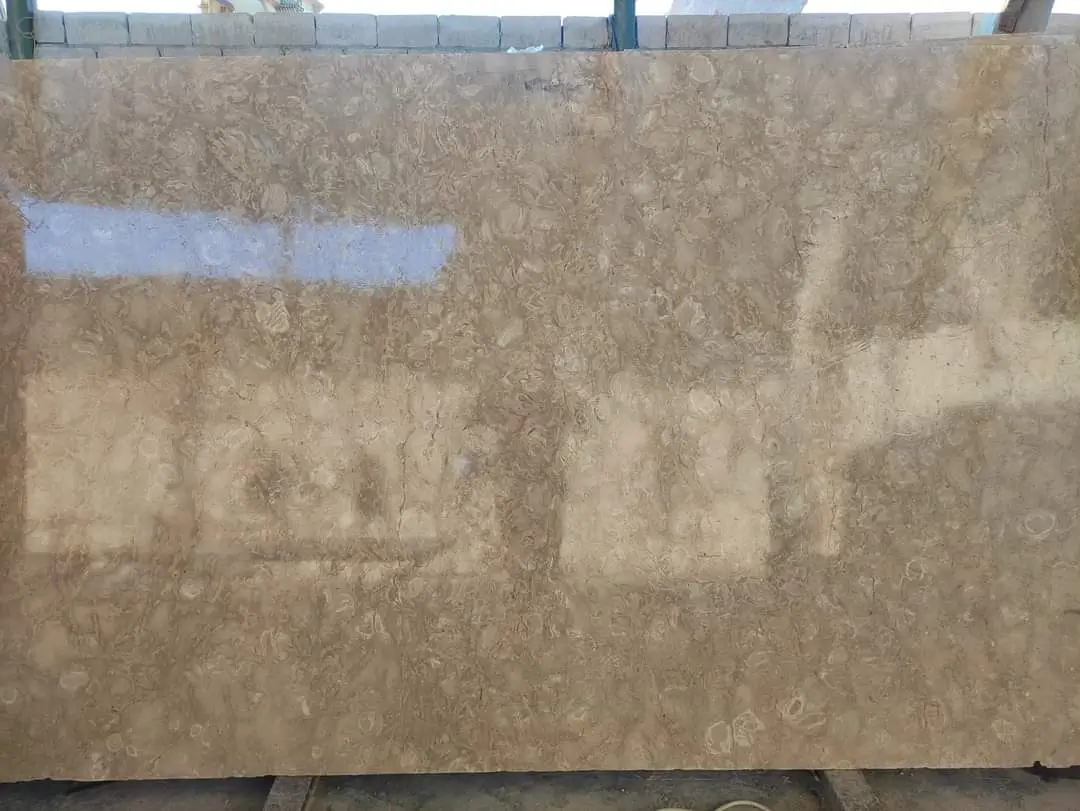
Sealing and Maintenance Costs Over the Life of the Installation
The upfront cost of travertine pavers is only the opening figure in the total cost of ownership. Sealing is a recurring maintenance cost that belongs in any honest budget for a travertine installation. The sealing interval depends on the sealer product specified, the finish of the stone, and the exposure conditions — a pool surround subject to constant wetting and chemical exposure cycles through sealers differently than a sheltered terrace.
Travertine’s pore structure means sealers are doing real work on this material — they’re not purely cosmetic. An impregnating sealer penetrates the stone and creates a barrier below the surface that is highly resistant to water and oil ingress without altering the surface appearance. Surface sealers create a film that changes the sheen level but is more vulnerable to abrasion. The sealer type affects both the reapplication interval and the cost per treatment — decisions worth making at specification, not after installation. According to USGS limestone and travertine natural mineral formation, travertine’s formation geology directly creates the pore and void structure that makes sealer selection so important for long-term performance.
- Budget for sealing as a recurring cost, not a one-time installation item
- Impregnating sealers preserve the stone’s natural appearance and require less frequent reapplication
- Surface-film sealers alter sheen and are more vulnerable to traffic abrasion
- Pool surrounds and outdoor terraces in sun-exposed positions require more frequent sealer maintenance than sheltered interior applications
- Void-fill grout maintenance is a separate line from sealer — inspect filled voids annually in freeze-thaw regions
Getting Travertine Paver Specifications Right
Pricing travertine pavers accurately means treating the quoted material cost as the first number in a calculation, not the final one. Grade, finish, thickness, format, freight, and ongoing maintenance each contribute to the real cost per square foot over the life of the installation. The buyers who end up with projects that perform well and stay within budget are the ones who specified each of those variables explicitly before ordering — not the ones who found the lowest headline price and hoped the details would work out.
For projects in temperature-cycling climates, the specification decisions around void fill, sealing, and joint spacing have a direct financial consequence — getting them right at the outset is less expensive than addressing freeze-thaw damage in year three. A travertine paver installation’s long-term performance depends on the material specification and the installation detail working together, which is why understanding what drives the price is inseparable from understanding what drives the outcome. As you plan your project, exploring how sourcing decisions affect both quality and cost is a natural next step — travertine paver sourcing and what to look for covers that dimension of the decision in detail. Product from Citadel Stone ships in palletized quantities that let buyers calculate square-foot pricing before committing to a full order.
Related reading: what are travertine pavers · travertine paver cost per square foot · how to seal travertine pavers.