Travertine paver cost per square foot isn’t a single number — it’s a range shaped by at least six independent variables, and most project budgets go sideways when buyers treat it as if it were fixed. The material grade, finish type, nominal thickness, order volume, and delivery logistics all shift the final figure in ways that matter far more than the base stone price alone. Understanding exactly which variables you control — and which ones are locked in by your project conditions — is what separates an accurate budget from a painful mid-project surprise.
What Drives Travertine Paver Pricing
The travertine paver cost per square foot you see quoted online rarely reflects what you’ll actually pay by the time material lands on your jobsite. Several cost layers stack on top of the base material rate, and each one is negotiable or variable depending on how you structure your order. Here’s what actually moves the number:
- Stone grade — commercial, select, or premium classifications carry meaningfully different price points, with select and premium grades running higher due to tighter color consistency and fewer surface voids
- Finish type — tumbled finishes typically cost less to produce than honed or brushed finishes, which require additional processing time
- Nominal thickness — 1.25-inch (3 cm) pavers are the most common outdoor specification; 2-inch (5 cm) material for driveway-rated applications carries a price premium of roughly 30–45% over standard patio thickness
- Order quantity — volume pricing thresholds exist at most suppliers, and ordering at least a full pallet rather than partial quantities consistently reduces per-square-foot cost
- Freight and delivery — truck delivery distance, lift-gate requirements, and jobsite accessibility all affect final landed cost in ways the material price doesn’t reflect
- Waste allowance — standard practice calls for 10–15% overage on straight-lay patterns and up to 20% on diagonal or herringbone layouts
Comparing travertine paver price per square foot across multiple suppliers only makes sense when you’re comparing identical specifications — same grade, same finish, same thickness. Mixing spec levels in a price comparison produces meaningless data.
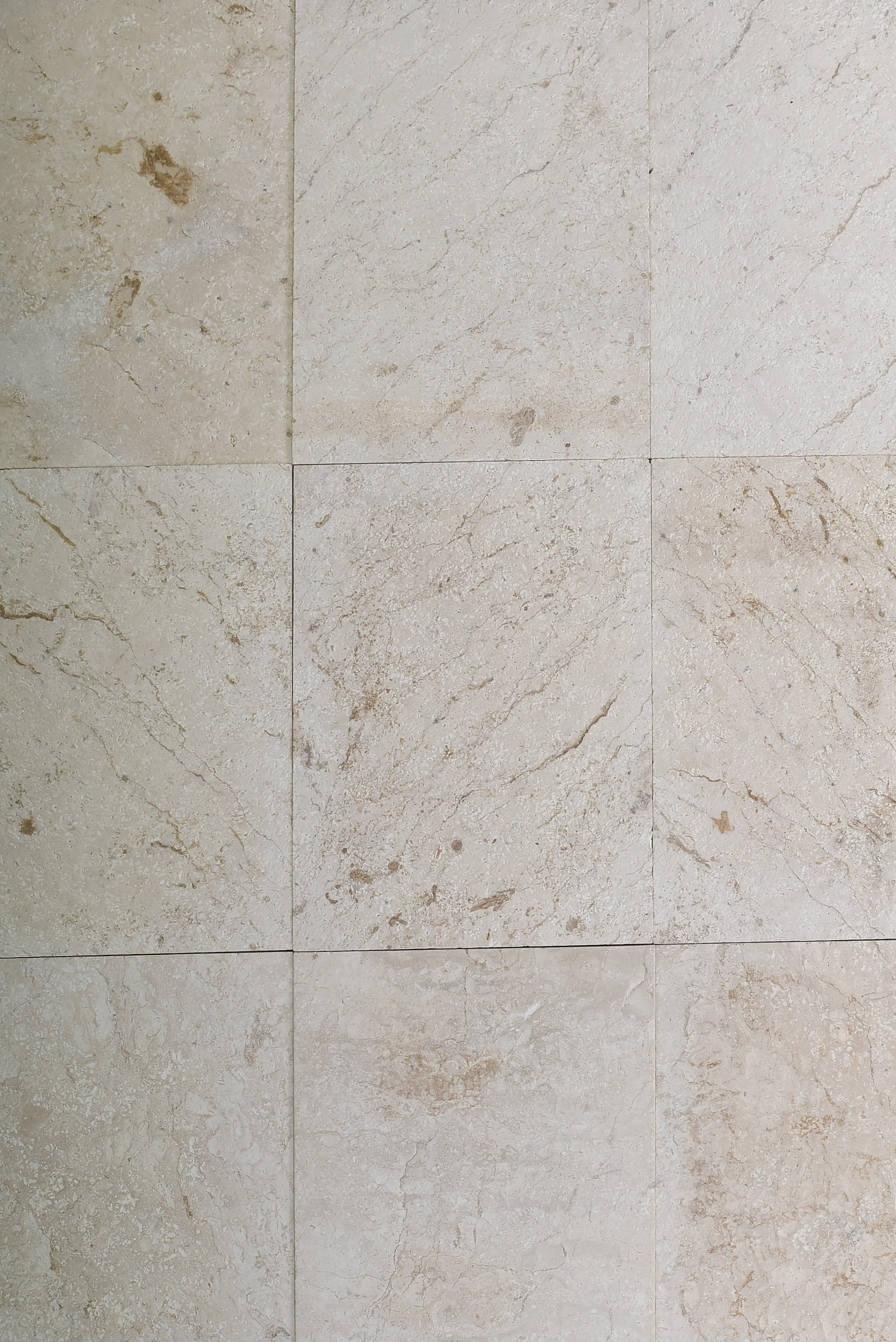
Material Cost Ranges by Grade and Finish
Travertine pavers span a wide price band depending on where in the quality hierarchy a given product sits. Rather than quoting static numbers that shift with market conditions, it’s more useful to understand the relative relationships between grades and finishes — those ratios stay fairly stable even when base prices fluctuate.
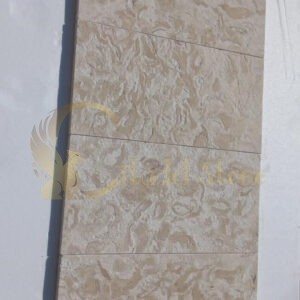
- Tumbled travertine pavers represent the most affordable finish category; the tumbling process rounds edges and creates a naturally aged surface texture without requiring post-processing machine time
- Honed travertine delivers a flat, smooth surface with a matte sheen; it requires surface grinding and adds processing cost relative to tumbled
- Brushed travertine sits between tumbled and honed in both texture and pricing; wire brushing opens the surface slightly without the full edge distressing of tumbled
- Filled-and-honed travertine — where natural voids are grouted before honing — commands a premium because of the additional labor involved in the fill step
- Select and premium grades carry higher premiums than commercial grade, which accepts more color variation and surface irregularity
According to Natural Stone Institute travertine properties and outdoor suitability, travertine is classified as a calcium carbonate sedimentary rock with open-pore structures that directly affect finishing options and long-term maintenance requirements. That pore structure is also why fill type and finish grade are so closely tied to pricing — more processing steps equal more cost.
For outdoor paving applications, commercial-grade tumbled material generally occupies the lower end of the price range, while premium filled-and-honed or select-grade brushed pavers push toward the upper end. The gap between these two endpoints is substantial enough that specifying the wrong grade for your aesthetic goals can mean either overpaying or delivering a result that doesn’t meet design expectations.
Thickness and Application: How Spec Choices Affect Cost
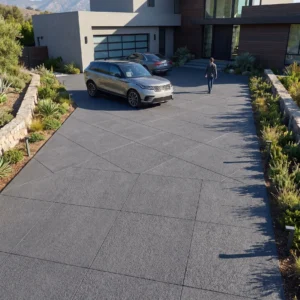
Thickness selection is one of the most direct cost levers you control as a specifier, and it’s frequently underspecified on residential projects. The 1.25-inch (3 cm) nominal thickness is the correct choice for pedestrian-only patio and pool deck applications with a properly compacted aggregate base. But when you’re extending the same travertine surface to a driveway, motor court, or any area that will see vehicle loads, moving to 2-inch (5 cm) material is required — and that shift carries a meaningful cost impact on the travertine paver cost per square foot.
- 1.25-inch (3 cm) pavers: standard specification for patios, pool decks, and pedestrian walkways
- 2-inch (5 cm) pavers: required for driveways and any surface subject to vehicle loads or heavy equipment staging
- Mixing thicknesses within a single project: possible but requires substrate height adjustments to maintain a consistent finished surface plane
- Thicker material also adds shipping weight per pallet, which can incrementally affect truck freight costs on longer hauls
The ASTM C1527 travertine dimension stone standard specifications define minimum performance thresholds for travertine used in exterior applications. Reviewing those standards before finalizing your thickness and grade specification ensures your selection is matched to the actual load and exposure conditions of your project.
Substrate variability is another factor worth addressing. If your base transitions from compacted gravel to an existing concrete slab mid-project, the setting bed depth changes, and that affects material cost calculations. At Citadel Stone, we recommend locking in thickness specification before budgeting, not after — it’s the variable most likely to shift your total material cost by 30% or more if it changes late in the planning process.
Cost to Install Travertine Pavers: What Labor Actually Covers
The travertine pavers installation cost breaks down into distinct labor categories, and understanding each one helps you evaluate contractor bids more accurately. A low bid that skips base preparation is not a better deal — it’s a deferred failure.
- Base excavation and grading: typically the largest single labor cost component; depth depends on your soil type and frost conditions in your region
- Aggregate base installation and compaction: compacted crushed stone base depth ranges from 4 inches for residential patios to 8–10 inches for driveways
- Sand setting bed: a 1-inch leveling bed over compacted aggregate; precise grading here determines your finished surface flatness
- Paver laying and pattern work: diagonal and herringbone patterns take longer to lay than standard grid patterns — budget accordingly
- Cutting: perimeter cuts and cuts around features like drains, columns, and curves add time and require wet-saw equipment
- Joint filling: polymeric sand installation and compaction after laying
- Sealer application: if specified at installation, this adds cost but reduces future maintenance expense
Site access is what most project budgets miss entirely. Narrow side yards, staircase delivery paths, and elevated pool decks all add labor time. Your contractor’s truck or pallet jack may not reach the installation area, which means hand-carrying stone — and that adds hours. Get this assessed during the site visit, not during bid review.
The cost to install travertine pavers also varies significantly by region, complexity of pattern, and whether the contractor is removing existing hardscape. Demo and disposal of an existing concrete slab, for example, is a separate cost category that frequently gets bundled into installation bids without clear itemization. Ask for a line-itemized bid so you can see exactly what’s covered.
Design and Landscape Integration: Where Aesthetic Choices Drive Cost
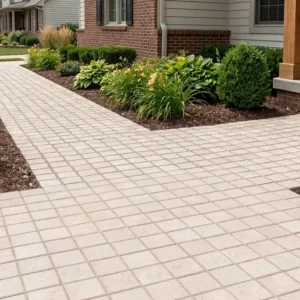
The landscape design context of your travertine installation shapes cost more than most buyers anticipate. A pool deck surround in a minimalist modern landscape with straight-line geometry installs faster and wastes less material than the same square footage in a curvilinear tropical garden design where every edge curves around plantings and water features.
Design style directly affects the three cost variables you care about most: cut volume, waste factor, and installation time. For Travertine Pavers in desert xeriscaping applications, where the palette leans toward warm ivory and walnut tones and the planting plan uses low-mass gravel mulch, the stone often does most of the visual work — which means surface consistency and color grading matter more, pushing you toward select-grade material. In a traditional colonial landscape with symmetrical geometry and dense foundation planting, commercial-grade material with its natural color variation often integrates beautifully because the planting canopy and formal layout carry the eye rather than the stone surface itself.
- Modern minimalist designs: straight lines, simple patterns — lower cut waste, faster installation
- Tropical and organic garden designs: curved edges, irregular perimeters — higher cut waste, longer installation time
- Desert xeriscaping: warm tone stone complements gravel mulch and drought-tolerant plantings; select grade often preferred for surface consistency
- Traditional formal landscapes: symmetrical layouts tolerate commercial-grade color variation well; pattern complexity varies by design
- Contemporary outdoor living spaces: large-format pavers (24×24 or 18×36) reduce joint lines and create a cleaner aesthetic but require flatter substrate preparation
Color tone selection also interacts with landscape palette. Ivory travertine works across nearly every design style, while walnut and noce tones read warmer and tend to work best in designs with brown, terracotta, and earth-tone hardscape elements. Choosing stone that fights your landscape palette creates a visual tension that no amount of sealing or maintenance will fix — and switching materials mid-project is expensive.
Ordering, Logistics, and Delivery Cost Factors
Delivery cost is the line item that surprises buyers most often in travertine paver budgets. The material price per square foot is visible upfront; the freight cost isn’t — and depending on your project location and order size, it can add meaningfully to your total landed cost.
Citadel Stone maintains warehouse inventory that allows most standard travertine paver orders to ship within 1–2 weeks of confirmation, which is significantly faster than the 6–8 week lead time typical of direct-import orders. That lead time advantage matters when your project is on a tight construction schedule. Confirm warehouse stock levels for your specific grade and finish before locking in an installation date.
- Full pallet orders minimize per-unit freight cost compared to partial pallet shipments
- Lift-gate delivery service is required when a forklift is not available at the delivery site — confirm this before scheduling
- Truck access at your jobsite affects delivery method; narrow access roads, low overhead clearance, or steep grades may require smaller delivery vehicles or off-site staging
- Ordering 10–15% overage material at the same time as your primary order avoids the cost and delay of a second freight delivery for replacement pieces
- If your project runs in phases, verify that your selected stone will remain available in the same batch color run — travertine has natural color variation between quarry cuts, and a second order months later may not match the first
The batch color consistency point deserves extra attention. Travertine from different quarry cuts — even at the same grade and finish — can show perceptible color shifts. Ordering everything you need for a project in a single truck shipment, with overage included, eliminates the risk of a mismatched second delivery that becomes visually obvious in the installed surface.
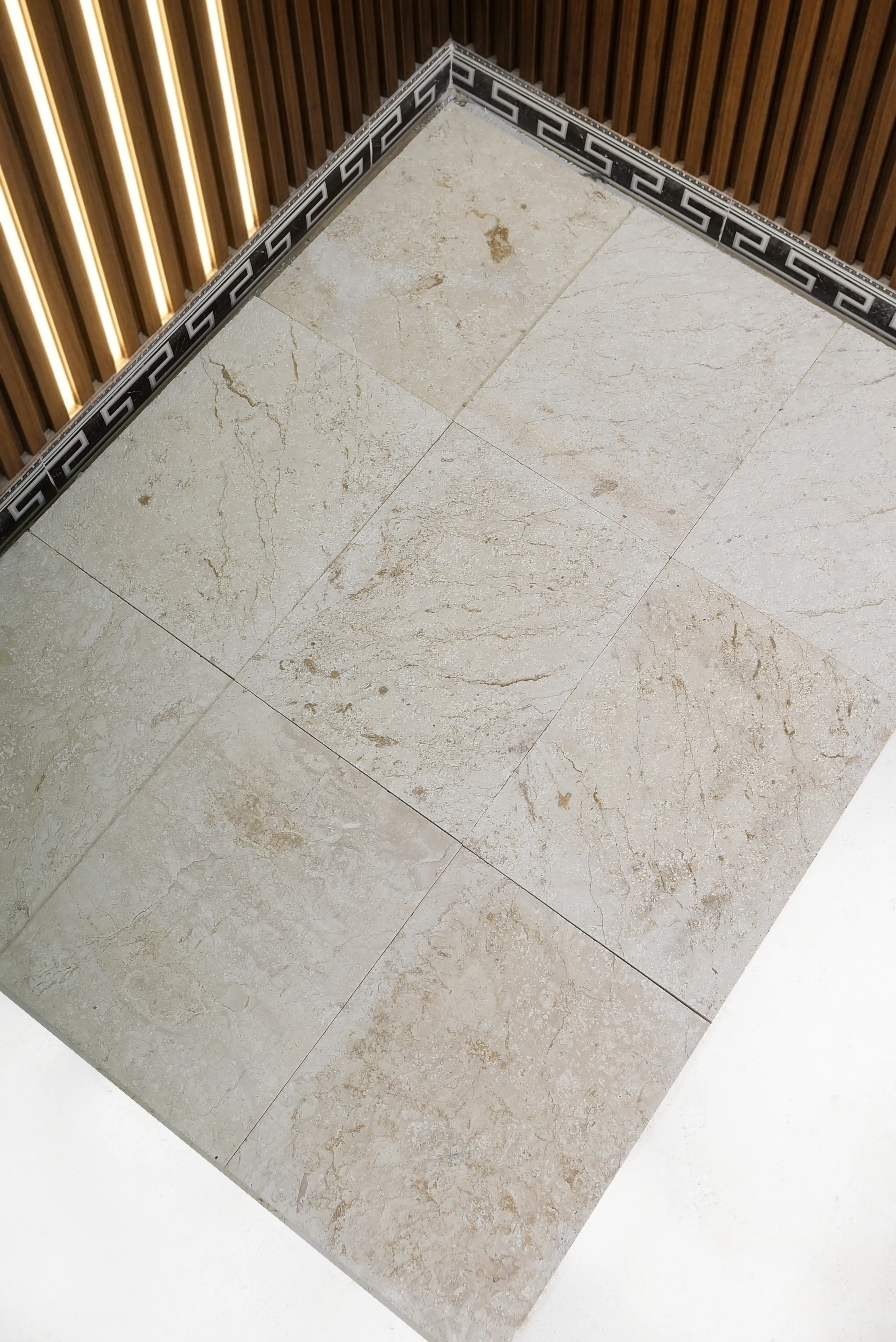
Sealing and Maintenance: The Long-Term Cost Picture
Your initial travertine paver cost per square foot is only part of the total ownership equation. Sealing and maintenance costs are predictable and manageable — but only when they’re planned for, not discovered reactively after the stone shows staining or weathering.
Travertine’s calcium carbonate composition makes it reactive to acidic substances, which is why sealing is considered standard practice rather than optional for most exterior applications. The USGS geological data on limestone and travertine formation confirms the calcium carbonate mineral base that characterizes travertine’s absorption behavior — a characteristic that directly informs sealing frequency and product selection. A penetrating impregnating sealer applied at installation, then reapplied on a two-year cycle, is the most cost-effective maintenance approach for most climates.
- Penetrating sealers protect from within the stone’s pore structure without altering surface appearance
- Topical sealers create a surface film that changes the stone’s sheen level; they require more frequent reapplication and can peel if moisture vapor transmission is not managed
- Sealing frequency increases in climates with high UV intensity and freeze-thaw cycles
- Joints filled with polymeric sand require periodic re-sanding as the material breaks down over time — typically every 5–7 years under normal conditions
- Acid-based cleaners should never be used on travertine; pH-neutral stone cleaners are the correct maintenance product
Properly maintained travertine pavers deliver decades of service life with consistent aesthetic quality. The maintenance cost over that lifecycle is modest relative to the material investment — but skipping biennial sealing accelerates surface degradation and joint erosion in ways that become structurally relevant, not just cosmetic.
Comparing Travertine to Alternative Paving Materials on Cost
Understanding the travertine paver cost per square foot requires context against the alternatives you’re actually considering. The cost comparison isn’t just about material price — it’s about total project cost including base prep, installation complexity, and long-term maintenance across a realistic service life.
- Concrete pavers: lower upfront material cost, but color fades over time and they carry a distinctly manufactured appearance that doesn’t integrate as naturally in high-end landscape designs
- Porcelain tile pavers: highly water-resistant and color-stable, but they require a more precise substrate, are significantly heavier in larger formats, and their harder, denser surface can feel cold underfoot compared to travertine’s natural warmth
- Limestone pavers: comparable material cost range, similar calcium carbonate base, but typically denser with lower absorption rates depending on the specific variety
- Granite pavers: exceptionally durable with very low absorption, but higher material cost and significantly harder to cut on-site without specialized equipment
- Stamped concrete: lower upfront cost but requires periodic resealing, cracks under differential settlement, and cannot be individually replaced the way a natural stone paver can
The repairability advantage of travertine pavers is worth quantifying in your total cost model. A cracked or stained natural stone paver can be lifted and replaced individually without disturbing the surrounding field. A cracked concrete slab or damaged stamped surface requires a much more invasive repair that typically leaves visible evidence. Over a 20–30 year service life, that individual replaceability has real cost value.
Getting Travertine Paver Specifications Right
Your travertine paver cost per square foot is determined by a layered set of variables — grade, finish, thickness, volume, freight, and waste factor — and each one is worth addressing explicitly before you commit to a project budget. Treating the material price as the only variable and working backwards from a quoted number is the most reliable path to a budget overrun.
The specification decisions that matter most are thickness (matched to your application), grade (matched to your design requirements and viewing distance), and order quantity (structured to hit volume pricing thresholds and include overage in the same shipment). Get those three right and the rest of the budget becomes much more predictable. For related planning decisions as your project takes shape, choosing the right travertine paver dimensions walks through how size selection interacts with pattern choice and substrate requirements — a natural next step in the specification process.
Travertine’s appeal across design styles — from formal colonial gardens to contemporary minimalist terraces to desert xeriscaping — means it’s rarely the wrong aesthetic choice. The risk isn’t in choosing the material; it’s in underspecifying it. Locking in the right grade and thickness early, ordering with adequate overage from the same color batch, and planning for biennial sealing gives you a surface that performs and looks as intended across its full service life. For buyers comparing bids, Citadel Stone can clarify how thickness and finish grade influence the overall project price.